Design Philosophy: Hideo Kojima, The Director Who Ships Constraints

Hideo Kojima speaking at GDC 2013

The Principle

“70% of my body is made of movies.” – Hideo Kojima1

Kojima’s slogan is a design statement wearing a joke’s clothing. He came to games wanting to make films, and instead of treating that as a compromise he treated it as a transfusion: four decades of importing cinema’s grammar – framing, editing, longing, dread – into an interactive medium that had none of it. But the slogan’s missing 30% is where his real signature lives. Kojima’s most original work was never the cinematic part. It was what he did when the machine said no.

His first game invented an entire genre because the hardware could not draw enough bullets. That alchemy – constraint in, genre out – is the through-line of the career, and it puts him in a lineage he might not claim: the Gunpei Yokoi school of treating limits as design material, executed by a man who would rather be Kubrick.

Context

Kojima was born in 1963 and grew up in the Kansai region as a latchkey kid whose household ritual was cinema – the family watched films together nightly, and he has said the habit formed him more than school did.1 He wanted to direct movies; in 1980s Japan that path was closed to a kid without connections, and games were the disreputable medium that would have him. In 1986 he joined Konami’s MSX home-computer division – the least glamorous outpost of a company whose arcade teams got the glory.2

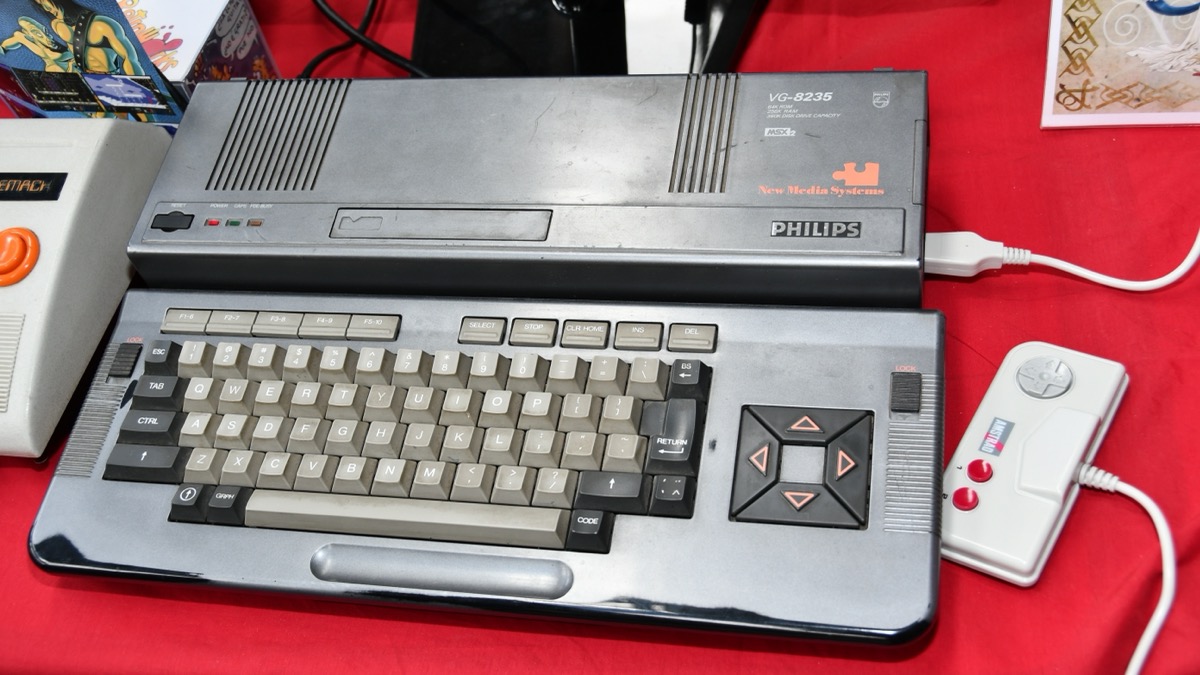
The indignity turned out to be the education. The MSX2 was a modest machine, and his first major assignment was an action war game it could not actually run: put a few enemies, the player, and bullets on screen and the sprites flickered and vanished.3 An action game with no action. The 24-year-old’s response defined him.

The Work

Metal Gear (1987): The Genre the Hardware Demanded

Unable to render combat, Kojima inverted the premise: make a war game about avoiding war. The player sneaks, hides, watches guard patrol patterns; being seen is failure. As he later put it, Metal Gear “was born from hardware limitations” – the MSX’s sprite ceiling made evasion the only playable verb, and the stealth genre exists because he built a game around it.3 It is the purest case study in the canon: the constraint was not worked around, it became the product.

The Philips VG-8235, an MSX2 home computer of the Metal Gear era

Metal Gear Solid (1998): Cinema Arrives, and the Fourth Wall Falls

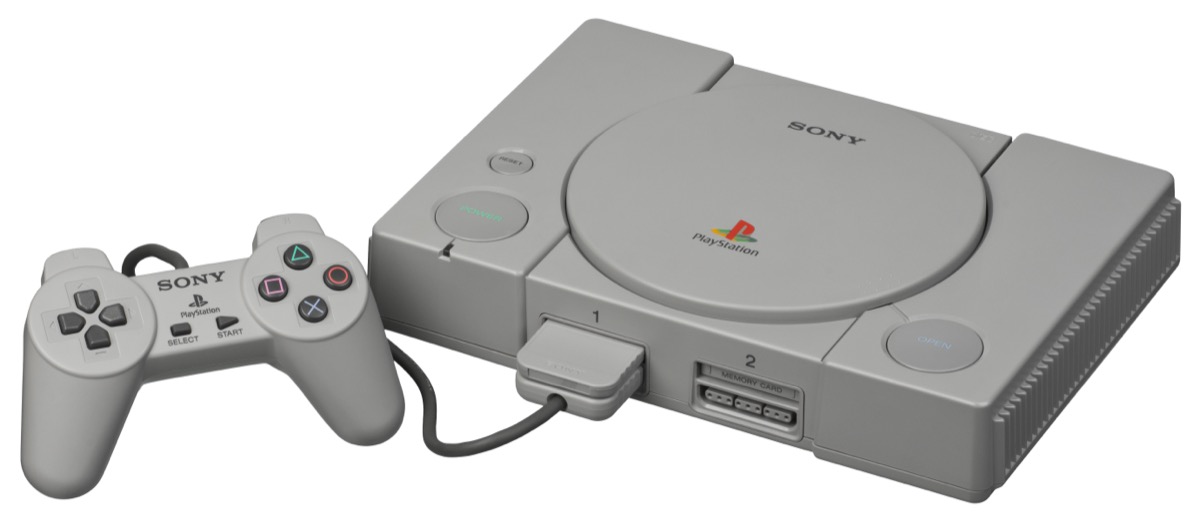
The PlayStation gave Kojima the machine his 70% had been waiting for: real-time 3D staging, voice acting, a camera he could direct. Metal Gear Solid imported film language wholesale – and then did something film cannot. The boss Psycho Mantis “read your mind” by reading your actual memory card, mocking your other save files, and defeating him required physically moving your controller to the second port. The fourth wall was not broken for a laugh; it was redeployed as a game mechanic. Kojima had noticed that the hardware itself – the card, the ports, the controller in your hands – was part of the fiction’s stage.

The original PlayStation

P.T. and the Break (2014–2015): The Auteur Meets the Corporation

The playable teaser for a Silent Hill reboot – one looping hallway, released free under a fake studio name – became one of the most influential horror artifacts of its decade. Then Konami cancelled the project, Kojima left the company after nearly thirty years, and P.T. was delisted, becoming the medium’s most famous ghost.2 The episode made him the industry’s defining test of the auteur question: his name had been on every box, and the split showed both what that name was worth and what it cost.

Death Stranding (2019): Connection as the Mechanic

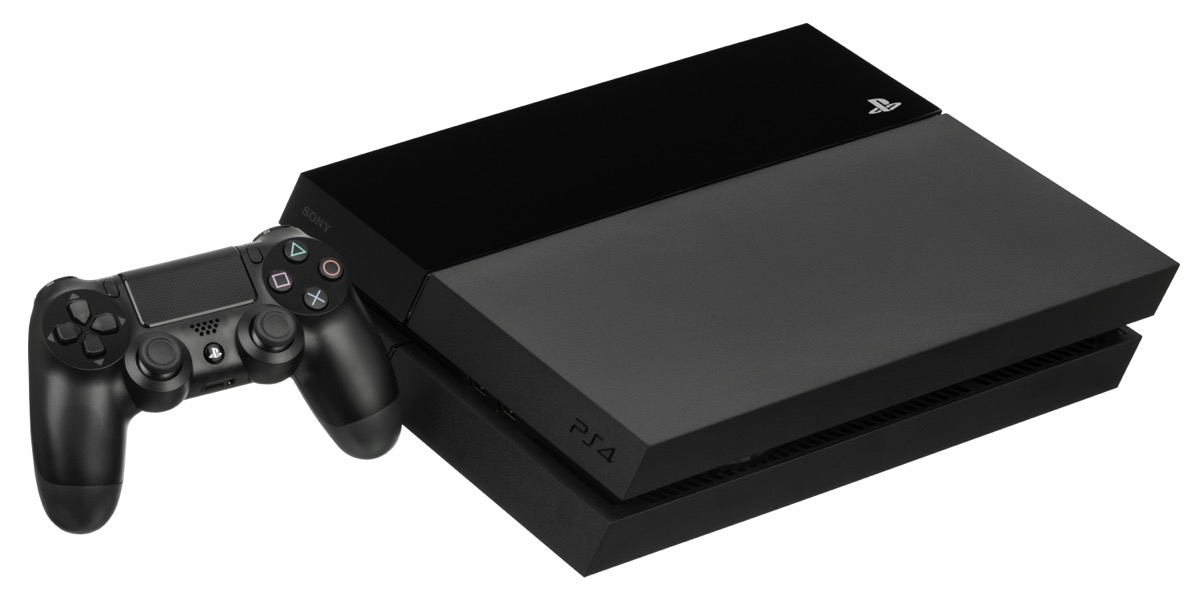
His independent debut refused every safe option. A blockbuster-budget game about a deliveryman crossing a broken America, where the core verbs are walking, balancing, and building – and where the signature system makes other players’ bridges, ropes, and ladders appear in your world, helpers you can thank but never meet. Kojima called it a “strand game,” a genre about making connections rather than eliminating enemies.1 Critics were divided at launch; then a pandemic made a game about isolated people sustaining each other through infrastructure feel like prophecy.4 It is Metal Gear’s inversion completed: the game that began by hiding from others ends by quietly helping them.

The PlayStation 4, Death Stranding's launch platform

The Method

Kojima’s method is graft-and-invert. The graft: take structures from cinema – and from the novels, music, and film criticism he consumes systematically – and force them into interactivity, accepting the friction as texture.1 The invert: whenever the medium or the machine imposes a limit, ask what game wants that limit. No bullets on screen became stealth. A memory card became a mind reader. Players isolated in single-player worlds became a network of anonymous mutual aid.

The third element is the name on the box. “A Hideo Kojima Game” is a claim that games have authors, with an author’s obligations: coherent obsessions, personal risk, the willingness to ship something divisive rather than something smooth. The auteur model has real costs – the Konami collapse is the case against it – but it produced a body of work with a signature no committee could have written.

Influence Chain

Who Shaped Him

The movies – the declared 70%: nightly family screenings, a directorial ambition redirected into a medium that had no directors yet.1 (Formative obsession)

The MSX2’s sprite ceiling – the undeclared 30%. The machine that could not make his action game forced the invention that made his career.3 (Formative constraint)

Who He Shaped

The stealth genre. Metal Gear’s descendants – every game where patience beats firepower – run on the design he built from a hardware bug’s worth of sprites.3

Games as authored work. The name on the box, the cinematic ambition, the personal obsessions shipped at scale: the entire auteur wing of the industry works in the space he cleared.

The Throughline

Kojima completes a triangle with this series’ other game designers. Gunpei Yokoi turned withered components into products; Kojima turned component failures into genres – the same alchemy, one level of desperation deeper. And he is Shigeru Miyamoto’s precise opposite on the medium’s central question: Miyamoto makes the player the protagonist and erases the designer; Kojima signs every frame and makes you feel the director’s hand – then reaches through the fourth wall to touch yours. Between those poles – the invisible designer and the unmissable one – sits every game ever shipped. (Series bridge)

What I Take From This

The Metal Gear origin is the best reframing exercise in product history: when the platform cannot do the thing, ask what product is made possible by exactly that inability – the answer is sometimes a category. Psycho Mantis is my favorite argument for knowing your whole stack: the memory card trick was available to every PS1 developer for years, and only the one who considered hardware part of the storytelling surface ever used it. And the strand system is the design I think about most: multiplayer as mutual aid between strangers who never meet is a mechanic, an argument about people, and a moderation strategy in one – a Miyamoto-grade idea, from the director who supposedly cares more about cutscenes.

FAQ

What is Hideo Kojima’s design philosophy?

Cinema-infused, constraint-driven auteurship: import film’s emotional grammar into interactive form, treat hardware limits as design prompts rather than obstacles, and ship personally authored, divisive work under his own name.1 The stealth genre (from MSX2 sprite limits) and the “strand game” (connection as the core mechanic) are both products of the same inversion habit.3

Why did Metal Gear become a stealth game?

Because the MSX2 could not handle it any other way: the hardware flickered and dropped sprites with just a few enemies and bullets on screen, making a combat game unplayable. Kojima inverted the premise so that hiding, not shooting, was the game – and the limitation became the genre.3

What is a “strand game”?

Kojima’s term for the genre Death Stranding proposes: games built around forming connections rather than defeating enemies.1 In practice, its asynchronous system places structures built by other players into your world – bridges, ladders, safehouses – so strangers help each other across a hostile landscape without ever meeting.

Why did Kojima leave Konami?

After nearly three decades, Kojima’s studio was dissolved amid the cancellation of the Silent Hills project (whose P.T. teaser had become a phenomenon), and he departed in 2015 to found the independent Kojima Productions, shipping Death Stranding four years later.2 The split remains the industry’s defining case study in the tension between auteur-led development and corporate portfolio management.


  1. Hideo Kojima, The Creative Gene: How Books, Movies, and Music Inspired the Creator of Death Stranding and Metal Gear Solid (Viz Media, 2021) – the “70% of my body is made of movies” credo, the nightly family film ritual, his systematic consumption of books and film as design input, and the “strand” framing of connection-driven design. 

  2. Hideo Kojima, Wikipedia – biographical scaffold: born 1963; joined Konami’s MSX division in 1986; Metal Gear (1987) and the Metal Gear Solid series; P.T. (2014) and the Silent Hills cancellation; departure from Konami (2015) and founding of Kojima Productions; Death Stranding (2019). 

  3. Game Developer, GDC: How Kojima Defied The “Impossible” Throughout Metal Gear’s History – Kojima’s own GDC 2009 account: the MSX2’s sprite limits made an on-screen firefight unplayable, so the game became one “that could be done without enemies,” with the hardware limitation used to its advantage. See also MCV/Develop, “Kojima: ‘Metal Gear was born from hardware limitations’”

  4. Photographs: Hideo Kojima at GDC 2013 by Official GDC (CC BY 2.0); Philips VG-8235 MSX2 by AUIC Oficial (public domain); PlayStation SCPH-1000 and PlayStation 4 by Evan-Amos (public domain). Via Wikimedia Commons

相關文章

Design Philosophy: Shigeru Miyamoto, The Player Is the Protagonist

Shigeru Miyamoto turned a childhood cave into Zelda, a rescue plot into Mario, and 'fun' into a testable engineering pro…

9 分鐘閱讀

Design Philosophy: Gunpei Yokoi, Lateral Thinking with Withered Technology

Gunpei Yokoi built the Game Boy from parts everyone else considered obsolete, and it outsold every technically superior …

10 分鐘閱讀