Design Philosophy: Gunpei Yokoi's Withered Technology

The Principle
“Hardware design isn’t about making the most powerful thing you can.” – Gunpei Yokoi1
Yokoi gave his approach a name that became doctrine: kareta gijutsu no suihei shikou – lateral thinking with withered technology.3 “Withered” means mature: components so old, cheap, and mass-produced that their behavior holds no surprises and their price holds no risk. The lateral move is the design act – taking those boring parts sideways into a use nobody had tried. The philosophy is a bet that novelty belongs in the experience, not the componentry, and that a product built from understood parts can be tuned entirely around one question: is it fun?
His career is the proof by repetition. An extending toy arm made from lattice scraps. A game system built from calculator LCDs. A handheld with a screen four shades of grey deep that buried its full-color competitors. Every one of them was technologically unimpressive on the day it shipped, and every one of them won.
Context
Yokoi was born in Kyoto in 1941 and graduated from Doshisha University with a degree in electronics. Nintendo hired him in 1965 for decidedly unglamorous work: maintaining the assembly-line machines that made hanafuda playing cards.4 The company was seventy-six years old and made card games. There was no games industry to join.
The legend starts with idle hands. Tinkering during downtime, Yokoi built an extendable lattice gripper to amuse himself; president Hiroshi Yamauchi saw it and told him to turn it into a product for the holiday season. The Ultra Hand (1966) sold over a million units, pulled Nintendo toward toys, and pulled Yokoi from machine maintenance into inventing things – eventually as head of the R&D1 division, where he spent more than two decades turning cheap components into play.4
The formative accident came on a bullet train in the late 1970s. Yokoi watched a bored businessman killing time by punching the buttons of an LCD calculator, and understood what he was actually seeing: an adult wanted to play, and the mature calculator components in his hand were already a game machine that nobody had bothered to design.2
The Work
Game & Watch (1980): A Calculator, Turned Sideways
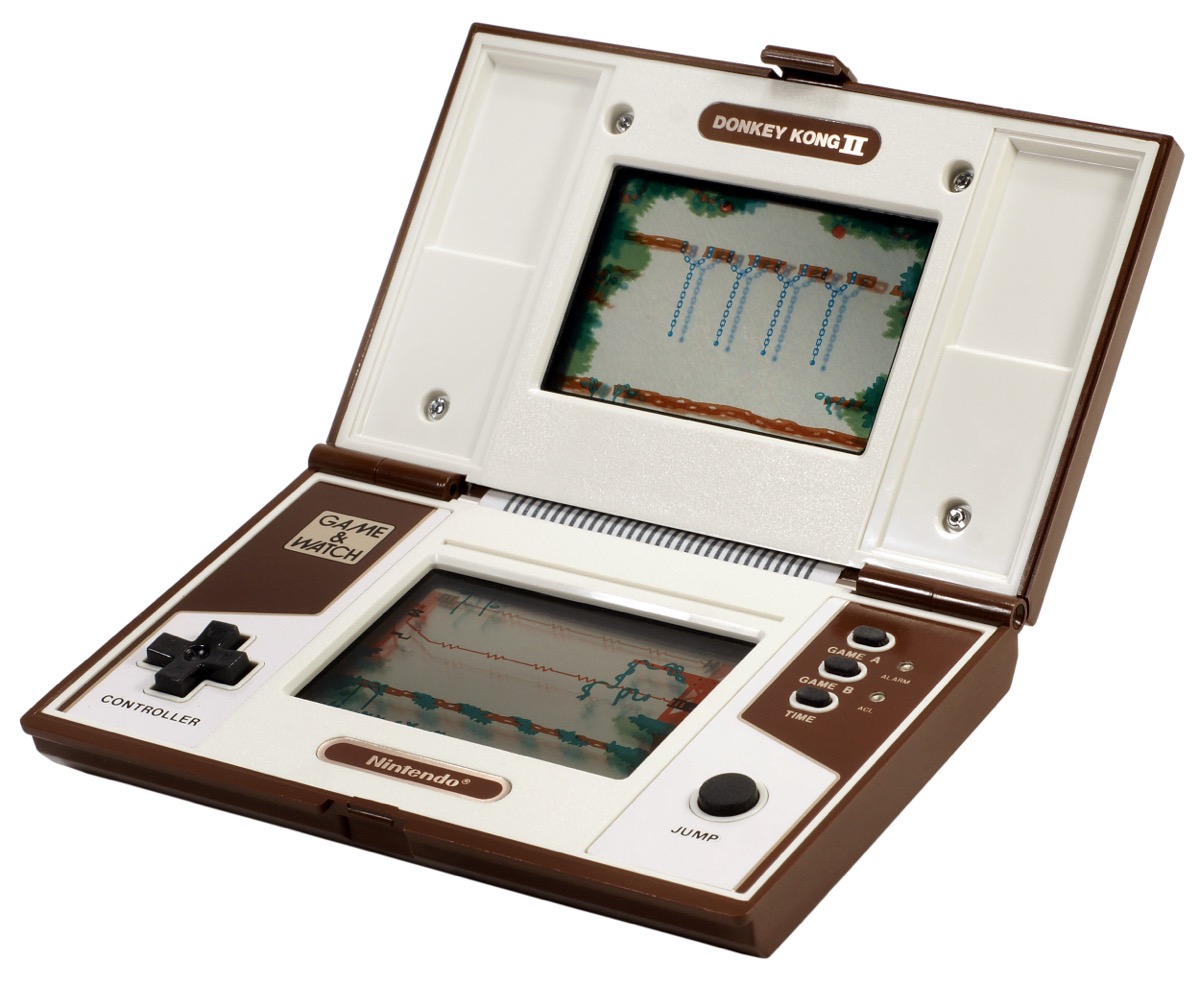
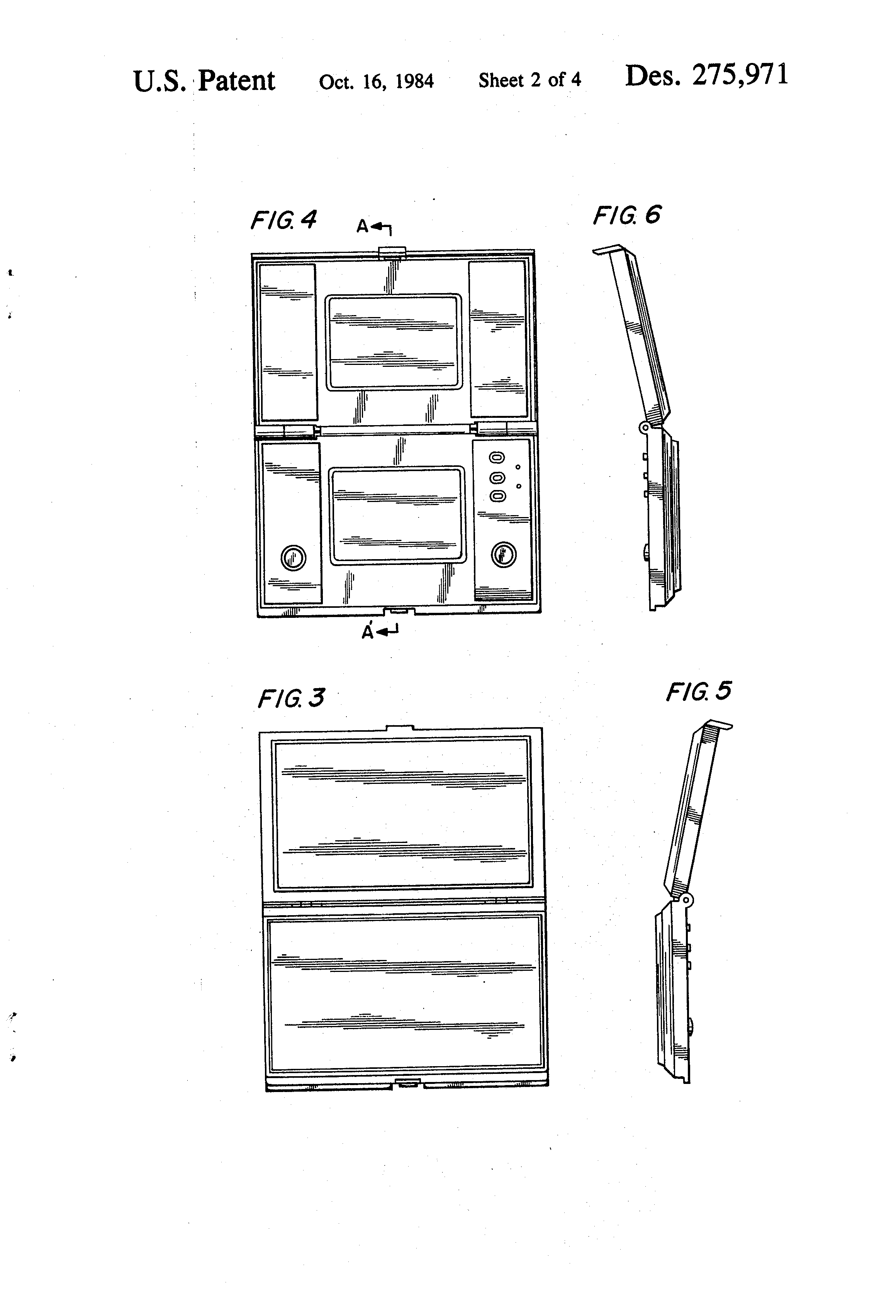
The Shinkansen observation became Game & Watch: calculator LCD, calculator buttons, watch battery, one game per unit.2 Every component was withered; the lateral thinking was the idea that this was a toy. The series sold in the tens of millions, rescued Nintendo’s finances, and established the template of Yokoi’s career – and its clamshell dual-screen variants, patented under his name, are the visible ancestor of the DS line two decades later.
The D-Pad (1982): Four Directions, One Thumb
Porting Donkey Kong to Game & Watch posed a control problem: a joystick would ruin the flat, pocketable form. R&D1’s answer was a cross of four switches under a single rocking cap – the directional pad. It cost almost nothing, could not snag in a pocket, and mapped the thumb to four directions with no travel and no ambiguity. It has appeared on essentially every game controller since, which makes it a strong candidate for the most-manufactured interface element in consumer electronics.
R.O.B. and Metroid (1985-86): The Trojan Horse and the Software Proof
When Nintendo brought the NES to an America still burned by the 1983 crash, retailers would not stock a video game console. R&D1’s answer was R.O.B. (1985), the Robotic Operating Buddy – a slow toy robot built from mature servo and light-sensor parts whose real function was rhetorical: with a robot in the box, the NES read as a toy, and toy shelves took it.4 Once the console was selling on its games, R.O.B. quietly retired – withered technology deployed not as product but as market access. The following year the division proved the doctrine transfers to software: R&D1 produced Metroid (1986), atmosphere-first and exploration-led, the experience carrying everything the spec sheet did not.
Game Boy (1989): Losing Every Spec, Winning the Market
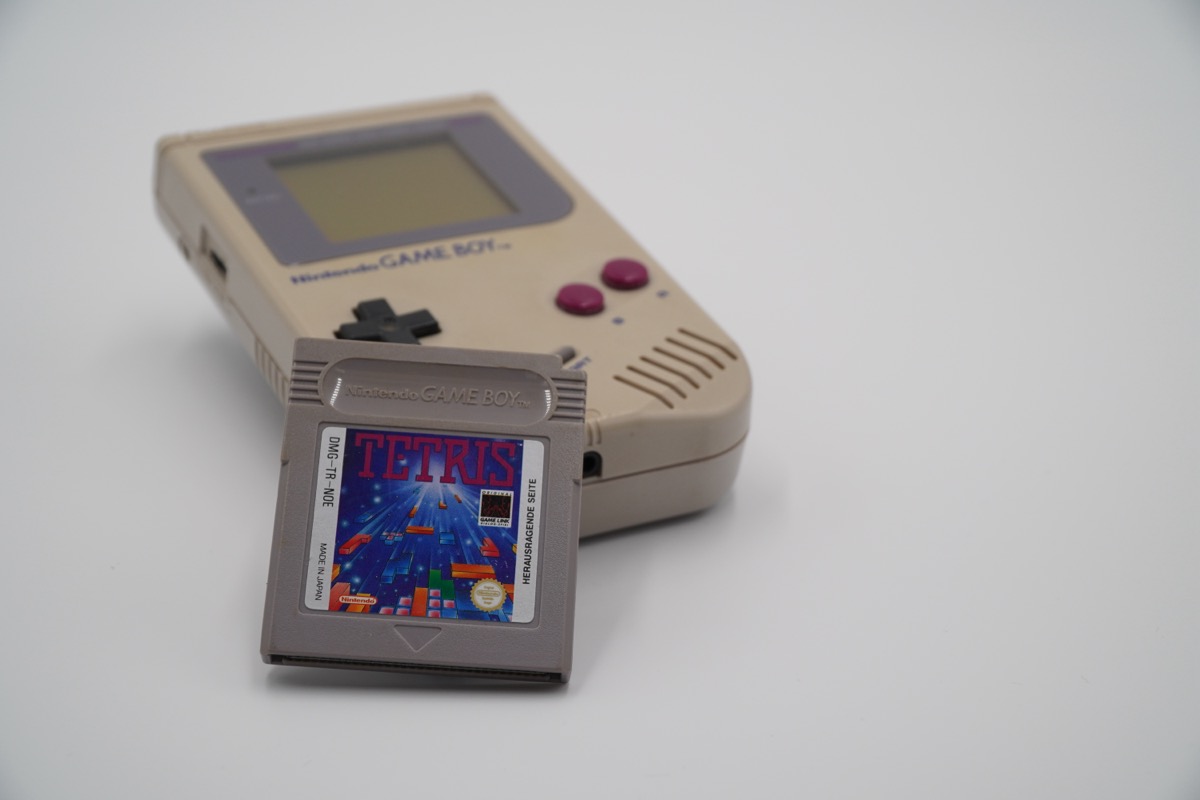
The Game Boy is the philosophy at full strength. Its rivals – Sega’s Game Gear, Atari’s Lynx – had color screens and more powerful chips. Yokoi chose a monochrome LCD and an 8-bit processor, and what those withered parts bought was everything that mattered: some fifteen to thirty hours on four AA batteries against rivals’ three to five, a low price, indestructibility, and a manufacturing cost that let Nintendo bundle Tetris. He defended monochrome with a blackboard parable: “If you draw two circles on a blackboard, and say ‘that’s a snowman’, everyone who sees it will sense the white color of the snow… the colors aren’t important.”1 The player’s imagination completes the picture – “your imagination has the power to transform that perhaps-unrecognizable sprite called a ‘rocket’ into an amazing, powerful, ‘real’ rocket.”1 The Game Boy line sold over a hundred million units and outlived both color competitors by many years.45
Virtual Boy (1995): The Exception That Tests the Rule
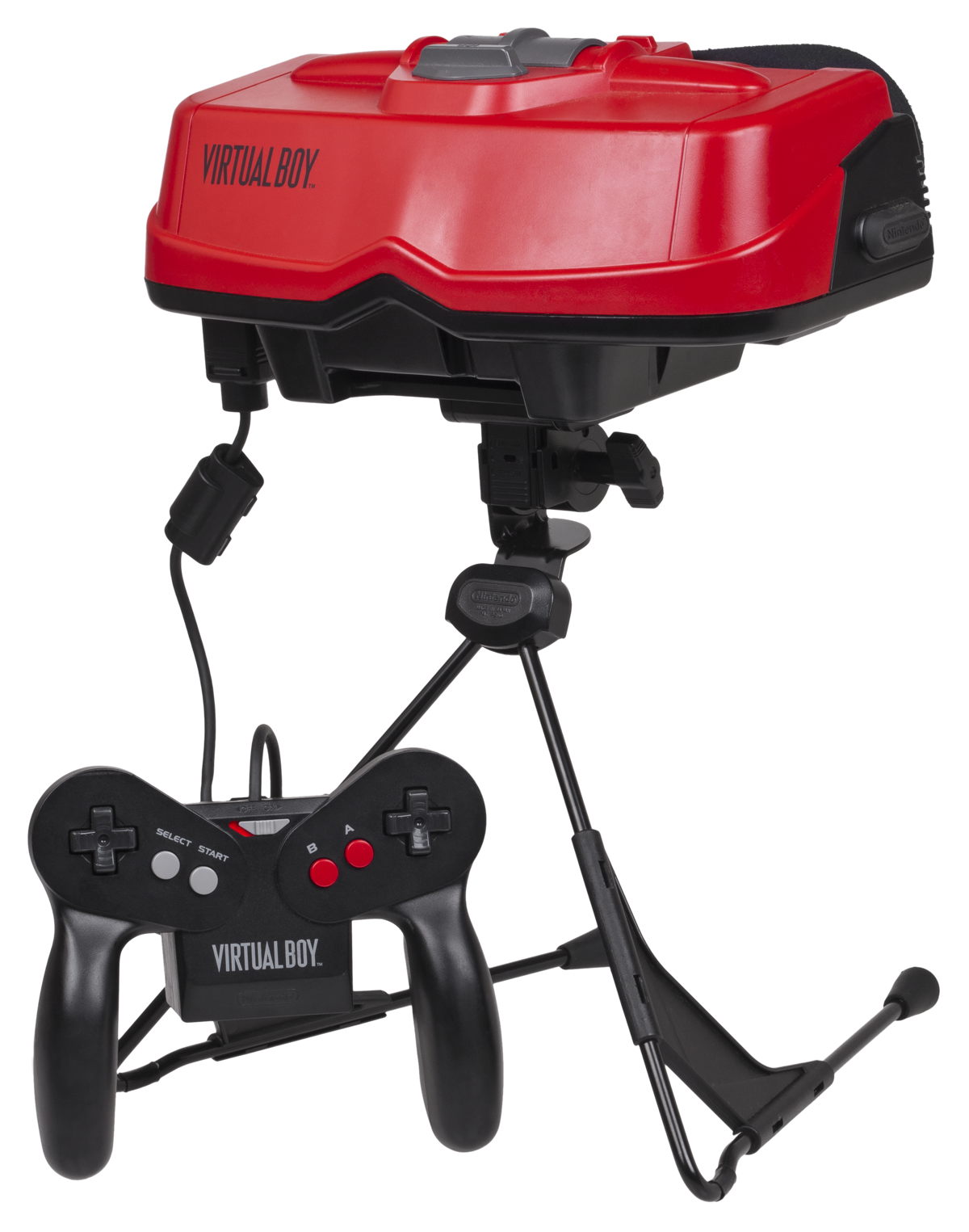
The one conspicuous failure is instructive. The Virtual Boy’s red-LED stereoscopic display was, by component logic, a Yokoi move – red LEDs were the cheap, mature option. But the experience was bleeding-edge: a face-mounted 3D machine that the market read as virtual reality and that delivered eyestrain, a tripod, and monochrome red. It sold poorly and was discontinued within a year; Yokoi left Nintendo in 1996 shortly after.4 The lesson is not that the principle failed. It is that the principle has two halves, and withered parts cannot rescue an experience people do not want. The fun test outranks the component test.
After Nintendo he founded his own studio, Koto, and designed one more handheld in his mold – the WonderSwan, cheap and long-lived on a single battery, released by Bandai after his death. Yokoi died in a roadside accident in October 1997, at fifty-six.4
The Method
Yokoi’s method inverts the industry’s default relationship to technology. Where competitors treated the newest component as the product’s selling point, he treated component novelty as risk with no fun attached. Mature parts are characterized: their failure modes are known, their costs are floor-level, their supply is guaranteed. Choosing them converts engineering uncertainty into design freedom – the team’s entire attention lands on the play experience, because nothing else is in question.
His definition of the product was equally strict: “The word ‘game’ means something competitive, where you can win or you can lose.”1 Fun is structured challenge, not spectacle, and spectacle-chasing earned his deepest skepticism: “No matter how much CG approaches reality, it will never be able to overtake real visuals. There will always be an unsurpassable limit.”1 Graphics compete with reality and lose; games compete with boredom and win. At the end of his life he was pushing the logic further, back past screens entirely: “Now I’d like to create something real like that, even if it’s something simple and cheap.”1
Influence Chain
Who Shaped Him
Nintendo’s card-company pragmatism – a maker of hanafuda cards since 1889 had no technological pride to defend, only products to sell. Yokoi’s indifference to spec-sheet prestige was the house culture, weaponized.4 (Formative environment)
The maintenance floor – he entered as the man who kept the machines running, and never lost the repairman’s view of technology: components are things with known behaviors, not statements. (Formative training)
Who He Shaped
Shigeru Miyamoto and the design culture of Nintendo. Yokoi supervised the young Miyamoto on Donkey Kong, and his fun-first, spec-last doctrine became the company’s operating system – visible decades later in underpowered, experience-led hardware from the DS to the Wii to the Switch.4
Every controller since 1982. The D-pad is his signature written on billions of devices.
The Throughline
Yokoi belongs beside Dieter Rams in this series, arguing the same case from the opposite direction: Rams removed everything unnecessary from the object, Yokoi removed everything unnecessary from the technology – less, but more fun. And he is the sharpest counterexample to the Steve Jobs school of the bleeding edge: Jobs packaged new technology until it felt inevitable; Yokoi proved you can skip the new technology entirely if the experience is right. Between them sits the whole space of product strategy. (Series bridge)
What I Take From This
“Choose boring technology” is the software industry rediscovering Yokoi with a worse name. The stack that wins is usually the withered one – the database that has been failing predictably for twenty years beats the one with novel failure modes, and the attention you save is exactly what the product needed. The Game Boy’s spec sheet is my favorite argument that constraints are positioning: battery life was not a compromise on color, it was a decision about what a handheld is for. And the snowman quote is a design principle I use for software directly – interfaces that sketch and let the user’s mind complete will outlive interfaces that render everything, because imagination is the one component that never withers.
FAQ
What is “lateral thinking with withered technology”?
Gunpei Yokoi’s design principle: build products from mature, cheap, well-understood components (“withered technology”) and direct all innovation into the novel, sideways use you put them to (“lateral thinking”).3 The Game & Watch applied calculator parts to play; the Game Boy chose a monochrome screen so it could win on battery life, price, and durability instead of specs.
Why did the Game Boy beat its more powerful competitors?
Sega’s Game Gear and Atari’s Lynx had color screens and stronger hardware, but paid for it with short battery life and high prices. The Game Boy’s withered components delivered fifteen to thirty hours of play on four AA batteries against their three to five, a lower price, and Tetris in the box – and Yokoi argued monochrome cost nothing that mattered, because the player’s imagination supplies what the screen leaves out.1
Did Gunpei Yokoi invent the D-pad?
The cross-shaped directional pad came out of Yokoi’s R&D1 division for the 1982 Game & Watch version of Donkey Kong, where a joystick would have ruined the flat clamshell form. The four-way rocker under a single cap became standard on the NES controller and on virtually every game controller made since.
What happened with the Virtual Boy?
The 1995 stereoscopic console used cheap red LEDs – a withered component – but wrapped them in an experience the market read as failed virtual reality: monochrome red, physically awkward, hard on the eyes. It was discontinued within a year, and Yokoi left Nintendo in 1996.4 It stands as the reminder that his principle’s first test was always the experience, not the parts.
-
Gunpei Yokoi, 1997 interview with Osamu Makino, translated at shmuplations – “Hardware design isn’t about making the most powerful thing you can”; the blackboard snowman argument for monochrome; “your imagination has the power to transform that perhaps-unrecognizable sprite”; “the word ‘game’ means something competitive”; the limits of CG realism; the late wish to “create something real… even if it’s something simple and cheap.” ↩↩↩↩↩↩↩
-
Gunpei Yokoi – Inventing the Game & Watch, translated interview – the Shinkansen origin: watching a bored businessman play with an LCD calculator’s buttons in the late 1970s, and the idea of a watch-sized game for killing time. ↩↩
-
Gunpei Yokoi with Osamu Makino, Yokoi Gunpei Game House (横井軍平ゲーム館, ASCII, 1997) – the source text for kareta gijutsu no suihei shikou, “lateral thinking with withered technology,” Yokoi’s own formulation of his design principle. ↩↩
-
Gunpei Yokoi, Wikipedia – biographical scaffold: born Kyoto 1941; Doshisha University electronics degree; hired by Nintendo in 1965 to maintain hanafuda card machinery; the Ultra Hand (1966, over a million sold) and promotion to head R&D1; supervision of Donkey Kong; R.O.B. (1985) as the NES’s retail Trojan horse and R&D1’s Metroid (1986); the Game Boy line’s combined sales past one hundred million; Virtual Boy (1995) and departure from Nintendo (1996); Koto Laboratory and the WonderSwan; his death in a roadside accident, October 1997. ↩↩↩↩↩↩↩↩↩
-
Photographs: Game Boy with Tetris by Sammlung der Medien und Wissenschaft (CC BY 4.0); Game & Watch Donkey Kong II by Evan-Amos (public domain); US design patent Des. 275,971 drawing, Gunpei Yokoi for Nintendo (public domain); Virtual Boy set by Evan-Amos (public domain). Via Wikimedia Commons. No suitable high-resolution portrait of Yokoi exists in accessible archives – searched well beyond Commons; the surviving photographs are small print-era scans. His machines, and his own patent drawings, stand in. ↩