Design Philosophy: Paul Rand — Don't Try to Be Original

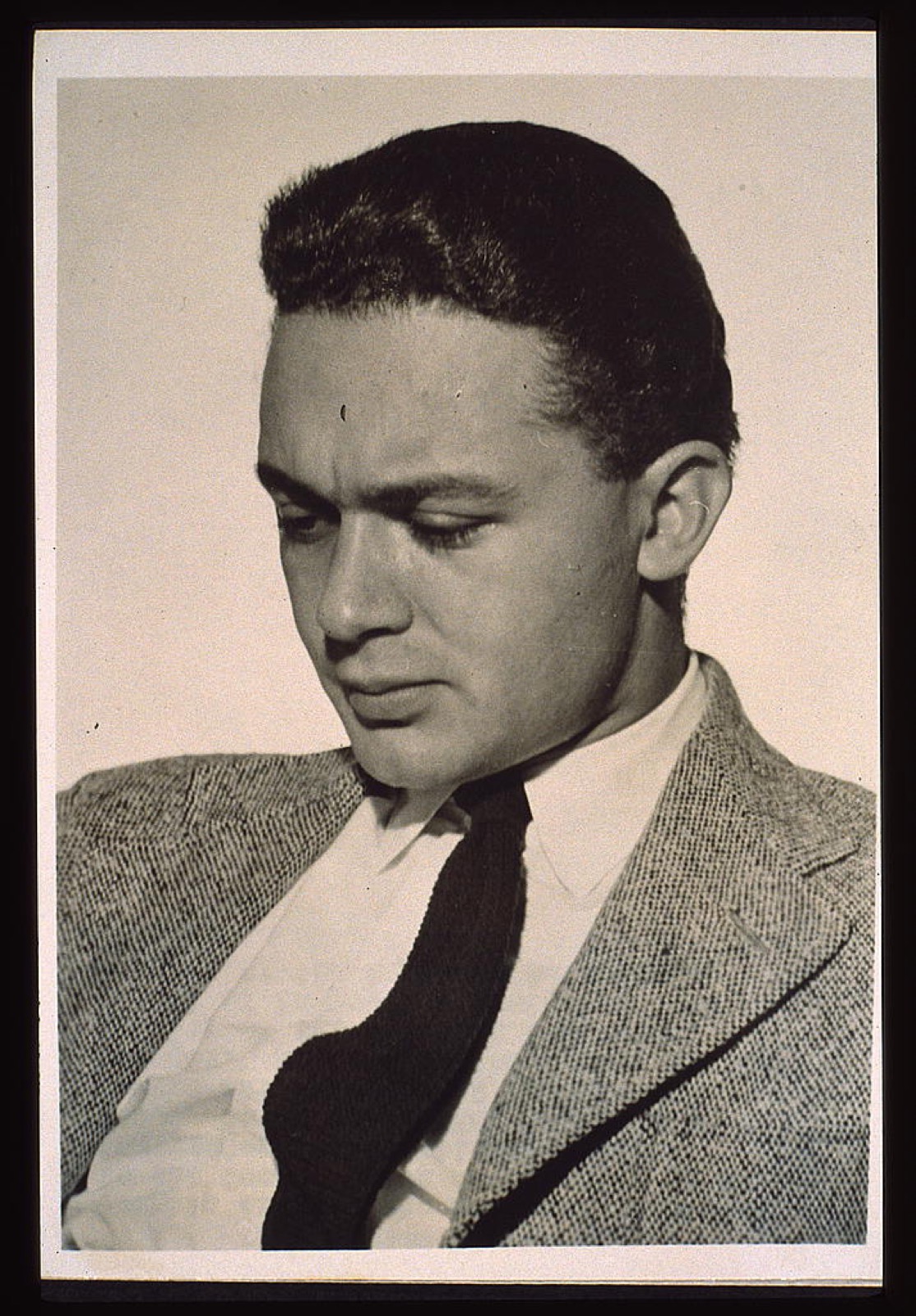
The Principle
“Don’t try to be original, just try to be good.” – Paul Rand1
Rand did not chase novelty. He solved problems. His work is a foundational layer of the taste infrastructure that defines how corporate identity communicates institutional values through visual form. The difference is structural: novelty exhausts itself; solutions endure. The IBM logo has survived sixty years not because it was original in 1956 but because it solved a communication problem so precisely that no subsequent solution has improved on it. The eight horizontal bars that make the letters legible at any size, the blue that signals institutional trust, the proportions that work on a lapel pin and a building facade – these are not aesthetic choices. They are engineering decisions expressed through visual form.
His method was play. Not playfulness as affectation – play as the disciplined exploration of possibilities within constraints. “There are no formulas in creative work,” he told Steven Heller in a 1990 interview. “I do many variations… It is a game of evolution.”2 The game had rules. The rules made the game worth playing.
Context
Paul Rand was born Peretz Rosenbaum in Brooklyn in 1914. He changed his name early – a pragmatic decision in an era when anti-Semitism could close doors before talent could open them. He studied at Pratt Institute, Parsons School of Design, and the Art Students League, absorbing European modernism through the work of Cassandre, Moholy-Nagy, and Le Corbusier at a time when American graphic design barely existed as a discipline.3
By age 23, he was art director of Esquire and Apparel Arts magazines. By his mid-twenties, he had published Thoughts on Design (1947), the first American book to articulate how modern art principles could serve commercial communication. The book’s thesis was simple and radical: there is no meaningful distinction between fine art and commercial art. A poster, a logo, a book cover – each is an act of visual communication governed by the same principles of form, contrast, and clarity.4
He joined the advertising agency William H. Weintraub in 1941, where he produced a decade of magazine advertisements that introduced collage, photomontage, and asymmetric typography to American commercial art. These were not decorative experiments. Each ad solved a specific communication problem – how to make a liquor brand feel sophisticated, how to make a typewriter feel modern – using the formal vocabulary of Klee, Miro, and the Bauhaus.3
In 1956, Eliot Noyes recruited Rand to design the IBM corporate identity. This was the assignment that defined corporate America’s relationship to design for the next half century.
The Work
The IBM Identity (1956-1996): A System, Not a Logo
When Rand began working with IBM, the company’s visual identity was inconsistent and forgettable. He did not redesign the logo once. He redesigned it as a system. The initial 1956 logo was a clean slab-serif rendering of “IBM” in City Medium. In 1962, he introduced horizontal lines through the letters. In 1972, he finalized the eight-bar version that remains IBM’s identity today.5
The bars were not decorative. They solved a problem: at large sizes, the solid letters felt heavy and monolithic – an unwanted association for a technology company that needed to communicate precision. The horizontal bars broke the visual weight, added rhythm, and created the optical illusion of speed and dynamism while maintaining absolute legibility. Rand understood that a logo must work at every scale – embossed on a business card, printed on a mainframe, projected on a conference screen – and the bars ensured that the logo remained readable and recognizable at any size.5
The IBM rebus poster (1982) is the most celebrated application of the identity. Rand replaced “IBM” with an eye, a bee, and the letter M – a visual pun that demonstrated the logo’s flexibility while exercising the play instinct that Rand considered essential to serious work. “The rebus takes the corporate image out of the realm of the formal and into the realm of the joyful,” he explained.3


The NeXT Logo (1986): One Option, No Negotiation
In 1986, Steve Jobs hired Paul Rand to design the identity for his new computer company. Jobs paid $100,000 – a fee that bought not options but certainty. When Jobs asked Rand for multiple concepts, Rand refused: “No, I will solve your problem for you and you will pay me. You don’t have to use the solution. If you want options go talk to other people.”6
Rand delivered a 100-page book that walked Jobs through the reasoning behind a single solution: a black cube tilted at 28 degrees with “NeXT” set in the Garamond typeface, the lowercase “e” deliberately emphasized to suggest “education.” The book was itself a design object – each page building the argument for why this solution was inevitable. Rand did not present a logo. He presented a proof.6
Jobs accepted it. He asked for one change: make the yellow of the “e” brighter. That was the entire negotiation between the most demanding client in technology and the most confident designer in America.

The NeXT logo connected Rand to Susan Kare. Kare was working at NeXT when she introduced Jobs to Rand and recommended him for the identity project – connecting her stated “design hero” to the most important client of her career. The introduction created a direct influence chain: Rand’s principles shaped Kare’s approach, Kare’s recommendation gave Rand his most famous late-career commission, and the resulting logo became an icon of the early personal computing era.1
The Corporate Identity Canon (1956-1991): Five Logos That Built a Discipline
Between 1956 and 1996, Rand designed logos for IBM (1956/1962/1972), ABC (1962), Westinghouse (1960), UPS (1961), and Enron (1996, his final logo). Each demonstrates the same method: understand the problem, find the visual metaphor, reduce until nothing unnecessary remains.
The ABC logo – a lowercase “abc” inside a circle – is the most extreme reduction. Three letters, one circle, one typeface. No gradient, no illustration, no clever trick. It has survived every era of television design without modification because there is nothing to date. The circle is structural, not decorative: it contains the letters, gives them equal visual weight, and creates a mark that reads identically at any size and in any context.3

The UPS shield is the only Rand logo that has been substantially modified (in 2003, after his death). The modification is instructive: the replacement logo is busier, more dimensional, less clear. It demonstrates by contrast what Rand’s version achieved through restraint.
The Method
Rand taught at Yale from 1956 until his death in 1996. His teaching method mirrored his design method: present the problem clearly, let students explore, then strip the solution to its essence. He was famously demanding. Students who presented underdeveloped work received blunt assessments. Students who presented overdeveloped work received the same criticism – complexity that serves the designer rather than the audience is not a sign of skill but a failure of discipline.7
“The designer does not begin with a preconceived idea,” Rand wrote in Design, Form, and Chaos (1993). “Rather, the idea is the result of careful study and observation, and the design a product of that idea.”8 This is not a rejection of intuition. It is a rejection of starting with solutions rather than problems.
His books – Thoughts on Design (1947), A Designer’s Art (1985), Design, Form, and Chaos (1993), From Lascaux to Brooklyn (1996) – are not theory texts. They are arguments for a specific position: that design is a serious intellectual discipline, not a trade; that the principles of visual communication are universal and learnable; and that play is not the opposite of seriousness but its prerequisite.4
“There can be design without play,” he told Steven Heller, “but that’s design without ideas.”2
Influence Chain
Who Shaped Him
European modernism – specifically Cassandre, Moholy-Nagy, and Le Corbusier – gave Rand the formal language of asymmetry, sans-serif typography, and photomontage. Of Cassandre, Rand told Steven Heller: “He’s our father.”2 He absorbed this vocabulary not through formal study abroad but through magazines and books in New York, translating European avant-garde into American commercial practice. (Direct influence)3
Jan Tschichold provided the typographic framework. Tschichold’s Die Neue Typographie (1928) codified the modernist approach to type that Rand adopted and adapted for American audiences. The irony is that Tschichold later repudiated his own modernist dogmatism, while Rand maintained it as his operating system for an entire career. (Direct influence)
Who He Shaped
Susan Kare called Rand her “design hero” and adopted his maxim: “Don’t try to be original, just try to be good.” At NeXT, Kare introduced Steve Jobs to Rand, connecting the two most important figures in her professional life. Rand’s principle that visual communication should be universal – no text dependence, no cultural assumptions – became the foundation of Kare’s approach to the Macintosh icons. (Direct influence)1
Michael Bierut, partner at Pentagram and one of the most prominent graphic designers working today, studied under Rand at Yale and has cited him as the foundational influence on his practice. The Yale lineage extends through multiple generations of American graphic designers. (Direct influence)
American corporate identity as a discipline. Before Rand, American companies treated logos as decorative marks. After Rand, corporate identity became a strategic investment – a system of visual communication that expressed institutional values. Every corporate identity program since IBM’s – from Apple to Google – operates within the framework Rand established. (Structural influence)
The Throughline
Rand proved that solving problems is more creative than inventing new ones. Dieter Rams removed everything unnecessary from products. Rand removed everything unnecessary from symbols. Both arrived at the same principle from different media: the object that communicates most clearly is the object that contains the least noise. The difference is that Rand’s objects were two-dimensional and immaterial – a logo has no weight, no texture, no manufacturing constraint – which makes the discipline of reduction even more demanding. When every pixel is a choice and nothing is dictated by physics, the only constraint is judgment. (Series bridge)
What I Take From This
“I will solve your problem for you and you will pay me.” That is the only professional relationship worth having. One solution. No options carousel. The confidence comes from the method, not the ego.
FAQ
What is Paul Rand’s design philosophy?
Rand’s philosophy centers on the principle that design is a method of visual communication governed by universal formal principles – contrast, hierarchy, proportion, rhythm – not personal expression. His maxim “Don’t try to be original, just try to be good” encapsulates the belief that originality is a byproduct of solving problems well, not a goal pursued independently. He treated play as essential to the design process: “There can be design without play, but that’s design without ideas.”2
What did Paul Rand design?
Rand designed corporate identities for IBM (1956-1972), ABC (1962), UPS (1961), Westinghouse (1960), NeXT (1986), and Enron (1996). He also produced influential magazine art direction for Esquire and Apparel Arts, advertising campaigns for William H. Weintraub, book covers for Vintage and Knopf, and four books on design theory. He taught at Yale from 1956 until his death in 1996.3
How did Paul Rand influence modern design?
Rand established corporate identity as a strategic discipline in America. His work at IBM created the model – identity as a complete visual system, not a single mark – that every major corporation has followed since. He also bridged European modernism and American commercial practice, making the formal principles of the Bauhaus accessible to business audiences. His teaching at Yale shaped multiple generations of American graphic designers.5
What can designers learn from Paul Rand?
The design guide traces how Rand’s method connects to other practitioners in this series. Paula Scher inherited his conviction that identity is a system, not a mark, and expanded it to architectural scale. Kashiwa Sato applies Rand’s reductive method to Japanese commercial branding at ecosystem scale.
Present one solution, not many. The confidence to present a single option comes from the rigor of the process that produced it. Play is not frivolous – it is how ideas emerge. And don’t chase originality: solve the problem in front of you with clarity and discipline, and originality will follow.
Sources
-
Susan Kare, Q&A for Cooper Hewitt National Design Awards, 2019. “NDA 20 Yrs: Q&A with Susan Kare.” Kare names Rand as her “design hero” and the source of “Don’t try to be original, just try to be good.” ↩↩↩
-
Paul Rand, interview with Steven Heller, 1990. Published in Design Dialogues (Allworth Press, 1998). “Paul Rand on the Play Instinct.” “There are no formulas in creative work” and “design without play is design without ideas.” ↩↩↩↩
-
AIGA / Eye on Design, “Everything Is Design: The Work of Paul Rand.” Museum of the City of New York exhibition, 2015. Biographical details, IBM rebus poster, career overview. ↩↩↩↩↩↩
-
Paul Rand, Thoughts on Design (Wittenborn, 1947; reprinted Chronicle Books, 2014). First American book articulating how modern art principles apply to commercial communication. ↩↩
-
IBM, corporate identity history. Also: Logo Design Love, “NeXT logo presentation, by Paul Rand.” IBM logo evolution from 1956 City Medium to 1972 eight-bar version. ↩↩↩
-
Steve Jobs, remarks on Paul Rand. Reported across multiple sources. “I will solve your problem for you.” The 100-page presentation book, $100,000 fee, and single-option approach. ↩↩
-
Paul Rand, Yale University teaching career (1956-1996). “Yale University.” Paul Rand Design archive. ↩
-
Paul Rand, Design, Form, and Chaos (Yale University Press, 1993). “The designer does not begin with a preconceived idea” and analysis of the design process. ↩











