Rick Rubin's Design Philosophy: Reduce Until Identity Breaks

The Principle
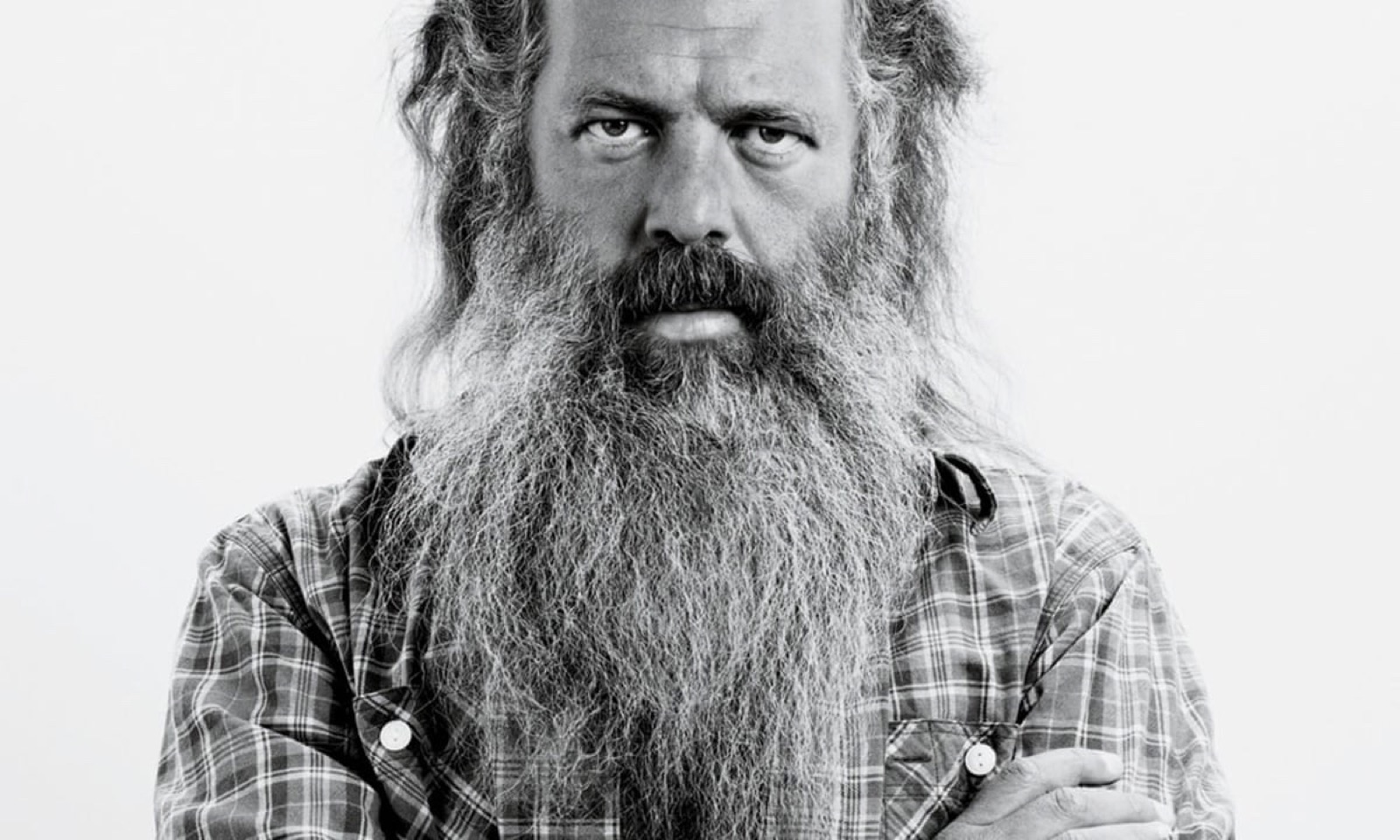
“Reduce something to the point that its identity is challenged.” – Rick Rubin, The Creative Act1
Rubin’s principle is subtractive. Start with more than you need. Remove until you hit the edge where the thing almost stops being itself, and then stop. The identity survives because the identity is structural, not decorative. The parts that remain after ruthless subtraction are the parts that make the thing what it is. Everything else was noise.
The approach is not minimalism as aesthetic preference. It is minimalism as diagnostic: the act of removing reveals what is essential. You cannot know what a song needs until you hear what it sounds like without the parts you assumed were necessary. The removal is the method of discovery.
Context
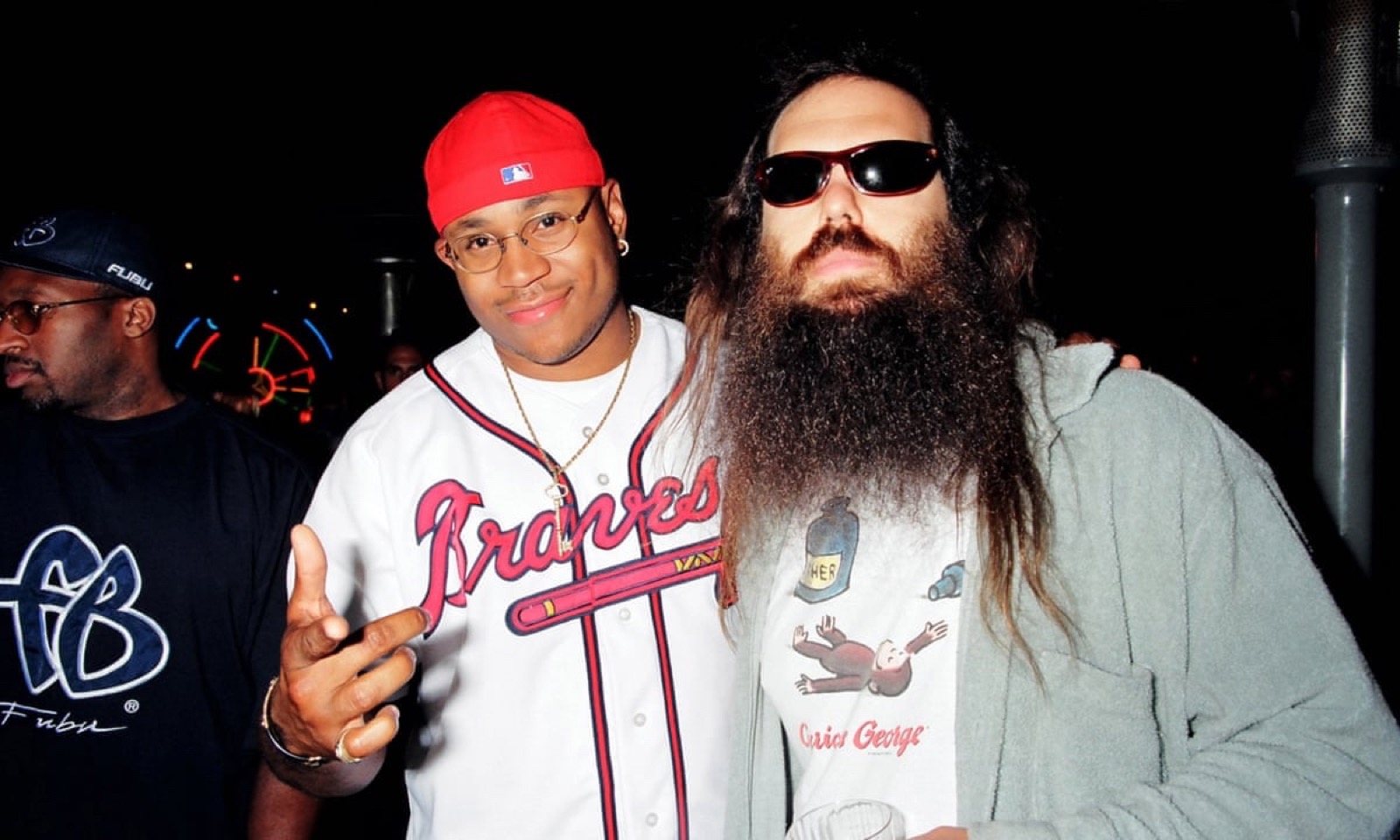
Frederick Jay Rubin was born on March 10, 1963, in Long Beach, Long Island. He co-founded Def Jam Recordings in his NYU dorm room with Russell Simmons in 1984. The label’s early releases (LL Cool J’s “I Need a Beat,” the Beastie Boys’ Licensed to Ill, Run-DMC’s “Walk This Way”) established hip-hop as a mainstream commercial force. Rubin was not a musician. He was a producer, the person who decides what a record sounds like, not what it says.2
What distinguished Rubin from the beginning was what he removed. While other hip-hop producers layered samples, Rubin stripped tracks to drums, voice, and space.4 The Beastie Boys’ debut was raw and loud because Rubin took out everything that would have made it smooth. The approach was confrontational: the absence of production was the production.
He then crossed genres, producing Slayer’s Reign in Blood (1986), Danzig’s debut, and the Red Hot Chili Peppers’ Blood Sugar Sex Magik (1991). Each time, the method held: find the essential sound, remove everything that obscures it. The genre changed. The method did not.
In 1994, Rubin began producing Johnny Cash’s American Recordings series, the project that defined his mature philosophy. Cash recorded alone in Rubin’s living room with an acoustic guitar. No band. No Nashville production. No strings, no backup vocals, no reverb. Just a voice, a guitar, and the songs. The series ran for six albums and restored Cash to critical and commercial prominence before his death in 2003.2
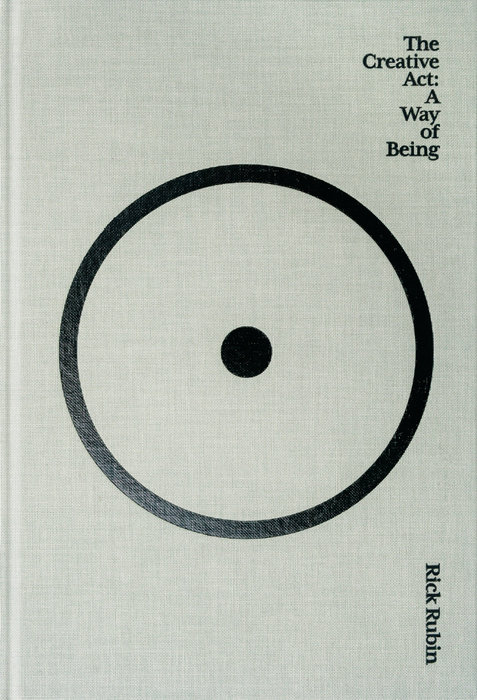
In 2023, Rubin published The Creative Act: A Way of Being, a book that codifies his method as a universal creative framework rather than a music production technique. It became a #1 New York Times bestseller.1
The Work
American Recordings (1994-2010): The Sound of Subtraction
Johnny Cash came to Rubin after decades of Nashville overproduction, albums where the voice that defined country music lay buried under orchestral arrangements, backing choirs, and studio sheen. Rubin’s intervention was radical: he removed everything except Cash and his guitar.
The first American Recordings album was recorded in Rubin’s living room. The sound is a man in a room. The reverb is natural, the room’s own acoustics rather than an engineer’s knob. The emotional impact comes from what is missing: without production to hide behind, every crack in Cash’s voice, every hesitation in his delivery, every silence between phrases becomes audible. The vulnerability is structural, not performed.
The series revived Cash’s career, won multiple Grammys, and produced the most celebrated cover recording in modern music history: Cash’s version of Nine Inch Nails’ “Hurt.” The subtraction — a dying man singing a song about self-destruction with nothing but an acoustic guitar — created meaning that the original, for all its production, could not.
The Creative Act (2023): Method as Philosophy
The Creative Act is not a music book. It is a design philosophy book that happens to come from a music producer. Its 78 chapters cover: Source, Awareness, Subconscious, Making, Experimentation, Craft, and Completion. The core argument: creativity is not self-expression. It is receiving and translating what already exists. The creator is an antenna, not a transmitter.13
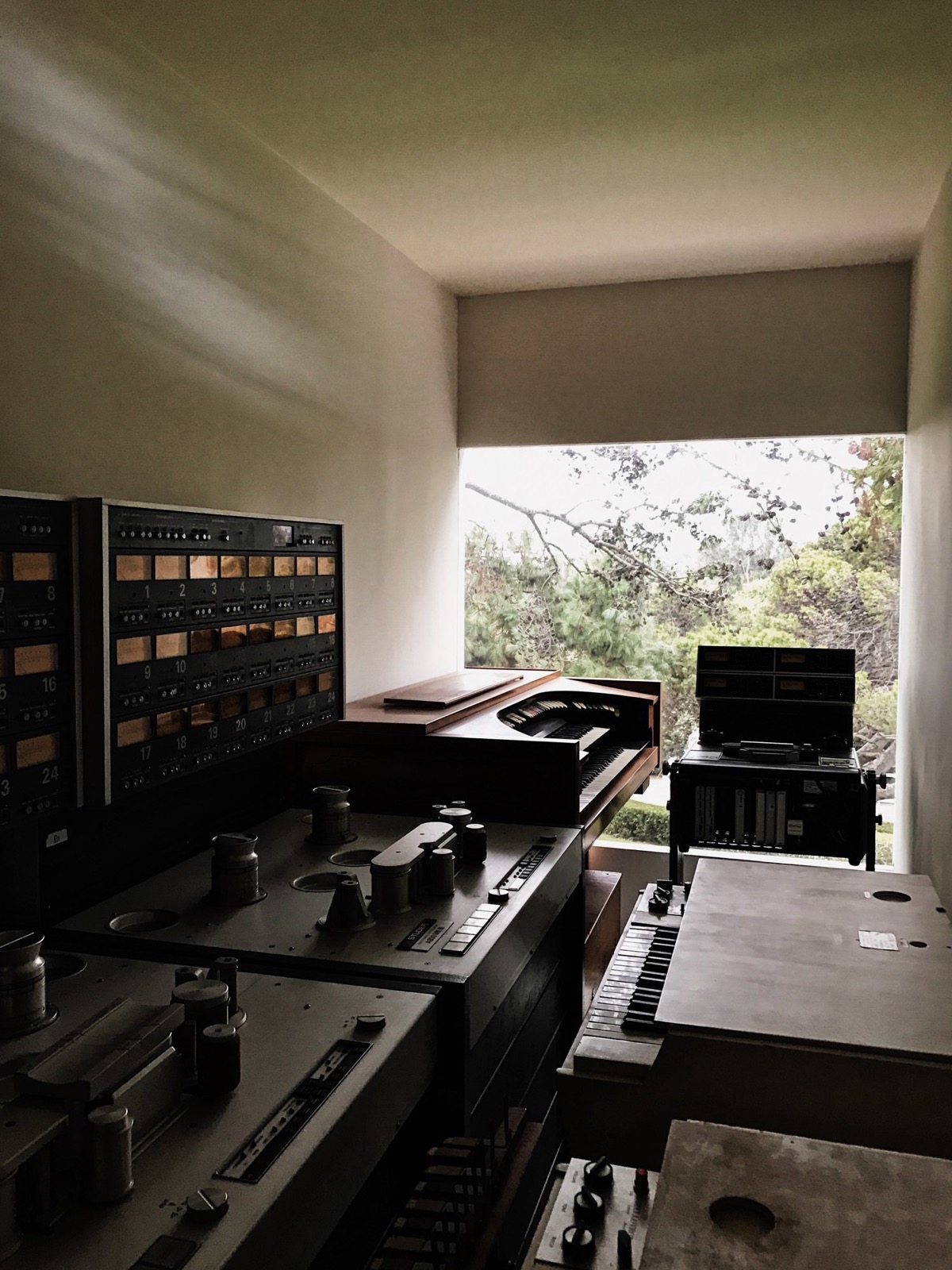
The book explicitly connects to Zen Buddhism and Japanese aesthetics, the same philosophical tradition that informs Kenya Hara’s emptiness and Hiroshi Fujiwara’s curatorial restraint. Rubin’s practice of meditation, his bare Shangri-La Studio in Malibu, his insistence on attention and presence as creative tools: all derive from the same source.
The book’s most frequently cited passage argues that taste is not innate but trainable. “The sensitivity we have to the work, to its potential, is not a fixed quality. It can be expanded.”1 Taste, in Rubin’s framework, is a muscle, the same metaphor Pharrell Williams uses for self-awareness and the same principle Kashiwa Sato applies to iconic branding: the ability to see essence is a skill, not a gift.
Cross-Genre Production: The Invariant Method
Rubin has produced hip-hop (Beastie Boys, Run-DMC, Jay-Z, Kanye West, Eminem), rock (Red Hot Chili Peppers, Metallica, System of a Down), country (Johnny Cash, Dixie Chicks), pop (Adele, Ed Sheeran), and spoken word (the Hamilton soundtrack’s companion). The breadth proves the method: if subtraction works across every genre, then subtraction is not a genre-specific technique. It is a universal design principle.2
The role he plays is consistent. Anderson Cooper asked Rubin on 60 Minutes: “Do you play instruments?” “Barely.” “Do you know how to work a soundboard?” “No. I have no technical ability. And I know nothing about music.” “So what are you being paid for?” “The confidence that I have in my taste and my ability to express what I feel has proven helpful for artists.”2
The producer, in Rubin’s model, is the most demanding client the artist will ever have, the person who creates the conditions for the artist’s best work by saying no to everything that is merely good. Natalie Maines of the Chicks described the method precisely: “He has the ability and the patience to let music be discovered, not manufactured.”2
The Method
Rubin’s method has three components: attention, subtraction, and sequencing.
Attention is the first skill. “The ability to look at the world with fresh eyes, as if seeing it for the first time, is the foundation of creative work.”1 The Shangri-La Studio in Malibu (a converted mansion with minimal equipment and maximum natural light) exists to facilitate attention. The environment is bare so the listener can hear.
Subtraction is the primary creative act. Rubin does not add his sound to a record. He removes the sounds that obscure the artist’s identity. The Cash sessions are the purest example: everything fell away until only the voice and the guitar remained. But the principle applies everywhere, to a Beastie Boys track (remove the smoothness), a Metallica album (remove the compression), an Adele vocal (remove the arrangement that competes with the voice).
Sequencing is the final skill. The order in which songs appear on an album, the pacing of energy across a tracklist, the placement of the emotional peak: these are compositional decisions that occur after every individual song is finished. Rubin’s sequencing instinct turns a collection of tracks into an experience. It is the same skill Paula Scher applies to environmental typography (the sequence of letters through a building) and Fumihiko Maki applies to urban design (the sequence of spaces through a city).
Influence Chain
Who Shaped Him
Zen Buddhism and Japanese aesthetics gave Rubin the philosophical framework for subtraction. His meditation practice, his sparse living environment, and his insistence on presence as a creative tool descend from the same tradition that informs Kenya Hara’s emptiness. (Philosophical influence)1
The hip-hop sampling tradition gave him the curatorial method. A DJ selects records. A producer selects sounds. Rubin selects what to keep and what to cut. The method is the same one Hiroshi Fujiwara applies to fashion: the creative act is not fabrication but selection. (Cultural influence)
Who He Shaped
The producer as auteur. Before Rubin, music producers were technical professionals who operated equipment. After Rubin, the producer is a creative vision holder: the person whose taste determines what the record sounds like, independent of genre. The model maps directly to Steve Jobs’s role at Apple: not a designer, but the condition under which designers do their best work.
The Creative Act as cross-disciplinary text. The book’s readership extends well beyond music. Designers, architects, writers, and engineers have adopted it as a creative method text. Within this series, it occupies the same territory as Dieter Rams’s ten principles and Don Norman’s Design of Everyday Things: a framework for subtraction and attention that applies regardless of medium.
The Throughline
Rubin closes the series by naming the principle that runs through it: subtraction as the primary creative act. Rams removed ornament from products. Tschichold removed decoration from typography. Hara removed identity from products to create emptiness. Abloh removed 3% from existing objects and called the removal the design. Rubin removes everything from a song until the identity is challenged, and then stops. The stopping point is the art. Every designer in this series practices the same discipline. Rubin is the one who named it. (Series bridge)
What I Take From This
“Reduce something to the point that its identity is challenged.” That is the refactoring instinct. Remove code until the tests almost fail. The code that survives is the code that matters.
FAQ
What is Rick Rubin’s design philosophy?
Rubin practices subtraction as the primary creative act. His method: start with more than you need, remove until the thing almost stops being itself, and stop at the edge where identity is preserved but everything unnecessary is gone. He views the producer’s role as creating conditions for the artist’s best work through attention, taste, and the discipline to say no. His 2023 book The Creative Act codifies the approach as a universal creative framework.1
What did Rick Rubin produce?
Rubin co-founded Def Jam Records (1984) and has produced across every genre: Beastie Boys’ Licensed to Ill, Run-DMC’s “Walk This Way,” Slayer’s Reign in Blood, Red Hot Chili Peppers’ Blood Sugar Sex Magik, Johnny Cash’s American Recordings series (1994-2010), Adele’s 21 and 25, Jay-Z, Kanye West, Metallica, System of a Down, Dixie Chicks, and Ed Sheeran. He published The Creative Act: A Way of Being (#1 NYT bestseller, 2023).2
How does Rubin’s method connect to design?
Rubin’s subtraction principle parallels what Dieter Rams applied to products (“as little design as possible”) and Kenya Hara applied to MUJI (“emptiness, not simplicity”). Within this series, The Creative Act occupies similar territory to Rams’ ten principles, a framework for reduction that applies across disciplines.1
What can designers learn from Rick Rubin?
Remove until the identity is challenged. The parts that survive ruthless subtraction are the parts that make the thing what it is. Taste is trainable, not innate. Attention (the ability to see with fresh eyes) is the foundational creative skill. And the creator’s role may not be to add but to identify what is already there and remove everything that obscures it.
Sources
-
Rick Rubin, The Creative Act: A Way of Being (Penguin Press, 2023). Penguin Random House. #1 NYT bestseller. “Reduce until identity is challenged,” taste as trainable skill, attention as creative tool, Zen influence. ↩↩↩↩↩↩↩↩
-
Rick Rubin, 60 Minutes interview with Anderson Cooper, January 2023. “The confidence I have in my taste,” Cash living room sessions, “the audience comes last,” Shangri-La bare walls, listening with eyes closed. ↩↩↩↩↩↩
-
Rick Rubin, Conversations with Tyler, Ep. 169, January 13, 2023. “Nothing comes from us. The creator isn’t making the thing.” Minimalism influence on taste. Glenn Gould Goldberg Variations comparison. ↩
-
Kanye West on Rubin, Yeezus sessions (2013). “He’s a reducer, not a producer.” Also: Premier Guitar, “Rick Rubin: Reducer, Not Producer.” 3.5 hours reduced to 40 minutes in 16 days. ↩