Design Philosophy: Tinker Hatfield — Show the Technology


The Principle
“Piano and his team wanted the building to be visible from a distance, to be striking – and maybe shock people a little more. And that’s what happened with the Air Max: I wanted to push things as far as possible without being fired!” – Tinker Hatfield1
Hatfield’s principle is structural honesty applied to footwear. If the technology inside the shoe is worth using, it is worth showing. The Air Max’s visible air window was not a marketing gimmick. It was an architectural argument: the same argument Renzo Piano made when he put the Centre Pompidou’s escalators, air ducts, and plumbing on the outside of the building. Hide nothing. Let the user see what the object actually does.
This is the opposite of mystery. Most consumer products conceal their mechanisms behind smooth surfaces. Hatfield’s career is built on the conviction that the mechanism is the most interesting part – and that showing it creates both trust and desire. The taste infrastructure territory examines why structural honesty – whether in sneakers or in software systems – functions as a form of trust.
Context
Tinker Linn Hatfield Jr. was born in Hillsboro, Oregon, in 1952. He studied architecture at the University of Oregon, where he also pole vaulted for the track team under coach Bill Bowerman – Nike’s co-founder. Hatfield placed sixth at the 1976 Olympic trials. Then he fell from seventeen feet, tore his ankle, and spent two years in rehab after five surgeries. The injury ended his athletic career and redirected his attention entirely to design.2
He joined Nike in 1981 as a corporate architect. He designed showrooms, retail spaces, and trade show installations – buildings, not shoes. In 1985, Bowerman noticed Hatfield’s drawing ability during a meeting and entered him in an internal 24-hour design competition. Hatfield won. He was told, not asked, that he was now a footwear designer.2
The architecture training was not left behind. It became the operating system. “I was able to apply what I learned in architecture school to sports,” Hatfield said. “I encourage people to learn to design all kinds of stuff – not even things you’re interested in. Over the long haul, if you have a passion, have the skills and are ambitious, you can leverage all those things and blend them together.”3 The design engineering guide explores how cross-disciplinary transfer like Hatfield’s produces results that specialists within a single field cannot.
The Work
Air Max 1 (1987): The Building That Became a Shoe
In the mid-1980s, Hatfield visited Paris and saw the Centre Pompidou. The encounter was catalytic.
“Coming into the Piazza, I was struck by the stark contrast between the traditional style of the Parisian buildings – mansard roofs, small windows – and this almost machine-like building sort of spilling its guts out into the world,” he recalled. “Everything was visible – air conditioning, escalators, heating, the different levels.”1
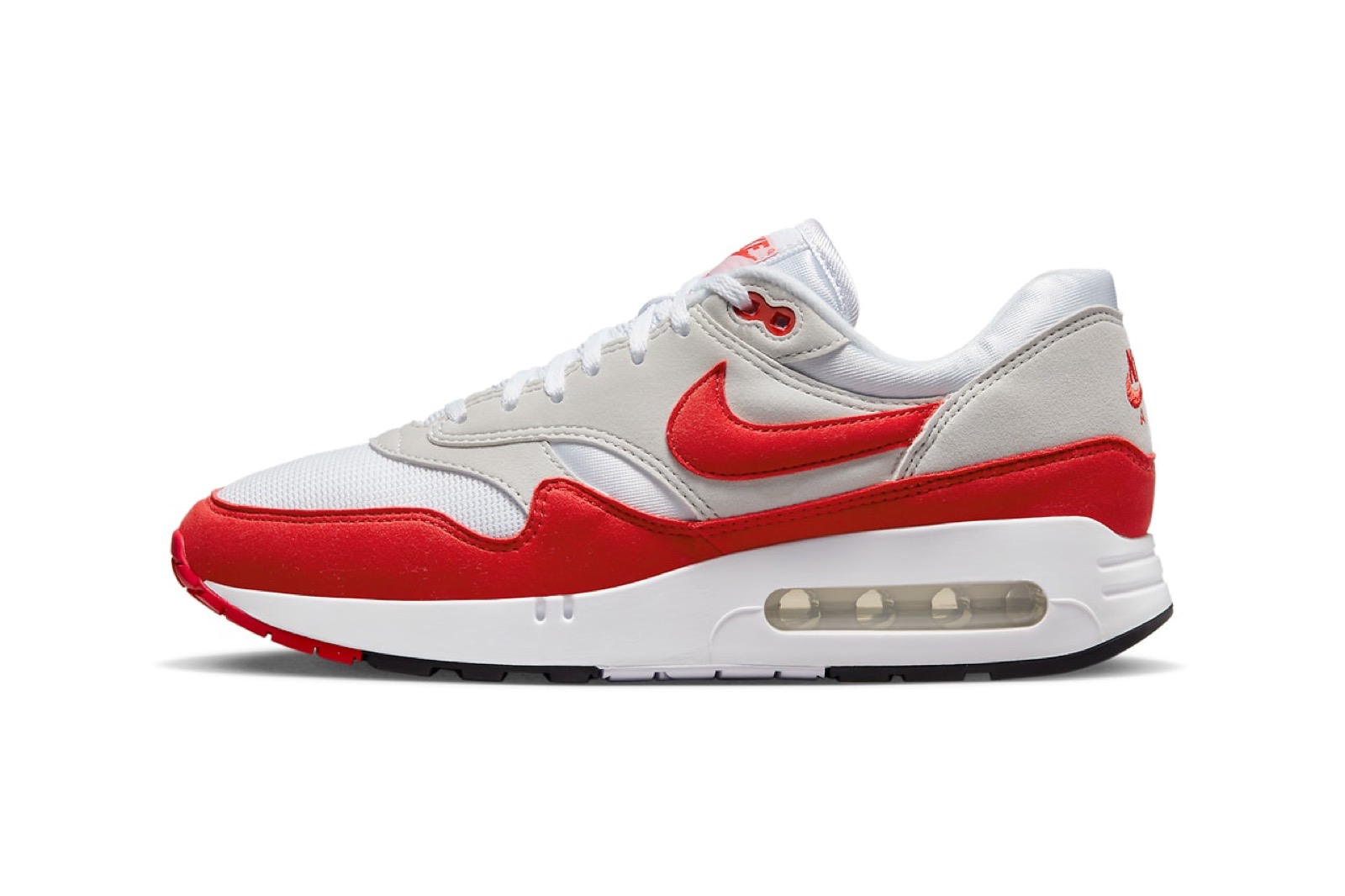
Nike already had air cushioning technology, developed by aerospace engineer Frank Rudy. But the air bags were hidden inside the midsole – the user had to trust the marketing that they were there. Hatfield’s idea was to cut a window in the midsole and let the air bag show. Executives resisted. They feared customers would see the exposed air unit as fragile, as a structural weakness rather than a feature.1
Hatfield pushed. The Air Max 1 launched in 1987 with a visible air window in the heel. The red-and-white colorway was itself radical – prior to 1987, performance sneakers were grey, white, or black. Hatfield added color as “one more exclamation point” to signal that this shoe was different from everything on the shelf.2
The Air Max became one of Nike’s most enduring product lines. In 2017, Nike released an Air Max colorway directly inspired by the Centre Pompidou’s color-coded pipes for the shoe’s 30th anniversary. In 2024, Nike held its “Art of Victory” exhibition at the Centre Pompidou itself, formalizing the connection between a building and a shoe that Hatfield had drawn thirty-seven years earlier.1
Air Jordan III (1988): The Shoe That Saved the Deal
By 1987, Michael Jordan was unhappy with his Nike shoes and close to signing with Adidas. Phil Knight later credited the Air Jordan III with keeping Jordan at Nike.2
Hatfield was assigned the project. For the design presentation, Jordan didn’t show up for four hours – he was on the golf course being recruited by competitors. When he finally arrived and saw the shoe, he said: “Tell me more.”4
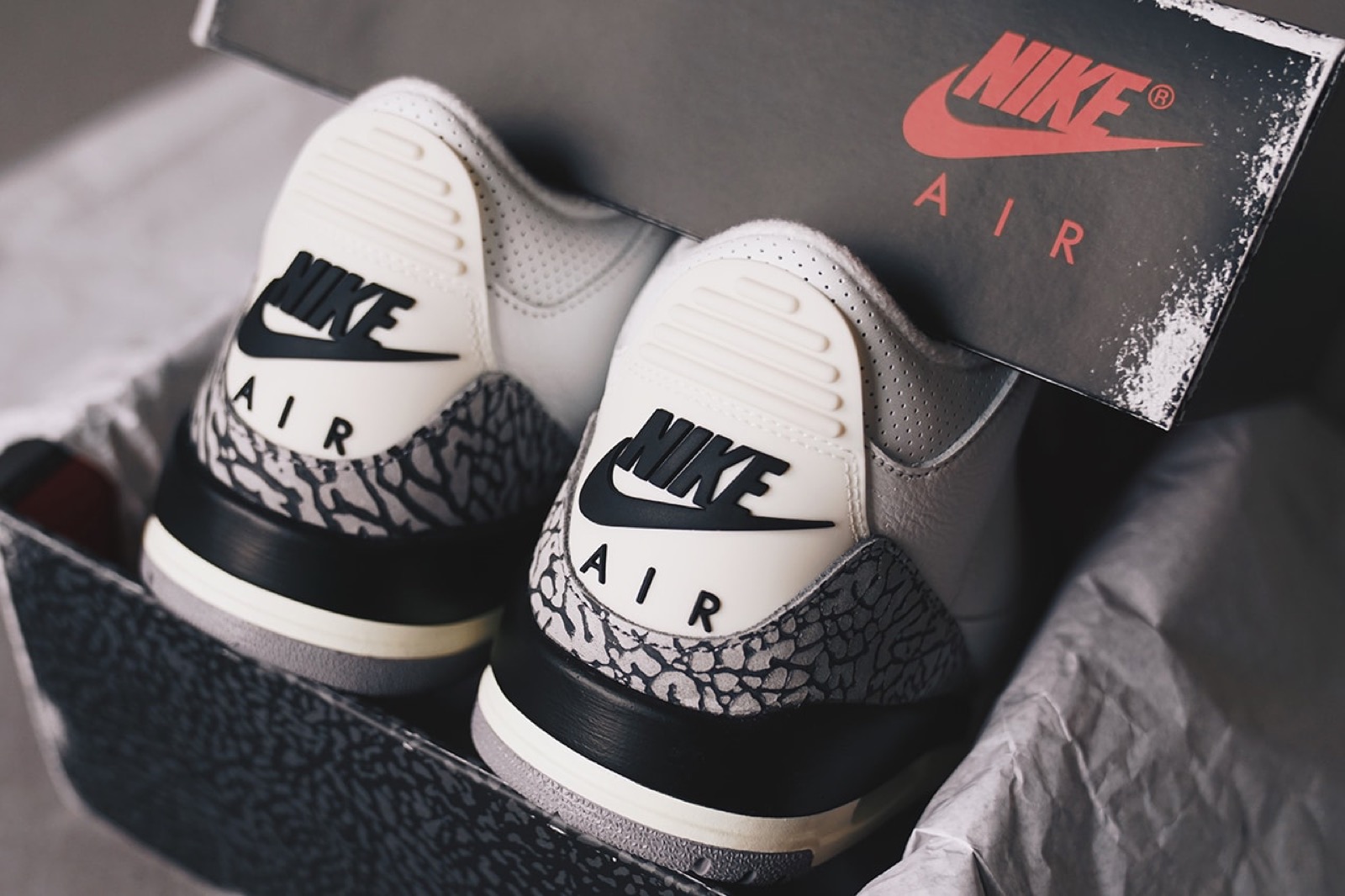
The Air Jordan III broke every convention in basketball footwear. It was the first mid-cut (previous basketball shoes were all high-tops). It introduced the Jumpman logo – silhouetting Jordan in flight rather than using the Nike Swoosh alone. It used tumbled leather “like glove leather” instead of rigid synthetic. It featured elephant print – a textural pattern borrowed from fashion, not performance. And it put a visible air unit in a basketball shoe for the first time.4
Hatfield also designed an entire apparel collection to present alongside the shoe – understanding that a sneaker is not just footwear but a statement about the athlete’s identity. Jordan wanted “that lifestyle basketball shoe, where you still play the game with that shoe, but then at the end of the day, you can wear it with a tuxedo.”4
Air Jordan XI (1995): Patent Leather on a Basketball Court
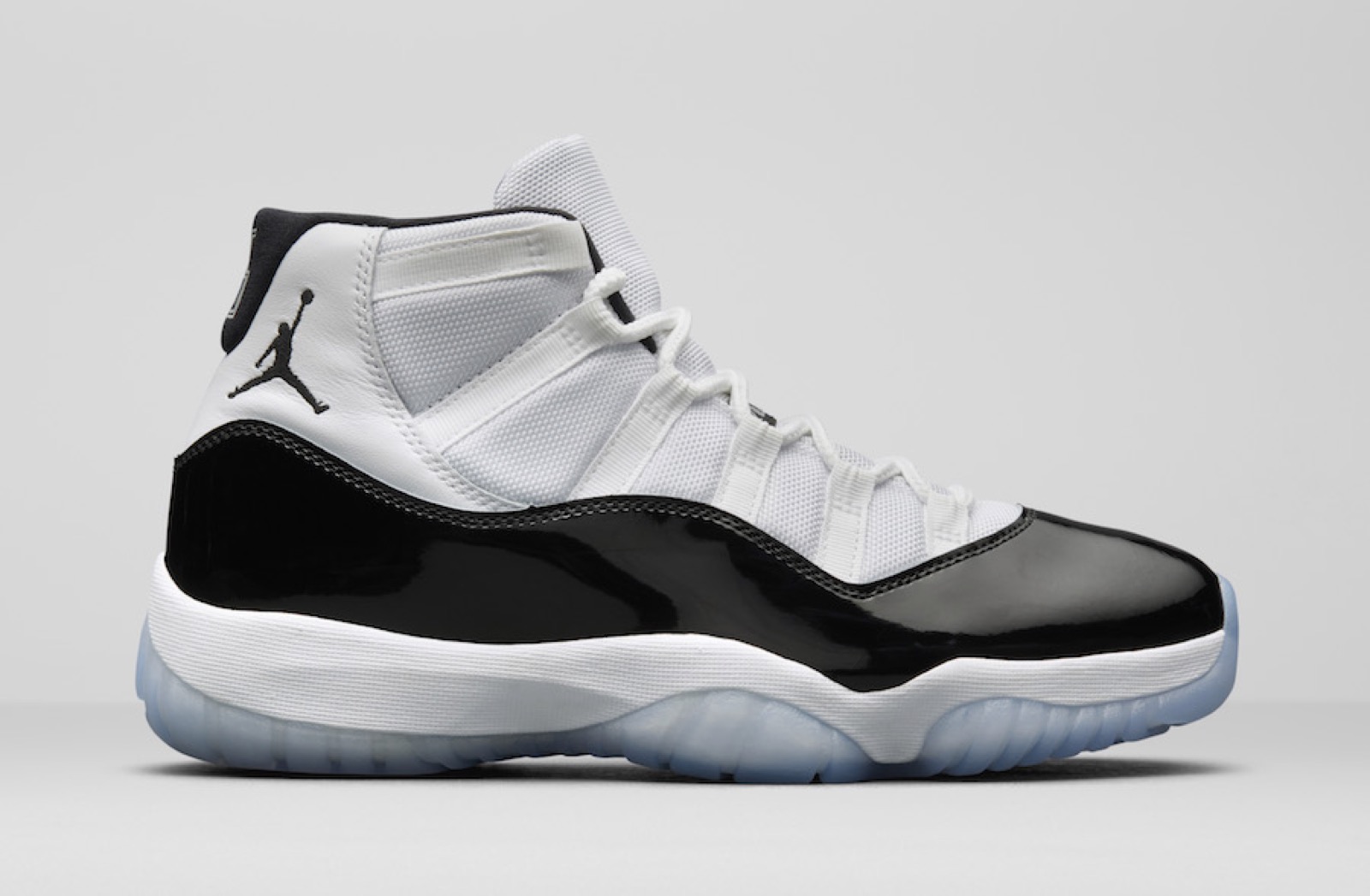
The Air Jordan XI used patent leather – a material associated with formal shoes, not athletic ones. Jordan’s response upon seeing the prototype: “Holy shit, that’s amazing.”4
Hatfield told Jordan not to wear them in a game since they weren’t ready for market. Jordan wore them on national television anyway. “He thought one way, I thought another,” Jordan said. “And lo and behold, I won.”4
The XI is Hatfield’s stated favorite Air Jordan design and Jordan’s most personally significant. It demonstrated that performance and formality are not opposed – that a shoe can function on a basketball court and at a dinner table because the design serves both contexts without compromising either.
Nike MAG (1989/2016): The Shoe That Had to Wait for Technology
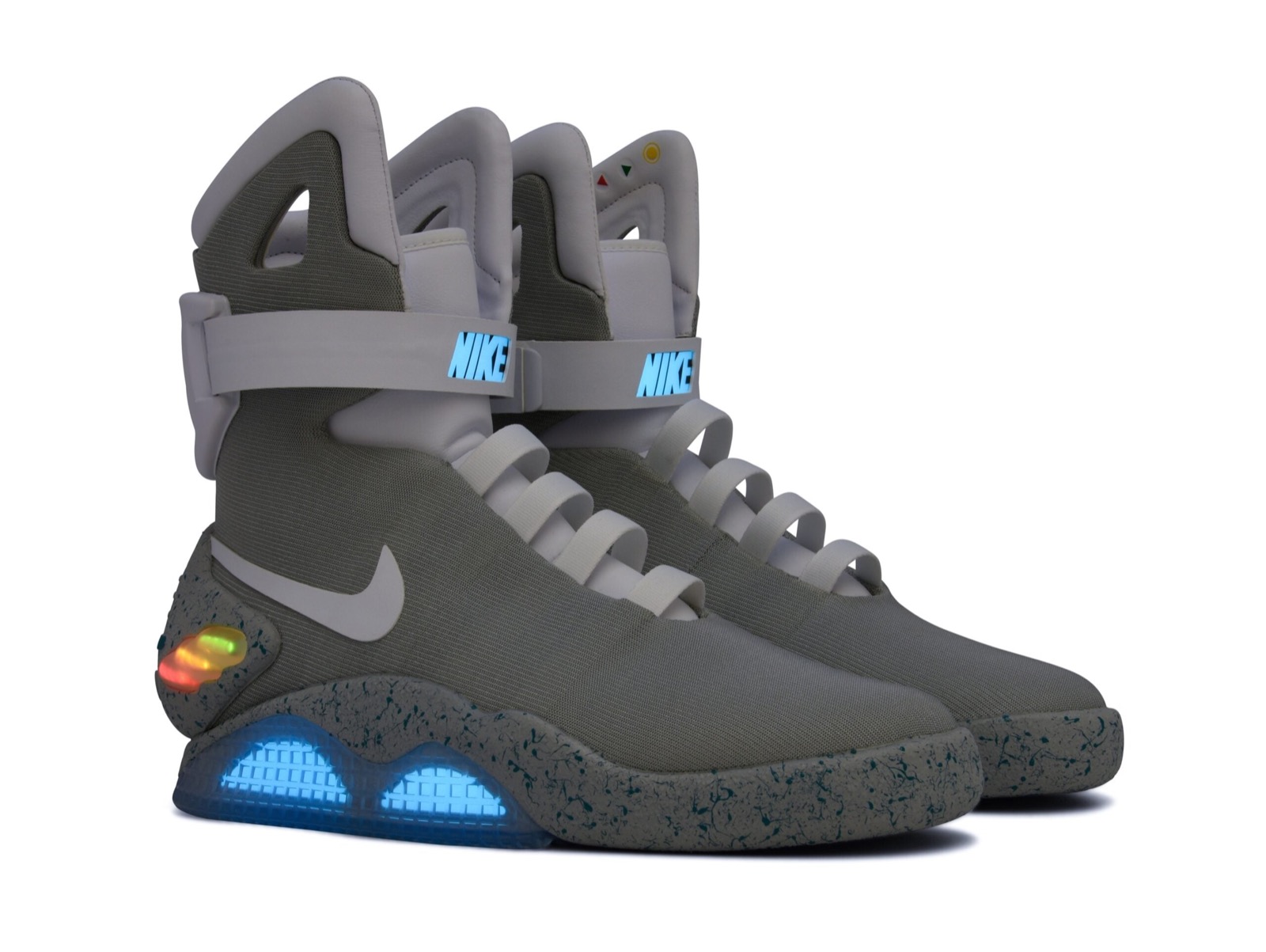
In 1989, filmmakers recruited Hatfield to design the self-lacing sneaker for Back to the Future Part II. The on-set prop was a dummy – laces pulled tight by a prop technician. But Hatfield’s actual vision was functional: “Shoes would be smart and could sense who you were, and when you put it on, it comes alive and shapes to your foot.”4
Technology caught up twenty-seven years later. The working Nike MAG was delivered to Michael J. Fox in 2016. It led to E.A.R.L. (Electro Adaptive Reactive Lacing) and the Nike HyperAdapt – shoes that actually sense the wearer’s foot and adjust. The MAG is proof that a designer’s vision can be correct decades before the engineering makes it possible.
The Method
Hatfield sketches in streams of consciousness. Faces on planets, George Jetson, a VW Bus, peace symbols, cheetah feet inside sneakers. “I don’t even know why I am doing this, I’m just doing it,” he said. “A stream of consciousness can lead you some place. You may not even know where you’re headed, but somehow you end up somewhere.”4
The sketching is not free association for its own sake. It is exploration within a constraint: the sketch must converge on a shoe that solves a specific athlete’s problem. The convergence is what separates design from doodling.
His athlete collaboration method was itself a design innovation. Mark Parker, Nike’s CEO, noted: “In the ’80s, Tinker Hatfield started to define what working with an athlete was all about. It was a relationship with the athlete, really digging in, getting to know them as athletes.”4 Jordan described the dynamic simply: “Tinker is a mad scientist. He came from pole vaulting. When I played the game, it was about jumping, so it was easy to find that synergy.”4
Hatfield designed around athletes’ personalities, not just their biomechanics. Andre Agassi got an “anti-country club” tennis shoe. Jordan got elephant print and patent leather. The shoe was a portrait of the person wearing it, not a generic performance tool. Hiroshi Fujiwara and Dapper Dan would later extend this principle – designing around cultural identity, not just individual athletes – turning sneakers and streetwear into statements about community belonging.
Influence Chain
Who Shaped Him
Renzo Piano and the Centre Pompidou gave Hatfield the formal principle that technology should be visible, not hidden. The connection is direct, acknowledged, and architectural: a building’s exposed structure became a shoe’s visible air bag. Hatfield’s “ultimate dream” is to meet Piano. When Piano was told about the tribute, he said he was “very flattered” though he admits “not knowing much about sports shoes.”1 (Direct influence)
Bill Bowerman shaped him through the University of Oregon – both as a track coach and as the co-founder of Nike who noticed Hatfield’s drawing talent and redirected his career from buildings to shoes. (Direct influence)2
Who He Shaped
Virgil Abloh deconstructed Hatfield’s designs in the 2017 “The Ten” collection. The Air Max 90 – a Hatfield silhouette – was one of the ten shoes Abloh cut open, exposed, and annotated. Abloh’s “REVEALING” concept – making the hidden visible by slicing away panels to show foam and stitching – is a direct descendant of Hatfield’s visible-air philosophy. As a teenager, Abloh said: “We were enamored with Air Jordans. Michael Jordan was larger than life – he was Superman to me. My entire design background and ethos came from the ’90s.”5 (Direct influence)
Sneaker design as a design discipline. Before Hatfield, footwear design was an engineering function inside shoe companies. After Hatfield, sneaker designers are named, profiled, and followed. The Netflix documentary Abstract dedicated an episode to him – the only footwear designer in a series alongside architects, illustrators, and automotive designers. He legitimized the category.4 Pharrell Williams carried this legitimacy further, proving that a musician’s design sensibility could command the same respect as a trained industrial designer’s.
The Throughline
Hatfield applies the same principle as Tadao Ando from the opposite direction. Ando trained as a boxer, never went to architecture school, and built spiritual spaces from concrete and light. Hatfield trained as an architect, never planned to design shoes, and built cultural objects from foam and rubber. Both prove that the transfer between disciplines – the cross-pollination of methods learned in one field and applied in another – produces work that specialists within either field cannot. The outsider sees what the insider takes for granted. (Series bridge)
What I Take From This
Hatfield’s Centre Pompidou moment is the best argument for looking outside your discipline. He didn’t find inspiration for shoe design in shoe design. He found it in a building. The solution to your current problem is probably in a field you haven’t looked at yet.
FAQ
What is Tinker Hatfield’s design philosophy?
Hatfield’s philosophy centers on structural honesty – showing the technology rather than hiding it. Inspired by the Centre Pompidou’s exposed-structure architecture, he applied the same principle to footwear: if the technology is worth using, it is worth showing. He also believes in cross-disciplinary transfer, applying architectural thinking to shoe design, and in designing around athletes’ personalities, not just their biomechanics.13
What did Tinker Hatfield design?
Hatfield designed the Nike Air Max 1 (1987, first visible air window), Air Jordan III through XV (1988-1999, including the iconic III that saved the Jordan-Nike deal and the XI with patent leather), Nike Air Trainer (first cross-training shoe), and the Nike MAG self-lacing shoe (concept 1989, functional 2016). He is Vice President of Design and Special Projects at Nike.24
How did Tinker Hatfield change sneaker design?
He transformed sneakers from engineering products into cultural objects. The visible air window turned hidden technology into a visible design feature. The Air Jordan line proved that sneakers could be designed as lifestyle statements, not just performance tools. His athlete collaboration method – designing around personality, not just biomechanics – became the model for every signature shoe program that followed.45
What can designers learn from Tinker Hatfield?
Look outside your discipline. Hatfield’s most important design idea came from a building, not a shoe. Show the technology – if the mechanism is worth including, it is worth making visible. And design for the whole person, not just the functional requirement: a basketball shoe that works at a dinner table serves the athlete better than one that only works on a court.
Sources
-
Centre Pompidou, “The Secret History of the Nike Air Max.” June 2024. Primary source for Hatfield’s Pompidou quotes, Piano’s response, and the architectural connection. ↩↩↩↩↩↩
-
Wikipedia, “Tinker Hatfield.” Verified against University of Oregon archives and Nike corporate materials. Pole vault career, injury, Nike hiring, Fortune 100 recognition. ↩↩↩↩↩↩
-
Idealog, “Nike’s legendary shoe designer Tinker Hatfield.” Semi-Permanent Sydney interview, May 2018. Cross-disciplinary design philosophy. ↩↩
-
Abstract: The Art of Design, Season 1 Episode 2, “Tinker Hatfield: Footwear Design.” Netflix, 2017. Transcript. Stream-of-consciousness sketching, Jordan collaboration, Air Jordan III/XI stories, Nike MAG, Mark Parker quote. ↩↩↩↩↩↩↩↩↩↩↩↩
-
Nike, “Virgil Abloh x Nike: ‘The Ten’ History.” Abloh’s connection to Hatfield’s designs, “The Ten” deconstruction concept. ↩↩