Design Philosophy: Futura — The Signature as Art

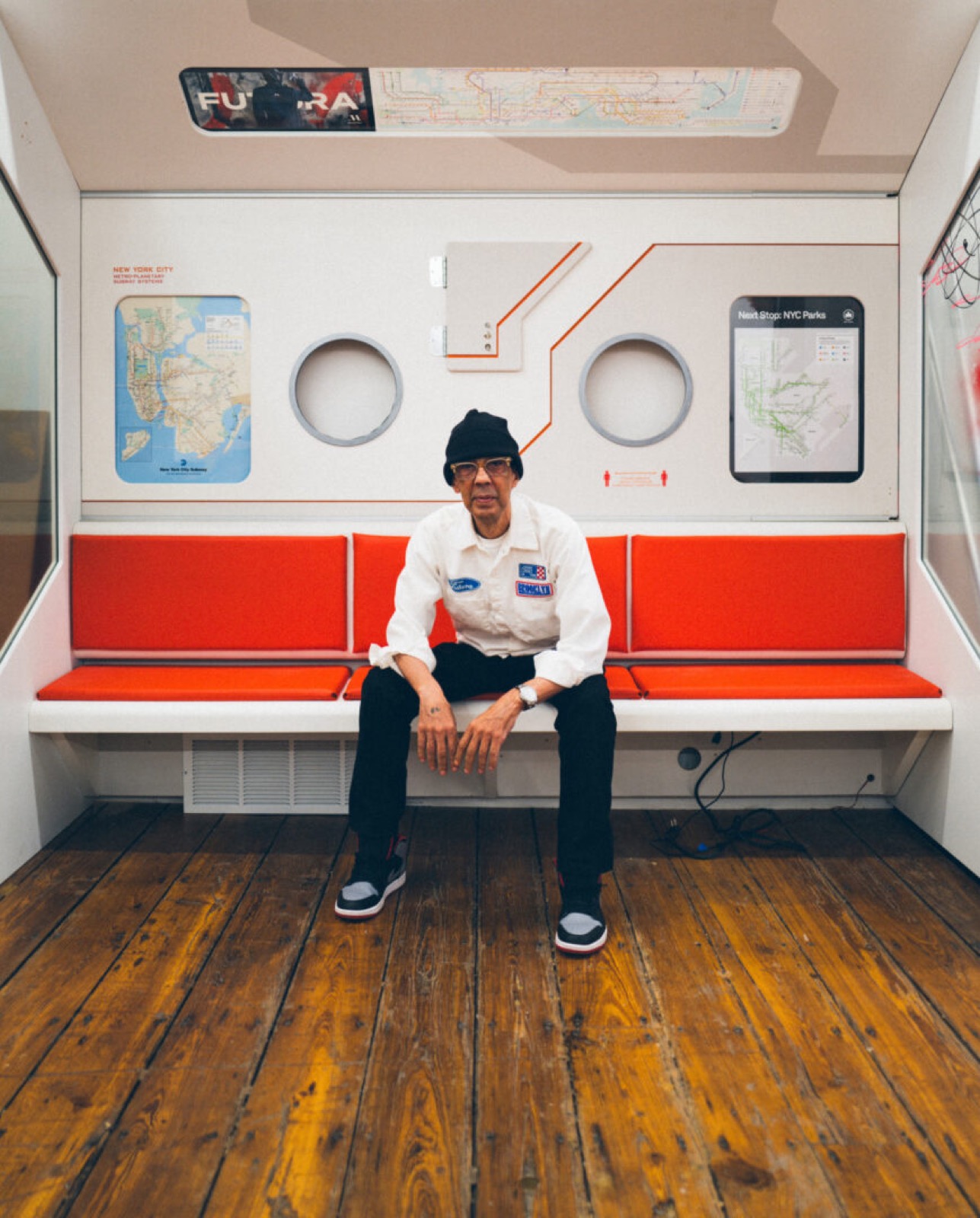
The Principle
“The concept of developing your name, alphabet, and style is the most important element of whatever identity you’re going to run with.” – Futura, MasterClass1
Graffiti writers invented personal branding before the term existed. A tag is a logo. A style is a visual language. Consistency across surfaces – trains, walls, doors, bridges – is brand management executed illegally at city scale. Every graffiti writer who built a recognizable name in 1970s New York was practicing identity design under the most hostile conditions imaginable: no budget, no client, no permission, and the city actively destroying your work every night.
Futura’s innovation was to abstract the tag away from letters entirely. While every other writer in New York was developing increasingly elaborate letterforms – wildstyle, bubble letters, block letters, 3D letters – Futura moved toward geometric shapes, arrows, symbols, and pure color fields. He proved that a graffiti identity does not require legible text. It requires a consistent visual language recognizable at speed from a moving train.
Context
Leonard Hilton McGurr was born on November 17, 1955, in New York City. He adopted the name “Futura 2000” at age fifteen, inspired by Stanley Kubrick’s 2001: A Space Odyssey – a film he described as “a life-changing phantasmagoria.” He dropped the “2000” after the millennium: “Oh, damn, I did live to see the year 2000. So, I was like, ‘Well, I can’t be Futura 2000 anymore.’”2
He started writing graffiti in 1970 and served in the US Navy from 1973 to 1978. When he returned to New York, the graffiti scene had “not only accelerated, but was blossoming.” He reconnected and, in 1980, painted “Break” – a full-exterior subway car that became the pivotal work of his career.3
“‘Break’ was the title because I was consciously breaking tradition, because I didn’t want to do what everyone else was doing,” Futura told Artnet. “I’ve always said that was my grand opening – grand closing in a sense that this is my love letter to graffiti.”3 The piece was vibrant reds, pinks, and orange with a burst of white in the center. No lettering. Four hours of work. Photographed by Martha Cooper. It was one of the first fully abstract pieces in graffiti history.
The early 1980s brought gallery recognition alongside Jean-Michel Basquiat and Keith Haring at the Times Square Show (1980), the MoMA PS1 “New York / New Wave” exhibition (1981), the Fun Gallery, and Tony Shafrazi Gallery. Then came The Clash: Futura spray-painted live on stage as backdrops during their 1981-82 tour, handwrote the sleeve notes and lyrics for Combat Rock (1982), and recorded “The Escapades of Futura 2000.”4
Then the art market collapsed and Futura with it. “I couldn’t sustain it. We had too many other people rising up… I was batting eighth on a starting lineup. I had a two-year-old son, and I just couldn’t make it as a gallery artist.”2 He became a bike messenger and worked at a Queens post office. The French gallerist Agnes B. rescued him in the late 1980s, funding his studio for two years and asking only for two paintings per year. “I’d never met anyone that benevolent,” Futura said. “It was weird. It felt like a scam.”2
The Work
Break (1980): Abstraction on a Moving Train
The full-car piece that established Futura’s method. While his contemporaries competed to develop the most elaborate letter-based styles, Futura eliminated letters entirely. The piece was pure color, geometry, and energy – legible not as text but as visual identity, recognizable at speed from a platform as the train passed.3
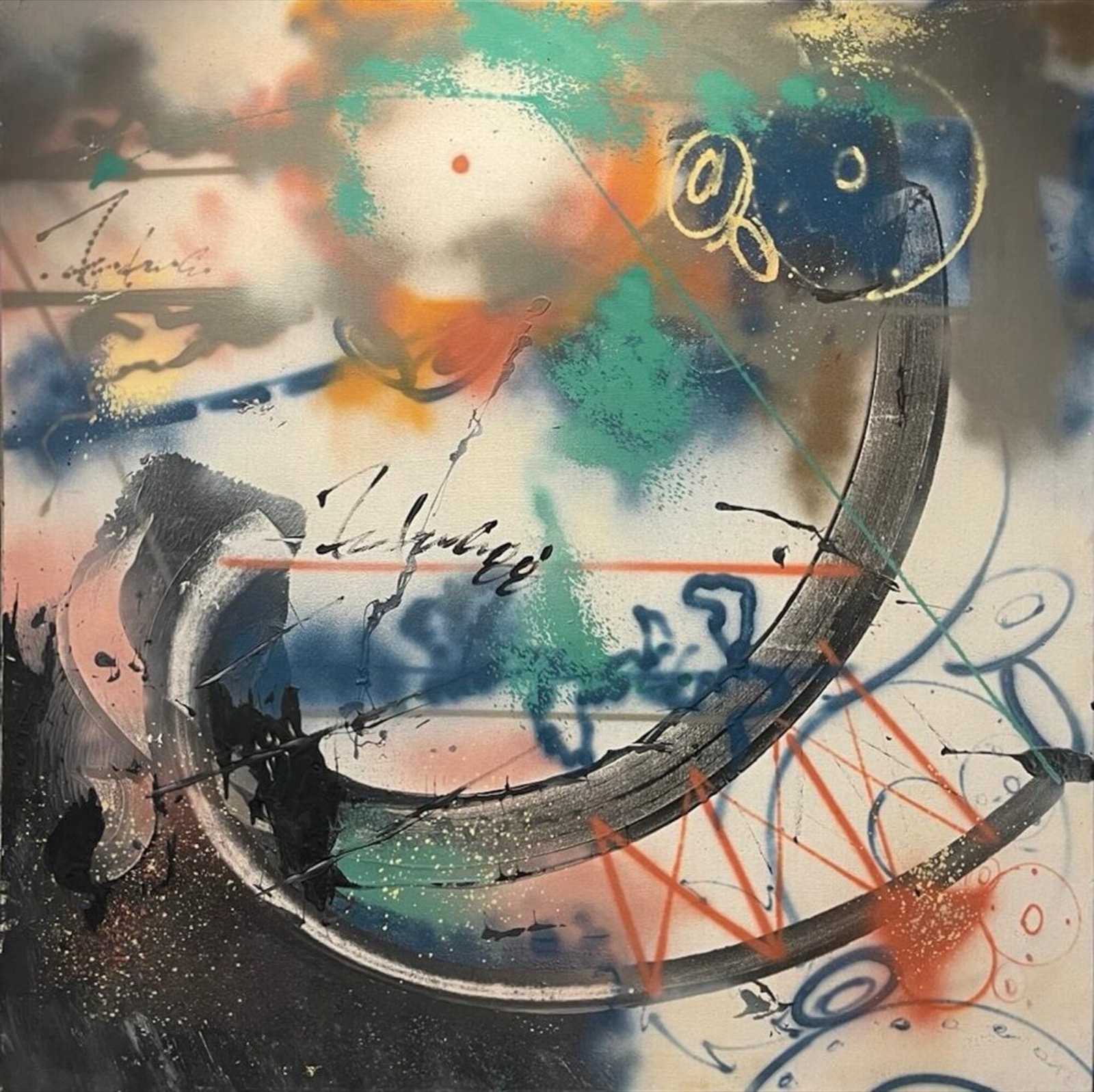
“I always wanted to find individualism within that school of art, which did focus on letters, and lettering styles,” Futura explained. “I noticed that the absence of those letter structures, beautiful colour fields and abstract realms. Those unknown, unexplored places were something I definitely wanted to investigate.”5
The abstraction was not a rejection of graffiti. It was a proof that the graffiti identity system – consistency, recognition, territorial presence – does not depend on letterforms. A writer’s identity can be a color field and a geometric vocabulary as effectively as it can be a name. The tag is the concept, not the letter.
The Clash / Combat Rock (1982): Street Art Meets Music
The Clash invited Futura to paint live during their performances – making visual art a real-time component of a rock show. He handwrote the lyrics and sleeve notes for Combat Rock, one of the earliest graffiti-to-music crossovers. He also recorded “The Escapades of Futura 2000” – described as a manifesto for graffiti.4
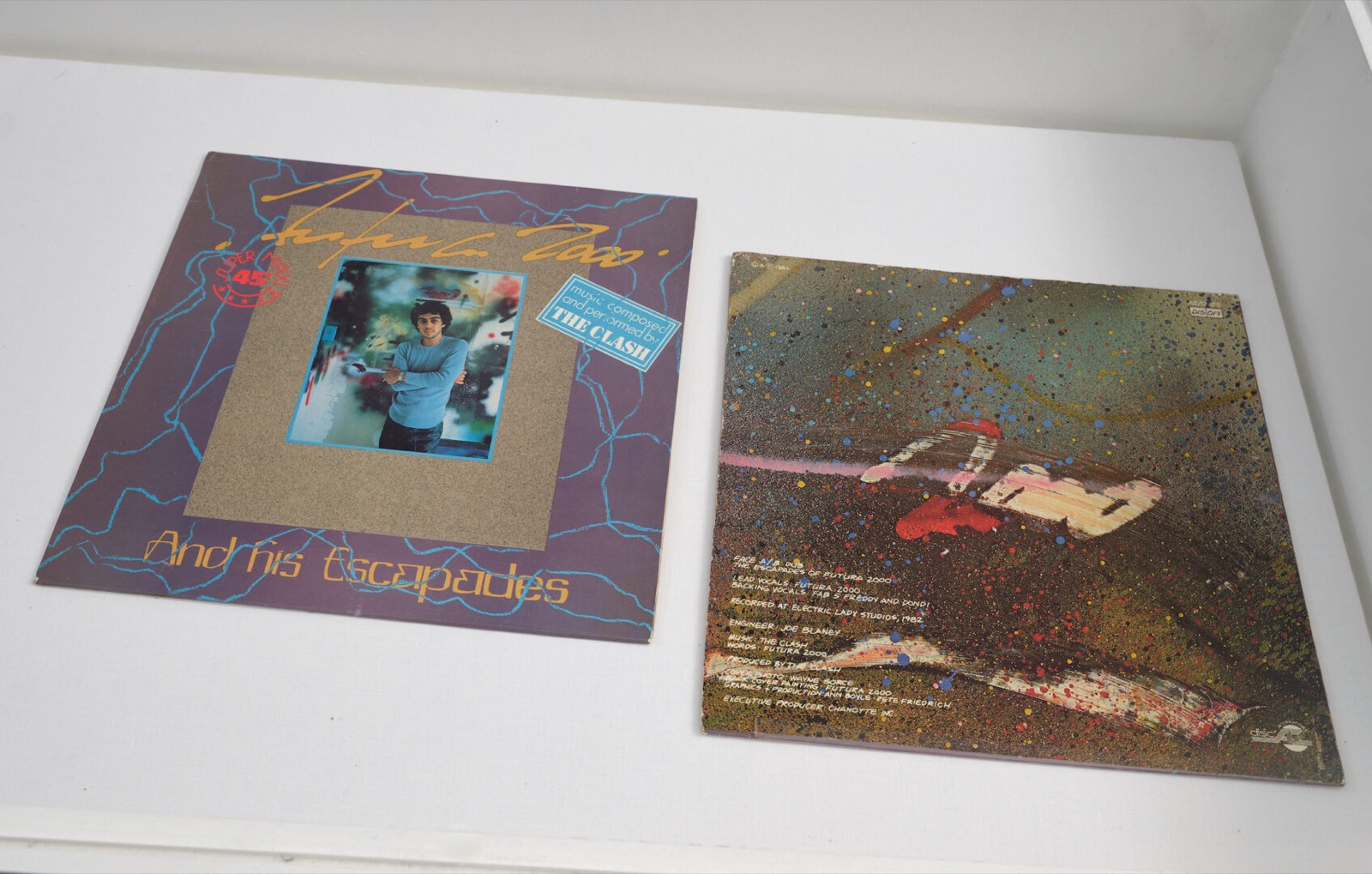
The Clash collaboration placed graffiti aesthetics in front of audiences who had never seen a subway train and would never visit a New York gallery. It demonstrated that the visual language Futura had developed underground – abstraction, spray-paint texture, spontaneous composition – was transferable to any medium and any audience.
Pointman (1992-present): The Iconic Identifier
Keith Haring told Futura: “You really need to have an iconic identifier.” The result was Pointman – a character inspired by H.R. Giger’s Alien, created in Futura’s Williamsburg studio around 1992. First used as cover art for Mo’Wax/UNKLE records, then made into an action figure by Medicom in 1997. Pointman became Futura’s “Hello Kitty” – a transferable brand mark across media.2
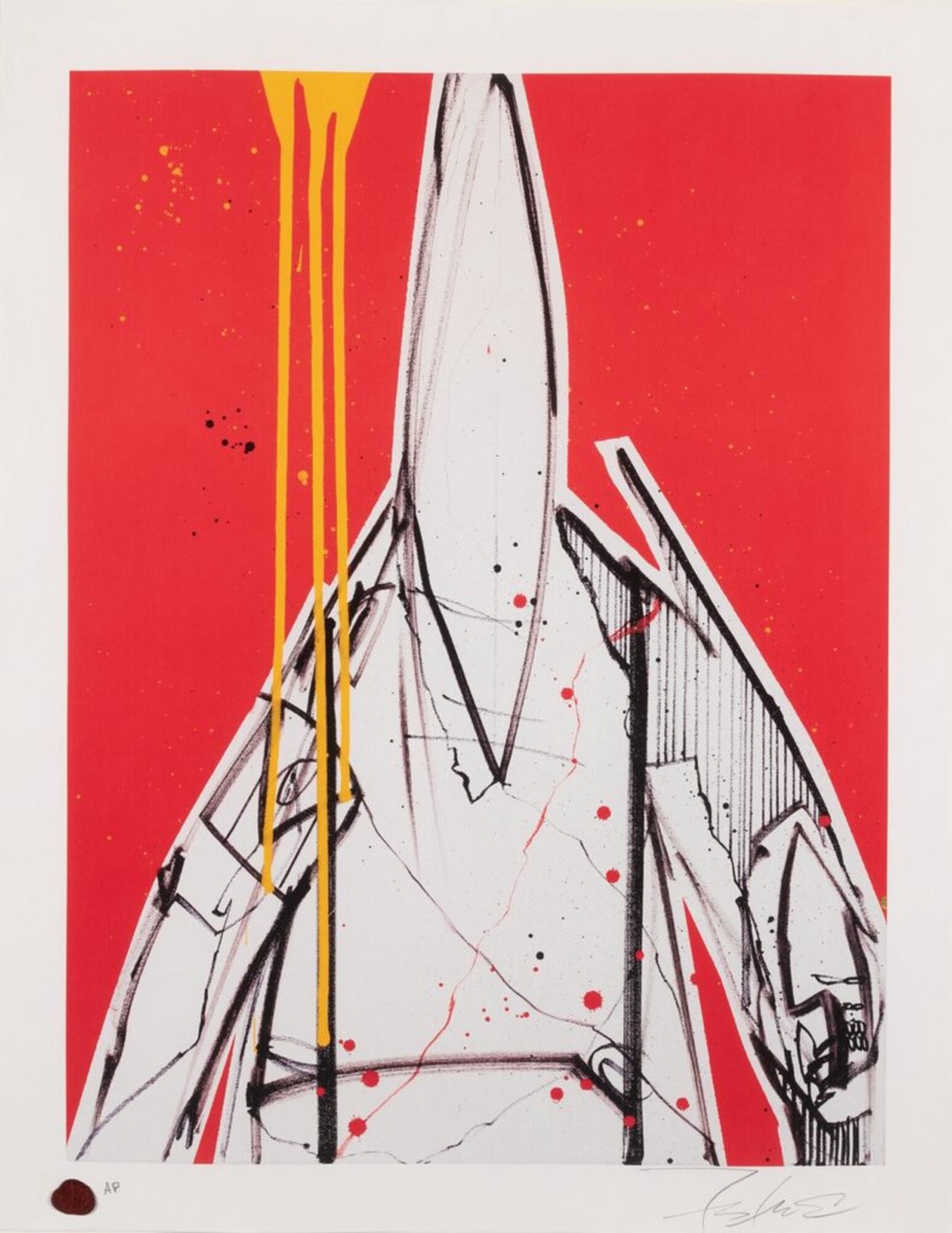
Pointman completed the evolution from tag to abstract mark to character. Each stage moved further from the letterform while maintaining the same function: a consistent, recognizable identity applied across surfaces. The graffiti writer’s tag, the abstract painter’s vocabulary, and the commercial designer’s mascot are the same system operating at different scales of legitimacy.
Collaborations: Supreme, Nike, Comme des Garçons, Louis Vuitton
Futura’s commercial collaborations apply the graffiti identity system to consumer products. The method is the same as the subway car: apply a recognizable visual language to a surface, and the surface becomes part of the identity. Supreme, Nike, CDG SHIRT (a full FW20 collection with Rei Kawakubo), and Louis Vuitton (at Abloh’s invitation) all function as surfaces for the same abstract vocabulary Futura developed on trains in the 1970s.6
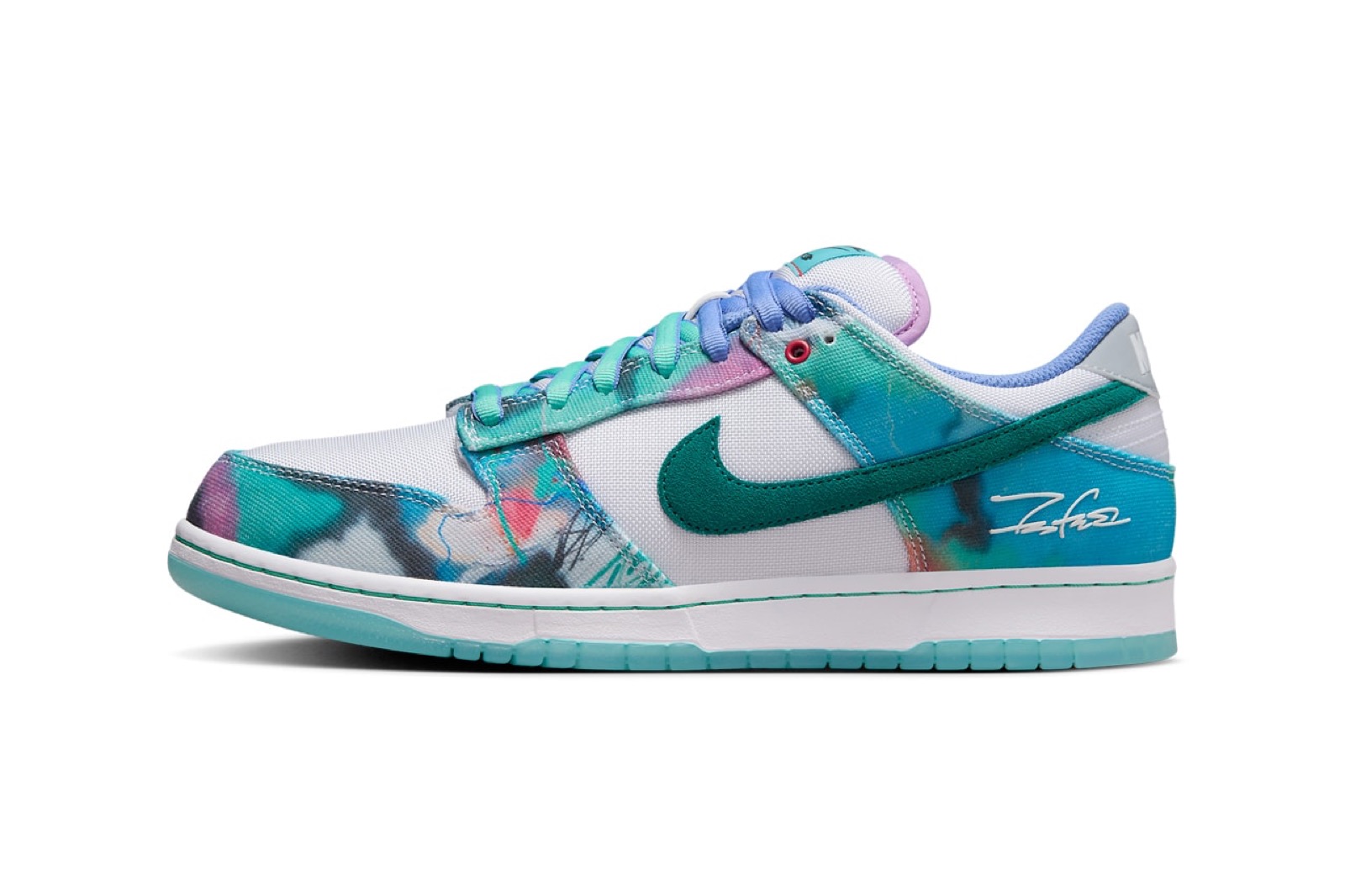
The Louis Vuitton collaboration was personal. Virgil Abloh invited Futura to paint live at the FW2019 show. “He was super supportive of me, and I miss him deeply,” Futura said after Abloh’s death in 2021, “because in the five years prior to his passing, we had gotten to know each other really well. He was an amazing mind to talk to about stuff.”7
The Method
Futura’s method is spontaneous and material-driven. “I am super spontaneous when it comes to spray painting, and it’s difficult to determine an outcome once I begin,” he has said.5 The spontaneity is not randomness. It is trained improvisation – the same way a jazz musician improvises within a harmonic framework, Futura improvises within a visual vocabulary he has spent fifty years developing.
His technique is specific: he turns the spray can upside down, using gravity to achieve ultra-thin lines that look airbrush-precise. Different fill levels produce different effects – 75% full for detail, 50% for blending. “Spray paint is the major shareholder in the work,” he says. “I always see it as the foundation. I may add to it, but usually it doesn’t need anything else.”2
He restricts his palette deliberately. “When I choose a palette and a series of colors I want to work with, with one specific piece, it helps me stay restricted in some sense that I’m just not grabbing every color in the rainbow.”1 The restriction is the discipline. Constraint produces consistency, and consistency produces recognizability – the same principle that makes a tag work across a hundred surfaces.
“Now I feel in a better position, I have a bit more authority,” Futura has said. “I won’t let myself be taken advantage of because, I don’t know, what is your white wall worth? What do I care about your space? Who are you to assume I want to lend my name to you? I know my worth now and I can reflect that in my terms. Artists have got to stop compromising.”8
Influence Chain
Who Shaped Him
NYC subway graffiti culture of the 1970s gave Futura the identity system: tag, style, territory, consistency. He then subverted it by removing the letterform and proving the system works without text. (Cultural foundation)
Stanley Kubrick’s 2001: A Space Odyssey gave him the name and the aesthetic – the space-program imagery, the sci-fi abstraction, the sense that art should reach beyond the present into speculative territory. (Direct influence)2
Keith Haring gave him the Pointman idea – “you really need to have an iconic identifier” – and, through the Pop Shop, opened the door to brand partnerships and merchandise. Futura credits Haring for showing that the commercial application of street art could be legitimate. (Direct influence)2
Who He Shaped
Virgil Abloh brought Futura into Louis Vuitton, explicitly connecting the graffiti-to-luxury pipeline that Dapper Dan had pioneered in Harlem. Abloh on Futura: “As the younger generation comes into the fold, I want them to see me and my inspirations on the same level.”7 (Direct influence)
The street-to-gallery-to-commerce pipeline. Futura’s career arc – subway trains → galleries → commercial collapse → rescue → brand collaborations → museum retrospectives – is the template that KAWS, Banksy, and dozens of other street artists have followed. The path was not planned. Futura survived it, and the survival became the model.
The Throughline
Futura grounds the street/fashion branch of this series in its actual origin: not a fashion studio, not a design school, but a New York City subway yard at night. Dapper Dan built luxury streetwear in Harlem. Abloh formalized the pipeline at Off-White and Louis Vuitton. Pharrell scaled it through Billionaire Boys Club and LV menswear. Fujiwara translated it through Japanese curation. Futura precedes all of them. He was painting trains while Dan was sewing jackets. The graffiti tag – anonymous, consistent, territorial, instantly recognizable – is the original identity system from which streetwear branding descends. (Series bridge)
What I Take From This
“The concept of developing your name, alphabet, and style is the most important element of whatever identity you’re going to run with.” That is API design. Your endpoint naming, your response shape, your error format – these are your tag. Consistency across surfaces is what makes the system recognizable.
FAQ
What is Futura’s design philosophy?
Futura’s philosophy centers on the graffiti tag as identity system – a consistent visual language recognizable across surfaces. His innovation was abstracting the tag away from letterforms entirely, proving that identity does not require legible text. He approaches spray painting as trained improvisation within deliberate constraints (restricted palette, specific technique, consistent vocabulary).15
What did Futura create?
Futura painted “Break” (1980, one of the first fully abstract subway cars), handwrote Combat Rock for The Clash (1982), created the Pointman character (1992), and has collaborated with Supreme, Nike, Comme des Garçons, and Louis Vuitton. His retrospective “Breaking Out” ran at the Bronx Museum (2024-2025). He teaches spray-painting and abstract art on MasterClass.134
How did Futura influence streetwear and fashion?
Futura demonstrated that the graffiti identity system – tag, style, consistency – transfers to any surface, from subway cars to gallery canvases to luxury products. His collaborations with Supreme, Nike, CDG, and Louis Vuitton established the model for street artists entering fashion. His career arc (street → gallery → collapse → commercial rebirth → museum retrospective) became the template for a generation of artists.67
What can designers learn from Futura?
Develop a consistent visual identity before worrying about the medium. A tag works because it is recognizable across surfaces, not because of the surface it appears on. Restriction produces consistency: limit your palette, commit to your vocabulary, and the identity builds through repetition. And know your worth – “Artists have got to stop compromising.”
Sources
-
Futura, MasterClass: Spray-Painting & Abstract Art. “The Signature as Art” chapter, palette restriction, technique details. ↩↩↩↩
-
Futura, interview, Artnet, “Making His Way Back” (2022). Bike messenger years, Agnes B. rescue, Pointman origin, spray paint as “major shareholder.” ↩↩↩↩↩↩↩
-
Futura, interview, Artnet, “Now Everything Is Legit” (2024). “Break” as grand opening, Bronx Museum retrospective. ↩↩↩↩
-
The Clash, Combat Rock (CBS Records, 1982). Handwritten sleeve notes and lyrics by Futura. Live painting on stage during 1981-82 tour. Also: Inspiring City, “The Clash, Futura 2000 and London’s First Graffiti.” ↩↩↩
-
Futura, ArtPlugged interview. “Absence of letter structures,” spontaneity in spray painting, abstraction as investigation. ↩↩↩
-
Complex, “A History of Futura’s Collaborations.” Supreme, Nike, CDG timeline. ↩↩
-
Futura and Virgil Abloh, Whitewall interview. “Same level,” LV collaboration, Abloh tribute. ↩↩↩
-
Futura, The Talks interview. “Artists have got to stop compromising,” “I know my worth,” Lenny/Futura duality. ↩