Neri Oxman's Design Philosophy: Editing Nature, Not Consuming It

The Principle
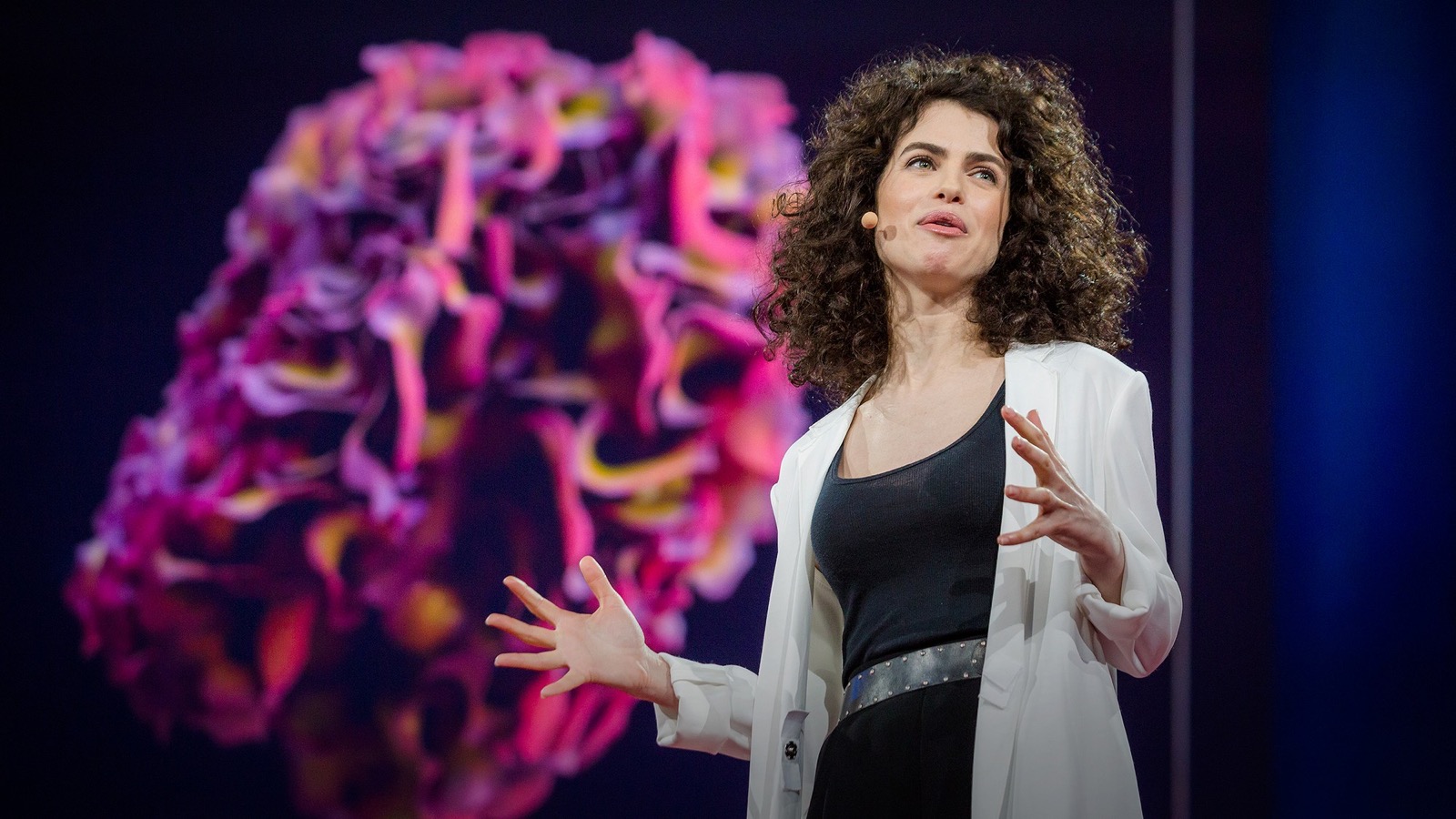
“From consuming nature as a geological resource to editing it as a biological one.” – Neri Oxman1
Oxman’s principle reframes the designer’s relationship to nature. For most of industrial history, design has consumed nature: extracting minerals, cutting trees, drilling oil, shaping raw material into products through force. Oxman proposes the alternative, designing with nature by using biological processes as fabrication methods. A building could be grown rather than assembled. A structure could be produced by organisms rather than by machines. The material and the method become inseparable because both are alive.
The distinction from biomimicry matters. Biomimicry studies nature’s forms and copies them in synthetic materials. Oxman’s approach is biodesign, enlisting nature as a literal collaborator in the fabrication process. Frank Lloyd Wright pursued a related idea a century earlier (organic architecture that emerged from the site rather than being imposed on it) though his materials remained inert where Oxman’s are alive. Silkworms deposit silk on a scaffold. Bacteria channel through a death mask. Chitin and cellulose dissolve in water and form structures that biodegrade when their purpose is served. The product and the process are one organism.
Context
Neri Oxman was born in 1976 in Haifa, Israel, to architecture professors Robert and Rivka Oxman. She served three years in the Israeli Air Force, reaching the rank of First Lieutenant, then began studying medicine at Hebrew University before switching to architecture at the Technion and completing her studies at the Architectural Association in London, the same institution where Zaha Hadid studied under Rem Koolhaas.2
At MIT, Oxman completed a PhD in architectural design (2010) and founded the Mediated Matter group at the Media Lab. The group used computational design, digital fabrication, 3D printing, materials science, and synthetic biology to create structures at scales from the microscopic to the architectural. The research produced both scientific papers and museum objects, works that exist simultaneously as experiments and as art.2
In 2006, while still a graduate student, Oxman coined the term “material ecology” to describe her approach. MoMA curator Paola Antonelli characterized it as a way to “decipher nature’s myriad design lessons and render them digitally for future application at all scales.”3
After leaving MIT, Oxman founded OXMAN, a design and research company. Its mission statement: “We are a design company advancing the unification of top-down design engineering with bottom-up biological growth toward the mutual empowerment of Nature and Humanity.”4
The Work
Silk Pavilion (2013): Silkworms as Fabricators
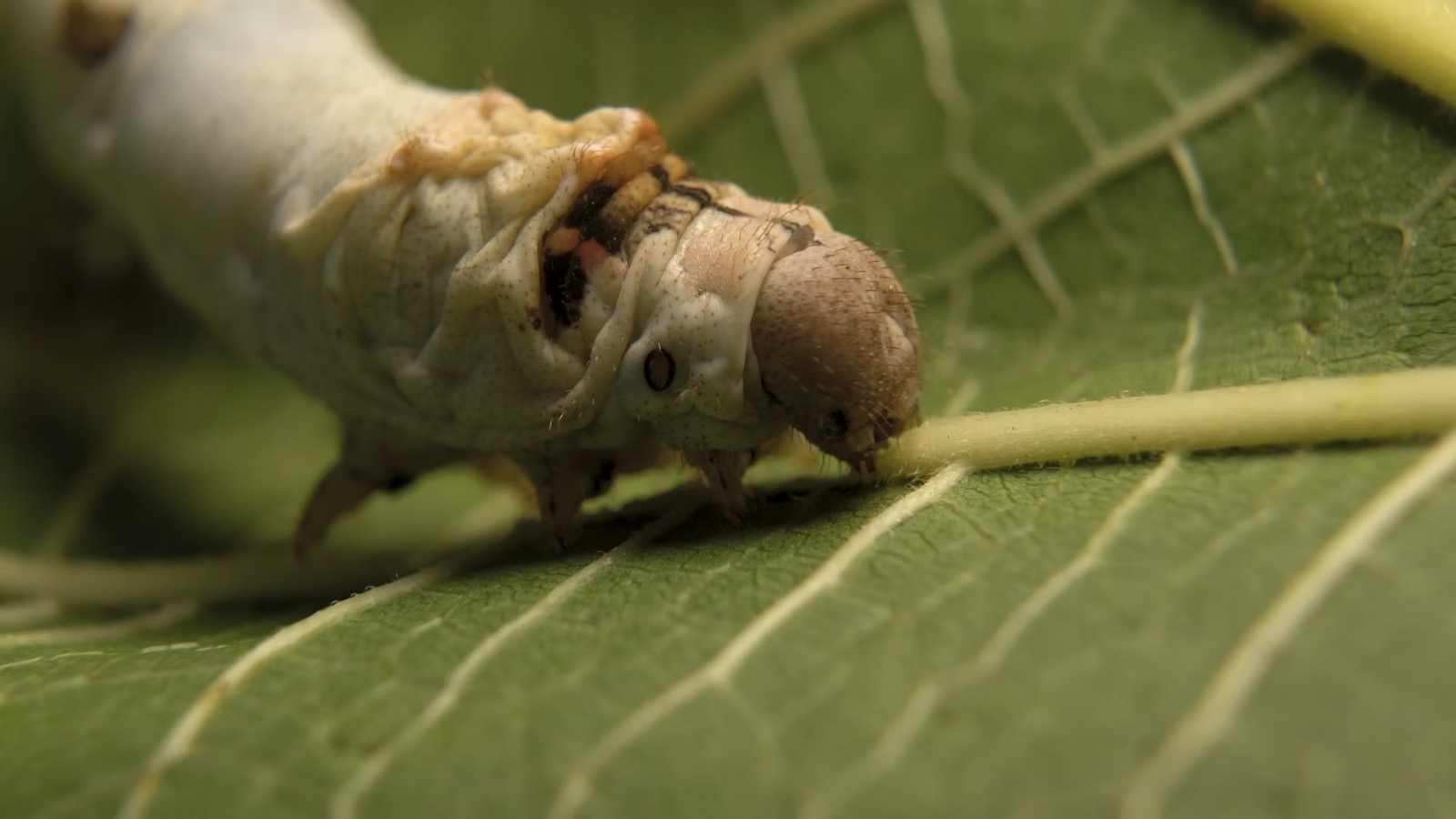
The Silk Pavilion is a structure produced through collaboration between a CNC machine and 6,500 live silkworms. The machine laid 26 polygonal panels of silk threads as a scaffold. The silkworms then completed the structure, migrating to darker, denser areas and filling in the panels with deposited silk. A sun path diagram dictated where apertures fell, allowing the silkworms’ natural behavior to create the form.5
The project proved that biological organisms can participate in architectural fabrication, not as metaphor but as literal builders. The silkworms were not decoration. They formed part of the manufacturing process, producing material the machine could not and responding to environmental conditions (light, density) that the machine could not sense.
Aguahoja (2017-2019): Architecture That Biodegrades
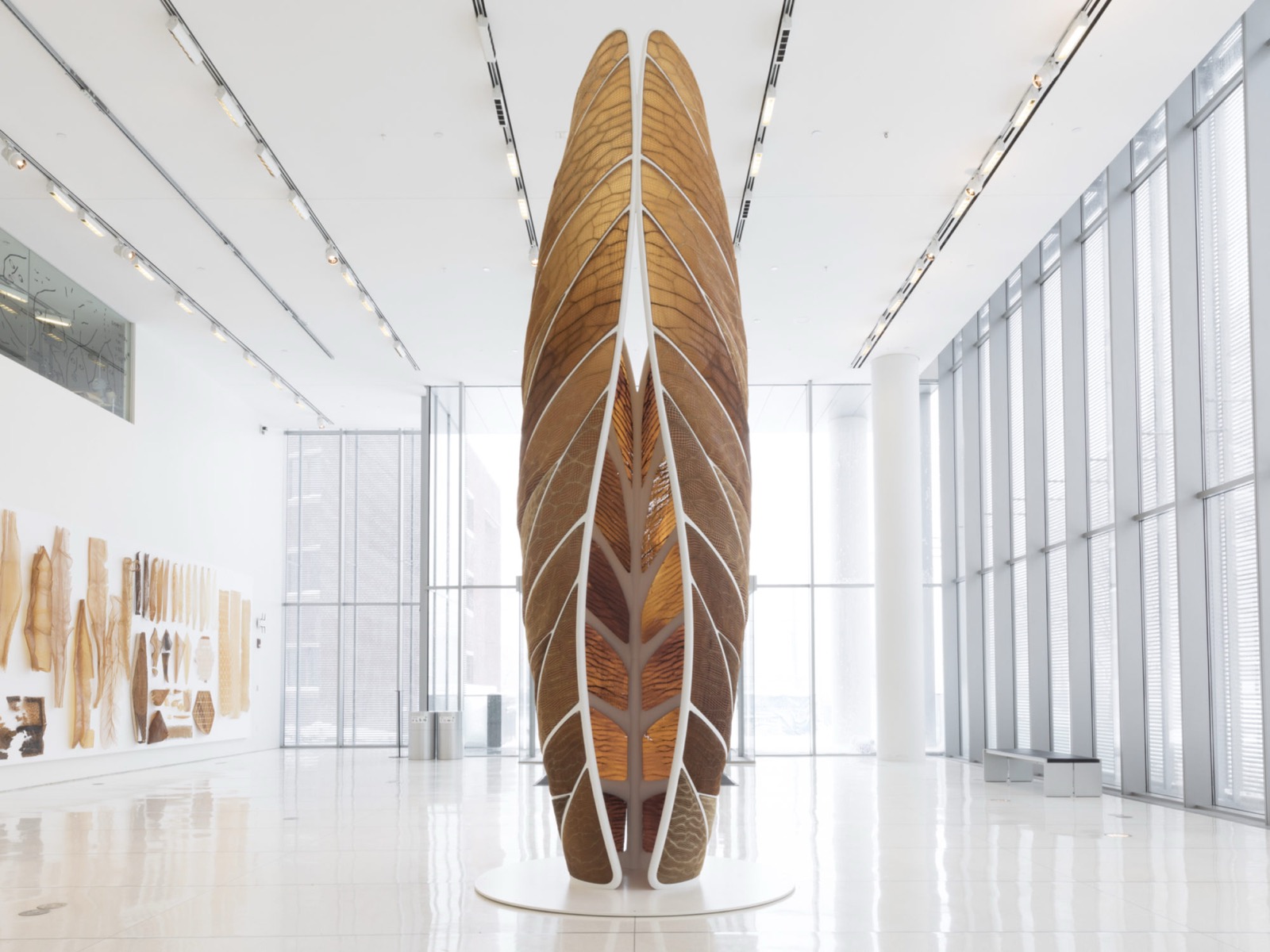
Aguahoja is a water-based fabrication platform that builds structures from chitosan, a water-soluble organic fiber derived from chitin (the material in insect exoskeletons and crustacean shells). The central sculpture, standing fifteen feet tall, resembles “enormous, folded cicada wings.” When its purpose is served, it dissolves in water and returns to the earth as compost.6
The project won Dezeen’s “Sustainable Design of the Year” and “Design Project of the Year.” It sits in SFMOMA’s permanent collection. Aguahoja argues that a building need not outlast its inhabitants, that a structure designed to biodegrade is not lesser architecture but a different relationship to time. Dieter Rams designed the 606 shelf to last sixty-six years. Oxman designs structures meant to disappear.
Glass / G3DP (2014): 3D Printing Molten Glass
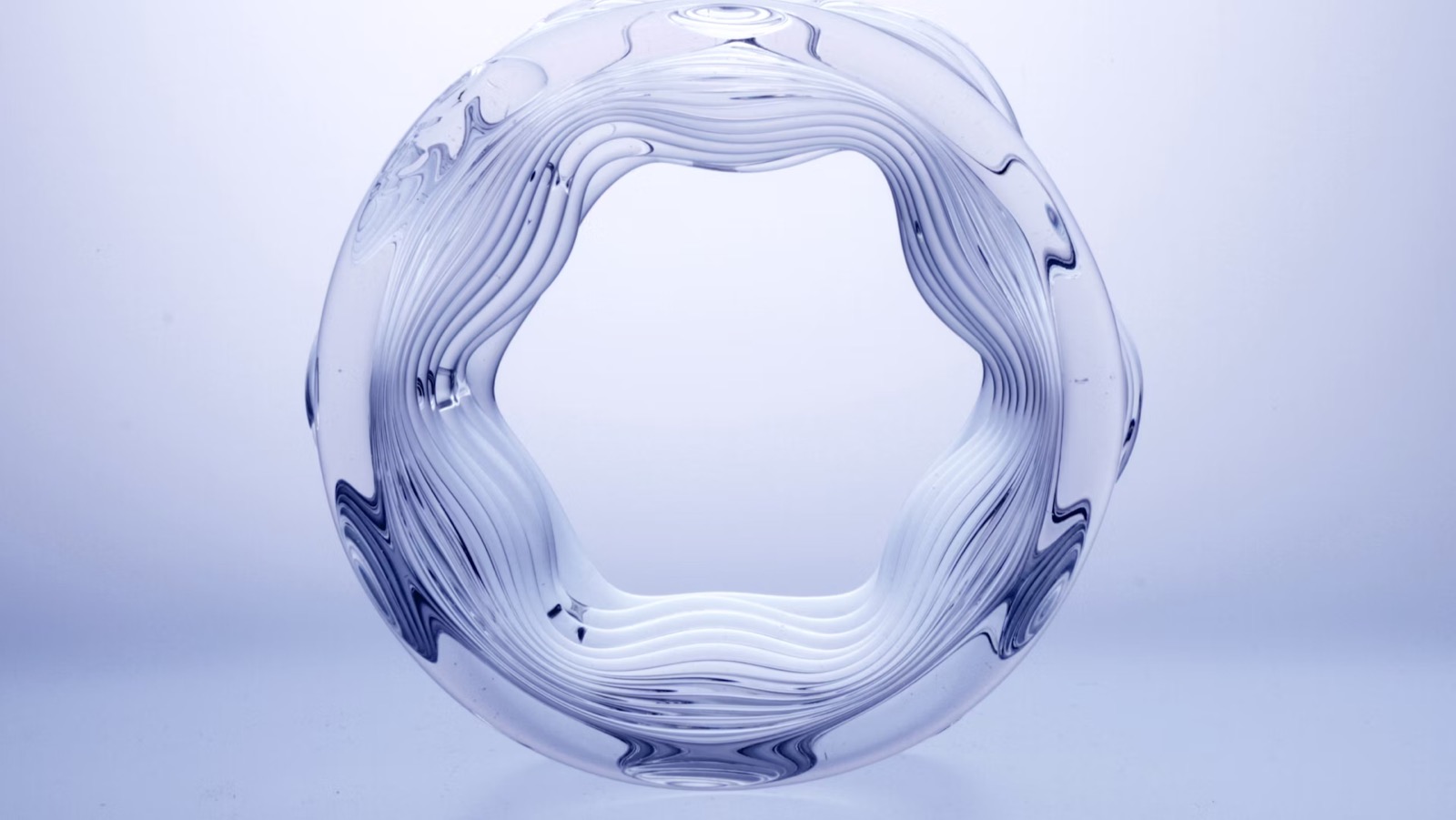
Oxman’s team developed the first 3D printer for optically transparent glass, a collaboration with MIT’s Glass Lab and the Wyss Institute. The printer emulated traditional glassworking with a kiln and annealing chamber but controlled the deposition computationally. At certain settings, the device became “a molten glass sewing machine.”2
The Glass project demonstrated that digital fabrication can produce materials with properties (transparency, refraction, structural strength) that conventional 3D printing cannot achieve. The resulting sculptures appeared at Milan Design Week and now reside in the MoMA collection.
The Method
Oxman’s method is antidisciplinary. In her 2016 paper “Age of Entanglement,” published in the MIT Press Journal of Design and Science, she proposed the Krebs Cycle of Creativity, a framework connecting four domains in a continuous loop:7
Science converts information into knowledge. Engineering converts knowledge into utility. Design converts utility into behavior. Art converts behavior into new perceptions of information, restarting the cycle.
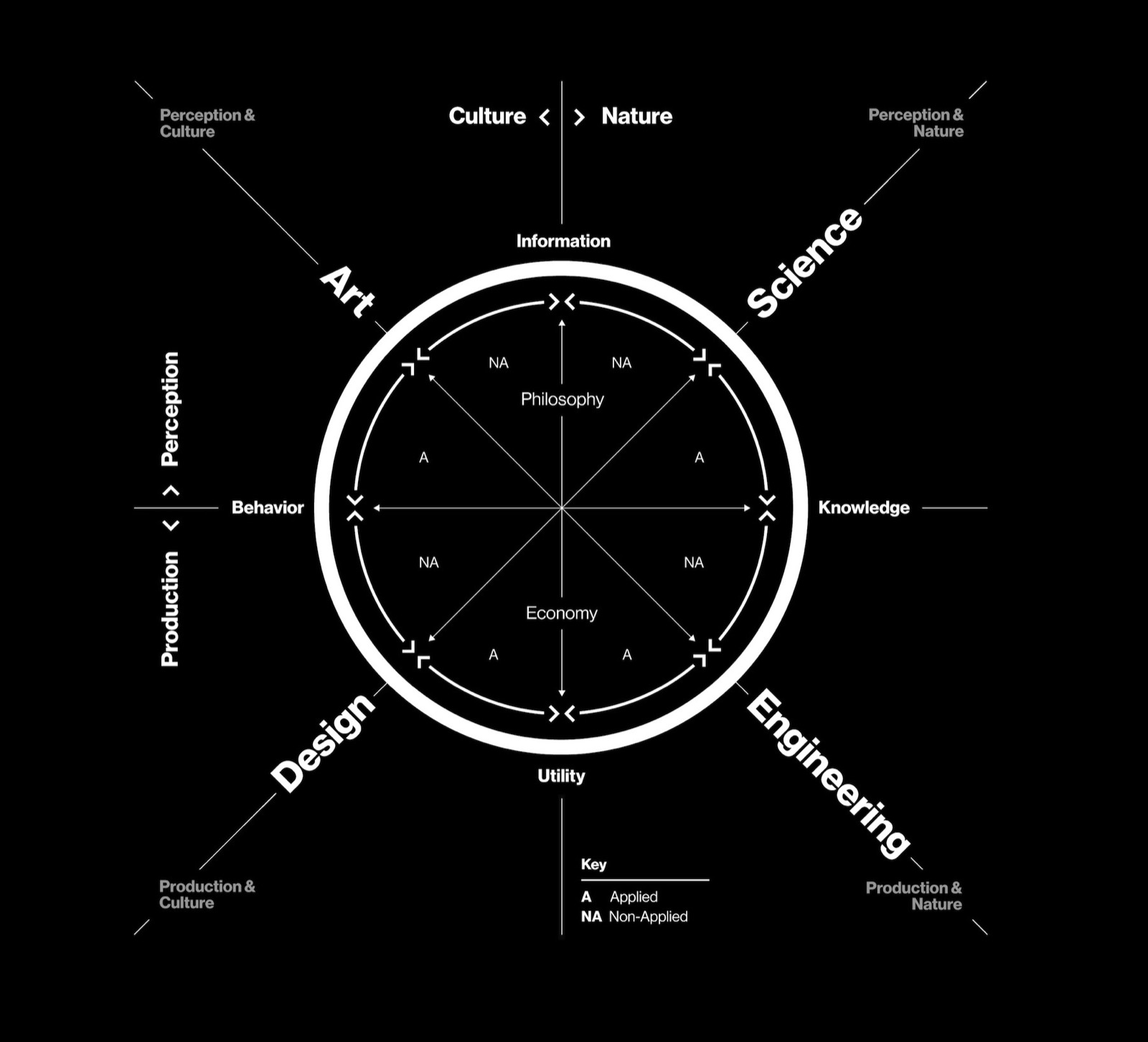
“Knowledge can no longer be ascribed to, or produced within, disciplinary boundaries, but is entirely entangled,” she wrote.7 The Mediated Matter group operated at the intersections: the Silk Pavilion is simultaneously a biology experiment, an engineering prototype, a design object, and an art installation. It belongs to no single discipline because the problem it solves (how do we make architecture with living organisms?) belongs to no single discipline.
The practical method is lab-based: take images of biological or natural samples, develop algorithms to produce similar structures, and develop new manufacturing processes to realize the results. Each project produces both peer-reviewed papers and exhibition-quality objects. The dual output is the method’s signature: the work must pass both scientific and aesthetic review.
Influence Chain
Who Shaped Her
The Architectural Association gave Oxman the conviction that architecture can operate beyond conventional form, the same conviction Zaha Hadid developed at the AA under Koolhaas. Both pushed architecture past its formal limits, but in different directions: Hadid through parametric geometry, Oxman through biological fabrication. (Institutional influence)2
Paola Antonelli at MoMA gave Oxman’s work institutional legitimacy in the design world, curating both the 2020 MoMA exhibition and championing the “knotty objects” concept: objects so entangled across disciplines “that one can no longer disentangle the disciplines or the disciplinary knowledge that contributed to their creation.”3
Who She Shaped
Material ecology as a field. The term Oxman coined in 2006 now circulates across architecture, industrial design, and fabrication research. SFMOMA framed her exhibition as work where “nature as the primary client” upends “the architectural legacy of a human-centered built environment.”8
The case for antidisciplinary design. The Krebs Cycle of Creativity gave the design community a framework for arguing that the most important problems cannot be solved within a single discipline, that the future of design sits at the intersection of biology, computation, engineering, and art.7
The Throughline
Oxman occupies the position in this series where design meets science and neither subordinates the other. Jony Ive was obsessed with manufacturing process: how aluminum is milled, how glass is formed. Oxman asks the next question: what if the material manufactures itself? What if the fabrication process is biological rather than mechanical? Ive’s unibody MacBook is milled from a block. Oxman’s Silk Pavilion is grown by worms. Both care about the inseparability of material and method. But Ive’s materials are inert. Oxman’s are alive. (Series bridge)
What I Take From This
“Knowledge can no longer be ascribed to, or produced within, disciplinary boundaries.” That is the argument for full-stack thinking. The best solutions come from people who refuse to stay in their lane, who understand the biology (user behavior), the engineering (systems architecture), and the design (interface) as a single entangled problem. The taste infrastructure territory applies the antidisciplinary principle to software: taste is not a design layer added on top of engineering but a quality entangled through every decision. The design engineering guide traces how the entanglement operates in practice.
FAQ
What is Neri Oxman’s design philosophy?
Oxman practices “material ecology,” designing with biological processes rather than against them. Her work proposes that buildings and objects can be grown (using organisms as fabricators) rather than assembled (using machines to shape inert materials). She frames the shift as moving “from consuming nature as a geological resource to editing it as a biological one.” Her Krebs Cycle of Creativity connects science, engineering, design, and art in a continuous loop.17
What did Neri Oxman create?
Oxman founded the Mediated Matter group at MIT Media Lab and later OXMAN. Her key works include the Silk Pavilion (2013, fabricated by 6,500 silkworms), Aguahoja (2017-2019, biodegradable structures from chitin/cellulose), the Glass 3D printing platform (2014, first optically transparent glass printer), Wanderers (2015, wearable structures for interplanetary exploration), and Vespers (death masks with biological channels). Her work resides in the MoMA and SFMOMA collections.256
How does Neri Oxman’s approach differ from biomimicry?
Biomimicry studies nature’s forms and copies them in synthetic materials. Oxman’s material ecology enlists nature as a literal fabricator: silkworms produce silk, bacteria process biological channels, chitosan structures biodegrade by design. The distinction lies between copying nature’s output and collaborating with nature’s process.15
What can designers learn from Neri Oxman?
The most important problems exist at the intersection of disciplines, not within them. Design for the full lifecycle, including what happens when the product’s purpose is served (Aguahoja dissolves). And the material is not separate from the method: the strongest design emerges when material, process, and form are a single entangled system.
Sources
-
Neri Oxman, “Design at the intersection of technology and biology,” TED Talk, 2015. “From consuming nature as a geological resource to editing it as a biological one.” Material ecology definition, “a world made of parts.” ↩↩↩
-
TED, “Neri Oxman” speaker page. Biography: Hebrew University medicine, Technion, AA London, MIT PhD. Also: OXMAN, About. ↩↩↩↩↩
-
MoMA, “Neri Oxman: Material Ecology” exhibition (2020). Paola Antonelli curatorial framing, “decipher nature’s design lessons.” ↩↩
-
OXMAN, About. “Unification of top-down design engineering with bottom-up biological growth toward the mutual empowerment of Nature and Humanity.” ↩
-
Dezeen, “Silkworms and robot work together to weave Silk Pavilion” (2013). 6,500 silkworms, CNC scaffold, sun path apertures. ↩↩↩
-
SFMOMA, “Nature x Humanity: Oxman Architects” exhibition (2022). Aguahoja in permanent collection, “nature as the primary client,” “upends the architectural legacy of a human-centered built environment.” ↩↩↩
-
Neri Oxman, “Age of Entanglement,” Journal of Design and Science (MIT Press), January 13, 2016. Krebs Cycle of Creativity, “knowledge can no longer be ascribed to disciplinary boundaries.” ↩↩↩↩











