Design Philosophy: Jony Ive, The Part You Never See


The Principle
“The most important thing is that you actually care. When you do, and you spend an enormous amount of time and energy to try to get something right, it’s a funny thing – your intent is felt.” – Jony Ive1
Ive cared about the inside of the machine. Not the circuit board layout – the inside of the case. The part the user would never see. “It’s like finishing the back of a drawer,” he explained. “Nobody’s going to see it, but you do it anyway. Products are a form of communication – they demonstrate your value system, what you care about.”1 At Apple, he insisted that the interior of the first iMac G3 – a translucent polycarbonate shell through which the components were barely visible – be as carefully designed as the exterior. The care is either total or it is performance. This is the same principle that makes taste a structural system rather than a surface preference – the quality is in the parts no one audits.
“Designing and making are inseparable,” Ive wrote in the introduction to Designed by Apple in California.9 He did not design an object and then hand it to manufacturing to figure out how to build. He designed the manufacturing process as part of the design. The unibody MacBook – milled from a single block of aluminum – was not a form that happened to be manufactured that way. The manufacturing process was the design decision. The form and the method of making it were inseparable.
Context
Jonathan Paul Ive was born in Chingford, London, in 1967. His father, Michael Ive, was a silversmith and lecturer at Middlesex Polytechnic who, as Jonathan later recalled, instilled in him the understanding that making things carefully was a way of expressing care for the people who would use them. Ive studied industrial design at Newcastle Polytechnic (now Northumbria University), where his graduating project – a telephone and pen – won a Royal Society of Arts award.2
After university, he joined the London design consultancy Tangerine, where he designed products for clients including Ideal Standard (bathroom fixtures). The work was competent but frustrating. Clients wanted cosmetic changes, not structural rethinking. In 1992, Apple recruited Ive to its industrial design team in Cupertino. He was 25. Apple was floundering – the company would not find direction until Steve Jobs returned in 1997.2
When Jobs returned, he found Ive already leading a small design team that had been marginalized under previous leadership. Jobs recognized what Ive’s colleagues already knew: the design studio at Apple – the most secretive room in the building, accessible only by badge – contained the seeds of the company’s transformation. Jobs gave Ive authority. Ive gave Jobs objects that felt inevitable.3
The Work
iMac G3 (1998): Translucency as Declaration
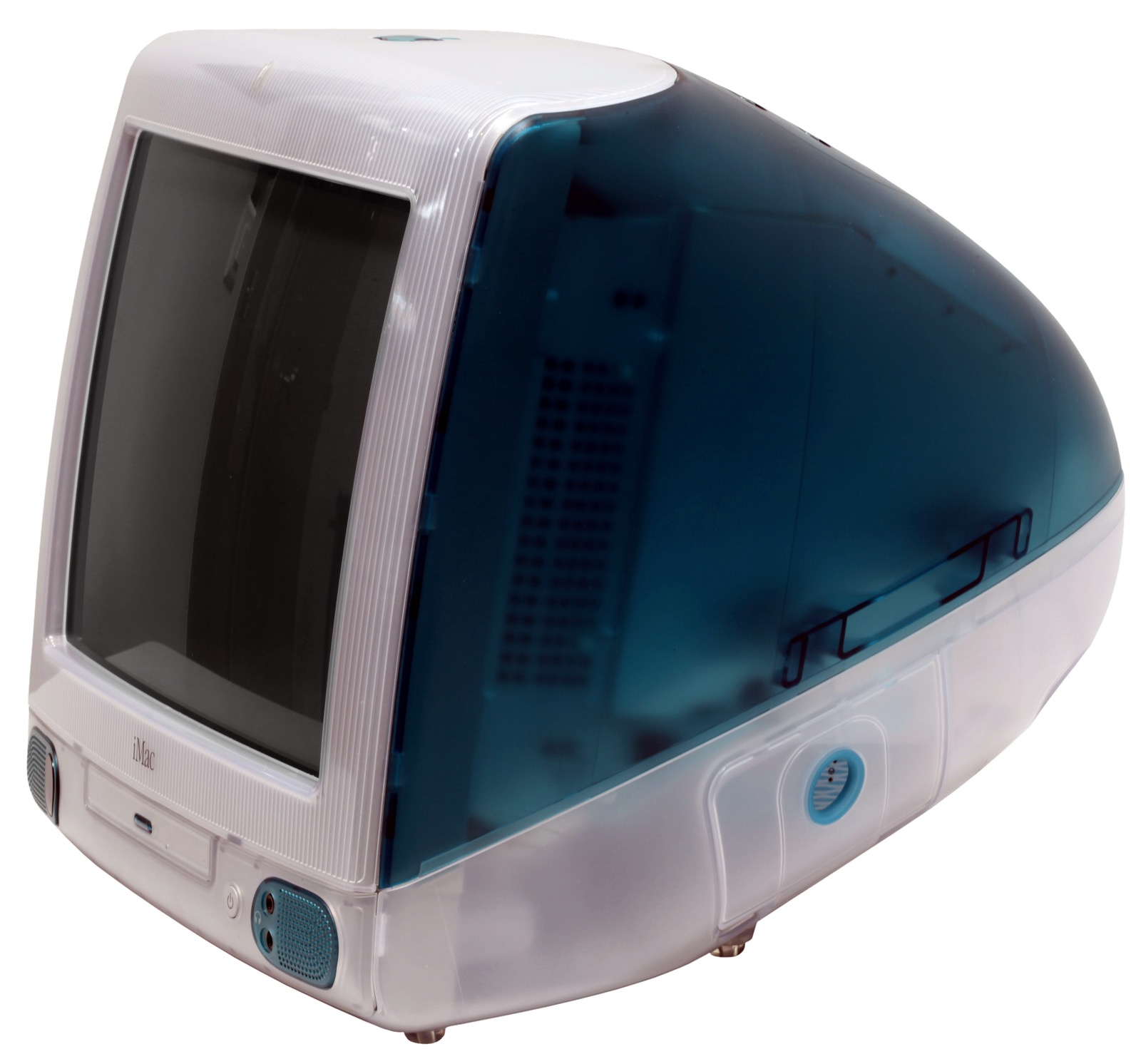
The iMac G3 was a translucent Bondi Blue polycarbonate shell containing an all-in-one computer. No beige box. No separate monitor. No visible screws. The translucent shell allowed users to see, dimly, the technology inside – a deliberate reversal of the industry convention that computer internals should be hidden behind opaque panels.4
The design decision was philosophical: if computers are not threatening, why hide how they work? The translucent shell was not decoration. It was a statement about the relationship between the user and the machine. Susan Kare had made that same argument through icons in 1984 – the Happy Mac greeted you, the bomb was “playful rather than alarming.” Ive made the argument through material: the machine itself was approachable because you could see inside it.
The iMac G3 saved Apple. It sold 800,000 units in its first five months and established the principle that would define Ive’s tenure: the manufacturing process is not a constraint to work around but a design material to work with.
MacBook Air and Unibody (2008): The Block of Aluminum
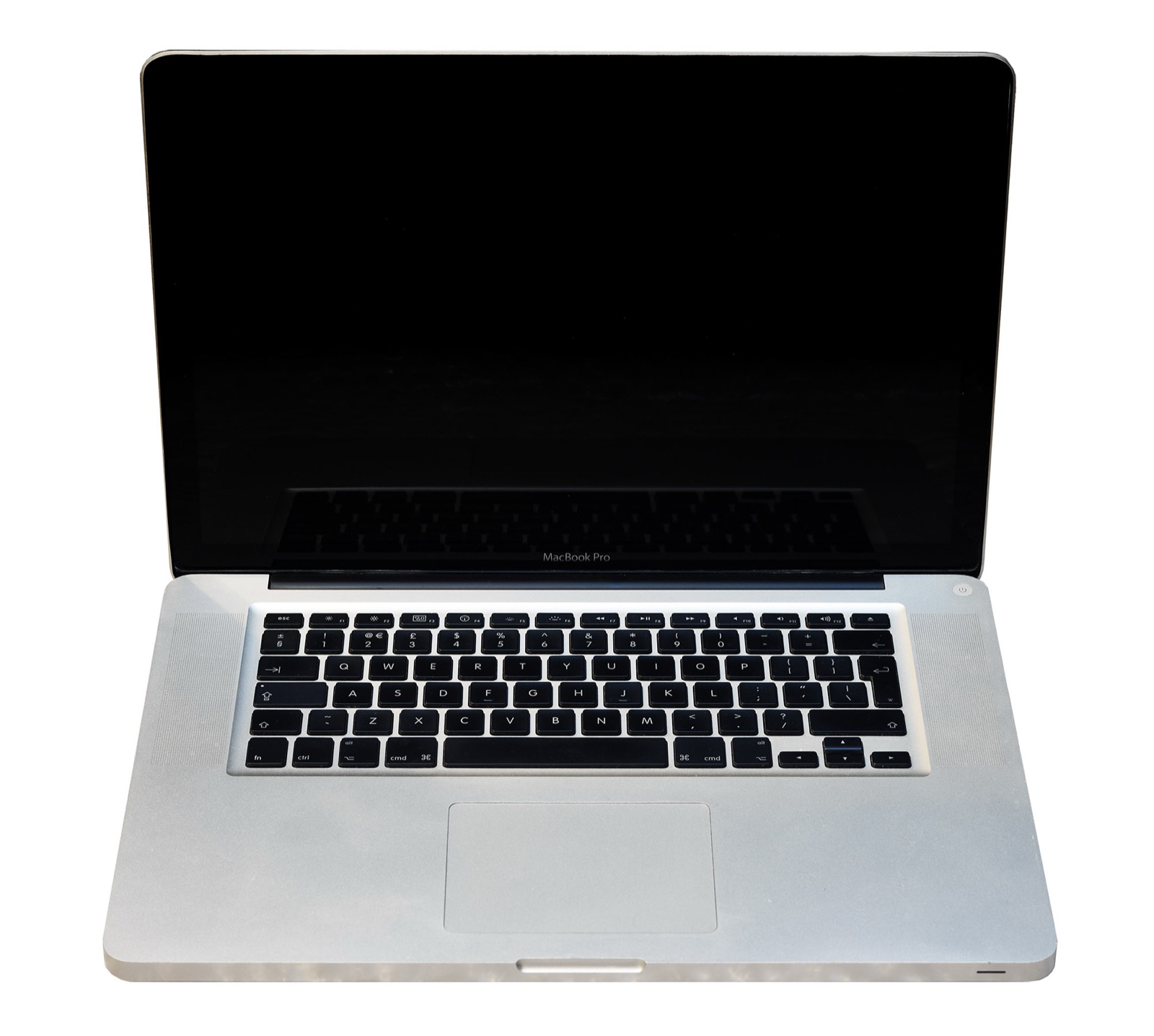
In January 2008, Apple introduced the MacBook Air, famously pulled from a manila envelope by Steve Jobs on stage. The Air was thin because of aggressive engineering – custom components, a miniaturized logic board, omission of an optical drive. But later that year, in October 2008, Ive debuted the manufacturing innovation that would define the next decade: the unibody MacBook Pro. Instead of assembling a laptop from stamped sheet metal parts screwed together, the case was CNC-milled from a single block of aluminum. The block was subtracted into a case – walls, screw posts, mounting points all carved from one piece.5
The engineering implications were structural: a unibody case is stronger and more rigid than an assembled case with the same wall thickness, because there are no joints to flex. But the design implications were more significant. The unibody process meant that tolerances could be measured in microns rather than millimeters. Every edge could be precise. The fit between the screen and the body could be controlled to a degree that assembled construction could never achieve.
“We’ve developed manufacturing processes that are our most complex and ambitious,” Ive said of the iPhone 5 (2012), which extended the unibody approach to a phone. “Never before have we built a product with this extraordinary level of fit and finish.” The iPhone 5’s chamfered edges were cut with a crystalline diamond – a manufacturing step that existed purely because Ive believed the transition between the glass face and the aluminum body should catch light in a specific way.6
The chamfer was not functional. It was a statement about what “caring” means at industrial scale: the manufacturing process is precise enough that a beveled edge catches light at a consistent angle across millions of units. The consistency is the craft.
Apple Park (2017): Architecture as Final Product
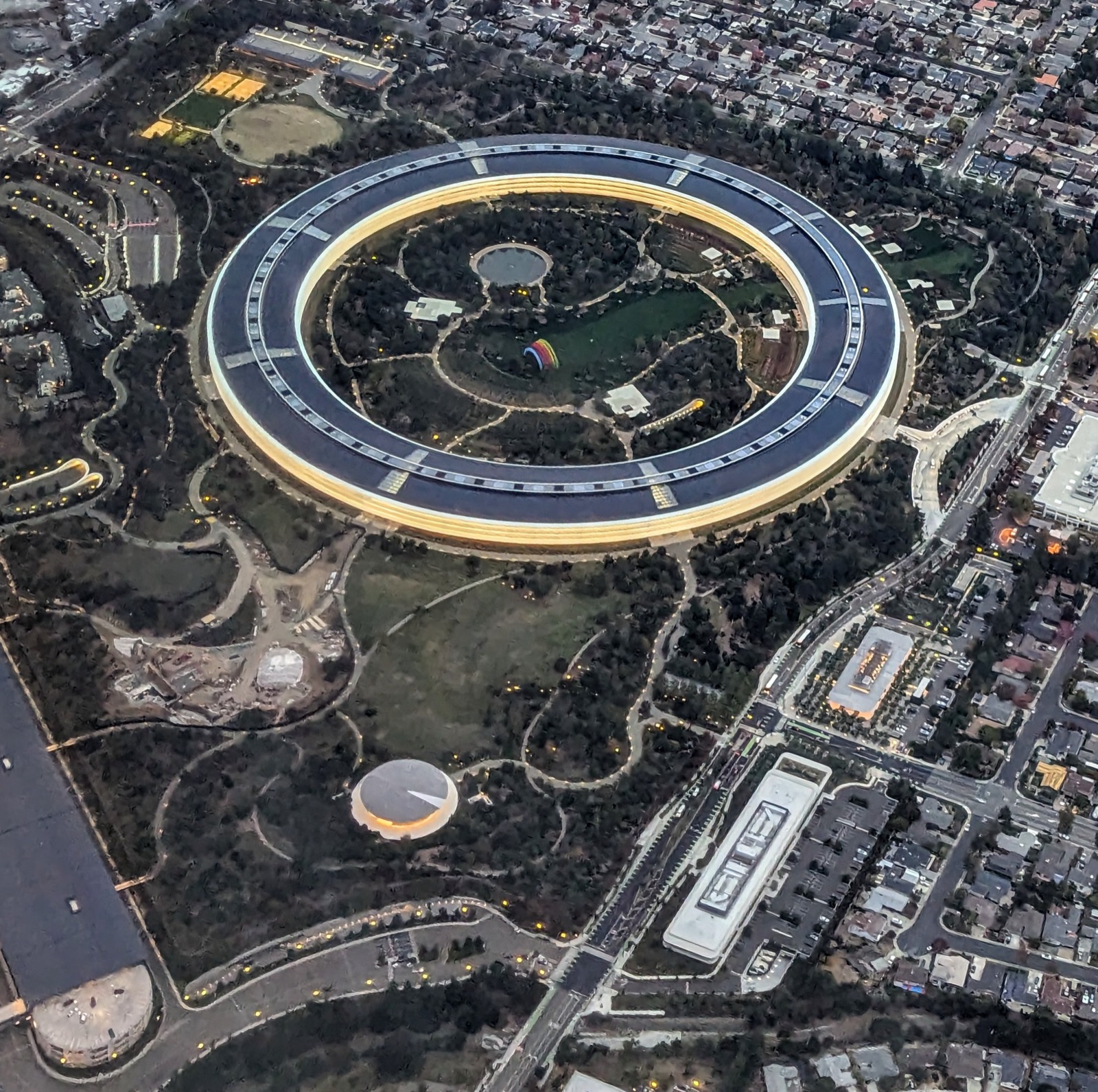
Ive’s last major project at Apple was not a device but a building. Apple Park in Cupertino – a 2.8-million-square-foot ring of glass and concrete designed with Foster + Partners – applied the same manufacturing precision to architecture. The curved glass panels were the largest ever fabricated. The concrete was poured to Ive’s specifications for surface finish. The doors, handles, and fixtures were custom designed to feel like Apple products at architectural scale.7
Apple Park demonstrated the endpoint of Ive’s philosophy: if the manufacturing process is the design, then a building is just a very large product. The design engineering guide traces how this manufacturing-as-design conviction scaled across the industry. The same attention to tolerances, materials, and finish that made an iPhone feel inevitable should make a door handle feel inevitable. The building is the final argument that craft scales.
Ive left Apple in 2019 to found LoveFrom, a creative collective. His departure marked the end of a 27-year period in which a single designer’s obsession with manufacturing process shaped the objects that defined personal technology.
The Method
Ive’s design studio at Apple operated on foam models. Every product began as a carved foam block – sometimes dozens of variations for a single product – before any CAD work commenced. The foam models were about proportion and hand-feel, not finish. Ive wanted to hold the object before he decided what material it would be made from.3
The transition from foam to prototype was where Ive’s method diverged from conventional industrial design. Most designers hand a finished design to manufacturing engineers and negotiate compromises. Ive embedded manufacturing engineers in the design process from the beginning. The question was never “can this be manufactured?” but “what does this manufacturing process make possible?” The unibody MacBook did not start as a thin laptop that manufacturing figured out how to produce. It started as a question: what if we machine the case from a single block?
“When you first start off trying to solve a problem, the first solutions you come up with are very complex, and most people stop there,” Ive observed. “But if you keep going, and live with the problem and peel more layers of the onion off, you can often times arrive at some very elegant and simple solutions.”1
Influence Chain
Who Shaped Him
Dieter Rams is the acknowledged influence. Ive wrote the foreword to Rams’ authorized biography and called “less but better” the mantra guiding Apple’s design. The visual lineage – white surfaces, visible materials, proportional rigor – is documented and undeniable. But the relationship is more specific than aesthetics: Rams proved that a designer could lead a company’s identity for decades through disciplined reduction. Ive absorbed that model and applied it at a scale Rams never operated at – billions of units rather than thousands. (Direct influence)8
Michael Ive, his father, taught him the silversmithing principle that the quality of making is an expression of care for the user. This is the ethical argument that Ive brought to Apple: we care about the inside of the case because caring is either complete or it is a lie. (Formative influence)
Who He Shaped
The entire consumer electronics industry. After the iPhone, every smartphone became a glass-and-aluminum rectangle. After the MacBook Air, every laptop aspired to the same proportions. Ive did not set trends. He set constraints: the manufacturing capabilities his team developed – unibody milling, diamond-cut chamfers, custom alloys – became the baseline expectation for premium consumer electronics worldwide.
Marc Newson, the Australian industrial designer, became Ive’s closest creative partner. Their collaboration at LoveFrom represents the continuation of Ive’s philosophy beyond Apple – the idea that manufacturing obsession applies to any category of object, from furniture to timepieces.
The Throughline
Paul Rand presented one logo and refused to offer alternatives because the rigor of his process made options unnecessary. Ive presented one product and the manufacturing process that made it inevitable. Both operated on the same conviction: if the method is sound, the solution is singular. Rams showed that reduction is a philosophy. Ive showed that manufacturing precision is an expression of that philosophy at scale. (Series bridge)
What I Take From This
Ive’s insistence on the inside of the case – the part nobody sees – is the same instinct behind clean internal code. If the implementation is sloppy where the user can’t see, the developer doesn’t actually care. The care is total or it’s theater. Kenya Hara arrives at a similar totality from the opposite direction – where Ive fills every invisible surface with precision, Hara empties every visible surface to create receptivity.
FAQ
What is Jony Ive’s design philosophy?
Ive’s philosophy centers on manufacturing process as design material. He did not design objects and then figure out how to make them – he designed the manufacturing process itself, and the form emerged from what the process made possible. His stated principle: “The most important thing is that you actually care.” Care meant attending to every detail, including the parts the user would never see, and treating manufacturing precision as an expression of respect for the user.1
What did Jony Ive design?
Ive was Senior Vice President and later Chief Design Officer at Apple from 1992 to 2019. He led the design of the iMac G3 (1998), iPod (2001), iPhone (2007), MacBook Air (2008), iPad (2010), Apple Watch (2015), and Apple Park (2017). He held thousands of design patents. After leaving Apple, he founded LoveFrom, a creative collective.24
How does Jony Ive’s approach differ from Dieter Rams’?
Both practiced subtractive design – removing everything unnecessary. But Rams operated at craft scale (hundreds or thousands of units), where the designer controls the final product directly. Ive operated at industrial scale (billions of units), where the designer’s relationship to the product is mediated by manufacturing systems. Ive’s innovation was making manufacturing precision itself an act of design – the unibody process, diamond-cut chamfers, and custom alloys were not production details but design decisions.8
What can designers learn from Jony Ive?
Care about the parts nobody sees. The manufacturing process is not a constraint to negotiate around – it is a design material to work with. Simplicity is the result of persistent refinement, not the starting point. And if you claim to care about quality, that claim must be total: visible and invisible, exterior and interior, the product and the process that makes it.
Sources
-
Jony Ive, interview. “The most important thing is that you actually care.” AppleInsider, October 2013. Also: “first solutions you come up with are very complex” quote. ↩↩↩↩
-
Britannica, “Jony Ive.” Newcastle Polytechnic, Tangerine, Apple career timeline, LoveFrom founding. Also: Wikipedia. ↩↩↩
-
Wallpaper*, “Sir Jony Ive reflects on the nature of objects, the fragility of ideas, and 20 years of Apple design.” Design studio process, foam models, Jobs partnership. ↩↩
-
Apple, iMac G3 launch documentation, 1998. Also: Smithsonian, “Why Jony Ive Is Apple’s Design Genius.” ↩↩
-
Apple, MacBook Air and unibody manufacturing process documentation, 2008. CNC milling from single aluminum block. ↩
-
Apple, iPhone 5 design video, 2012. “Most complex and ambitious manufacturing processes.” Diamond-cut chamfered edges. ↩
-
Foster + Partners, Apple Park documentation. 2.8 million square feet, largest curved glass panels, custom fixtures. ↩
-
Jonathan Ive, foreword to Sophie Lovell, Dieter Rams: As Little Design as Possible (Phaidon, 2011). “Less but better” as guiding mantra. Also: CNN, “Dieter Rams: The legendary designer who influenced Apple.” ↩↩
-
Jonathan Ive, introduction to Designed by Apple in California (Apple, 2016). “Designing and making are inseparable,” “simplicity is not the absence of complexity.” Summary. ↩