Design Philosophy: Wang Shu — I Hate Perfect Things

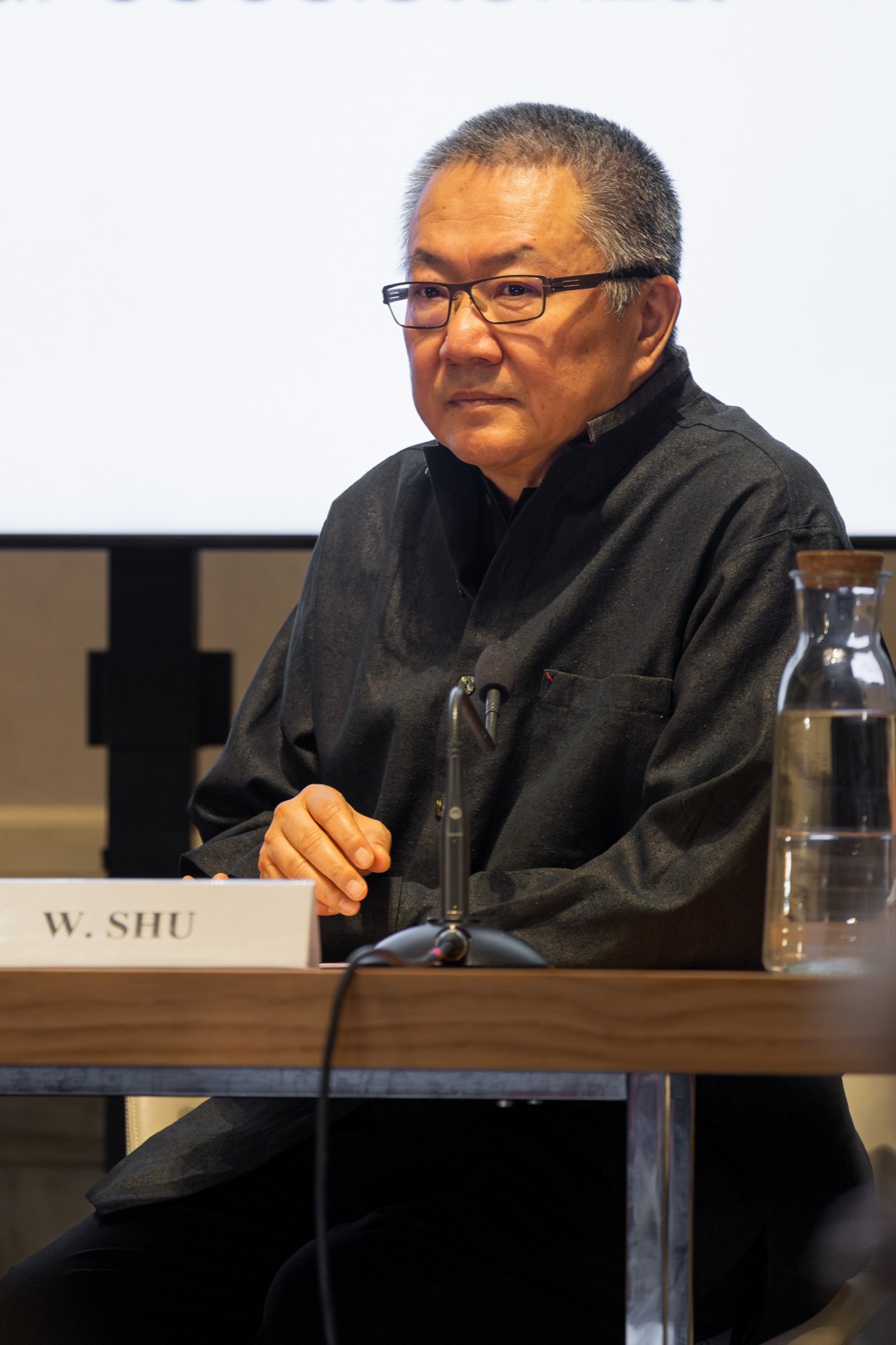
The Principle
“I hate ‘perfect’ things. To me, perfect things are just a lot of imperfect things put together.” – Wang Shu1
Wang Shu builds with other people’s demolished houses. The bricks and tiles in his facades, some over a thousand years old, were salvaged from villages demolished to make way for China’s modernization. The salvage is not recycling in the ecological sense. It is memory preservation: every brick carries the history of the building it came from, and the building that receives it becomes an archive of the buildings that were destroyed.
His practice is called Amateur Architecture Studio. The word “amateur” is deliberate and confrontational – a stance that represents a distinct layer of the taste infrastructure governing how we value craft, memory, and material. “To me, being an artisan or a craftsman, is an amateur or almost the same thing,” Wang has said.2 The amateur builds out of love for the work. The professional builds out of obligation to the system. Wang chose the amateur position because the professional system in China was destroying cities faster than it could build them.
Context
Wang Shu was born in 1963 in Urumqi, China’s westernmost province. His father was a musician and amateur carpenter; his mother was a librarian. He earned bachelor’s and master’s degrees in architecture from the Nanjing Institute of Technology and completed one early commission, a youth center in Haining, before dropping out of professional architecture entirely.3
For seven years, from 1990 to 1997, Wang stopped designing buildings. He spent the time learning vernacular construction techniques (rammed earth, timber framing, traditional masonry) from craftsmen in and around Hangzhou. “If you really want to become a good architect, you should become a scholar first,” he has said.4 The sabbatical was financially enabled by his wife and architectural partner, Lu Wenyu.
In 1997, Wang and Lu founded Amateur Architecture Studio in Hangzhou. In 2012, Wang received the Pritzker Prize, the first Chinese citizen to win it. His response: “It’s not right. They should give the prize to us, and not to me.”1
The context for his work is China’s demolition crisis. “In the past twenty-five years, [China] did an incredible thing… made a big decision to demolish it. Ninety percent, just in the past twenty-five years,” Wang told PIN-UP Magazine. “Because there are all these large-scale demolitions, all these beautiful materials and rubbish strewn everywhere, it can make you feel pain here.”4
The Work
Ningbo History Museum (2008): Architecture Completed by Thousands of Hands
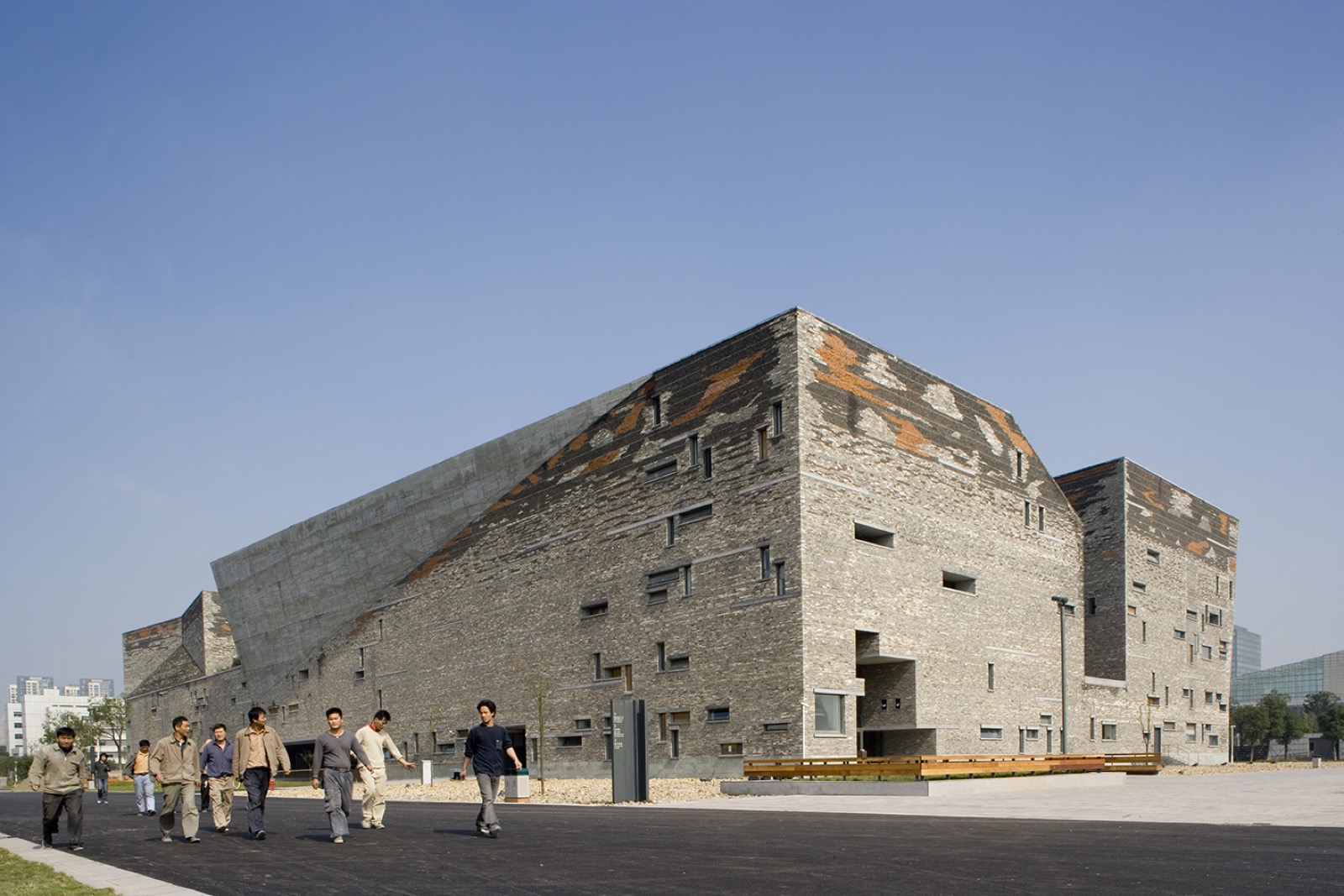
The Ningbo History Museum sits on a site where approximately thirty demolished villages once stood. Wang built the museum’s facade from millions of recycled bricks and tiles salvaged from demolition sites across Zhejiang province, some dating back over a thousand years. The lower facade uses wapan, a traditional dry-walling technique historically employed to rebuild villages after typhoons, combining twenty different types of grey and red bricks and tiles of varying sizes.5
“I call the facades of this building: architecture completed by thousands of hands,” Wang said.6 The description is literal: multiple teams of laborers produced different sections using different techniques, weaving together a patchwork of methods across a single facade. The wall is not a uniform surface. It is a record of how many different hands, working with many different salvaged materials, built something new from something destroyed.
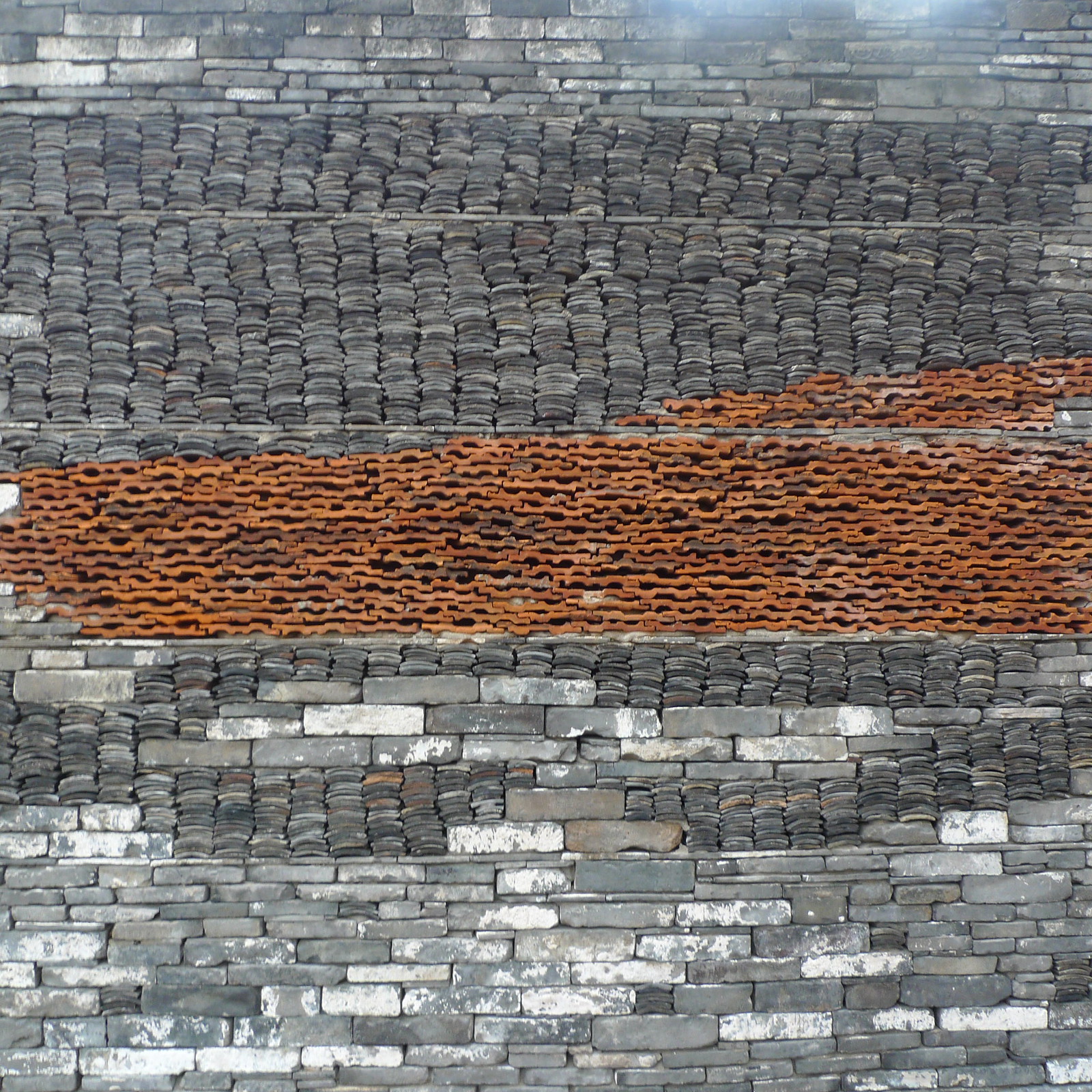
The Pritzker essay by Grace Ong Yan described it: “It is at once a rejection of China’s demolition and renewal projects, and a way to ensure continuity of the region’s history in its new construction.”5
Xiangshan Campus, China Academy of Art (2004-2007): Two Million Salvaged Tiles
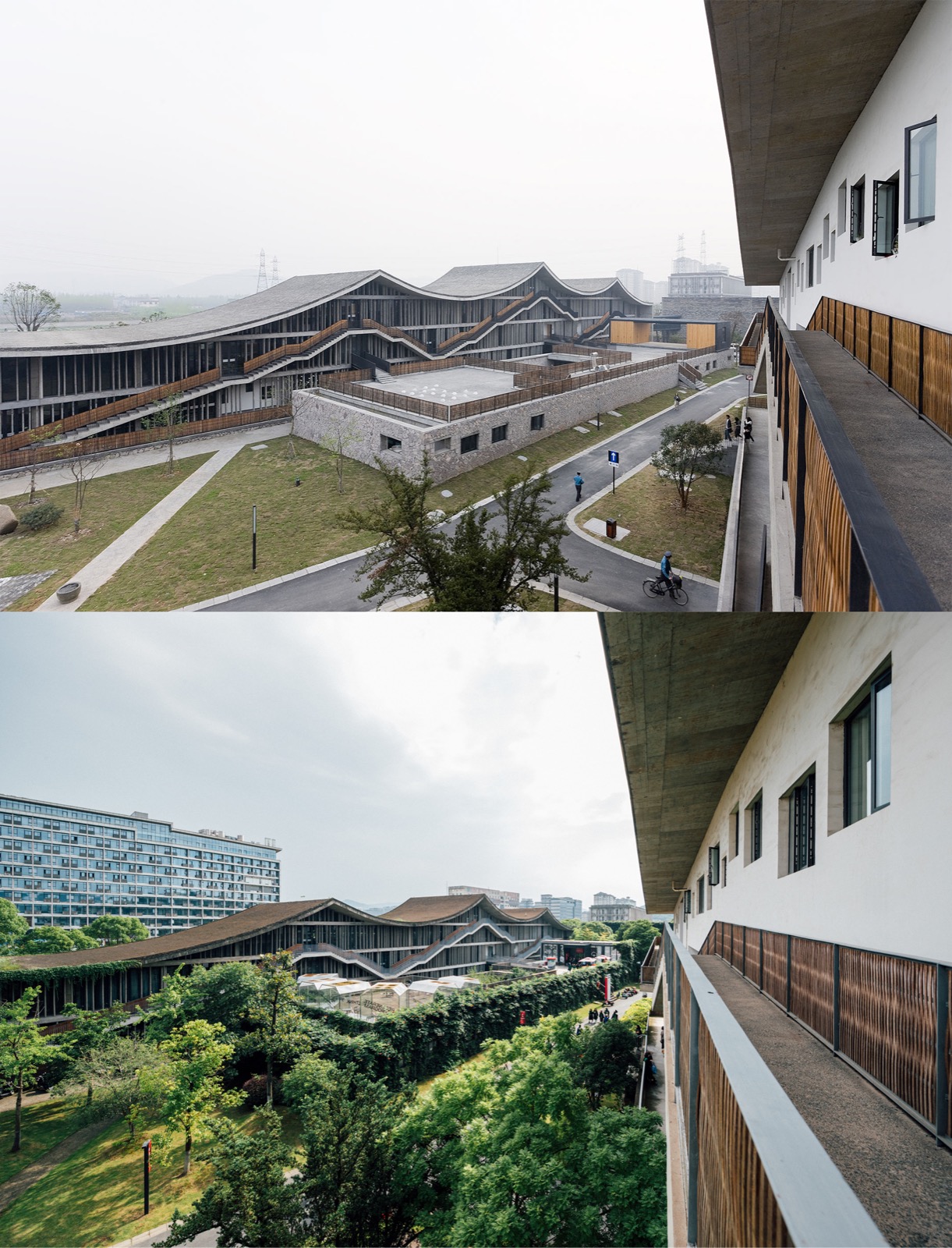
Wang designed more than twenty buildings for the China Academy of Art campus in Hangzhou’s tea-producing hills, salvaging over two million tiles from demolished traditional houses for roof coverings. The planning is not grid-based but what Wang calls “a tight layout of scattered architecture,” with buildings placed in relation to terrain and each other rather than on a rational grid.3
The campus uses rammed earth, cement cast in bamboo formwork, and plain masonry construction. The four basic building types all prioritize the roof, the element that connects the building to the sky and the rain. The salvaged tiles mean every roof carries material from the demolished houses of Zhejiang province, making the campus literally a new home for displaced architectural memory.
Wa Shan Guesthouse (2013): 2,000 Cubic Meters of Rammed Earth
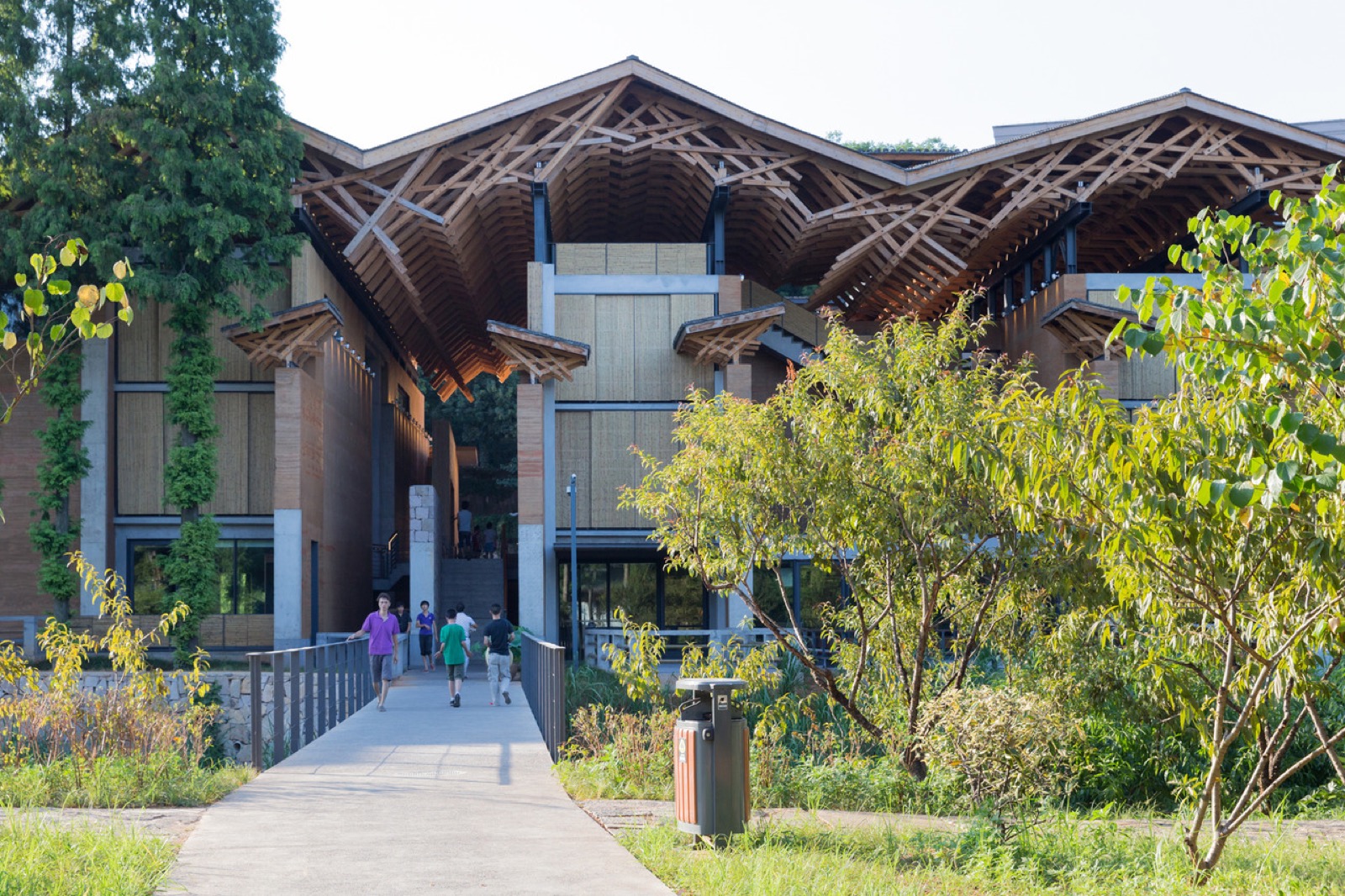
Part of the Xiangshan Campus, the Wa Shan Guesthouse contains 2,000 cubic meters of rammed earth walls, using rubble from demolished villages as fill instead of quarried earth. The artificial hill on its roof is covered in traditional fired roof tiles, and bamboo pedestrian bridges allow access to the undulating surface.7
The guesthouse pushes the salvage method to its structural limit: the demolished villages are not just a surface treatment. They are the structure itself, compressed into walls, walked upon as paths, inhabiting the building as literally as the guests do.
The Method
“My typical way, say, of designing a large building for the campus is that I think about it and make some small sketches, maybe for two months. Then, and this is a very typically Chinese way, one morning I get a feeling that is very clear. I pull out the paper, and I draw it from this end to that end, maybe working four hours before I finish the design.”8
The apparent spontaneity conceals years of preparation. The seven years Wang spent learning from craftsmen (1990-1997) are embedded in every design decision. “You should understand what your workers and your craftsmen do,” he says. “My way, I call it the ‘dirty way.’ A little bit dirty, a little bit imperfect. I like the feeling. I don’t like perfect things.”8
Amateur Architecture Studio accepts only one or two commissions per year. “We want to do interesting things, we want to do good work.”1 In a country building faster than any nation in history, Wang’s deliberate slowness is a political act as much as an aesthetic one. The speed is what demolishes the villages. The slowness is what preserves them.
“The computer connects to your brain,” Wang says. “But the hand, it connects to your heart and your body.”1 He draws by hand and builds with craftsmen who work by hand. The method is deliberately analog in a country that has digitized construction faster than any other.
Influence Chain
Who Shaped Him
Aldo Rossi gave Wang his theoretical framework. Wang’s PhD dissertation at Tongji University was directly influenced by Rossi’s The Architecture of the City (1966), which proposed mining the historical evolution of urban environments for architectural forms that embody collective memory. “Rossi’s dual quest for the timeless and the new, a tabula rasa that nevertheless reinvigorated tradition, resonated with Wang’s own search for an architectural syntax.”5
Chinese craftsmen (1990-1997) gave him the manual vocabulary. Seven years of learning rammed earth, timber framing, and masonry from working builders meant Wang understood materials as physical processes, not abstract specifications. “Craftsmen are smarter than architects,” he says.4
Who He Shaped
Material memory as architectural practice. Wang demonstrated that salvaged materials are not a constraint but a design material, and that the history embedded in a brick is as important as its structural properties. Every architect who uses reclaimed material in a meaningful way (not just as greenwashing) operates in the space Wang opened. Kunle Adeyemi extends this principle into the Global South, building with locally available materials and community labor to create architecture that belongs to its place rather than being imposed upon it.
The “amateur” position. Wang’s rejection of professional architecture’s complicity in China’s demolition culture is a model for how an architect can resist institutional pressure without abandoning practice. He did not protest. He built differently.
The Throughline
Wang Shu inverts the principle that Frank Lloyd Wright established. Wright’s buildings are of their sites: Fallingwater uses sandstone quarried from the property. Wang’s buildings are of other sites — demolished villages whose materials are reborn in new structures. Wright builds from what the land offers. Wang builds from what the demolition crews discard. Both treat materials as carriers of meaning. But Wright’s materials carry the meaning of the place they came from. Wang’s materials carry the meaning of the places that no longer exist. Tadao Ando builds with concrete, a material without history. Wang builds with bricks that have a thousand years of it. (Series bridge)
What I Take From This
“Craftsmen are smarter than architects.” The people closest to the material understand it better than the people who specify it. In software, the deployment engineer who runs the system in production understands constraints the architect who designed it never considered.
FAQ
What is Wang Shu’s design philosophy?
Wang Shu practices “amateur architecture,” a deliberate rejection of professional architecture’s complicity in China’s demolition-and-rebuild development model. He builds with salvaged materials (bricks, tiles, rubble from demolished villages) to preserve material memory and uses traditional Chinese construction techniques (rammed earth, wapan dry-walling) alongside modern structures. His buildings are intentionally imperfect: “a little bit dirty, a little bit imperfect. I like the feeling.”48
What did Wang Shu design?
Wang co-founded Amateur Architecture Studio with Lu Wenyu in 1997 in Hangzhou. His key works include the Ningbo History Museum (2008, built from millions of salvaged bricks), the Xiangshan Campus of the China Academy of Art (2004-2007, two million salvaged tiles), and the Wa Shan Guesthouse (2013, 2,000 cubic meters of rammed earth). He received the Pritzker Prize in 2012, the first Chinese citizen to win it.23
Why does Wang Shu use demolished buildings as material?
Wang has described China as having demolished approximately 90% of its traditional architecture in the twenty-five years preceding his major work. He salvages bricks and tiles from demolition sites because the materials carry the memory of the buildings they came from. Using them in new construction is an act of preservation: the demolished villages continue to exist, materially, in the walls of Wang’s buildings.45
What can designers learn from Wang Shu?
Slow down. Wang accepts one or two commissions per year in a country building thousands of projects simultaneously. Learn the craft before designing with it. His seven years studying with craftsmen produced more architectural knowledge than his university degrees. And imperfection is not failure: “perfect things are just a lot of imperfect things put together.” Kenya Hara shares this reverence for the imperfect and the empty – his design philosophy treats blankness not as absence but as a vessel waiting to receive meaning, the same way Wang treats salvaged bricks as vessels carrying the memory of demolished homes. The design guide maps these connections across the full series.
Sources
-
Wang Shu, conversation with Toshiko Mori, Architectural League of New York, April 2, 2013. “Prize should go to us,” “hand connects to heart,” “perfect things” quote, annual commission limit. ↩↩↩↩
-
Pritzker Architecture Prize, “Announcement: Wang Shu.” “Being an artisan or a craftsman is an amateur,” prize reaction. ↩↩
-
Pritzker Architecture Prize, “Biography: Wang Shu.” “Architecture is spontaneous,” education, founding of Amateur Architecture Studio. ↩↩↩
-
Wang Shu, PIN-UP Magazine interview by Andrew Ayers. “90 percent demolished,” “craftsmen are smarter than architects,” “scholar first,” demolition crisis context. ↩↩↩↩↩
-
Cole Roskam, “Structures of Everyday Life,” Artforum, November 2013. Aldo Rossi influence, Ningbo Museum analysis, Wright/brick connection, Grace Ong Yan essay reference. ↩↩↩↩
-
Vladimir Belogolovsky, interview with Wang Shu, STIRworld, April 24, 2021. “Architecture completed by thousands of hands,” cultural continuity. ↩
-
Architectural Review, “Wa Shan Guesthouse.” 2,000 cubic meters rammed earth, bamboo bridges, tile-covered artificial hill. ↩
-
Wang Shu, Cite Magazine interview, Spring 2012. “The dirty way,” design process description, “I don’t like perfect things.” ↩↩↩