Design Philosophy: Hiroshi Fujiwara — I Copy with Respect

The Principle
“I copy many things – almost everything I do could be called a copy in some way. But I copy with a certain respect.” – Hiroshi Fujiwara, Interview Magazine, 20101
Fujiwara does not design objects. He selects them. Fragment Design – his consultancy, operated by a team of two – exists not to fabricate products but to place a thunderbolt logo on other brands’ products. The thunderbolt is not a brand mark in the conventional sense. It is a curatorial stamp: this object has been selected, recontextualized, and endorsed by Fujiwara’s taste. The selection is the creative act.
This is DJing applied to fashion. A DJ does not compose music. A DJ selects records, sequences them, and creates a new experience from existing material. Fujiwara was a DJ before he was a designer – one of the first to bring hip-hop records from New York to Tokyo – and the method transferred intact. “Hip hop is based on sampling, which is like reconstructing from what you already have, and that’s fascinating,” he has said. “This had an impact not only on music but on fashion as well.”2
Context
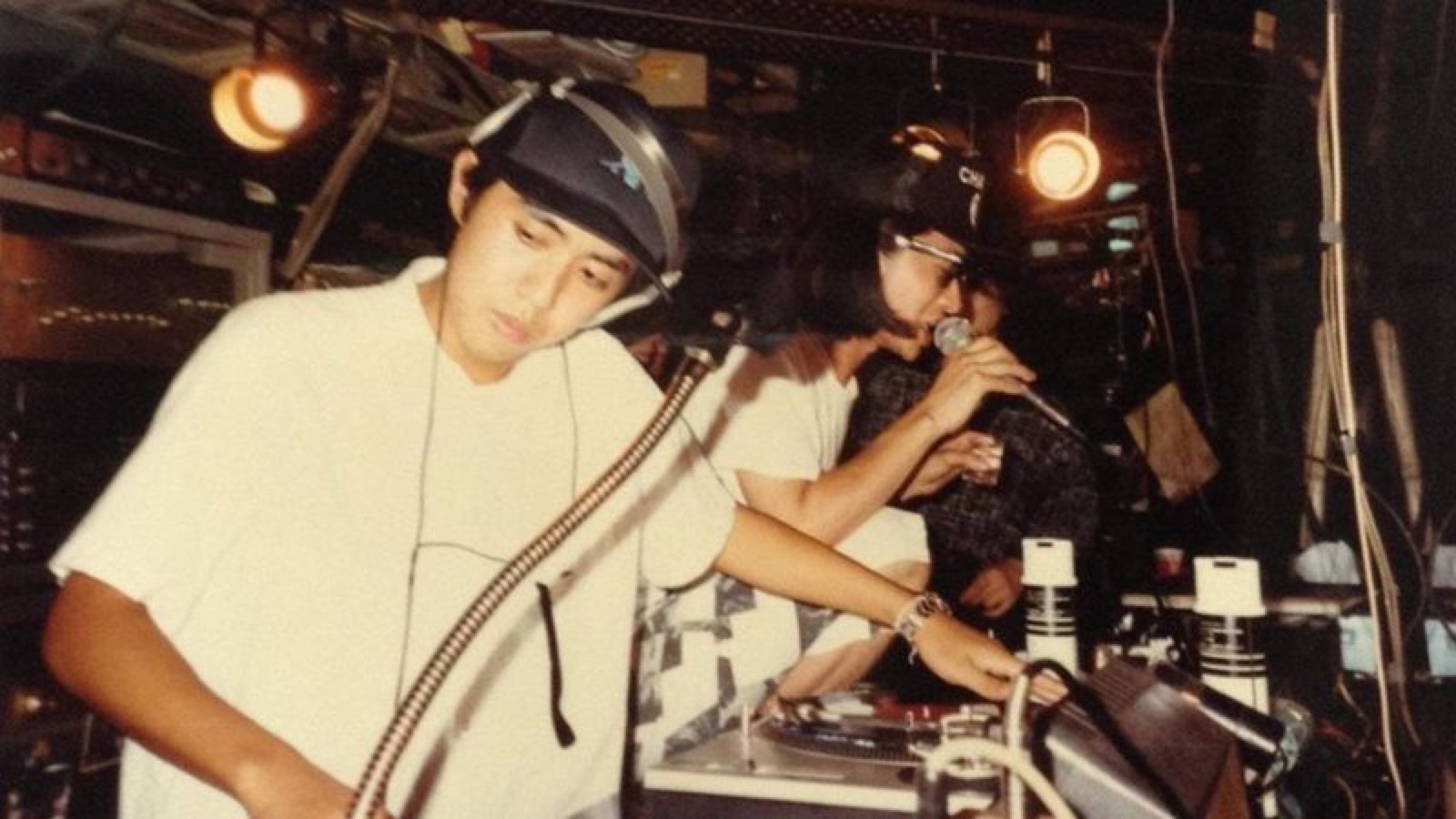
Hiroshi Fujiwara was born in 1964 in Ise, Mie Prefecture, Japan. “When I was 18 years old, I came to Tokyo from my hometown, Ise, in the countryside,” he told Interview Magazine.1 From Tokyo, he traveled to London in 1982, where he visited Malcolm McLaren and Vivienne Westwood’s World’s End shop and absorbed the punk ethos. He then discovered hip-hop at The Roxy Theatre in New York, brought records back to Tokyo, and became one of Japan’s first hip-hop DJs.3
In 1985, he co-founded Tiny Panx, Japan’s first hip-hop duo, with Kan Takagi. They opened for the Beastie Boys on their first Japanese tour. In 1987, he co-created the “Last Orgy” column in Takarajima magazine – a recommendations column for music, clothing, and film. Items he mentioned sold out the next day. The column made him a tastemaker before the word existed in Japanese fashion.4
In 1990, he founded GOODENOUGH. The name choice was deliberate – he did not attach his own name to the brand. “If I attached my name to the brand, only people who liked me would buy it,” he explained. “They wouldn’t be able to see the clothes for what they were.”5
In 1993, Fujiwara helped NIGO and Jun Takahashi open NOWHERE, a small store in Ura-Harajuku (hidden Harajuku) on a budget of approximately 400,000 yen – about $4,000. NIGO had been Fujiwara’s assistant for DJing and styling. A local store clerk gave Nagao the nickname “NIGO” (number two) for his resemblance to Fujiwara. NOWHERE became the focal point of the Ura-Harajuku scene and the launchpad for A Bathing Ape.3
“Some people work like a band, some work like an orchestra – I work solo,” Fujiwara has said.5 Fragment Design, founded in the early 2000s, operates with a team of two. The smallness is not a limitation. It is the method: Fujiwara’s output is his taste, applied through collaboration, not his hands applied to fabric.
The Work
Nike HTM (2002-2016): The Jam Session
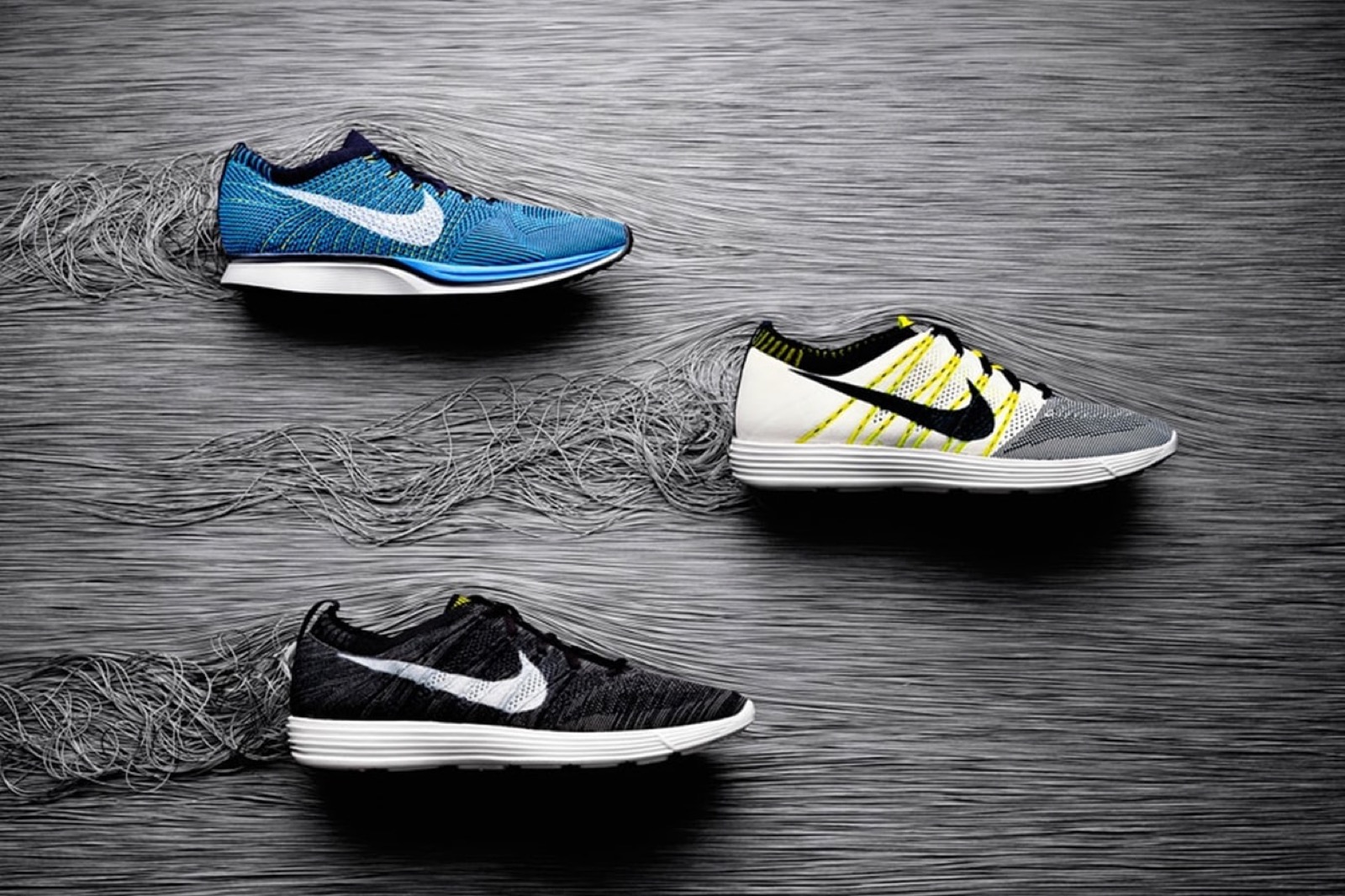
HTM – Hiroshi, Tinker Hatfield, Mark Parker (Nike CEO) – was a fourteen-year collaboration that produced 32 releases. The trio worked as what Parker called “a jam session” – each bringing different expertise to a shared process.6
“This was a time when luxury sneakers were not so common,” Fujiwara recalled. “So at the beginning, HTM became an opportunity to add a sense of luxury to sneakers.”6 The collaboration introduced Flyknit technology to market (2012) and debuted with the Air Force 1 (2002). HTM demonstrated that Fujiwara’s curatorial method could operate at Nike’s scale without being absorbed by it.
Fragment x Air Jordan 1 (2014): The Most Valuable Thunderbolt
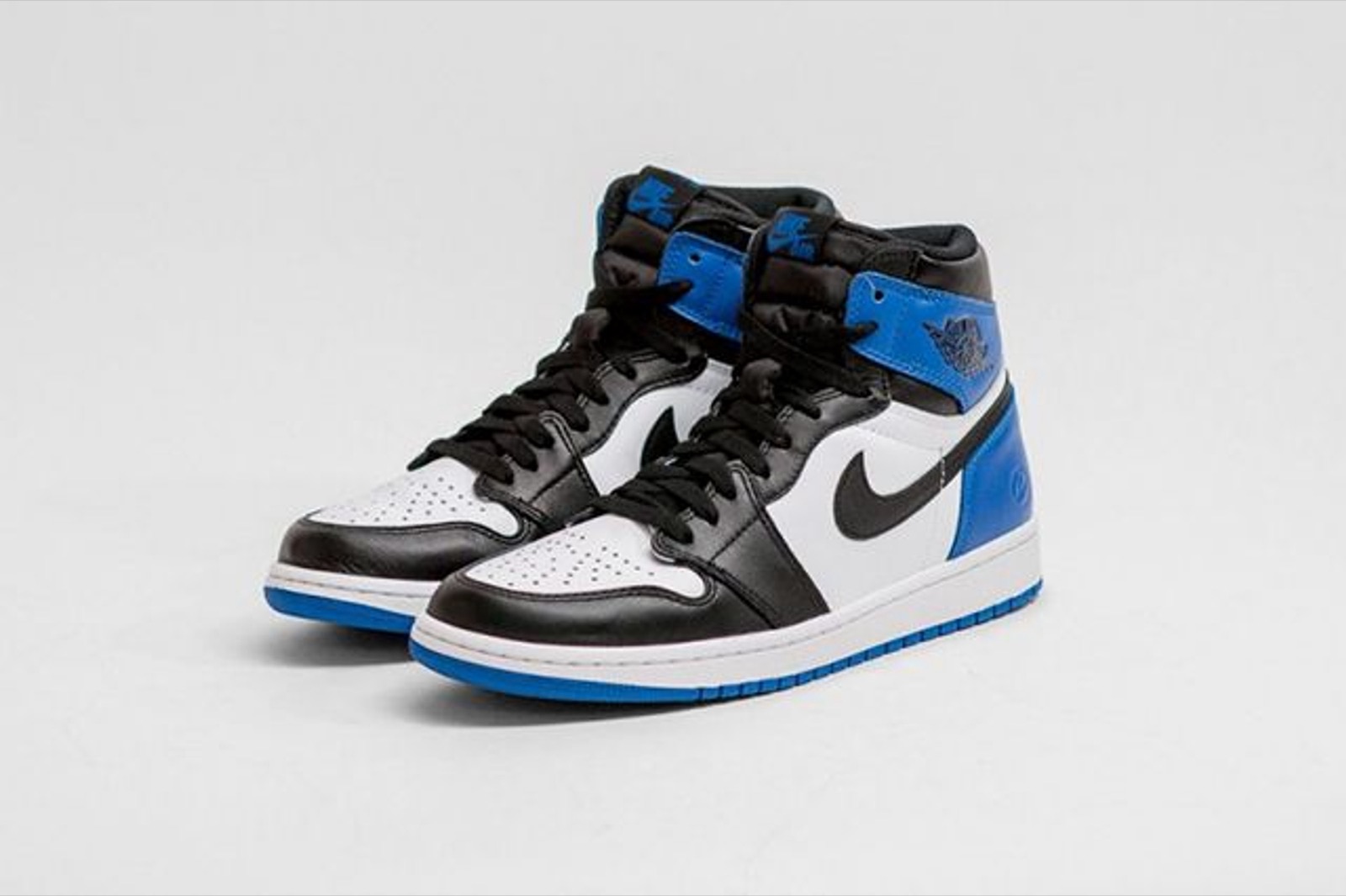
The Fragment x Air Jordan 1 is one of the most valuable Jordan 1 releases in history. The design intervention is minimal: a black-toe mudguard, a sport-royal heel panel, and a Fragment thunderbolt embossed on the heel. Retail was $185. Resale ranges from $1,800 to over $5,000.5
The value is not in the materials, the construction, or the innovation. It is in the selection. Fujiwara chose which colorway, which silhouette, which detail to add and – more importantly – which to leave alone. The Jordan 1 is already a finished design. The thunderbolt says: Fujiwara endorses this specific version. The endorsement is the product.
The Conveni (2018-2020): The Store as Medium
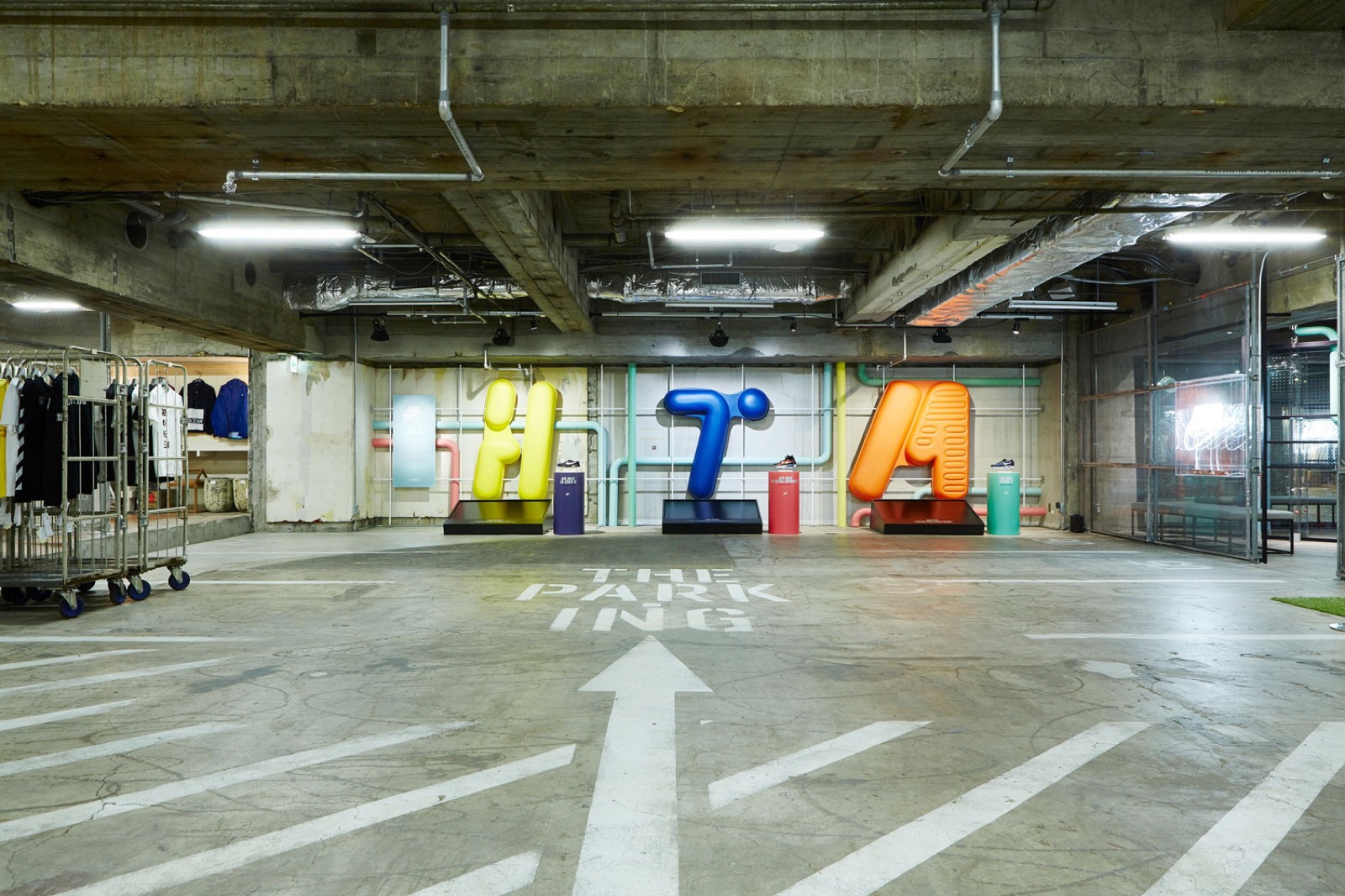
The Conveni was a convenience store concept shop at Sony Ginza Park in Tokyo. It looked like a 7-Eleven but sold collaborations with Off-White, PEACEMINUSONE, and Vogue alongside curated everyday goods. The space was designed by architect Nobuo Araki. The concept was Fujiwara’s: retail as editorial, the store as a magazine you walk through.5
The Conveni, The POOL Aoyama (2014-2016), and The Parking Ginza – Fujiwara’s sequence of concept shops – treat physical retail the same way he treats fashion: as a medium for curation rather than a channel for product. Each shop had a limited lifespan, a specific editorial voice, and a rotating selection that made the space itself the design object.
Starbucks Japan: The Everyday Collaboration
Fujiwara designed an entire Starbucks branch at Miyashita Park, Shibuya (opened 2020). The concept: “a box in the middle of a vast vacant lot” inspired by “an overseas gas station in the middle of an endless road.” The collaboration extends to exclusive FRGMT/MYST branded products available only in Japan.7
The Starbucks project demonstrates the final stage of curation-as-design: the curator’s sensibility applied not to a luxury drop but to a chain coffee shop. The intervention is the same as the thunderbolt on a Jordan 1 – Fujiwara selects, contextualizes, and endorses – but the audience is not sneaker collectors. It is people buying coffee.
The Method
“I kind of want to be in the middle of the majority and the minority,” Fujiwara told Interview Magazine. “I don’t really want people to know what I am.”1 The ambiguity is the method. Fujiwara is not a fashion designer, not a musician, not a shopkeeper, not a brand consultant. He is all of these applied through a single sensibility that refuses to be categorized.
His approach to collaboration is precise: “I try not to go too far away from brand originality while exploring new ideas.”8 The restraint is the value. A Fragment x Nike collaboration does not look like Fragment. It looks like Nike – with a thunderbolt. The collaborator’s identity is preserved. Fujiwara’s contribution is the edit, not the overhaul.
“Actually, regardless of whether it is ‘new’ or ‘old,’ I honestly just want to put out whatever is in my archive of things that I like and want to do,” he has said.2 The archive – of references, records, objects, memories – is the design tool. The output is a curated selection from that archive applied to whatever medium presents itself.
Influence Chain
Who Shaped Him
Punk and hip-hop culture – experienced firsthand in London and New York in the early 1980s. Punk gave him the attitude (“makes you do something a little strange or make fun of something popular”). Hip-hop gave him the method (sampling, reconstructing from what already exists). (Direct influence)2
Malcolm McLaren and Vivienne Westwood – the World’s End shop in London was his first encounter with fashion as cultural provocation rather than clothing. (Direct influence)3
Who He Shaped
NIGO was literally “Fujiwara number two.” Fujiwara mentored him, helped him open NOWHERE in 1993, and connected him to the network that made A Bathing Ape possible. NIGO went on to co-found Billionaire Boys Club with Pharrell Williams and eventually became creative director of Kenzo. The Fujiwara → NIGO → Pharrell pipeline is one of the most consequential influence chains in streetwear history. (Direct influence)3
Virgil Abloh acknowledged Fujiwara’s influence directly: “He specifically contributed to this way of design and culture” that Abloh believed in. Both applied hip-hop methodology to fashion. Fujiwara developed the formula – curation as creation, the logo as endorsement stamp, the collaboration as primary output – that Abloh perfected at Off-White and Louis Vuitton. (Direct influence)9
The Throughline
Fujiwara is the bridge between this series’ Japan branch (Hara, Sato, Ando, Maki) and its street/fashion branch (Dapper Dan, Abloh, Pharrell, Hatfield). He connects them through method: Japanese aesthetic restraint applied through hip-hop’s curatorial logic. Hara’s emptiness and Fujiwara’s minimalism come from the same cultural root but serve different purposes – Hara invites contemplation, Fujiwara creates desire. Both understand that what you leave out is as important as what you include. (Series bridge)
What I Take From This
“I copy with respect.” That is how open-source contribution works. You take an existing project, apply a specific edit, and the edit – not the original – is your contribution. The fork is the creative act. The respect is in keeping what works.
FAQ
What is Hiroshi Fujiwara’s design philosophy?
Fujiwara practices curation as creation. He selects existing products, recontextualizes them through collaboration, and applies his Fragment Design thunderbolt as an endorsement mark. The method derives from DJing and hip-hop sampling: “reconstructing from what you already have.” His interventions are minimal by design – the collaborator’s identity is preserved, and Fujiwara’s contribution is the edit, not the overhaul.12
What did Hiroshi Fujiwara design?
Fujiwara founded GOODENOUGH (1990), co-created the Ura-Harajuku scene (1993), and founded Fragment Design (early 2000s). Key works include the Nike HTM collaboration (2002-2016, with Tinker Hatfield and Mark Parker), Fragment x Air Jordan 1 (2014), Fragment x Louis Vuitton (2017), The Conveni concept store (2018-2020), and the Starbucks Miyashita Park branch (2020). He is called the “godfather of streetwear.”35
How does Fujiwara’s approach differ from Virgil Abloh’s?
Both applied hip-hop methodology to fashion. Fujiwara curates – he selects existing products and applies a minimal mark (the thunderbolt). Abloh annotated – he took existing products and made the commentary visible through quotation marks and deconstruction. Fujiwara’s interventions are nearly invisible. Abloh’s were deliberately conspicuous. Fujiwara mentored the generation (NIGO, Abloh) that made the method mainstream.19
What can designers learn from Hiroshi Fujiwara?
Selection is creation. The creative act is not always fabrication from scratch – it can be choosing the right thing, placing it in the right context, and knowing when to stop editing. Respect the source material. And work solo if your output is taste: “Some people work like a band, some work like an orchestra – I work solo.”
Sources
-
Hiroshi Fujiwara, interview with Fraser Cooke, Interview Magazine, March 2010. “I copy many things,” “middle of the majority and the minority,” archive-first approach, culture stagnation. ↩↩↩↩↩
-
Hiroshi Fujiwara, In Sheep’s Clothing HiFi interview. “Hip hop is based on sampling,” DJ scene origins, archive methodology. ↩↩↩↩
-
Yokogao Magazine, “Before Fragment Design: Origins of Hiroshi Fujiwara” and “Complete History of Ura-Harajuku.” London trip, NOWHERE opening, NIGO mentorship. ↩↩↩↩↩
-
Sabukaru Online, “Last Orgy: Legacy of Japan’s Most Important Fashion Column.” Takarajima magazine column, 1987 debut. ↩
-
Grailed, “Godfather of Streetwear: Life and Legacy of Hiroshi Fujiwara.” GOODENOUGH naming, Fragment x Jordan 1 resale, solo operator quote. ↩↩↩↩↩
-
nss magazine, “HTM Oral History.” 32 releases, “jam session,” luxury sneaker origins. ↩↩
-
Japan Today, “Fragment Design creates a new Starbucks in Tokyo.” Miyashita Park concept, “gas station” inspiration. ↩
-
Hiroshi Fujiwara, Man of Many interview. “Not go too far away from brand originality.” ↩
-
Virgil Abloh and Hiroshi Fujiwara, Hypebeast interview on OFF-BLACK. “Specifically contributed to this way of design and culture.” ↩↩