Design Philosophy: Zaha Hadid, There Are 360 Degrees

The Principle
“There are 360 degrees, so why stick to one?” – Zaha Hadid, The Guardian, 20031
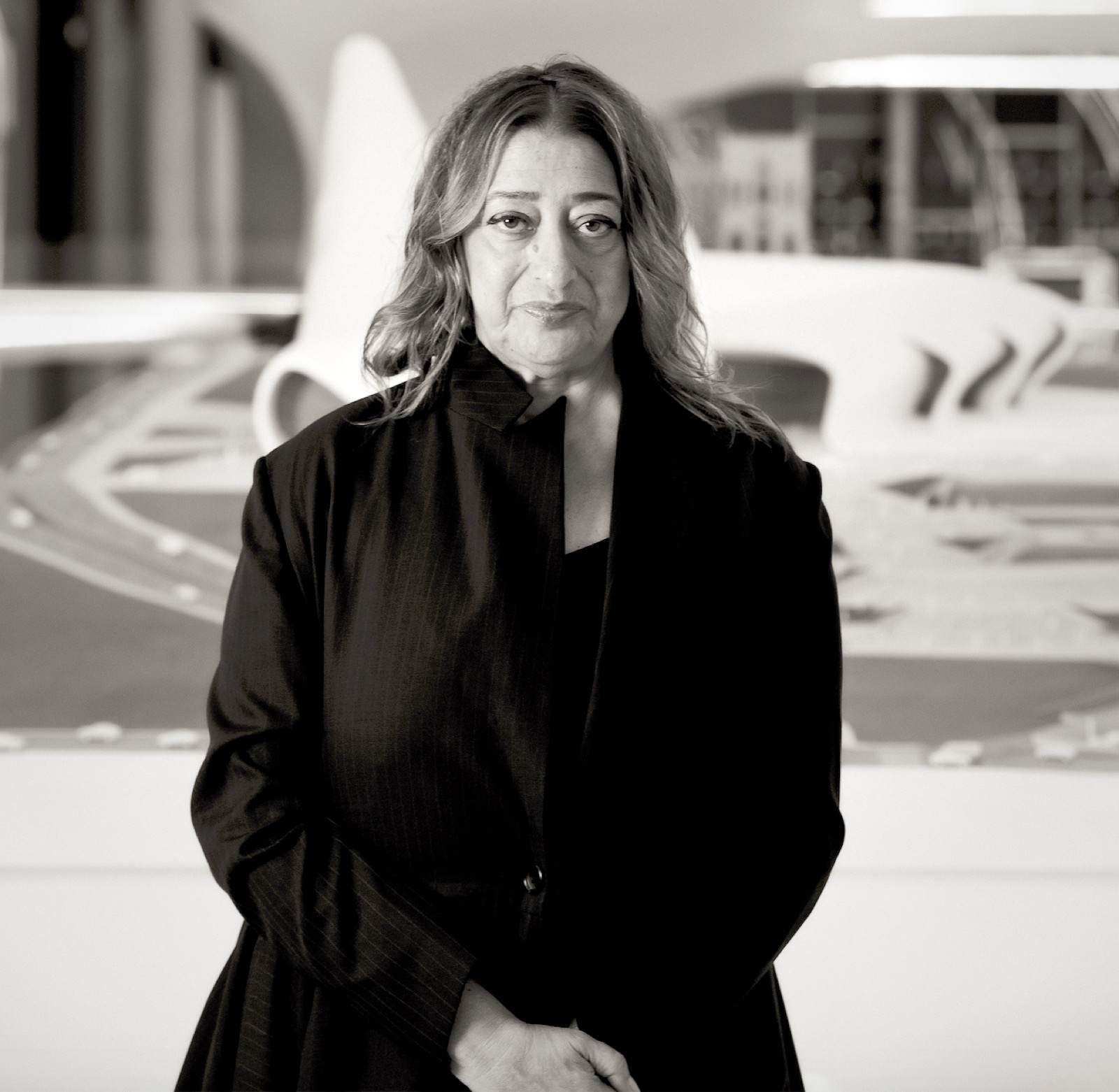
Hadid rejected the right angle. Not as an aesthetic preference – as a philosophical position. In the taste infrastructure that shapes how we see the built environment, Hadid’s contribution was to prove that fluidity is structural, not decorative. The right angle is convention. Convention is the residue of solved problems that have been repeated past the point where the original problem still exists. Architecture had been building on a ninety-degree grid for so long that the grid itself had become invisible, mistaken for a law of physics rather than a cultural habit. Hadid made the habit visible by refusing to participate in it.
Her buildings flow, curve, and fold. The walls become floors. The floors become ceilings. The terrain becomes the building. This is not decoration applied to structure. It is structure reconceived from first principles: if you start from geometry rather than convention, the forms that emerge are continuous rather than boxed. For a broader map of how design philosophies connect across disciplines, see the design guide.
Context
Zaha Hadid was born in Baghdad in 1950. Her father, Mohammed Hadid, was a leading liberal Iraqi politician and industrialist. She was educated at a religiously inclusive Catholic school in Baghdad, boarding schools in Switzerland and England, and studied mathematics at the American University of Beirut from 1968 to 1971. The mathematical foundation was not incidental – it became the operating system for her spatial thinking.2
In 1972, she enrolled at the Architectural Association School in London, where she studied under Rem Koolhaas and Elia Zenghelis. After graduating with the Diploma Prize in 1977, she joined Koolhaas’s Office of Metropolitan Architecture (OMA) as a partner. In 1979, she founded Zaha Hadid Architects.2
For the next fourteen years, she was the most celebrated architect in the world who had not built a building. Her 1983 competition-winning design for The Peak in Hong Kong – a “horizontal skyscraper” leisure club – was never constructed. Her paintings and drawings were exhibited in galleries and museums. The architecture press published her proposals. But no client would build them. She was called “the paper architect” – a term that was simultaneously a compliment and a dismissal.3
The Cardiff Bay Opera House competition crystallized the problem. Hadid won the design competition three times. The building was still not awarded to her. The rejection was attributed to political and institutional resistance, and Hadid herself identified a “triple whammy” – being a woman, a foreigner, and doing unconventional work. “I am judged a lot more harshly because I am a woman,” she said.4
The period was not wasted. Rolf Fehlbaum, who commissioned her first built project, observed: “Without ever building, Zaha Hadid would have radically expanded architecture’s repertoire of spatial articulation.”3 The decade of unbuilt work was research – the accumulation of formal vocabulary that would, when the buildings finally came, arrive fully formed rather than tentative.
The Work
Vitra Fire Station (1993): Movement Frozen
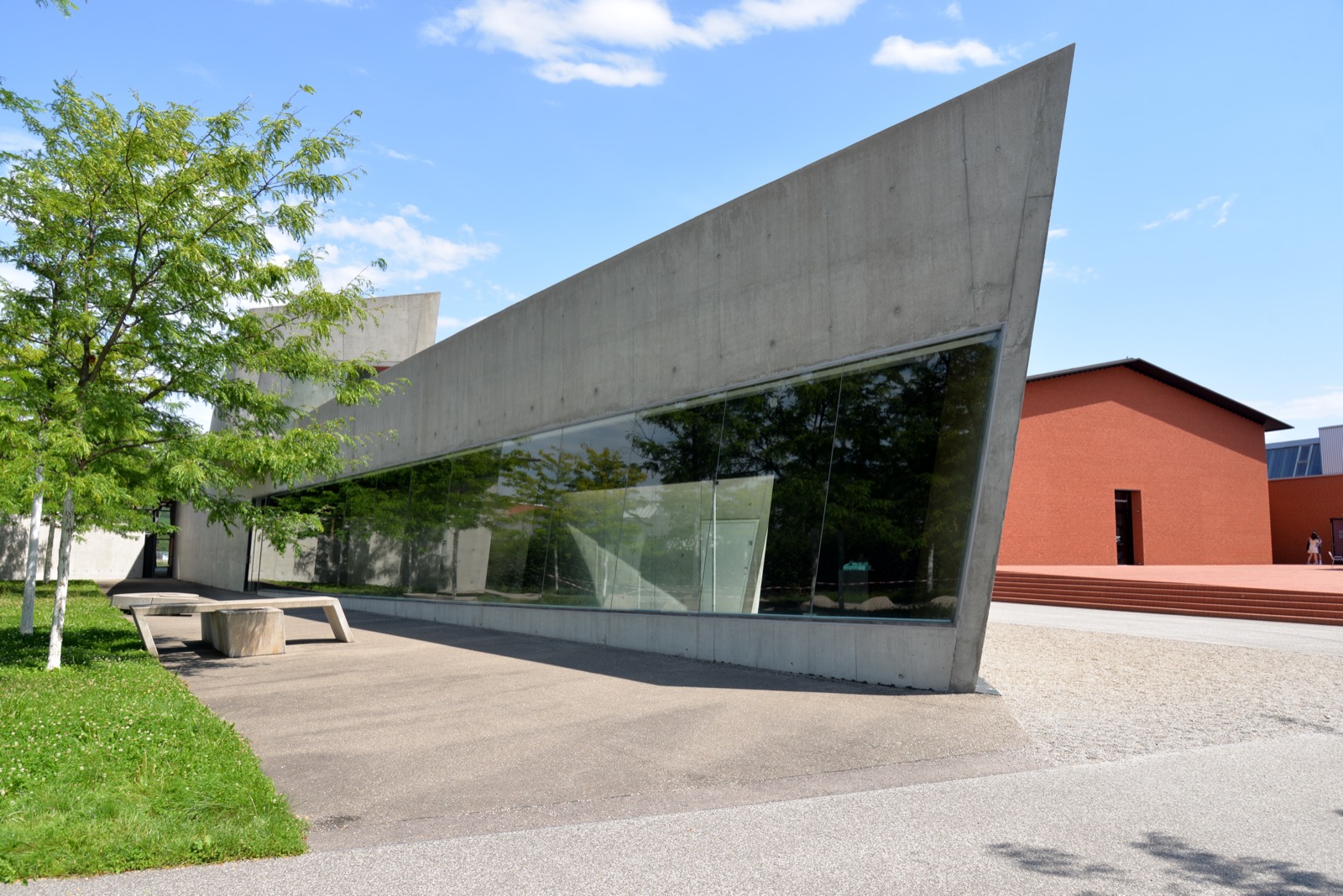
Hadid’s first completed building was a fire station for the Vitra furniture company in Weil am Rhein, Germany. The commission came from Rolf Fehlbaum, who understood that Hadid’s drawings were not fantasies but construction documents waiting for a client willing to build them.5
The fire station is a series of sharp concrete planes that appear to be in motion – walls that lean, tilt, and slice through space rather than standing perpendicular to the ground. Hadid described it as “movement frozen.” The building looks as if a photograph of an explosion was paused at the moment before the pieces separate. It is disorienting, angular, and nothing like any fire station that existed before it.5
The Vitra Fire Station is no longer used as a fire station (a conventional one was built later), but it remains on the Vitra Campus as an exhibition space – proof that Hadid’s vision was buildable, not theoretical.
Rosenthal Center for Contemporary Art, Cincinnati (2003): The American Validation
The Rosenthal Center was Hadid’s first American building and the one that changed the critical consensus. Herbert Muschamp of the New York Times called it “the most important American building to be completed since the Cold War.”6
The building works by pulling the street into the interior. The ground-floor lobby is a continuation of the sidewalk – the same concrete surface flows from outside to inside without a threshold. The galleries stack upward in interlocking volumes, each with different ceiling heights and proportions. The result is a building that feels simultaneously compressed and expansive, where the experience of moving through it is as much the content as the art on the walls.
Heydar Aliyev Center, Baku (2012): Continuous Surface
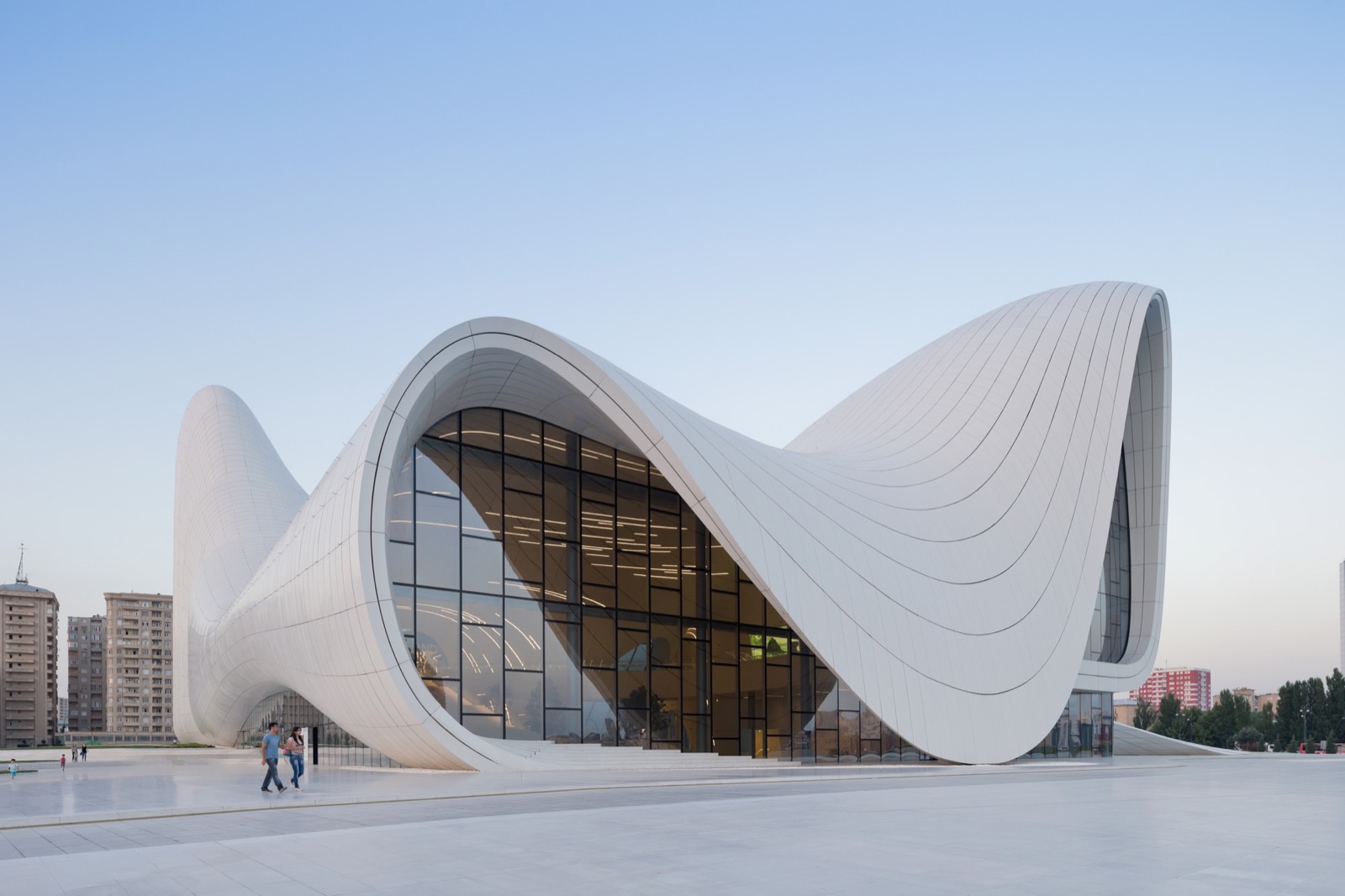
The Heydar Aliyev Center in Azerbaijan is Hadid’s most recognizable building – a flowing white form where the roof, walls, and ground are a single continuous surface with no visible joints or seams. The building appears to rise from the ground rather than sit on it.
Hadid rejected claims that the building was “self-indulgent and wilful,” arguing in her 2016 Royal Gold Medal acceptance speech that she felt “widely misunderstood” by critics. “For me there was never any doubt that architecture must contribute to society’s progress and ultimately to our individual and collective wellbeing,” she said.7
London Aquatics Centre (2012): Olympic Scale
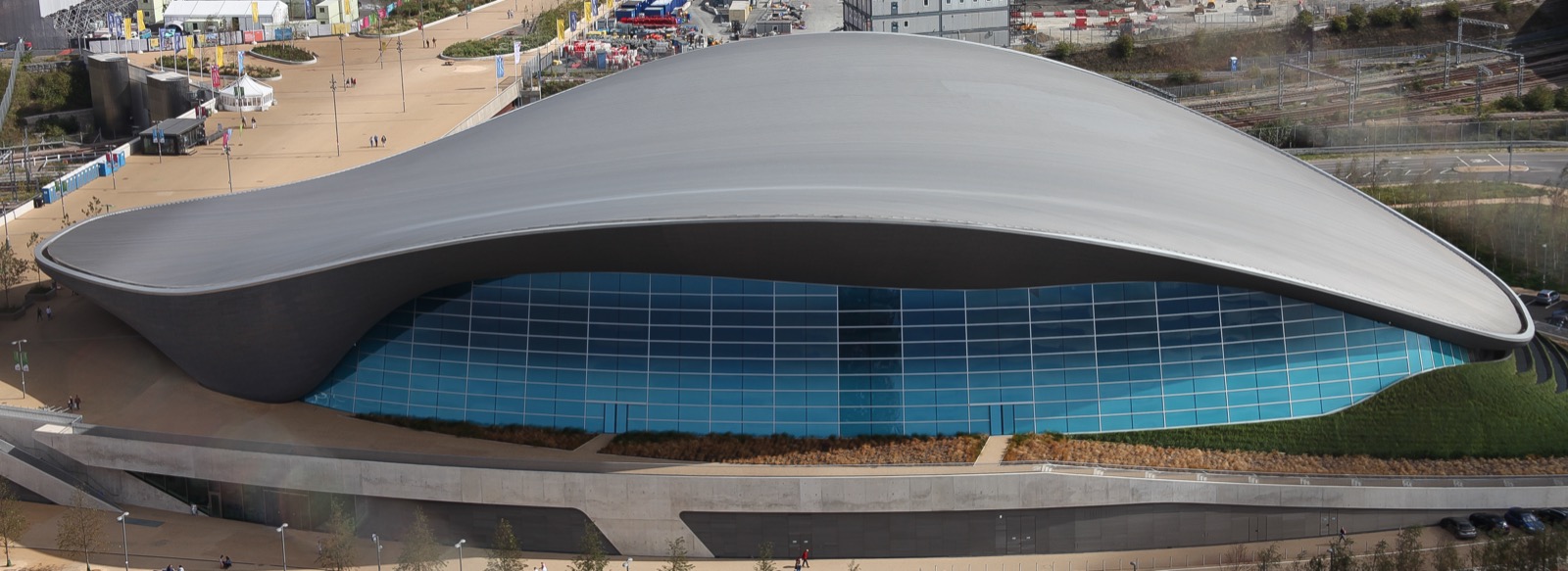
The Aquatics Centre for the 2012 London Olympics is a wave-form roof spanning 160 meters, supported at only three points. The interior is a single open volume containing two 50-meter pools and a diving pool. The roof undulates like a stingray – Hadid’s stated inspiration – creating a space where the geometry of the building responds to the fluid dynamics of the activity it houses: swimming.5
The Method
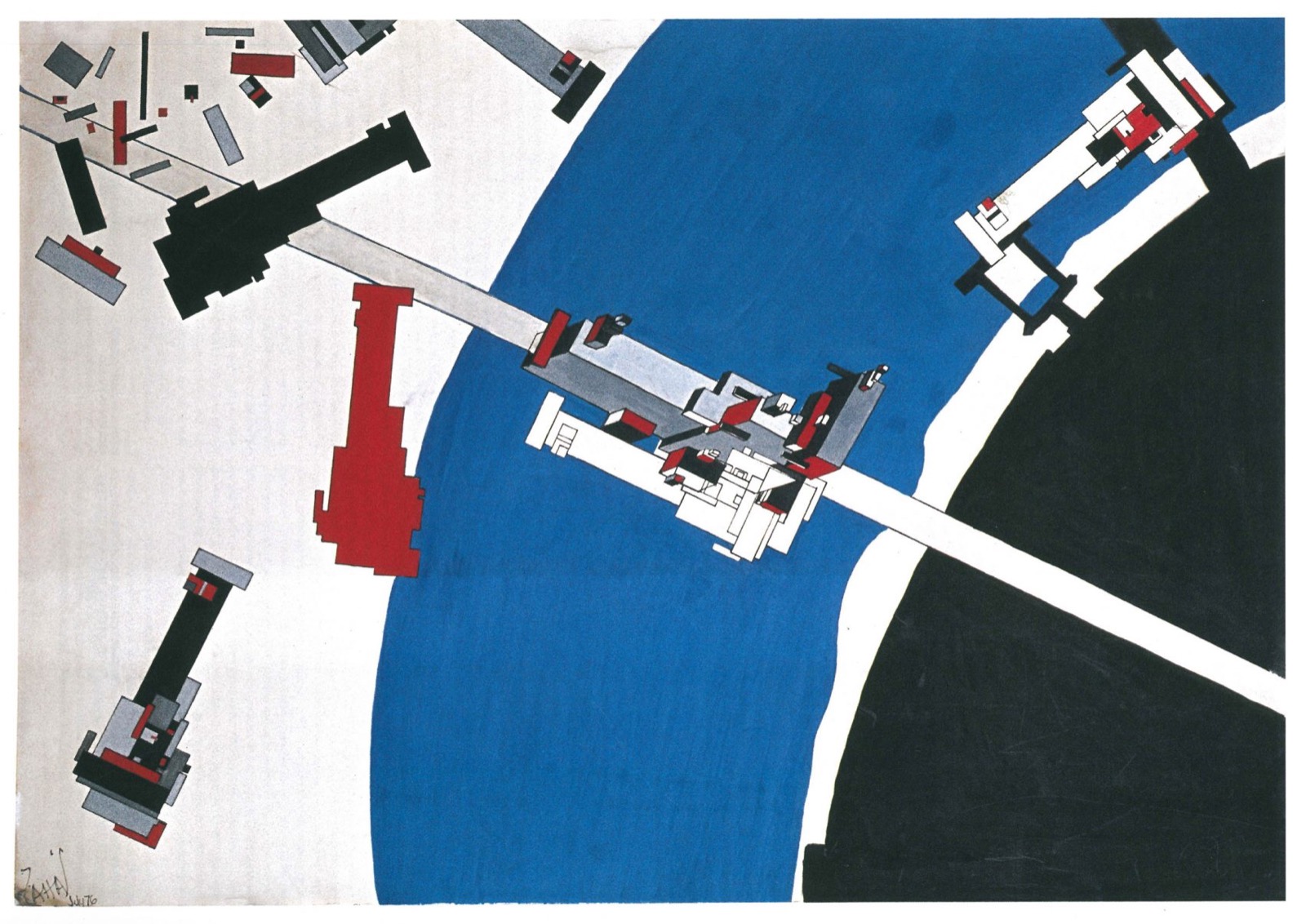
Hadid painted before she built. Her early work – canvases showing buildings from impossible perspectives, fragmented into overlapping planes, influenced by Malevich and the Russian Suprematists – functioned as design investigations. “I was very fascinated by abstraction,” she said. Each painting explored a spatial idea at a resolution that drawings could not capture and models could not convey.8
She produced over 100 sketches per design investigation. “I don’t use the computer,” she said – not as a Luddite rejection of technology, but because her spatial thinking operated through hand-eye coordination at a speed that digital tools could not match. The computer came later, to resolve the structural engineering. The vision came first, through paint and ink.8
“I don’t design nice buildings,” she said. “I like architecture to have some raw, vital, earthy quality.”9 The statement is a rejection of pleasantness as a design goal. Her buildings are meant to be experienced, not admired from a distance. The disorientation is intentional – it forces the occupant to move through space actively rather than passively.
Influence Chain
Who Shaped Her
Rem Koolhaas was her direct teacher at the AA and partner at OMA. His intellectual framework – architecture as a cultural practice, not just a building practice – gave Hadid permission to think of unbuilt work as legitimate architectural production. The fourteen years of “paper architecture” were possible because Koolhaas had established the precedent that ideas matter independently of construction. (Direct influence)2
Kazimir Malevich and Russian Suprematism gave her the formal vocabulary. Her early paintings – fragmented, geometrically explosive, perspectivally impossible – descend directly from Malevich’s compositions. The connection is not decorative. Suprematism proposed that geometric form could exist independently of representation. Hadid proposed that architectural form could exist independently of the right-angle grid. (Direct influence)8
Who She Shaped
Parametric architecture as a field. Hadid’s practice, particularly under partner Patrik Schumacher, became the most prominent proponent of parametric design – using algorithmic tools to generate complex curved forms. Whether one agrees with the results, Hadid proved that continuous, non-orthogonal architecture could be built at institutional scale and survive real use. Neri Oxman extended this principle further, using computational biology to generate forms that are grown rather than drafted.
Women in architecture. The Pritzker Prize in 2004 (first woman in the award’s 26-year history) and the Royal Gold Medal in 2016 (first woman to receive it in her own right) were not symbolic gestures. They were institutional acknowledgments that the “paper architect” had been right all along – and that the resistance she faced was about prejudice, not about the work.
The Throughline
Hadid is the inverse of Tadao Ando. Both won the Pritzker Prize. Both endured long periods without building. Both arrived at architecture from outside conventional training (Ando from boxing, Hadid from mathematics). But their formal languages are opposites: Ando builds with concrete, right angles, and silence. Hadid builds with curves, flow, and spectacle. Ando subtracts until only the essential remains. Hadid generates until the form feels inevitable. Both prove that conviction – the willingness to wait for the world to catch up – is as important as talent.
Fumihiko Maki occupies a third position in this Japanese-European triangle: where Ando creates spiritual enclosures and Hadid generates fluid spectacles, Maki builds modest, urban-calibrated structures that participate in their cities rather than dominating them. And where Hadid’s buildings reject the ground plane, Frank Lloyd Wright honored it – Fallingwater grows from its site the way Hadid’s Heydar Aliyev Center appears to land on its site from somewhere else entirely. (Series bridge)
What I Take From This
Hadid spent fourteen years building nothing. The work she did during that time – the paintings, the competition entries, the unbuilt proposals – was not wasted. It was the research that made the built work possible. The lesson: if you are not building yet, you may still be working.
FAQ
What is Zaha Hadid’s design philosophy?
Hadid’s philosophy centers on the rejection of the right angle and the conventional grid in favor of fluid, continuous architectural forms. “There are 360 degrees, so why stick to one?” she asked. She believed architecture should contribute to collective wellbeing through spatial experience, not merely provide shelter. Her buildings treat roof, wall, and ground as continuous surfaces rather than separate planes.17
What did Zaha Hadid design?
Hadid founded Zaha Hadid Architects in 1979. Her key buildings include the Vitra Fire Station (1993, first built project), Rosenthal Center for Contemporary Art in Cincinnati (2003), Heydar Aliyev Center in Baku (2012), London Aquatics Centre (2012 Olympics), MAXXI museum in Rome (2010), and Guangzhou Opera House (2010). She won the Pritzker Prize in 2004 – the first woman to receive the award.23
Why was Zaha Hadid called a “paper architect”?
For fourteen years (1979-1993), Hadid’s designs won competitions and were exhibited in museums but were not built. Institutional resistance, attributed in part to her gender, nationality, and unconventional formal language, prevented construction. The period was not wasted: Rolf Fehlbaum observed that “without ever building, Zaha Hadid would have radically expanded architecture’s repertoire of spatial articulation.”3
What can designers learn from Zaha Hadid?
Conviction is a design material. Hadid waited fourteen years for her first building, never compromising her formal language to match conventional expectations. The unbuilt years were research, not failure. If the world has not caught up to your vision, the question is whether you are wrong or whether you are early. Hadid was early.
Sources
-
Simon Hattenstone, “Master builder,” The Guardian, February 3, 2003. “There are 360 degrees, so why stick to one?” Also cited in Fast Company retrospective. ↩↩
-
Pritzker Architecture Prize, “Biography: Zaha Hadid.” Baghdad birth, AUB mathematics, AA under Koolhaas, OMA partnership, ZHA founding. ↩↩↩↩
-
Zaha Hadid Foundation, “About Zaha.” Fehlbaum quote on unbuilt work. Also: Pritzker jury citation on “paper architect” period. ↩↩↩↩
-
Architects’ Journal, “Zaha Hadid: ‘I’m judged more harshly because I am a woman.’” Gender discrimination in architecture, “triple whammy.” ↩
-
Zaha Hadid Architects, project archives. Vitra Fire Station, London Aquatics Centre, project descriptions. ↩↩↩
-
Herbert Muschamp, review of Rosenthal Center, New York Times, 2003. “The most important American building to be completed since the Cold War.” ↩
-
Dezeen, “Royal Gold Medal: Zaha Hadid.” Acceptance speech: “architecture must contribute to society’s progress.” ↩↩
-
Designboom, “Interview: Zaha Hadid.” 2007. Painting practice, abstraction, “fluid organization,” development of formal language. ↩↩↩
-
Business Vision, “Zaha Hadid: ‘I don’t design nice buildings.’” ↩