Design Philosophy: Frank Lloyd Wright, Of the Hill, Not On It

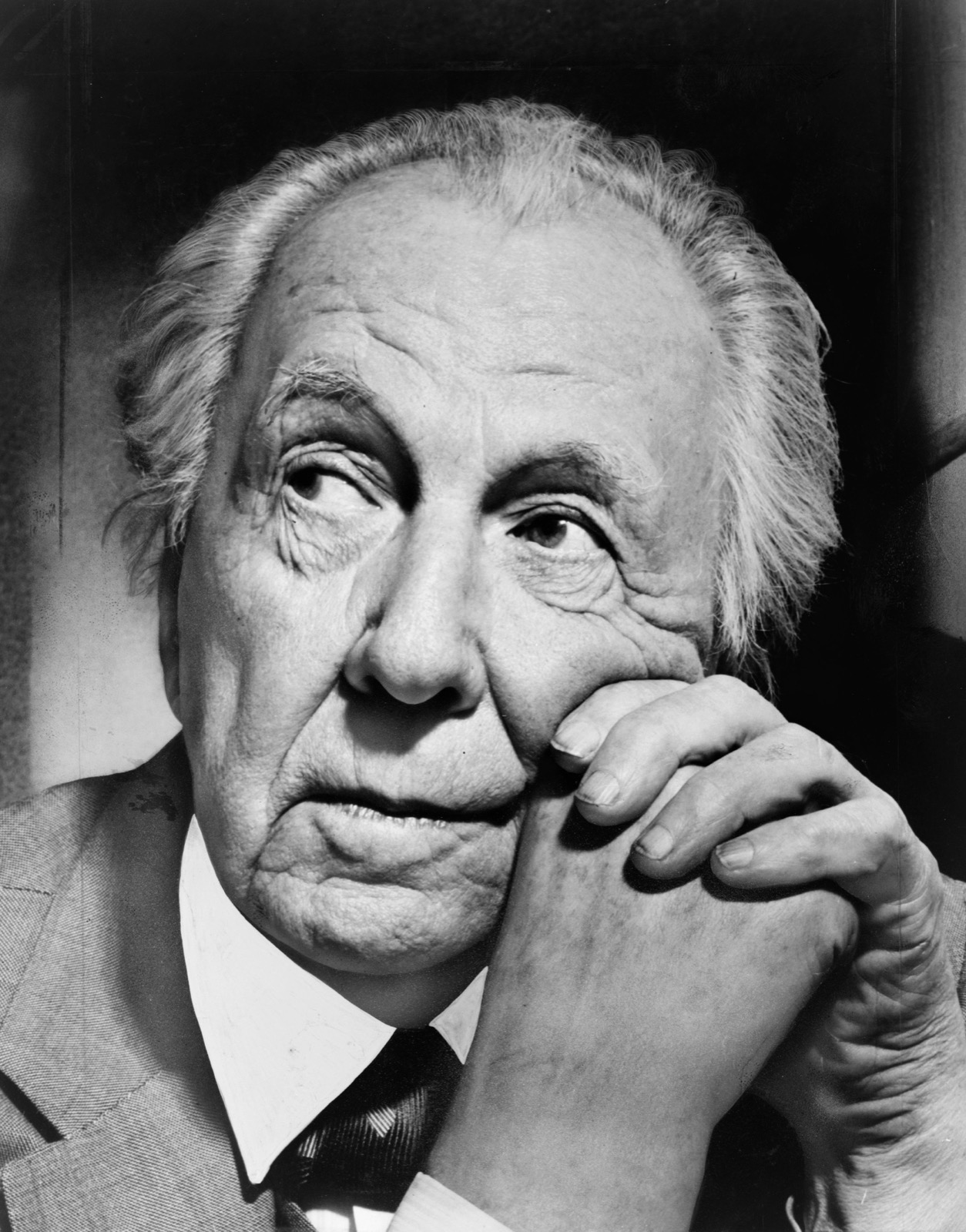
The Principle
“No house should ever be on a hill or on anything. It should be of the hill. Belonging to it.” – Frank Lloyd Wright, An Autobiography1
Wright’s principle is organic architecture: the building grows from its site the way a plant grows from soil. The materials come from the land. The forms respond to the terrain. The structure does not sit upon the earth – it belongs to it. This is not a metaphor. Fallingwater is built from sandstone quarried on the property. Taliesin West is built from desert rock gathered from the surrounding terrain. The building and the site share a material identity because they share a physical origin.
The principle extends beyond materials to form. Wright destroyed the box – the enclosed, orthogonal room that had defined Western architecture for centuries – and replaced it with open, flowing space where interior and exterior merge. Walls became screens. Rooms became zones. The horizon became part of the floor plan.
Context
Frank Lloyd Wright was born in Richland Center, Wisconsin, in 1867. His father was a preacher and musician. His mother, Anna Lloyd Jones, came from a Welsh family settled near Spring Green, Wisconsin – the terrain that would anchor Wright’s career and personal mythology for seventy years.2
In 1887, Wright left Madison for Chicago and was hired by Adler and Sullivan, where he worked directly under Louis Sullivan for six years. Wright called Sullivan his “Lieber Meister” – beloved master. Sullivan’s dictum, “form follows function,” became the seed from which Wright’s organic architecture grew, though Wright would push the idea further than Sullivan imagined: for Wright, form does not merely follow function. Form and site and function and material are indivisible.3
Sullivan fired him (or Wright quit – accounts differ) in 1893 for taking private commissions outside the firm. Wright opened his own practice in Oak Park, Illinois, and between 1899 and 1910 designed the Prairie Houses – low, horizontal structures with open floor plans, cantilevered roofs, and continuous bands of windows that dissolved the boundary between inside and outside. The Robie House (1910) in Chicago is the consummate expression: Wright himself called it “a cornerstone of modern architecture.”4
His career spanned seventy-two years. He designed 1,114 architectural works, of which 532 were realized. Eight of his buildings are UNESCO World Heritage Sites. He died on April 9, 1959, still overseeing the construction of the Guggenheim Museum, two months short of his ninety-second birthday.2
The Work
Fallingwater (1935): The Building That Proved the Principle
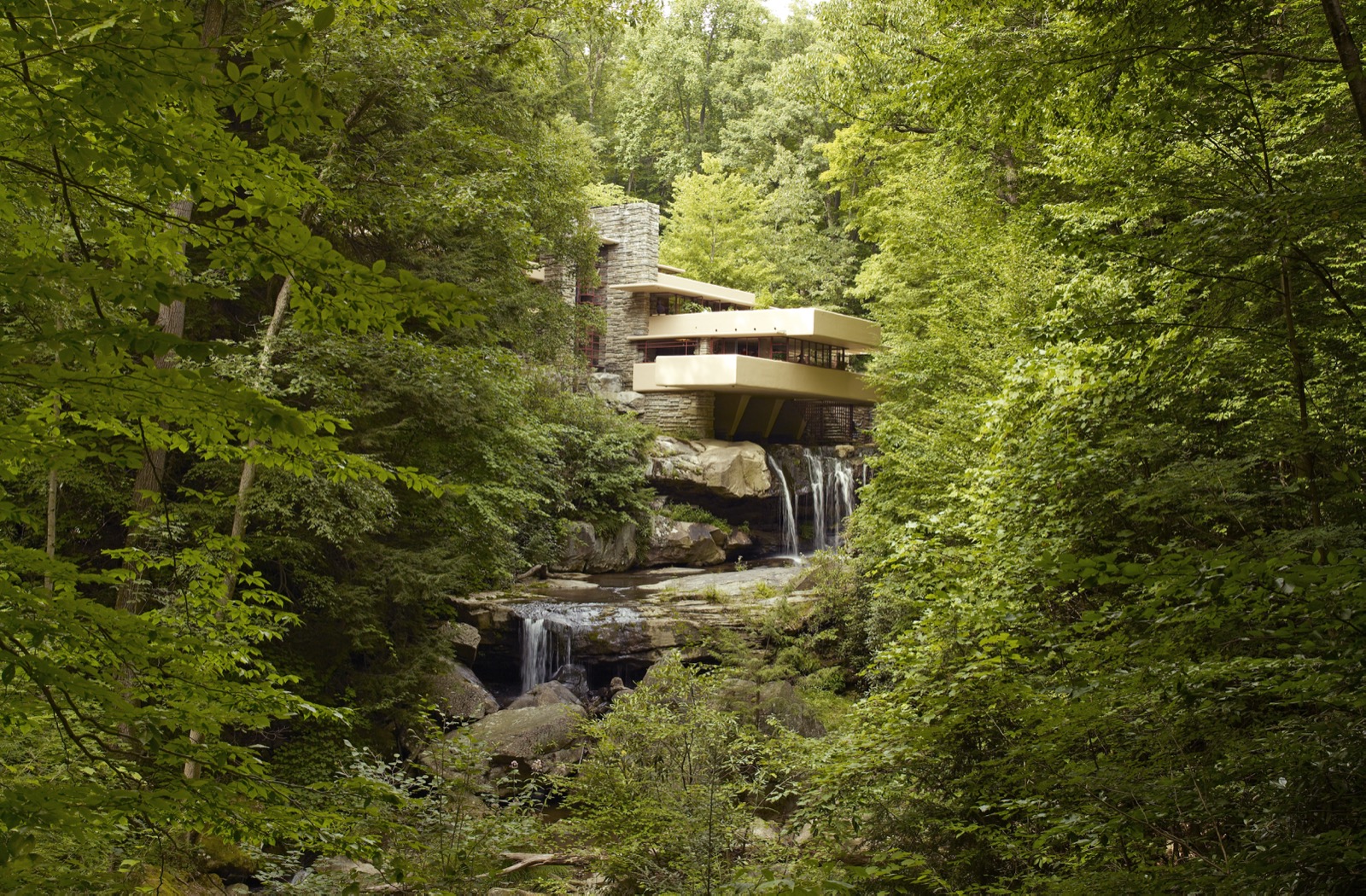
Fallingwater was designed for the Kaufmann family of Pittsburgh, built over a waterfall on Bear Run in rural Pennsylvania. Local craftsmen quarried sandstone from the property itself. The cantilevered concrete terraces extend over the stream, hovering above the falls rather than observing them from a distance.5
The design is not respectful of nature in the passive sense – it is not set back from the waterfall to admire it from across a meadow. It is aggressive in its integration: the building occupies the waterfall. The sound of falling water is inside the house. The rocks of the streambed protrude through the living room floor. Wright did not design a house with a view of a waterfall. He designed a house that is the waterfall’s architectural expression.
The American Institute of Architects named Fallingwater the “best all-time work of American architecture” in a member poll. It became a UNESCO World Heritage Site in 2019. It proved that organic architecture was not a romantic theory but a buildable, inhabitable reality.5
The Guggenheim Museum (1943-1959): Space as Spiral
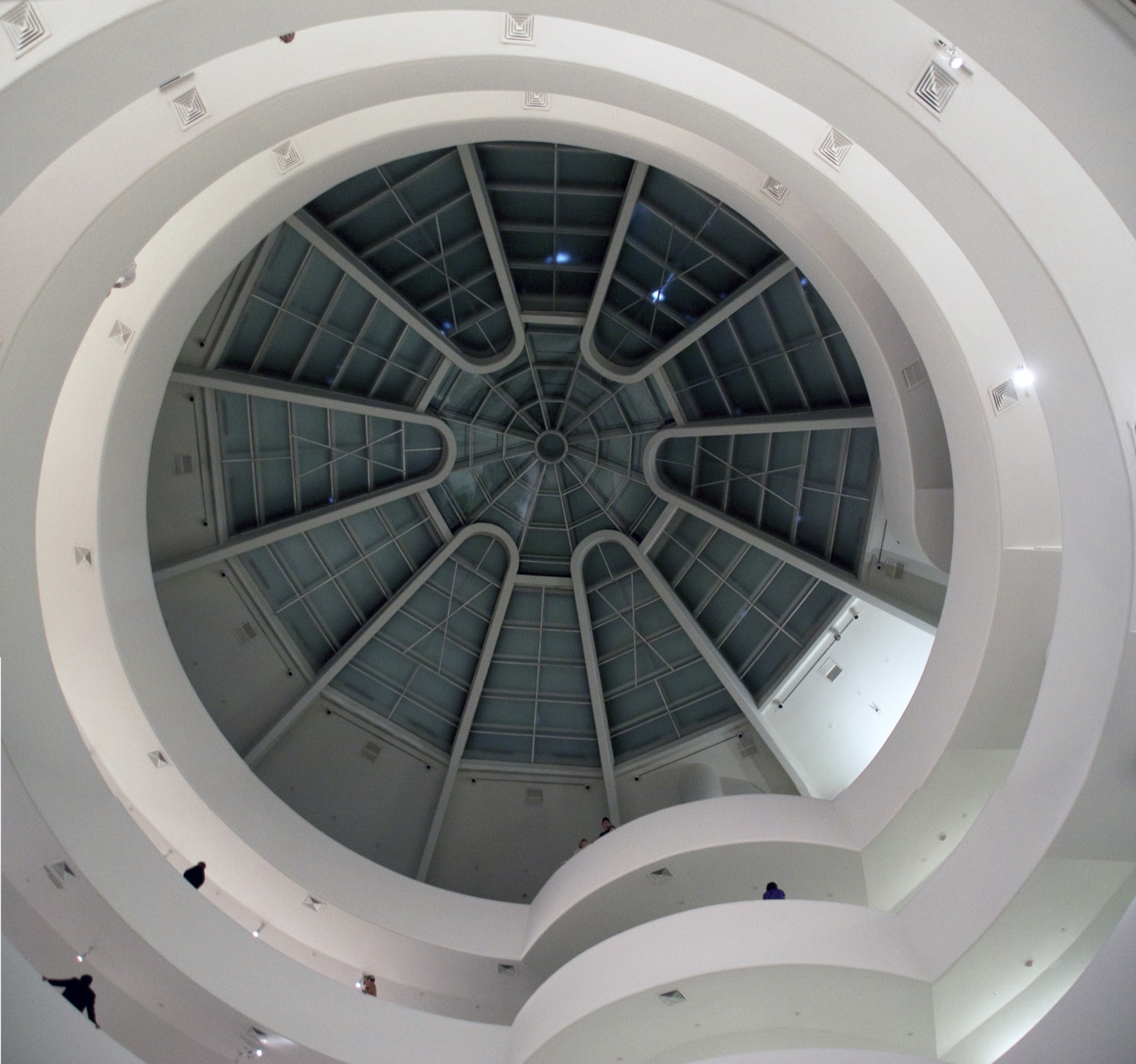
Wright worked on the Guggenheim for sixteen years – from the 1943 commission by Baroness Hilla von Rebay through design modifications, wartime delays, Solomon Guggenheim’s death in 1949, and construction beginning in 1956. The museum opened six months after Wright’s death.6
The building is an inverted ziggurat: a continuous spiral ramp rising from ground floor to domed skylight. Visitors take the elevator to the top and descend the ramp, viewing art along the outer wall as they walk. The spiral eliminates the conventional museum experience of rectangular rooms connected by doorways. There are no rooms. There is one continuous space.
Paul Goldberger wrote: “Wright’s building made it socially and culturally acceptable for an architect to design a highly expressive, intensely personal museum. In this sense almost every museum of our time is a child of the Guggenheim.”6 Zaha Hadid’s Rosenthal Center in Cincinnati, Tadao Ando’s Chichu Art Museum on Naoshima – both descend from the Guggenheim’s premise that the building is as much the experience as the art inside it.
Taliesin and Taliesin West: Architecture as Life
Taliesin, near Spring Green, Wisconsin (begun 1911), was Wright’s home, studio, and farm – architecture as total way of life. In August 1914, a domestic employee set fire to the living quarters and attacked the occupants. Seven people died, including Wright’s companion Mamah Borthwick Cheney and her two children. Wright was in Chicago at the time. He described himself as “emotionally and spiritually devastated” and found “solace only in work.”2 He rebuilt Taliesin. It burned again in 1925 from an electrical fire. He rebuilt it again. The rebuilding was not stubbornness. It was the principle made literal: if the building and the life are one thing, then the life continues only if the building does.
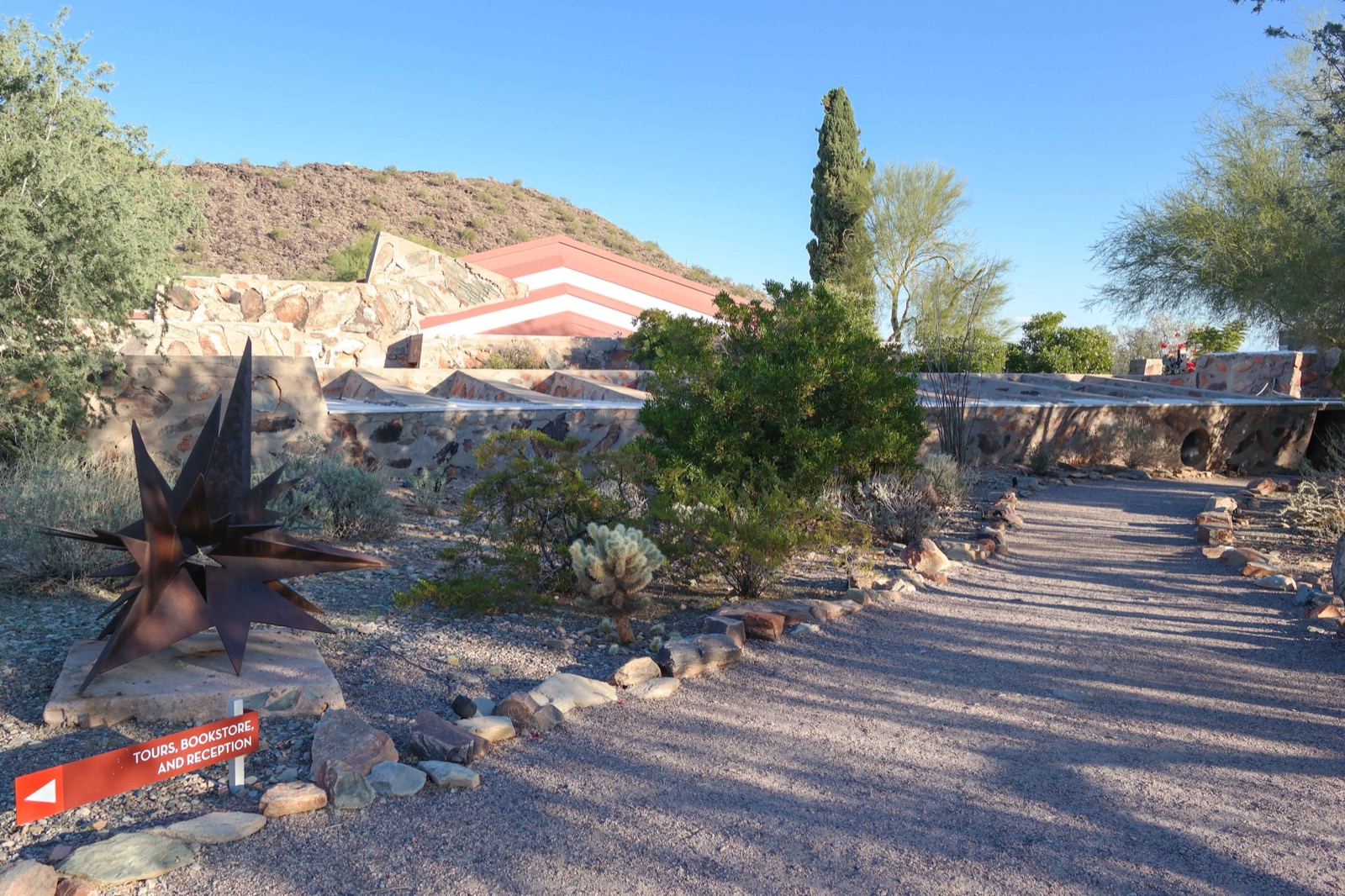
Taliesin West, in the Scottsdale foothills of Arizona (begun 1937), was the winter counterpart. Built from “desert masonry” – local rock set in wooden forms bound by cement and desert sand – with canvas roofs and redwood beams, it was constructed and maintained by Wright and his Taliesin Fellowship apprentices. “Taliesin West is a look over the rim of the world,” Wright said.7
The two Taliesins embody the principle that a building should be of its site. One is of the green hills of Wisconsin. The other is of the red desert of Arizona. Both are UNESCO World Heritage Sites.
The Destruction of the Box
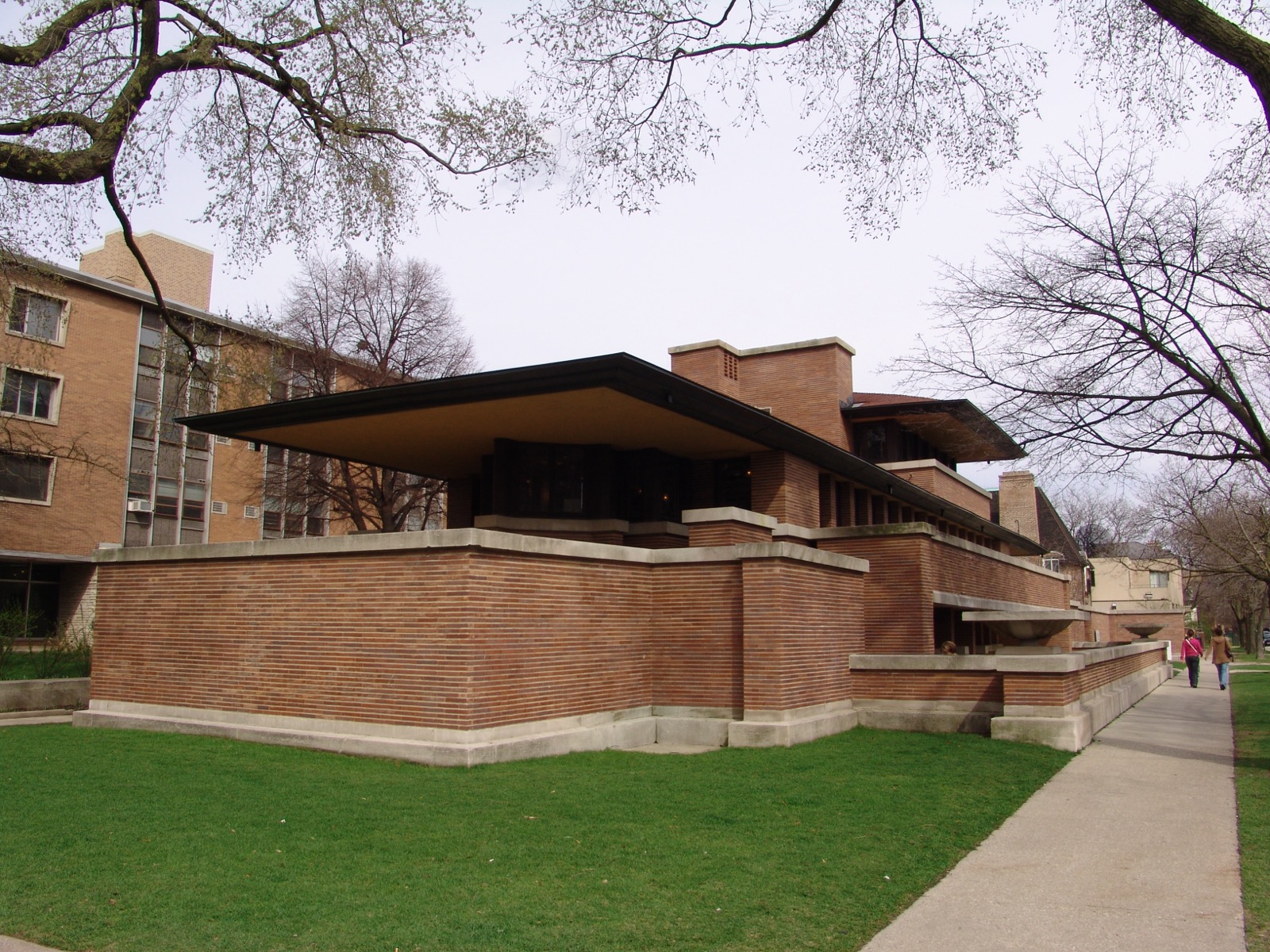
Wright’s most lasting contribution may not be a building but a spatial concept. “The essential nature of the box could be eliminated,” he wrote. “The relationship of inhabitants to the outside became more intimate; landscape and building became one, more harmonious; and instead of a separate thing set up independently of landscape and site, the building with landscape and site became inevitably one.”8
The open floor plan – now so universal in residential and commercial architecture that it reads as a default rather than an invention – originates here. Wright removed the walls that divided Victorian houses into closed rooms and replaced them with flowing space organized by furniture, level changes, and structural elements rather than partitions.
The Method
“In organic architecture then, it is quite impossible to consider the building as one thing, its furnishings another and its setting and environment still another,” Wright wrote. “The spirit in which these buildings are conceived sees all these together at work as one thing.”2
Wright designed everything: the building, the furniture, the rugs, the fabrics, the art glass, the lighting, the dinnerware, the graphic identity. Florence Knoll would later formalize this as the Planning Unit approach, but Wright practiced total design decades earlier – not as a service model but as a philosophical necessity. If the building and its contents are one organism, no element can be delegated to someone who does not understand the whole.
The Taliesin Fellowship, founded around 1932, was his educational model: “a total learning environment, integrating not only architecture and construction, but also farming, gardening, and cooking, and the study of nature, music, art, and dance.”2 Apprentices at Taliesin West built the buildings by hand. The education was not academic. It was physical: you learned architecture by constructing architecture, the same way Tadao Ando learned it by traveling to buildings and tracing Le Corbusier’s drawings.
“Above all integrity,” Wright wrote. “Buildings like people must first be sincere, must be true.”2
Influence Chain
Who Shaped Him
Louis Sullivan gave Wright the principle (“form follows function”) and the apprenticeship model. Wright worked under Sullivan from 1887 to 1893 and called him “Lieber Meister” for the rest of his life. Sullivan’s organic ornament and his belief that architecture was a living art – not a set of historical styles to be copied – became the foundation of Wright’s entire practice. (Direct influence)3
Japanese architecture shaped Wright’s spatial thinking. He first encountered Japanese design at the 1893 Columbian Exposition and maintained a lifelong engagement with Japanese art and spatial philosophy. “Wright drew inspiration from the Japanese idea of a culture in which every object, every human, and every action were integrated so as to make an entire civilization a work of art.”9
Who He Shaped
Tadao Ando saw Wright’s Imperial Hotel in Tokyo as a young man – the first building that made him think about architecture. The connection is documented in the Ando post and forms a reciprocal loop: Wright drew from Japanese architecture, Ando drew from Wright, and both arrived at buildings that merge with their surroundings. (Direct influence)
The Eameses emerged from the Cranbrook/Saarinen tradition that existed in dialogue with Wright’s work. The Case Study House program – which produced the Eames House – was a modernist response to the question Wright had been asking since the Prairie Houses: how should Americans live? (Structural influence)
Museum architecture. Paul Goldberger: “almost every museum of our time is a child of the Guggenheim.” Zaha Hadid’s museums, Ando’s Chichu – all follow from Wright’s conviction that the building should be as powerful an experience as the art it contains. (Structural influence)6
The Throughline
Wright is the American anchor of this series’ architecture branch. Ando practices restraint with concrete and light. Hadid practices fluidity with parametric curves. Wright practices integration with native materials and open space. All three reject the idea that architecture is a container for life. For all three, architecture is life – shaped by the land, structured by conviction, and indifferent to convention. (Series bridge)
What I Take From This
“It should be of the hill.” When you build a system, build it from the constraints of its environment – the language, the framework, the deployment target. Don’t import a foreign architecture and set it on top. Grow the system from the soil it runs on.
FAQ
What is Frank Lloyd Wright’s design philosophy?
Wright’s philosophy is organic architecture: the principle that a building should grow from its site like a plant from the earth, using native materials, responding to the terrain, and integrating structure, furnishings, and environment into a single organism. He destroyed the conventional box of Western architecture and replaced it with open, flowing space where interior and exterior merge.12
What did Frank Lloyd Wright design?
Wright designed over 1,114 works across a 72-year career, of which 532 were built. His most celebrated buildings include Fallingwater (1935), the Solomon R. Guggenheim Museum (1943-1959), the Frederick C. Robie House (1910), Taliesin (1911), and Taliesin West (1937). Eight of his buildings are UNESCO World Heritage Sites.256
How did Frank Lloyd Wright influence modern architecture?
Wright invented the open floor plan, which became the default in residential and commercial architecture worldwide. His Guggenheim Museum established that museum buildings could be as important as the art they contain. His Prairie Houses and Usonian homes proposed new models for American domestic life. The 1911 Wasmuth Portfolio brought international recognition and influenced the European Modern Movement.26
What can designers learn from Frank Lloyd Wright?
Build from the constraints of your site, not despite them. The materials, the terrain, the culture of the place should generate the form. Total design – controlling every element from structure to furnishings – produces coherence that delegation cannot. And integrity matters more than novelty: “Buildings like people must first be sincere, must be true.”
Sources
-
Frank Lloyd Wright, An Autobiography (Longmans, Green and Company, 1932; revised edition Duell, Sloan and Pearce, 1943). “No house should ever be on a hill” quote widely cited from the Fallingwater chapters. Also in Bruce Brooks Pfeiffer, ed., Frank Lloyd Wright: Collected Writings, Vol. 3 (Rizzoli, 1993). ↩↩
-
Frank Lloyd Wright Foundation, “Frank Lloyd Wright.” Biography, philosophy, “above all integrity” quote, organic architecture definition, career statistics. ↩↩↩↩↩↩↩↩↩
-
Frank Lloyd Wright Foundation, “Mike Wallace Interview Excerpts (1957).” “My old master Louis Sullivan,” Sullivan relationship, design philosophy in Wright’s own words. ↩↩
-
Frank Lloyd Wright Trust, “Robie House.” “The consummate expression of Wright’s Prairie style,” “a cornerstone of modern architecture.” ↩
-
Fallingwater, “What Is Fallingwater?” AIA “best all-time work of American architecture,” UNESCO status, sandstone quarried on-site. ↩↩↩
-
Guggenheim Museum, “Frank Lloyd Wright and the Guggenheim.” Goldberger quote, 16-year design process, spiral concept. ↩↩↩↩↩
-
Frank Lloyd Wright Foundation, “Taliesin West.” Desert masonry, “a look over the rim of the world,” Taliesin Fellowship. ↩
-
Frank Lloyd Wright Foundation, “Style & Design: Prairie Style.” “The essential nature of the box could be eliminated” quote, open floor plan origins. ↩
-
Art Institute of Chicago, “Frank Lloyd Wright.” Japanese architecture influence, 1893 Columbian Exposition encounter. ↩