Filozofia projektowania: Massimo Vignelli — projektowanie jest jedno

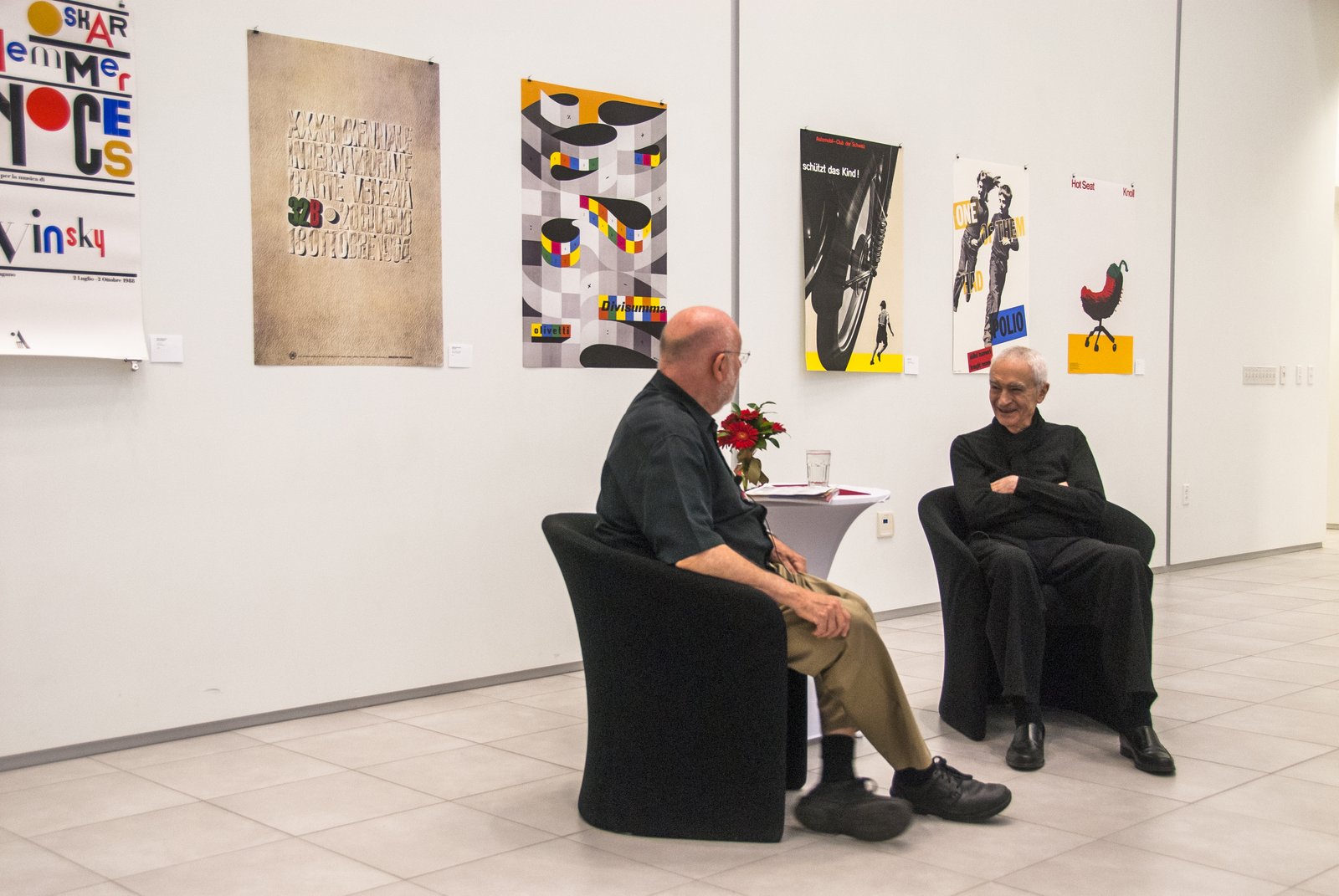
Zasada
„To właśnie z tym zestawem wartości podchodzimy do projektowania każdego dnia, niezależnie od tego, czym ono jest: dwu- czy trójwymiarowym, dużym czy małym, bogatym czy ubogim. Projektowanie jest jedno!” — Massimo Vignelli, The Vignelli Canon1
Vignelli projektował zastawę stołową, identyfikacje wizualne firm, mapę metra, meble, książki i oprawę graficzną manhattańskiego kościoła. Nigdy nie traktował tych zleceń jako odmiennych zadań. Stała była dyscyplina; zmienną — medium. Odszukać sens danej rzeczy, ułożyć go z rygorem, odrzucić wszystko, co modne — a ta sama metoda, która daje melaminowy kubek, daje też system komunikacji miejskiej. Oto co znaczy „projektowanie jest jedno”: nie to, że jeden projektant ma robić wszystko, lecz to, że pod wszystkim kryje się tylko jedna dyscyplina.
Twierdzenie to brzmi arogancko, dopóki nie spojrzy się na dzieła. Diagram metra z 1972 roku, system broszur National Park Service i stos plastikowych naczyń mają to samo DNA: niewielki zbiór reguł, stosowanych bez wyjątku, dobranych tak, by same reguły wykonywały większość pracy projektowej. Vignelli nie dekorował problemów. Budował systemy, które czyniły pojedyncze decyzje zbędnymi — ten sam instynkt stoi za gustem jako infrastrukturą, gdzie jakość mieszka w strukturze, a nie na powierzchni.
Kontekst
Vignelli urodził się w Mediolanie 10 stycznia 1931 roku. W wieku szesnastu lat pracował jako kreślarz w pracowni projektowej braci Castiglioni, a następnie studiował architekturę na Politecnico di Milano oraz Università Iuav di Venezia.2 Mediolan tamtych lat traktował projektowanie jako jeden zawód, który obejmował wszystko — od najmniejszego przedmiotu po samo miasto: architekci projektowali lampy, krzesła i logotypy, nie zmieniając kapelusza. Vignelli przyswoił to założenie tak całkowicie, że resztę kariery poświęcił na jego eksportowanie.
Wspólnie z Lellą Vignelli — swoją żoną i partnerką projektową do końca życia, wymienianą u jego boku przy większości najlepszych prac — otworzył w 1960 roku w Mediolanie Vignelli Office of Design and Architecture. W 1965 roku Massimo współzałożył Unimark International i przeniósł się do Nowego Jorku, by kierować tamtejszym biurem.3 Unimark przenosił europejski modernizm do amerykańskich korporacji na skalę przemysłową: identyfikacja American Airlines z 1967 roku — logotyp AA złożony krojem Helvetica, w połowie czerwony, w połowie niebieski — przetrwała 46 lat, aż linie lotnicze wycofały ją w 2013 roku.4 Słynny orzeł nie był jego pomysłem; to linia lotnicza się przy nim upierała, a rysunek powstał w pracowni Henry’ego Dreyfussa. Gdy zmiana marki w 2013 roku ostatecznie uśmierciła ten znak, werdykt Vignellego był charakterystycznie oschły: „Nie żal mi, że orzeł odchodzi”.5
Do kwietnia 1971 roku Unimark dryfował w stronę marketingu i Vignelli odszedł. Wraz z Lellą założył w tym samym roku Vignelli Associates, pracując dla Knoll, Bloomingdale’s i dziesiątek instytucji.23 W 2010 roku para przekazała całe swoje archiwum Rochester Institute of Technology, gdzie przechowuje je dziś Vignelli Center for Design Studies. Massimo zmarł w Nowym Jorku 27 maja 2014 roku, w wieku 83 lat. Jego własne podsumowanie celu, wypowiedziane w wywiadzie zachowanym przez RIT: „Jeśli zaprojektuje się to właściwie, przetrwa na zawsze”.3
Twórczość
Sztaplowana zastawa stołowa Max 1 (1964): jedna rodzina kształtów, dwadzieścia pięć elementów
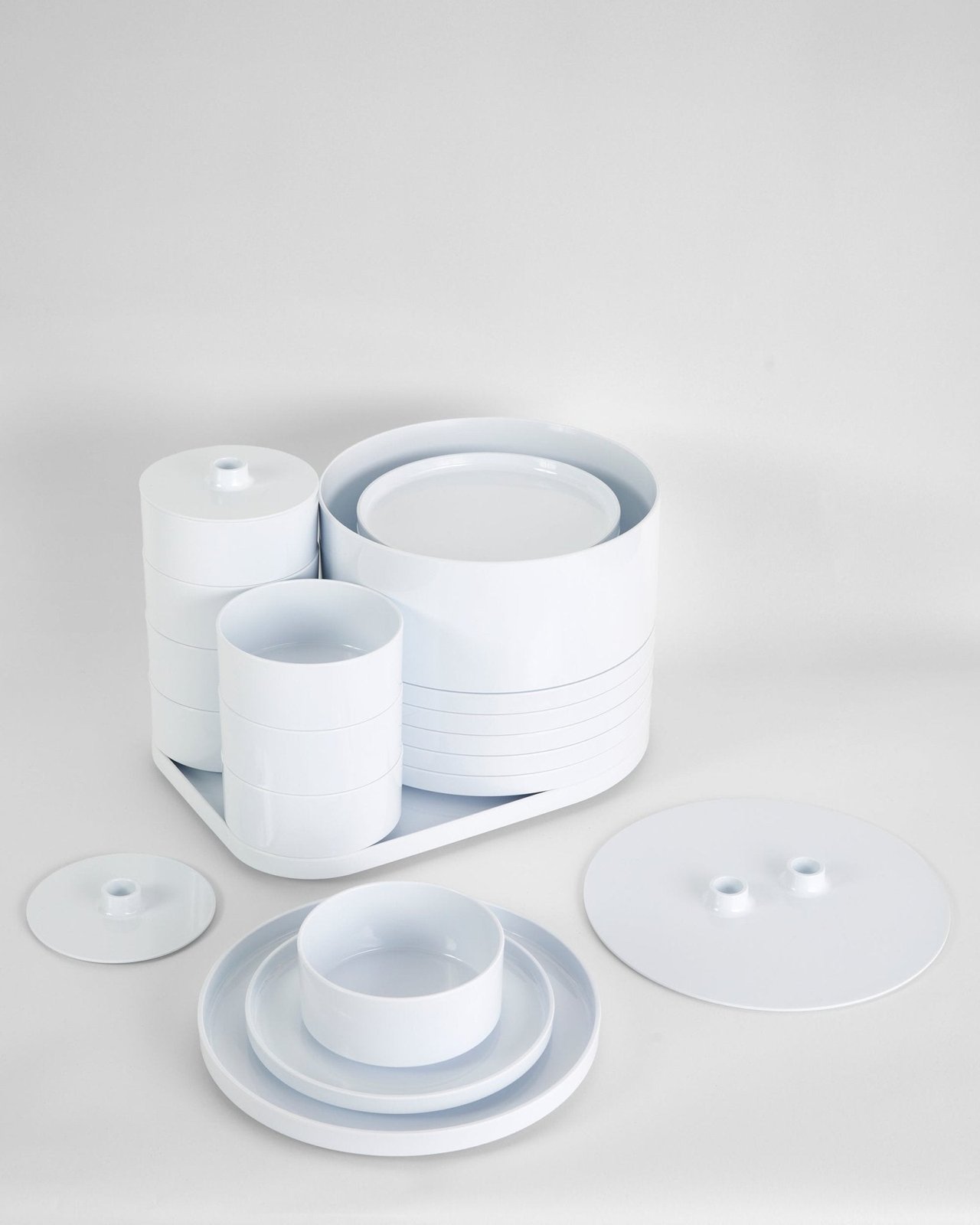
Zaprojektowana wraz z Lellą w Mediolanie w 1964 roku, Max 1 to 25-elementowa zastawa stołowa z formowanej melaminy, w której każdy element wkłada się w każdy inny.67 Przechowywanie nie było kwestią drugorzędną; było treścią zlecenia projektowego. Talerze, miski i kubki składają się w jeden zwarty walec, co oznacza, że geometria każdego elementu jest ograniczona geometrią wszystkich pozostałych. Nic w tym komplecie nie istnieje samo. To system, który akurat jest naczyniami.
Pierwotny włoski producent zbankrutował. Alan Heller zobaczył sztaplowany komplet w muzeum pod koniec lat 60., odnalazł państwa Vignelli i wznowił jej produkcję w 1971 roku jako pierwszy wyrób swojej nowej firmy — dlatego Amerykanie znają ją jako Hellerware.6 Projekt trafił do stałej kolekcji MoMA i zdobył Compasso d’Oro, najwyższe włoskie wyróżnienie w dziedzinie wzornictwa.67
Sześćdziesiąt lat później Heller nadal ją produkuje. Talerz obiadowy to bodaj najtrudniejszy sprawdzian dla pretensji do „ponadczasowości” — stoi na stole i codziennie mierzy się z każdym trendem, jaki od tamtej pory przewinął się przez dział z artykułami gospodarstwa domowego. Max 1 przetrwała, ponieważ nie ma w niej nic, co mogłoby się zestarzeć: podstawowe kształty, brak ornamentu i jedna myśl porządkująca, dość silna, by udźwignąć całą rodzinę.
Diagram nowojorskiego metra (1972): tylko spaghetti
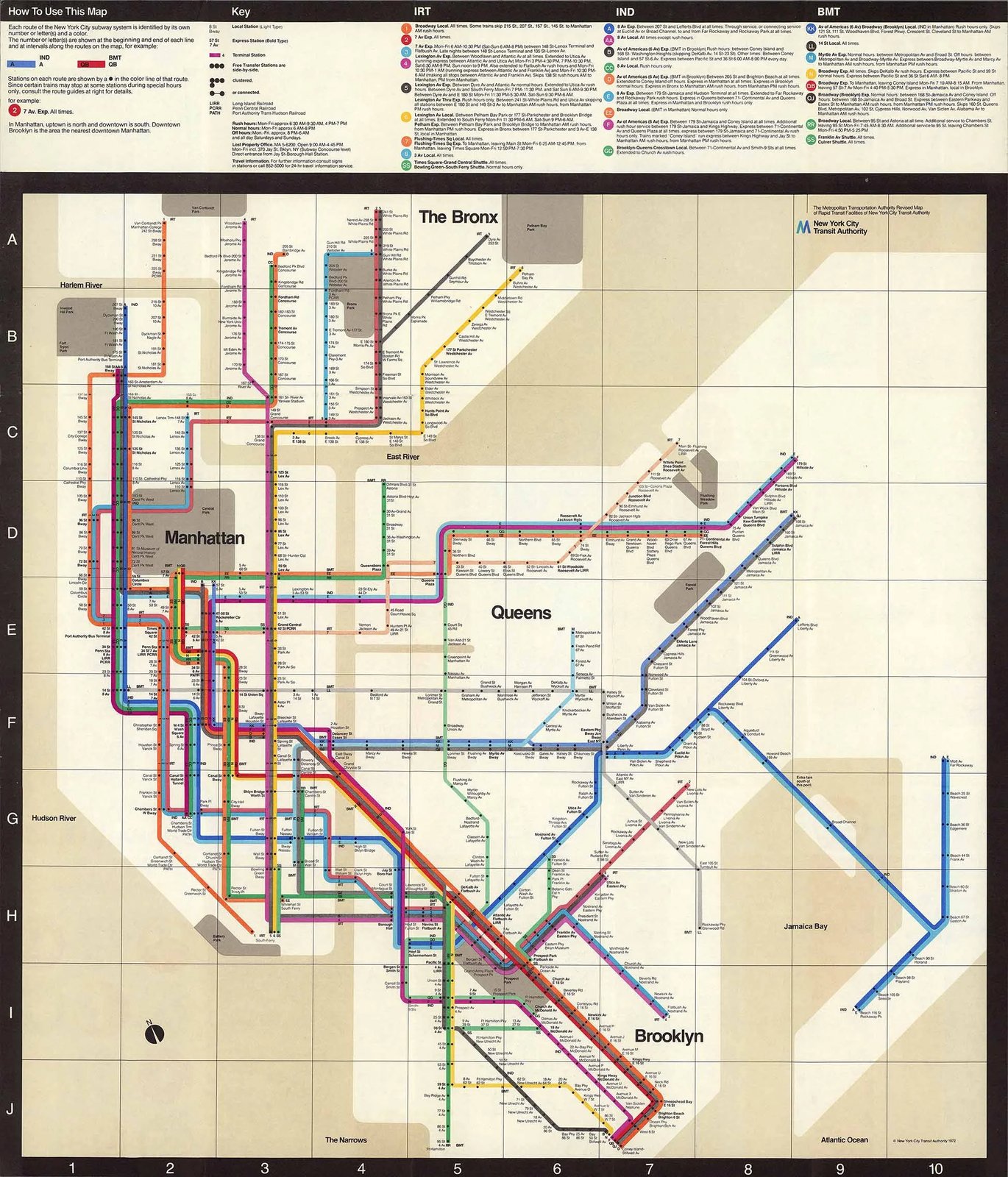
Praca nad metrem zaczęła się od oznakowania, nie od kartografii. W 1967 roku, za rekomendacją kuratorki MoMA Mildred Constantine, New York City Transit Authority zaangażowała Unimark, by wprowadzić ład w wizualny chaos swoich stacji.8 Vignelli i Bob Noorda opracowali w 1970 roku Graphics Standards Manual — modularny system oznakowania, którego potomkowie do dziś porządkują stacje. Legenda o kroju pisma wymaga sprostowania: podręcznik przewidywał Standard Medium, a nie Helveticę. Helvetica oficjalnie zapanowała w metrze dopiero w 1989 roku — historię tę Paul Shaw rozwikłał w całej książce.9
Potem przyszedł diagram. Zadebiutował w sierpniu 1972 roku, narysowany wspólnie z projektantką Unimark Joan Charysyn, i sprowadził najbardziej skomplikowane metro świata do linii biegnących pionowo, poziomo i pod kątem 45 stopni, z jedną kropką na stację.10 Geografię poświęcono celowo: woda była beżowa, Central Park stał się szarym prostokątem szerszym niż wyższym, a rozmieszczenie stacji odpowiadało potrzebom diagramu, nie siatce ulic.11 Obrona Vignellego była bezceremonialna: „Chce Pan dostać się z punktu A do punktu B, kropka. Jedyne, co Pana interesuje, to spaghetti”.10
Pasażerowie się nie zgodzili. Nowojorczycy orientują się według geografii, a mapa, która umieszczała stacje w złym miejscu względem ulic na górze, sprawiała wrażenie kłamstwa, choćby najbardziej spójnego wewnętrznie. W 1979 roku MTA zastąpiła diagram geograficzną mapą pracowni Michael Hertz Associates.10 Potem werdykt powoli się odwrócił: w 2004 roku MoMA pozyskało diagram, podręcznik standardów i zestaw emaliowanych porcelanowo tablic stacyjnych,8 a we wrześniu 2011 roku sama MTA przywróciła diagram — zaktualizowany przez Vignellego wspólnie z Beatriz Cifuentes i Yoshikim Waterhouse’em — jako The Weekender, swoją cyfrową mapę usług.12 Mapa z 1972 roku poniosła porażkę jako geografia, a odniosła sukces jako diagram. Trzeba było dopiero nadejścia ekranów, na których przełącza się między abstrakcją a szczegółem dzielnicy, by obie te rzeczy okazały się prawdą naraz.
Unigrid dla National Park Service (1977): system, nie broszura
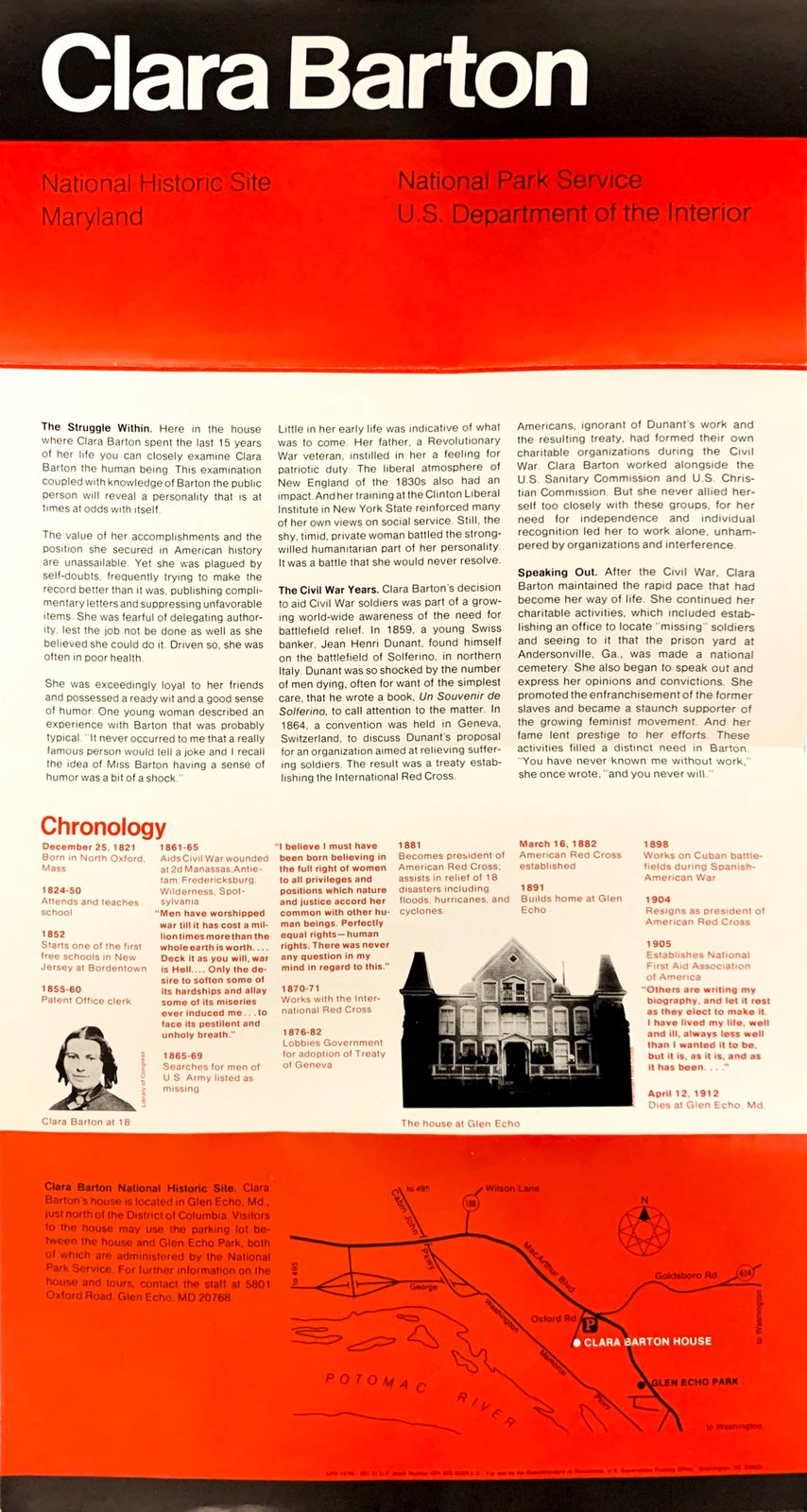
W 1977 roku szef publikacji NPS Vincent Gleason zatrudnił Vignellego, by uporządkował praktyczny bałagan: setki parkowych broszur w niekompatybilnych formatach i stylach, każda projektowana od zera. Odpowiedzią był Unigrid — modularny system oparty na panelach o wymiarach 4 na 8¼ cala wyznaczonych liniami zgięcia, w formatach sięgających pełnego arkusza drukarskiego 25 na 38 cali, z krojami Helvetica i Times Roman jako pierwotnymi oraz czarnym pasem tytułowym biegnącym u góry każdej broszury.13 Pierwsza broszura w systemie Unigrid, dla Clara Barton National Historic Site, ukazała się w 1978 roku.
To liczby dowodzą racji. Park Service drukuje rocznie około 20 milionów broszur w ponad 400 parkach, wszystkie w jednym systemie, od blisko pięćdziesięciu lat.13 Gdy program zdobył w 1985 roku Presidential Design Award, oceniający trafnie wskazali, dlaczego to działa: Unigrid „ogranicza rutynowe decyzje, tak by wysiłek można było skupić na jakości”.13
To zdanie jest całą filozofią w miniaturze. Vignelli nie zaprojektował broszur dla Park Service. Zaprojektował decyzje — rozmiary paneli, dobór krojów, czarny pas — tak, by setki etatowych projektantów przez pięć dekad mogły poświęcać uwagę treści każdego parku, zamiast wciąż na nowo rozstrzygać kwestię formatu. Każdy, kto zbudował bibliotekę komponentów lub system projektowy, rozpozna ten ruch od razu.
Metoda
Vignelli spisał tę metodę. The Vignelli Canon, wydany przez Larsa Müllera w 2010 roku i udostępniony bezpłatnie jako PDF przez RIT, otwierają trzy pytania, które zadawał przy każdym projekcie: „W projektowaniu są dla mnie ważne trzy aspekty: semantyczny, syntaktyczny i pragmatyczny”. Najpierw semantyka — „poszukiwanie sensu wszystkiego, co mamy zaprojektować” — potem syntaktyka, która to porządkuje, a na końcu pragmatyczny sprawdzian: czy osoba po drugiej stronie to rozumie.1
Pod tą triadą leży dyscyplina, a Vignelli mówił o niej bez sentymentów: „Nie ma miejsca na niechlujstwo, na niedbałość, na zwlekanie”. I dalej: „Projektowanie bez dyscypliny to anarchia, ćwiczenie z nieodpowiedzialności”.1 Reguły były narzucone samemu sobie, co dla Vignellego stanowiło sedno — dyscyplina jako zestaw narzędzi gwarantujący ciągłość zamysłu od pierwszego szkicu po zadrukowany arkusz.
Najsłynniejsze ograniczenie było typograficzne. Przerażony desktop publishingiem — „skażeniem kulturowym o niezrównanej skali” oraz: „gdyby wszyscy zajmujący się desktop publishingiem byli lekarzami, wszyscy bylibyśmy martwi!” — urządził wystawę dekad pracy wykonanej zaledwie w czterech krojach pisma: Garamond, Bodoni, Century Expanded i Helvetica. Nauka płynąca stąd, jego słowami: „liczy się nie krój, lecz to, co się z nim robi”.1 To ograniczenie nigdy nie było ascezą. Był to ten sam zakład co przy Unigridzie: usuń rutynową decyzję, a uwaga trafi tam, gdzie ma znaczenie.
Walczył publicznie i sprawiało mu to przyjemność. „Życie projektanta to życie walki: walki z brzydotą” — mówi w filmie Helvetica Gary’ego Hustwita — „zupełnie jak lekarz walczy z chorobą”.14 A rozdział Kanonu poświęcony ponadczasowości brzmi jak manifest przeciwko całej gospodarce nieustannej wymiany: „Gardzimy kulturą starzenia się rzeczy, kulturą marnotrawstwa, kultem tego, co efemeryczne”.1
Łańcuch wpływów
Kto go ukształtował
Mediolańska tradycja architektoniczna dała mu założenie fundujące. Terminując u braci Castiglioni w wieku szesnastu lat i kształcąc się na architekta w Mediolanie i Wenecji, Vignelli odziedziczył włoski ideał projektanta, którego kompetencje sięgają od łyżki po miasto — jeden zawód, każda skala.2 „Projektowanie jest jedno” to ta tradycja sprężona w trzy słowa.
Jan Tschichold ustanowił typograficzny precedens. Die Neue Typographie (1928) opowiadała się za typografią obiektywną i strukturalną, w służbie komunikacji — argument, który szkoła szwajcarska usystematyzowała w siatki i kroje bezszeryfowe, a który Vignelli przeniósł na skalę amerykańskich korporacji. Dług ten uznał we wstępie do Kanonu: „Że o zdyscyplinowanym projektowaniu nauczyłem się od moich szwajcarskich kolegów, o białej przestrzeni — od kolegów amerykańskich, a o dobitnej sile kroju pisma — od kolegów niemieckich”.1 (Rodowód przez szkołę szwajcarską)
Kogo ukształtował
Michael Bierut trafił do Vignelli Associates z zamiarem pozostania osiemnastu miesięcy, a spędził tam dziesięć lat, nim został partnerem w Pentagram. Jego hołd po śmierci Vignellego — „mój nauczyciel, mój mentor, mój szef, mój bohater, mój przyjaciel” — utrwala głębszą naukę: że to dobra praca przynosi kolejną dobrą pracę i że projektowanie jest strukturą doświadczenia, nie stylizacją powierzchni.15
Każdy system projektowy od tamtej pory. Podręcznik standardów metra z 1970 roku i Unigrid z 1977 roku to przodkowie bibliotek komponentów i systemów marki, na których opiera się dziś każda poważna organizacja produktowa: ograniczony zestaw części, udokumentowane reguły i wyraźny cel — sprawić, by rutynowe decyzje zniknęły. Słownictwo zmieniło się z arkuszy drukarskich na tokeny; idea się nie zmieniła.
Nić przewodnia
Dieter Rams i Vignelli to dwaj wielcy systematycy powojennego modernizmu, którzy realizowali tę samą zasadę wzdłuż różnych osi. Rams pracował pionowo — co można usunąć z tego przedmiotu? Vignelli pracował poziomo — co pozostaje stałe we wszystkich przedmiotach? Oba zakłady wypłacają się długowiecznością: system regałów 606 jest produkowany od sześćdziesięciu sześciu lat, a Unigrid służy od blisko pięćdziesięciu — wciąż czytelny, wciąż działający. I podobnie jak siatka 32×32 pikseli Susan Kare, cztery kroje pisma Vignellego dowodzą powracającej w tej serii nauki, że ograniczenie dobrane rozmyślnie nie jest granicą, lecz dźwignią. Przewodnik po projektowaniu odwzorowuje te powiązania w obrębie całej serii. (Łącznik serii)
Co z tego biorę dla siebie
Mój stos webowy sięga czterech krojów pisma: FastAPI, HTMX, Alpine.js, zwykły CSS. Wybrane raz, nigdy nie roztrząsane, opanowywane nieustannie. Zdanie Vignellego to ujmuje — liczy się nie krój, lecz to, co się z nim robi.
FAQ
Na czym polega filozofia projektowania Massima Vignellego?
Filozofia Vignellego opiera się na haśle „projektowanie jest jedno” — przekonaniu, że jedna dyscyplina leży u podstaw projektowania w każdej skali, od zastawy stołowej po systemy komunikacji miejskiej. W The Vignelli Canon wymienia trzy aspekty każdego projektu: semantykę (poszukiwanie sensu), syntaktykę (strukturę) i pragmatykę (to, czy efekt jest zrozumiały), a wszystkim rządzą dyscyplina, stosowność i ponadczasowość.1
Co zaprojektował Massimo Vignelli?
Wraz z Lellą Vignelli zaprojektował sztaplowaną zastawę stołową Max 1 (1964, później Hellerware), identyfikację American Airlines (1967, z logotypem w kroju Helvetica), standardy oznakowania nowojorskiego metra wspólnie z Bobem Noordą (1970) oraz diagram metra z 1972 roku, system broszur Unigrid dla National Park Service (1977), torbę na zakupy Bloomingdale’s, grafiki dla Knoll oraz projekty dla kościoła St. Peter’s w Nowym Jorku (1977).23
Dlaczego mapa metra Vignellego z 1972 roku została zastąpiona?
Pasażerowie uznali zniekształcenia diagramu za dezorientujące — beżowa woda, prostokątny Central Park, stacje rozmieszczone według logiki diagramu, a nie geografii ulic — i w 1979 roku MTA zastąpiła go geograficzną mapą pracowni Michael Hertz Associates. Projekt został później zrehabilitowany: MoMA pozyskało go w 2004 roku, a w 2011 roku MTA wskrzesiła zaktualizowany diagram Vignellego jako swoją cyfrową mapę Weekender.81012
Czego projektanci mogą się nauczyć od Massima Vignellego?
Warto ograniczyć swój zestaw narzędzi i opanować to, co pozostaje: Vignelli pokazał, że cztery kroje pisma mogą udźwignąć dekady pracy. Należy projektować system, który podejmuje decyzje, a nie pojedynczy artefakt — Unigrid odniósł sukces, bo „ogranicza rutynowe decyzje, tak by wysiłek można było skupić na jakości”. I trzeba projektować z myślą o długiej perspektywie; wszystko, co wymierzone w trend, umiera wraz z trendem.113
Źródła
Zdjęcia: portret za pośrednictwem Wikimedia Commons (CC BY-SA 3.0); skan diagramu metra z 1972 roku za pośrednictwem NYC Urbanism (mapa © MTA); fotografia Max 1 dzięki uprzejmości Heller; broszura Unigrid za pośrednictwem NPS Harpers Ferry Center (domena publiczna).
-
Massimo Vignelli, The Vignelli Canon (Lars Müller Publishers, 2010). Bezpłatny PDF w RIT Vignelli Center. Źródło dla: „projektowanie jest jedno!”, semantyki/syntaktyki/pragmatyki, cytatów o dyscyplinie, wystawy czterech krojów pisma, „skażenia kulturowego” desktop publishingu, rozdziału o ponadczasowości, fragmentu o „szwajcarskich kolegach”. ↩↩↩↩↩↩↩↩
-
Wikipedia, „Massimo Vignelli”. Data urodzenia, terminowanie u Castiglionich, wykształcenie, odejście z Unimark, lista klientów, Compasso d’Oro (1964, 1998) oraz Złoty Medal AIGA (1983). ↩↩↩↩
-
RIT News, „Massimo Vignelli, icon of design, dead at 83” (maj 2014). Kalendarium kariery, Vignelli Office of Design and Architecture (1960), współzałożenie Unimark (1965), Vignelli Associates (1971), Vignelli Center (2010), „Jeśli zaprojektuje się to właściwie, przetrwa na zawsze”. ↩↩↩↩
-
Archivio Grafica Italiana, „American Airlines”. Identyfikacja z 1967 roku z udziałem Heinza Waibla w Unimark, logotyp Helvetica w czerwieni i błękicie, atrybucja orła pracowni Henry’ego Dreyfussa, wycofanie w 2013 roku. ↩
-
Dallas Observer, „The Designer of the Old American Airlines Logo Really Doesn’t Like the New Design” (2013). Cytaty z reakcji Vignellego, orzeł dodany na życzenie linii lotniczej. ↩
-
Heller, „Max 1 Dinnerware by Massimo Vignelli”. Rok projektu 1964, wznowienie jako pierwszy produkt firmy w 1971 roku, kolekcja MoMA, Compasso d’Oro. Odkrycie muzealne Alana Hellera i zamknięcie pierwotnego producenta według historii Hellerware serwisu Hive Modern. ↩↩↩
-
MoMA, „Massimo Vignelli, Lella Vignelli. Stacking Dinnerware. 1964”. Wspólna atrybucja i datowanie w stałej kolekcji. ↩↩
-
MoMA Inside/Out, „The Subway and the City: Massimo Vignelli, 1931–2014” (czerwiec 2014). Zaproszenie Unimark w 1967 roku za rekomendacją Mildred Constantine; pozyskanie przez MoMA w 2004 roku diagramu, podręcznika standardów i tablic stacyjnych. Zobacz także rekord kolekcji: New York City Subway Guide, 1970–72. ↩↩↩
-
Paul Shaw, Helvetica and the New York City Subway System: The True (Maybe) Story (MIT Press, 2011). Strona wydawcy. Standard Medium w oryginalnym podręczniku; Helvetica nie była standardem aż do 1989 roku. ↩
-
New York Transit Museum, cyfrowa wystawa „Vignelli”. Debiut w sierpniu 1972 roku, autorstwo Joan Charysyn, „jedyne, co Pana interesuje, to spaghetti”, zastąpienie w 1979 roku przez Michael Hertz Associates, droga od odświeżenia diagramu w 2008 roku do The Weekender. ↩↩↩↩
-
NYC Urbanism, „1972 Vignelli Subway Map”. Beżowa woda, proporcje Central Parku, jedna kropka na stację, geometria 45 stopni. ↩
-
Wikipedia, „New York City Subway map” oraz Second Ave. Sagas, „The return of Vignelli with a weekend twist” (16 września 2011). Uruchomienie Weekendera z użyciem diagramu Vignelli–Cifuentes–Waterhouse. ↩↩
-
National Park Service, Harpers Ferry Center, „A Brief History of the Unigrid”. Vincent Gleason, zlecenie z 1977 roku, system paneli i kroje pisma, broszura Clara Barton z 1978 roku, 20 milionów egzemplarzy w ponad 400 parkach, Presidential Design Award z 1985 roku i cytat „ogranicza rutynowe decyzje”. ↩↩↩↩
-
Gary Hustwit, Helvetica (film dokumentalny, 2007). „Życie projektanta to życie walki: walki z brzydotą”. hustwit.com ↩
-
Michael Bierut, „Massimo Vignelli, 1931–2014”, Design Observer (maj 2014). Dziesięć lat w Vignelli Associates, „mój nauczyciel, mój mentor, mój szef, mój bohater, mój przyjaciel”. ↩











