Philosophie du design : Issey Miyake, une pièce de tissu


Le principe
« Le design n’est pas fait pour la philosophie, mais pour la vie. » – Issey Miyake1
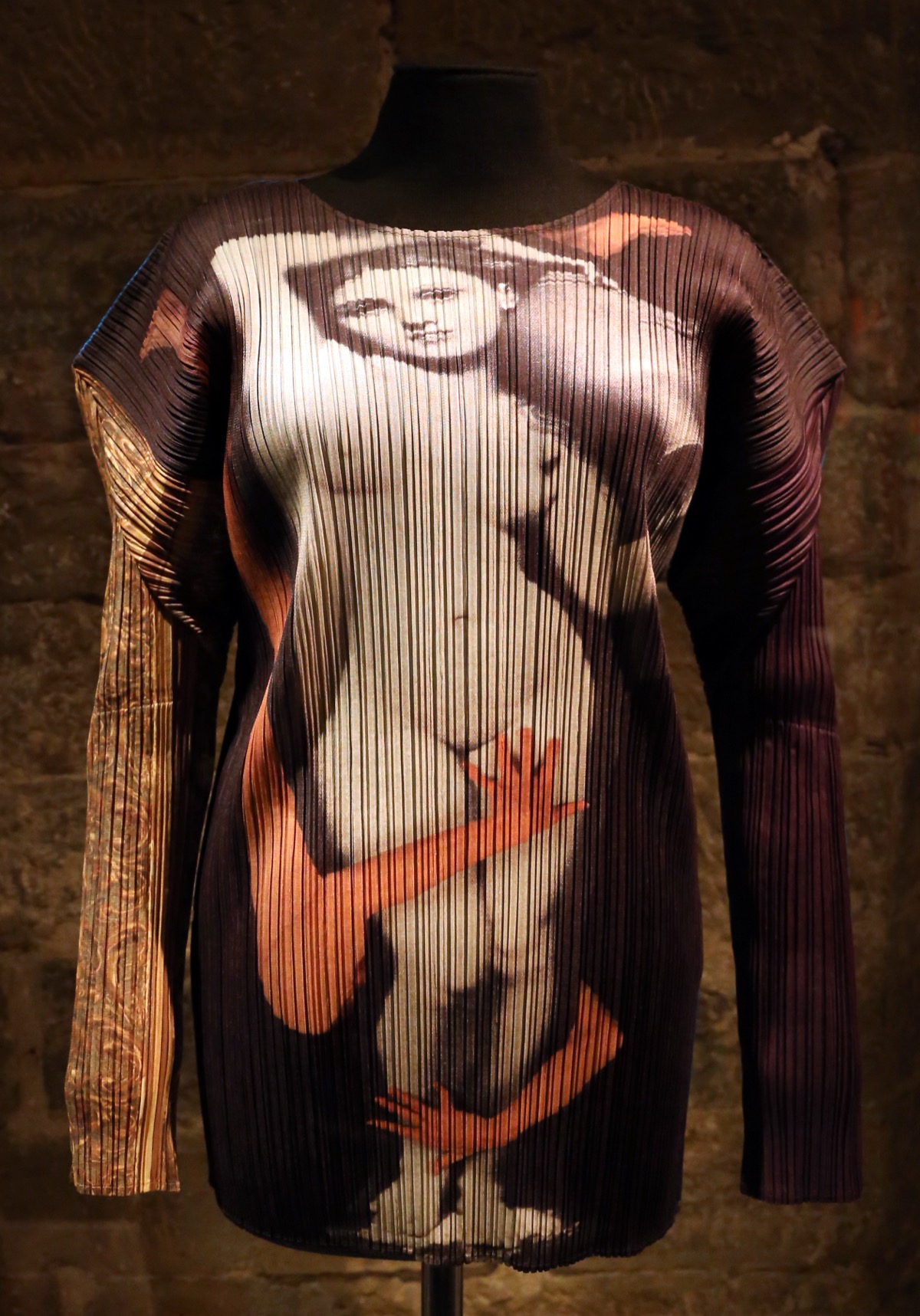
La mode fonctionne selon un cycle saisonnier de spectacle : proposer une silhouette, la photographier sur un podium, la remplacer six mois plus tard. Miyake s’est soustrait à presque tout cela. Il préférait le mot « vêtement » à « mode », et il construisait ses pièces comme un ingénieur construit un outil : pour être portées, lavées, rangées à plat dans une valise et remises sans repassage. La ligne Pleats Please, qui a rendu cette idée concrète, est plissée à la machine après l’assemblage du vêtement – une inversion brevetée de la logique de la couture, où le tissu est traité avant la coupe.2 Les plis sont permanents. La robe survit à la machine à laver. La philosophie tient dans un bagage à main.
La citation n’est pas un slogan ; c’est un filtre. Demandez à n’importe quel vêtement de Miyake ce qu’il fait pour la vie de la personne qui le porte, et chaque décision technique – le polyester plutôt que la soie, le pli plutôt que la pince, le tube de maille plutôt que la pièce de patron – aboutit à la même réponse : liberté de mouvement, liberté d’entretien, liberté face à la tyrannie du corps ajusté.
Contexte
Miyake est né à Hiroshima le 22 avril 1938. Il avait sept ans le 6 août 1945 et a survécu au bombardement atomique ; sa mère est morte de l’exposition aux radiations moins de trois ans plus tard.3 Il a passé l’essentiel de sa carrière à refuser d’en parler, peu désireux d’être étiqueté « le créateur qui a survécu », jusqu’en 2009, lorsque l’engagement du président Obama en faveur du désarmement l’a poussé à écrire une tribune dans le New York Times, « A Flash of Memory », et à poser le fait dans ses propres termes.3 Ce qu’il a retiré de cette expérience, écrivait-il, c’est une préférence pour la pensée des « choses qui peuvent être créées, et non détruites, et qui apportent beauté et joie ».
Il a étudié le design graphique à la Tama Art University, fait son apprentissage dans les ateliers parisiens (Guy Laroche, Givenchy) à la fin des années 1960, travaillé à New York, puis fondé le Miyake Design Studio à Tokyo en 1970.4 Le calendrier compte : il est entré dans la mode au moment précis où le monopole de Paris commençait à se fissurer, et il a élargi la fissure.7 Aux côtés de Rei Kawakubo et de Yohji Yamamoto, il a établi qu’un vêtement conçu à Tokyo pouvait redéfinir les termes de la conversation plutôt que de traduire ceux de la France.
L’œuvre
Pleats Please (1993) : le vêtement qui s’entretient tout seul
Miyake et ses ingénieurs textiles ont passé des années à mettre au point le plissage du vêtement fini : couper et coudre une pièce surdimensionnée dans un polyester léger, puis faire passer le vêtement achevé sous une presse à chaud qui fixe les plis de façon permanente.2 Le résultat ne pèse presque rien, ne se froisse jamais, sèche en quelques heures et accompagne le corps comme une seconde peau. Il se vend à une fraction du prix de la couture et se porte chez les danseurs, les voyageurs et tous ceux qui ne veulent simplement pas que leurs vêtements deviennent une corvée d’entretien. La ligne a fêté ses trente ans en 2023, toujours en production, visuellement inchangée – la preuve la plus solide, dans la mode, qu’un problème résolu peut le rester.2
A-POC (1998) : une pièce de tissu
A-POC – le nom abrège « a piece of cloth », une pièce de tissu – est l’argument le plus radical de Miyake. Avec l’ingénieur Dai Fujiwara, il a programmé des machines à tricoter industrielles pour produire un tube de tissu continu contenant des vêtements entiers à l’état latent, leurs contours tricotés à même l’étoffe.5 Celui qui le porte coupe le long des lignes et les pièces ne s’effilochent pas ; l’endroit où vous coupez décide de la longueur de vos manches, de votre encolure, de votre ourlet. Les décisions de design migrent de l’atelier vers le propriétaire, et les chutes tendent vers zéro puisque le vêtement n’a jamais été découpé dans une nappe plus grande. La ligne se poursuit aujourd’hui sous le nom d’A-POC ABLE, dirigée par ses successeurs comme un programme de recherche permanent.5
Le col roulé (années 1980-2011) : l’uniforme comme amitié
Les vêtements de Miyake les plus photographiés sont les plus simples : les cols montants noirs qu’il a réalisés pour Steve Jobs, une centaine environ, après que Jobs eut admiré la culture d’uniforme que Miyake avait conçue pour les usines de Sony et lui eut demandé un uniforme à lui.4 On raconte d’ordinaire l’histoire comme une anecdote. Mieux vaut la lire comme une philosophie : tout le projet de Miyake consistait à faire des vêtements qui retirent des décisions au lieu d’en ajouter, et Jobs – qui appliquait la même réduction à ses gammes de produits – a reconnu un confrère par-delà les disciplines.
21_21 Design Sight (2007) : l’institution comme vêtement
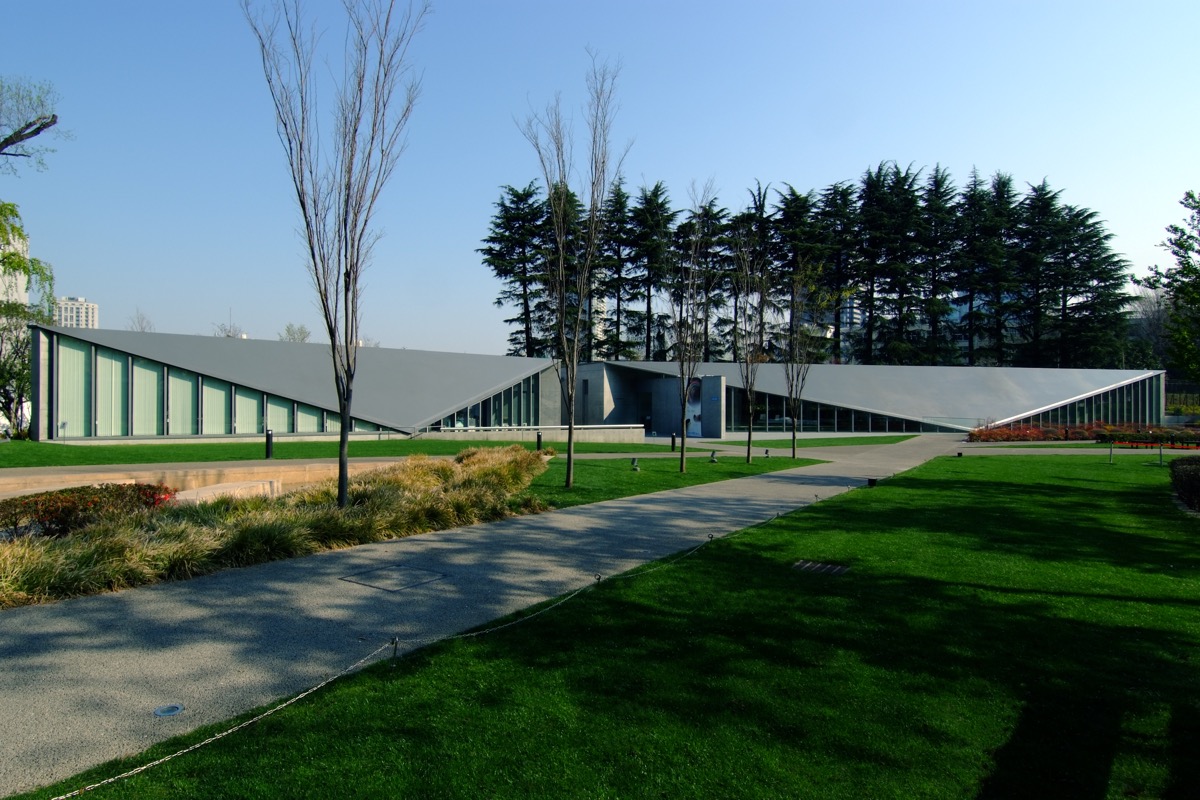
Avec Tadao Ando, qui en a dessiné le bâtiment, Miyake a cofondé le 21_21 Design Sight à Tokyo – un musée consacré non pas aux objets du design mais au regard du design, qui met en scène des expositions examinant la vie quotidienne comme Miyake examinait le tissu.6 La structure d’Ando prend appui sur le concept de Miyake : un toit en tôle d’acier pliée, une pièce unique courbée comme une étoffe, l’essentiel du bâtiment enfoui sous le niveau du sol. C’est l’un de ces rares musées dont l’architecture cite le médium de son fondateur.
La méthode
La méthode de Miyake, c’était la recherche d’abord, la silhouette ensuite. Il a maintenu une structure de studio plus proche d’un laboratoire de design industriel que d’une maison de mode : ingénieurs textiles, tisserands et chercheurs en matériaux travaillant des années en avance sur le moindre défilé. Pleats Please a demandé une demi-décennie d’expériences de plissage. A-POC a exigé d’enseigner aux machines à tricoter une grammaire entièrement nouvelle. La collection saisonnière, lorsqu’elle existait, n’était que la couche de publication d’un programme de recherche continu – l’article, pas la science.
Deux engagements ont tenu du début à la fin. D’abord, la technologie au service du corps : chaque innovation devait passer l’épreuve d’être portée par quelqu’un qui a un endroit où se rendre. Ensuite, l’espace entre le tissu et le corps : Miyake dessinait l’air à l’intérieur du vêtement avec autant de soin que l’étoffe, en puisant dans le sens japonais du ma – l’intervalle – plutôt que dans la tradition occidentale d’un tissu taillé au plus près d’une silhouette idéalisée. Un vêtement de Miyake va à de nombreux corps parce qu’il n’a jamais été moulé sur un seul.
Chaîne d’influence
Ceux qui l’ont façonné
Madeleine Vionnet, grande maîtresse de la coupe en biais du début du XXe siècle, a montré que la géométrie pouvait remplacer la structure – qu’une robe pouvait tomber selon la logique propre du corps au lieu d’une armature corsetée. Les géométries planes de Miyake descendent de ses cercles et de ses carrés. (Ascendance technique)4
Hiroshima et le Japon d’après-guerre lui ont donné à la fois le sujet qu’il a refusé pendant des décennies et la conviction qu’il a énoncée sans détour : fabriquer de belles choses utiles est une réponse morale à la destruction. (Fondement biographique)3
Ceux qu’il a façonnés
Le rayonnement mondial de l’avant-garde japonaise. Miyake est arrivé à Paris le premier ; Kawakubo et Yamamoto ont fait détoner l’esthétique une décennie plus tard. Ensemble, ils ont fait de la « mode japonaise » une catégorie à laquelle la mode occidentale a dû répondre, même si Miyake n’aimait pas ce cadrage national – sa recherche était sans lieu, même quand sa sensibilité ne l’était pas.
La mode comme ingénierie. Chaque marque de vêtements techniques d’extérieur, chaque programme de maille sans couture, chaque initiative de coupe zéro déchet travaille en aval de la démonstration d’A-POC : la méthode de fabrication peut être le design.
Le fil conducteur
Miyake et Kenya Hara partagent la conviction que le don du design japonais est la réceptivité – le récipient vide de Hara et le tissu non coupé de Miyake confient tous deux la décision finale à l’utilisateur. Mais là où Hara soustrait du sens pour créer de l’ouverture, Miyake fabrique l’ouverture : la liberté d’une robe Pleats Please y est intégrée par une presse à chaud. Il est le cas le plus net de la série d’une philosophie mise en œuvre sous forme de technologie de production, et c’est pourquoi son parent le plus proche ici est peut-être Jony Ive – un autre designer dont les idées sont indissociables de l’outillage qui les réalise. (Passerelle de série)
Ce que j’en retiens
Les plis de Miyake sont une étape de compilation. L’intelligence du design vit dans le processus – la passe de plissage brevetée, la machine à tricoter programmée – et non dans le moindre vêtement que ce processus produit. C’est ainsi que je veux que mes systèmes de build fonctionnent : encoder le jugement une seule fois, dans le pipeline, pour que chaque artefact qui en sort en aval en hérite gratuitement. Et A-POC est la meilleure métaphore physique que je connaisse pour une API bien conçue : livrez le tube continu avec les bonnes décisions à l’état latent à l’intérieur, et laissez l’utilisateur couper là où il en a besoin – la distinction entre vide et simple mise en œuvre en fil de polyester.
Questions fréquentes
Quelle est la philosophie de design d’Issey Miyake ?
Miyake l’a lui-même résumée : « Le design n’est pas fait pour la philosophie, mais pour la vie. »1 Il traitait le vêtement comme un problème de recherche – comment la technologie peut servir le corps – plutôt que comme un spectacle saisonnier, et préférait le mot « vêtement » à « mode ». Ses deux concepts signatures, le plissage permanent du vêtement et le « a piece of cloth » d’A-POC, déplacent tous deux les décisions de design hors de l’atelier, vers la vie quotidienne de celui qui le porte.
Qu’est-ce que Pleats Please ?
Une ligne de vêtements lancée en 1993, dans laquelle des pièces en polyester léger sont cousues surdimensionnées puis plissées de façon permanente sous une presse à chaud – on plisse le vêtement plutôt que le tissu, à l’inverse de la pratique de la couture.2 Les résultats sont lavables, à séchage rapide, infroissables et assez légers pour se ranger à plat ; la ligne est toujours en production continue trois décennies plus tard.
Quel était le lien entre Issey Miyake et Steve Jobs ?
Jobs admirait les uniformes que Miyake avait conçus pour Sony et lui a demandé de lui en fabriquer un ; Miyake a produit les cols montants noirs – une centaine environ – qui sont devenus l’uniforme quotidien de Jobs.4 L’affinité était philosophique : les deux hommes concevaient pour retirer des décisions.
Qu’est-ce qu’A-POC ?
« A Piece of Cloth », une pièce de tissu (1998), mis au point avec l’ingénieur Dai Fujiwara : des machines à tricoter industrielles produisent un tube de tissu continu dans lequel sont tricotés des vêtements finis, que le propriétaire découpe le long de lignes qui ne s’effilochent pas.5 Le procédé réduit les chutes au minimum, condense les étapes de fabrication et confie les décisions finales de design à celui qui porte le vêtement. Le programme se poursuit sous le nom d’A-POC ABLE ISSEY MIYAKE.
-
Cincinnati Art Museum, « Le design n’est pas fait pour la philosophie, mais pour la vie. » Essai du musée sur le mantra directeur de Miyake et sur les pièces plissées de sa collection. ↩↩
-
ISSEY MIYAKE, page de la marque PLEATS PLEASE ISSEY MIYAKE – technique de plissage du vêtement et histoire de la ligne ; voir aussi Wallpaper*, « Pleats Please Issey Miyake celebrates 30 years » (2023). ↩↩↩↩
-
Chugoku Shimbun Hiroshima Peace Media Center, « World-renowned fashion designer Issey Miyake dies at age 84 » – la survie à Hiroshima à sept ans, la mort de sa mère due à l’exposition aux radiations et la tribune de 2009 dans le New York Times, « A Flash of Memory ». ↩↩↩
-
WWD, « Issey Miyake Dies at 84 » – nécrologie de carrière : Tama Art University, apprentissages parisiens, Miyake Design Studio (1970), les cols roulés de Jobs ; mort à Tokyo le 5 août 2022. ↩↩↩↩
-
ISSEY MIYAKE, A-POC ABLE ISSEY MIYAKE – le concept de « a piece of cloth », ses origines en 1998 avec Dai Fujiwara et la ligne de recherche qui se poursuit. ↩↩↩
-
21_21 DESIGN SIGHT, site officiel – fondé en 2007 à Tokyo Midtown, dirigé par Miyake avec Taku Satoh et Naoto Fukasawa, bâtiment de Tadao Ando. ↩
-
Photographies : Issey Miyake à Tokyo, 2016, par Hsinhuei Chiou (CC BY-SA 4.0) ; Pleats Please Guest Artist Series No. 1 au Modemuseum Hasselt par Francesco Bini (CC BY-SA 4.0) ; entrée de MIYAKE ISSEY EXHIBITION par chinnian (CC BY-SA 2.0) ; 21_21 Design Sight par Wiiii (CC BY-SA 3.0). Le tout via Wikimedia Commons. ↩