Designphilosophie: Rei Kawakubo, bei null anfangen

Das Prinzip
„Ich beschloss, bei null anzufangen, beim Nichts, um Dinge zu tun, die noch nie getan worden waren, Dinge mit einem starken Bild.“ – Rei Kawakubo1
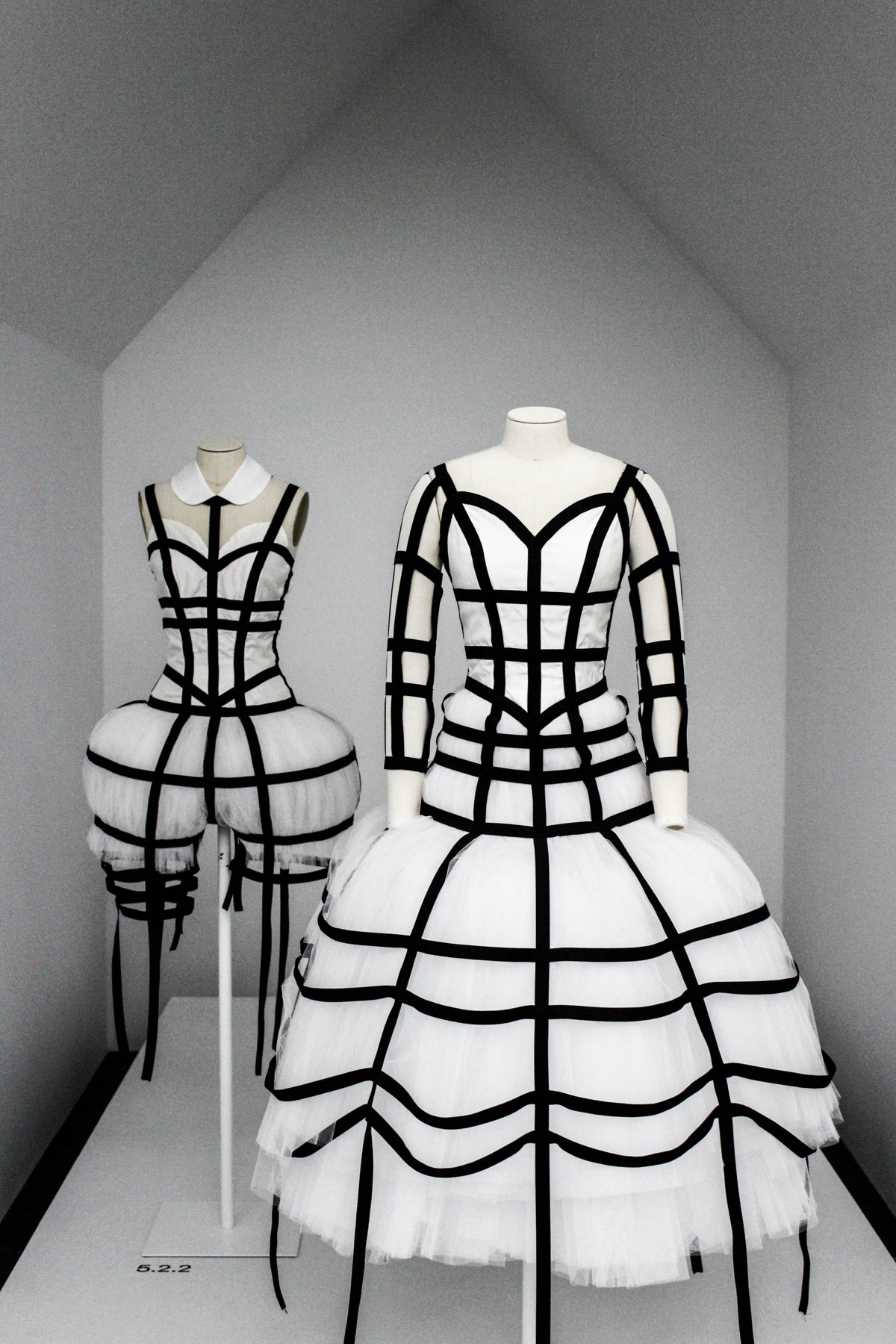
Die meisten Designer beginnen mit einer Referenz: einem Jahrzehnt, einer Muse, einem Archiv. Kawakubo beginnt mit einer bewusst gesetzten Leerstelle und behandelt sie als Rohmaterial. Die Retrospektive des Metropolitan Museum von 2017 hat die Methode präzise benannt: Ihre Arbeit lebt im Dazwischen, strukturiert durch die Zen-Begriffe mu – die Leere – und ma – das Intervall, ein Raum, der zugleich Leere und Volumen ist.1 Wo Kenya Hara die Leere einsetzt, um ein Objekt aufnahmefähig zu machen, setzt Kawakubo sie ein, um ein Objekt unaufgelöst zu lassen: ein Kleidungsstück, das zwischen Kleidung und Skulptur sitzt, zwischen schön und grotesk, zwischen gemacht und aufgetrennt, und sich weigert zu landen.
Die Verweigerung reicht bis in die Sprache. Kawakubo erklärt eine Kollektion fast nie, gibt selten Interviews und widersetzt sich der Deutung aus Prinzip. Die Arbeit ist die Aussage, und Mehrdeutigkeit ist kein Scheitern der Kommunikation, sondern ihr Ziel.
Kontext
Kawakubo wurde 1942 in Tokio geboren. Eine Ausbildung als Designerin hat sie nie absolviert: Sie studierte Kunst und Literatur an der Keio-Universität, arbeitete in der Werbeabteilung eines Textilunternehmens, war als Stylistin tätig und begann dann, die Kleidung zu machen, die sie nirgends finden konnte. 1969 wählte sie den Namen Comme des Garçons – „wie die Jungs“ – für ihr Label und gründete 1973 in Tokio die Firma.2
Ihr Pariser Debüt 1981 schlug ein wie eine Detonation. Schwarz, asymmetrisch, zerrissen und übergroß ignorierten die Kleider jede Konvention der taillierten, dekorierten weiblichen Silhouette; Kritiker griffen zu Wörtern wie „postatomar“,4 und die Modepresse spaltete sich in Entsetzen und Bekehrung.2 Binnen eines Jahrzehnts hatte der Look, für den sie keinen Namen gefunden hatten, das Vokabular der Mode neu geordnet: Schwarz als Standard, Dekonstruktion als Technik, der Laufsteg als Ort des Arguments statt der Vorführung. 2017 machte das Met sie nach Yves Saint Laurent 1983 zur erst zweiten lebenden Designerin, der das Costume Institute eine monografische Ausstellung widmete.2
Die Arbeit
Die Kollektionen 1981-82: Zerstörung als Konstruktion
Die frühen Pariser Kollektionen legten die Grammatik fest: Kleidungsstücke mit absichtlichen Löchern („Für mich sind das keine Risse. Das sind Öffnungen, die dem Stoff eine weitere Dimension geben“1), Pullover, gestrickt auf Maschinen mit gelockerten Schrauben, sodass der Stoff bereits beschädigt aus der Maschine kam, Silhouetten, die die Körperkontur vollständig verbargen. Es ging nie um Schock als Selbstzweck. Es ging darum, dass die „Fehler“ eines Kleidungsstücks zu seinem Thema befördert werden konnten – dass der Raum zwischen Absicht und Zufall bewohnbar war.
Body Meets Dress, Dress Meets Body (Frühjahr 1997): die Beulen-Kollektion
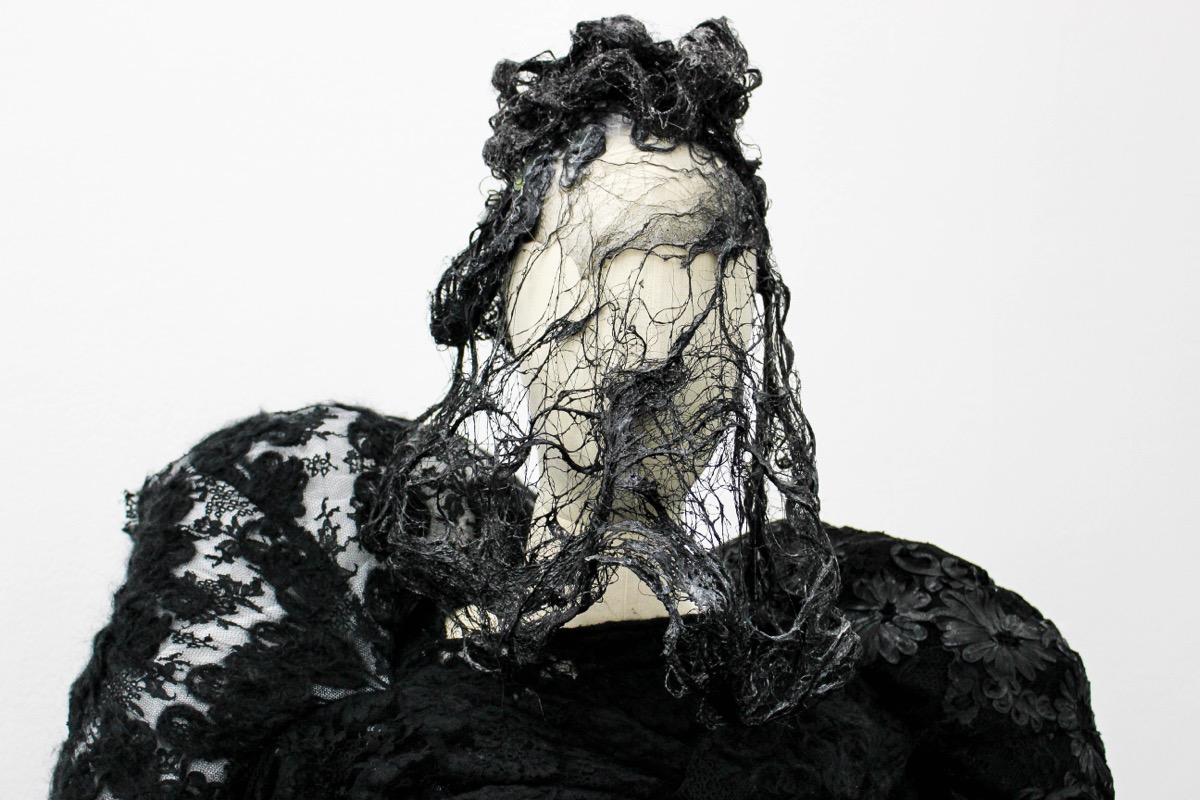
Stretch-Kleider aus Vichykaro, an Schulter, Rücken und Hüfte mit daunengefüllten Auswüchsen gepolstert – Wucherungen, die die Silhouette der Trägerin in etwas zwischen Tänzerin und Wasserspeier verwandelten. Die Modepresse nannte es die „lumps and bumps“-Kollektion; Merce Cunningham choreografierte einen Tanz in den Kleidern. Es bleibt ihr vollständigstes Argument dafür, dass Kleidung einem idealisierten Körper nicht schmeicheln muss, weil sie einen ganz anderen Körper vorschlagen kann: „Ich arbeite um die Figur herum, aber ich bin nie dadurch begrenzt, was die Figur sein muss.“1
Dover Street Market (2004): Einzelhandel als schönes Chaos
Mit ihrem Mann Adrian Joffe eröffnete Kawakubo 2004 in London den Dover Street Market – ein Multibrand-Store, organisiert nach ihrem erklärten Prinzip des „schönen Chaos“, in dem aufstrebende Labels, die Linien von Comme des Garçons und Installationen externer Künstler aufeinanderprallen und das gesamte Geschäft zweimal im Jahr abgerissen und neu aufgebaut wird.3 DSM ist das Dazwischen als Geschäftsmodell: weder Boutique noch Kaufhaus, wurde es zur zentralen Institution, über die Avantgarde- und Streetwear-Labels die Welt erreichten – darunter ein junger Virgil Abloh, dessen Off-White sie früh ins Sortiment nahm.
Das Met, Art of the In-Between (2017): die institutionalisierte Verweigerung
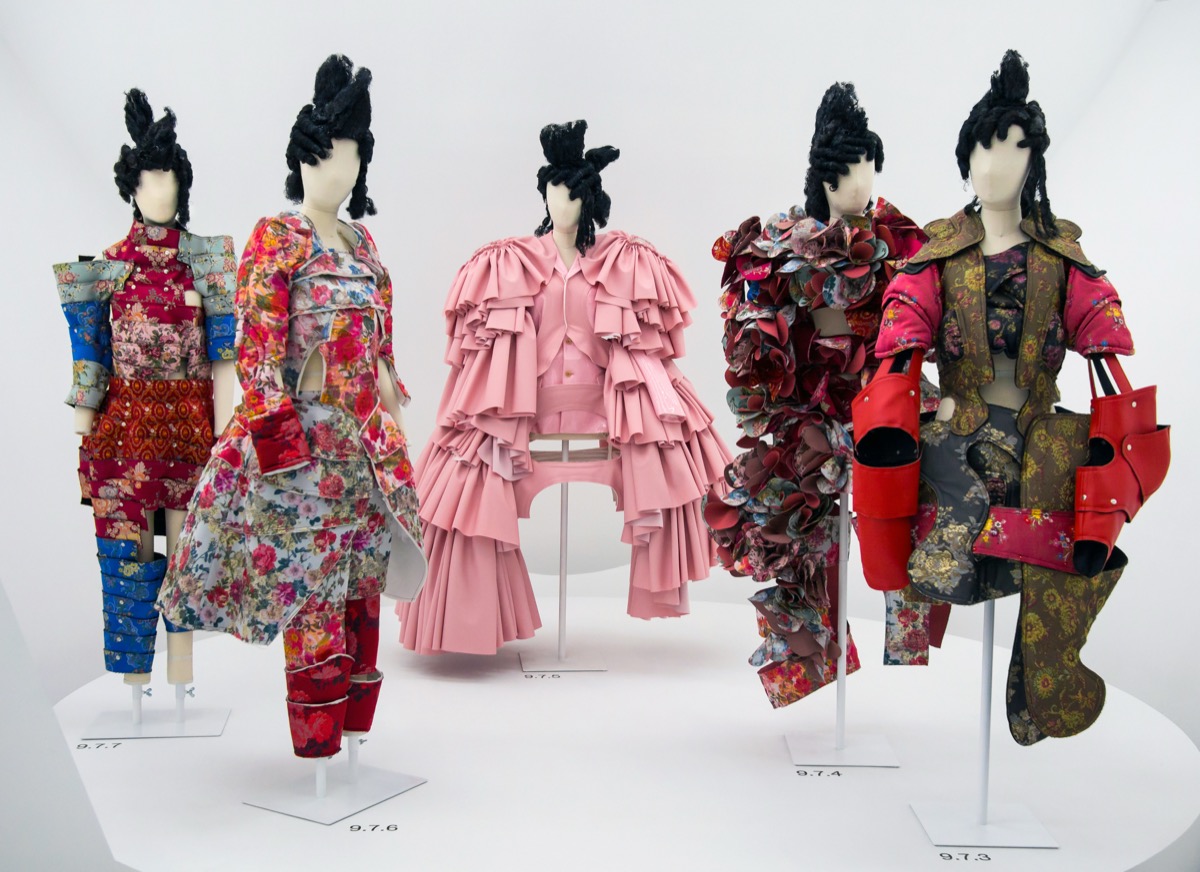
Die Retrospektive ordnete 140 Entwürfe nicht chronologisch, sondern als Gegensatzpaare – Abwesenheit/Anwesenheit, Design/Nicht-Design, Damals/Jetzt – und rief mu in der kreisförmigen Architektur der Galerien auf.1 Kawakubo kooperierte widerwillig und lehnte es, wie es ihre Art ist, ab, die Fragen der Ausstellung aufzulösen. Der meistzitierte Satz des Katalogs stammt von ihr: „Die Bedeutung ist, dass es keine Bedeutung gibt.“
Die Methode
Kawakubos Prozess ist darauf angelegt, ihrer eigenen Routine auszuweichen. Sie hat sich „eine neue psychedelische Droge, die mich die Welt anders sehen ließe, mit den Augen einer Außenseiterin“1 gewünscht – und ihre Arbeitsweise ist die nüchterne Version dieses Wunsches. Ihre Anweisungen an die Schnittmacher sind berühmt für ihre Schrägheit: ein zerknülltes Blatt Papier, ein Wort, die Aufforderung, einen Schnitt falsch zu machen. Das Team muss interpretieren, und die Distanz zwischen ihrer Absicht und dieser Interpretation ist der Ort, an dem die neue Form entsteht. „Wenn die natürlichen Bewegungen des Tanzes abgewehrt und widerlegt werden, entstehen neue Formen.“1
Unabhängigkeit ist die Voraussetzung. Comme des Garçons ist bis heute in Privatbesitz, profitabel und ganz ihres; sie hat Unabhängigkeit als „von größter Bedeutung für mich“ bezeichnet und sich selbst, im geistigen Register des Punk, als „bis zum Ende eine erwachsene Delinquentin“ beschrieben.1 Die Firma finanziert die Experimente; die Experimente rechtfertigen die Firma. Viele Kollektionen beginnen nach ihrer eigenen Aussage „aus einem Gefühl der Wut oder Empörung über die Zustände in der Gesellschaft“1 – die Arbeit ist Argument, bevor sie Produkt ist.
Einflusskette
Wer sie geprägt hat
Punk – nicht sein Kostüm, sondern seine Haltung. Kawakubo hat ausdrücklich gesagt, dass sie vom Punk den Geist übernommen hat, der „gegen das Gewöhnliche, die normale Art, Dinge zu tun“ gerichtet ist.1 (Haltungsfundament)
Zen-Ästhetik – mu und ma als ererbte kulturelle Instrumente, geschärft zu Werkzeugen der Formfindung statt der Dekoration. Dieses Fundament teilt sie mit Kenya Hara und Tadao Ando, nutzt es aber zum entgegengesetzten Zweck: Deren Leere beruhigt; ihre destabilisiert. (Philosophisches Fundament)1
Wen sie geprägt hat
Dekonstruktion als Disziplin. Martin Margiela, Helmut Lang und die gesamte Antwerpener Generation arbeiten in einem Raum, den die Kollektionen von 1981 geöffnet haben. Jede offenliegende Naht und jeder unversäuberte Saum auf einem heutigen Laufsteg hat sie in seiner Ahnenreihe.
Die Fusion von Avantgarde und Streetwear. Über CdG PLAY, die Kooperationen mit Nike und Supreme und vor allem über die Kuratierung des Dover Street Market hat Kawakubo die Brücke gebaut, die Virgil Abloh und seine Generation überquerten – der Beweis, dass konzeptuelle Strenge und kommerzielle Straßenkultur sich eine Kleiderstange teilen können.3
Die durchgehende Linie
Kawakubo vervollständigt ein Dreieck mit Issey Miyake und Kenya Hara. Alle drei arbeiten aus der japanischen Leere heraus; jeder richtet sie anders aus. Miyake konstruiert die Leere zur Freiheit – die Luft in einem plissierten Kleid. Hara kuratiert die Leere zur Aufnahmefähigkeit – das leere Gefäß, das auf seinen Gebrauch wartet. Kawakubo macht aus der Leere eine Waffe in Form einer Frage – das unaufgelöste Kleidungsstück, das nicht verrät, was es ist. Miyakes Stoff dient dem Leben, Haras Leere dient der Bedeutung, Kawakubos Dazwischen dient dem Zweifel. Die Mode brauchte alle drei; das Design braucht sie noch immer. (Brücke der Reihe)
Was ich daraus mitnehme
Kawakubos schräge Anweisungen sind das stärkste Argument gegen das Überspezifizieren kreativer Arbeit, das ich kenne. Sie gibt ihren Schnittmachern absichtlich eine Lücke, weil das Missverständnis das Designwerkzeug ist – und genau so funktionieren die besten Prompts an ein fähiges Modell: die Absicht eingrenzen, den Weg offenlassen, und die Interpretation bringt Optionen hervor, die man nicht hätte spezifizieren können. Und „bei null anfangen“ ist eine echte Disziplin, kein Slogan: Das Argument, dass Geschmack ein technisches System ist, hängt davon ab, zu wissen, wann man die eigenen Voreinstellungen verweigern muss. Niemand hat Voreinstellungen länger, oder profitabler, verweigert als Kawakubo.
Häufige Fragen
Was ist Rei Kawakubos Designphilosophie?
Kawakubo entwirft aus dem „Dazwischen“ – dem unaufgelösten Raum, der durch die Zen-Begriffe mu (Leere) und ma (Intervall) strukturiert ist – und aus dem erklärten Vorsatz, „bei null anzufangen, beim Nichts, um Dinge zu tun, die noch nie getan worden waren“.1 Sie weigert sich, ihre Arbeit zu erklären, behandelt Mehrdeutigkeit als den Punkt statt als Scheitern und hält Unabhängigkeit für die Voraussetzung von alledem.
Warum ist das Pariser Debüt von Comme des Garçons 1981 berühmt?
Es brach die vorherrschenden Regeln der Mode in einer einzigen Schau: schwarze, zerrissene, asymmetrische, übergroße Kleider, die den Körper verbargen, statt ihn zu zeigen. Die anfängliche Feindseligkeit der Kritik wich einer umfassenden Übernahme – Schwarz als Standard der Mode und Dekonstruktion als Standardtechnik gehen beide darauf zurück.2
Was ist der Dover Street Market?
Ein Multibrand-Einzelhandelskonzept, das Kawakubo 2004 mit Adrian Joffe in London gründete, organisiert um ihr Prinzip des „schönen Chaos“: die Linien von Comme des Garçons, aufstrebende Designer und Kunstinstallationen in einem Geschäft, das zweimal im Jahr neu aufgebaut wird. Es wurde zur zentralen Institution, die Avantgarde-Mode mit Streetwear verbindet.3
Warum war die Met-Ausstellung 2017 bedeutend?
Rei Kawakubo/Comme des Garçons: Art of the In-Between machte sie nach Yves Saint Laurent 1983 zur erst zweiten lebenden Designerin mit einer monografischen Ausstellung im Costume Institute – und ihre thematische Struktur aus Gegensatzpaaren, mit Galerien, die mu aufrufen, präsentierte ihre Methode zu deren eigenen, nicht erklärenden Bedingungen.12
-
The Metropolitan Museum of Art, Rei Kawakubo/Comme des Garçons: Art of the In-Between (Google-Arts-&-Culture-Fassung des Ausstellungstexts des Met) – alle Kawakubo-Zitate in der Darstellung des Met sowie das mu/ma-Konzept des „Dazwischen“. ↩↩↩↩↩↩↩↩↩↩↩↩↩
-
Wikipedia, Rei Kawakubo/Comme des Garçons: Art of the In-Between – Ausstellungsdaten (4. Mai bis 4. September 2017), der Meilenstein als zweite lebende Designerin nach YSL; biografischer Abriss (Keio, Label 1969, Firmengründung 1973, Pariser Debüt 1981 und dessen Aufnahme). ↩↩↩↩↩
-
Dover Street Market, offizielle Website – Gründung (London, 2004), das Konzept des „schönen Chaos“ und das Multibrand-Modell. ↩↩↩
-
Fotografien: Installationsansichten von Art of the In-Between von vi_britannia57 (CC BY 2.0) und Rhododendrites (CC BY-SA 4.0), via Wikimedia Commons. Kawakubo lehnt es bekanntermaßen ab, fotografiert zu werden; hier steht ihre Arbeit an ihrer Stelle, was ihr vermutlich lieber wäre. ↩











