Filosofia de Design: Dieter Rams — Menos, Porém Melhor


O Princípio
“Bom design é o mínimo de design possível. Menos, porém melhor – porque se concentra nos aspectos essenciais, e os produtos não são sobrecarregados com o que não é essencial. De volta à pureza, de volta à simplicidade.” – Dieter Rams1
Rams não defendia o minimalismo como estética. Ele defendia a remoção de tudo que não serve à pessoa que usa o objeto. A distinção importa: minimalismo é um estilo que você pode aplicar a qualquer coisa. A redução de Rams é um método que exige entender exatamente o que é essencial e ter a disciplina para remover todo o resto. O que resta não é mínimo. É suficiente.
Contexto
Em 1955, uma empresa alemã de eletrônicos chamada Braun fabricava rádios que pareciam pequenos móveis. Gabinetes com folheado de madeira. Tecido esticado sobre as aberturas dos alto-falantes. Botões posicionados por simetria visual – o dial de volume tinha o mesmo tamanho e posição do dial de sintonia, embora um fosse usado constantemente e o outro raramente. A estética era emprestada do aparador de sala de estar, e a mensagem era: essa tecnologia não é ameaçadora, é doméstica. Esse era o padrão em toda a indústria alemã de eletrônicos de consumo do pós-guerra. A indústria estava se reconstruindo após a produção bélica, e o vocabulário de design era herdado das tradições artesanais pré-guerra. Um rádio era um móvel que por acaso tocava música.
Os fundadores da Braun, os filhos de Max Braun, Erwin e Artur, herdaram a empresa em 1951 e queriam modernizá-la. Em 1954, procuraram a Escola de Design de Ulm – a Hochschule fur Gestaltung, fundada no ano anterior por Inge Aicher-Scholl, Otl Aicher e Max Bill como sucessora intelectual da Bauhaus. A filosofia de Ulm rejeitava a ideia de que design era tornar as coisas atraentes. Design era fazer as coisas funcionarem. A forma emerge da função, dos materiais e das restrições de fabricação. Nada mais.2
Fritz Eichler, diretor artístico da Braun, tornou-se a ponte entre essa filosofia e os produtos de consumo. Ele recrutou Hans Gugelot de Ulm e depois um arquiteto de 23 anos chamado Dieter Rams, que havia estudado na Werkkunstschule em Wiesbaden e se formado em arquitetura e marcenaria – esta última aprendida com seu avô, cuja ética artesanal Rams citaria ao longo de toda a sua carreira. Eichler criou algo incomum para a época: uma empresa onde o design respondia à engenharia, não ao marketing.3
Rams chegou para modernizar os interiores da Braun. Em menos de um ano, já estava redesenhando os próprios produtos. Em 1961, era Diretor de Design. Ocupou o cargo por mais de trinta anos, liderando uma equipe que raramente ultrapassava dez pessoas. Nesse período, projetaram ou supervisionaram mais de 500 produtos. A linguagem que estabeleceram – carcaças brancas ou cinza claro, controles visíveis organizados por função, nenhuma decoração aplicada, proporções ditadas pelos componentes internos – tornou-se o vocabulário visual do design industrial alemão e, décadas depois, o modelo para a empresa de tecnologia mais valiosa do mundo.4
O Trabalho
SK 4 Phonosuper (1956): Tornando o Objeto Honesto
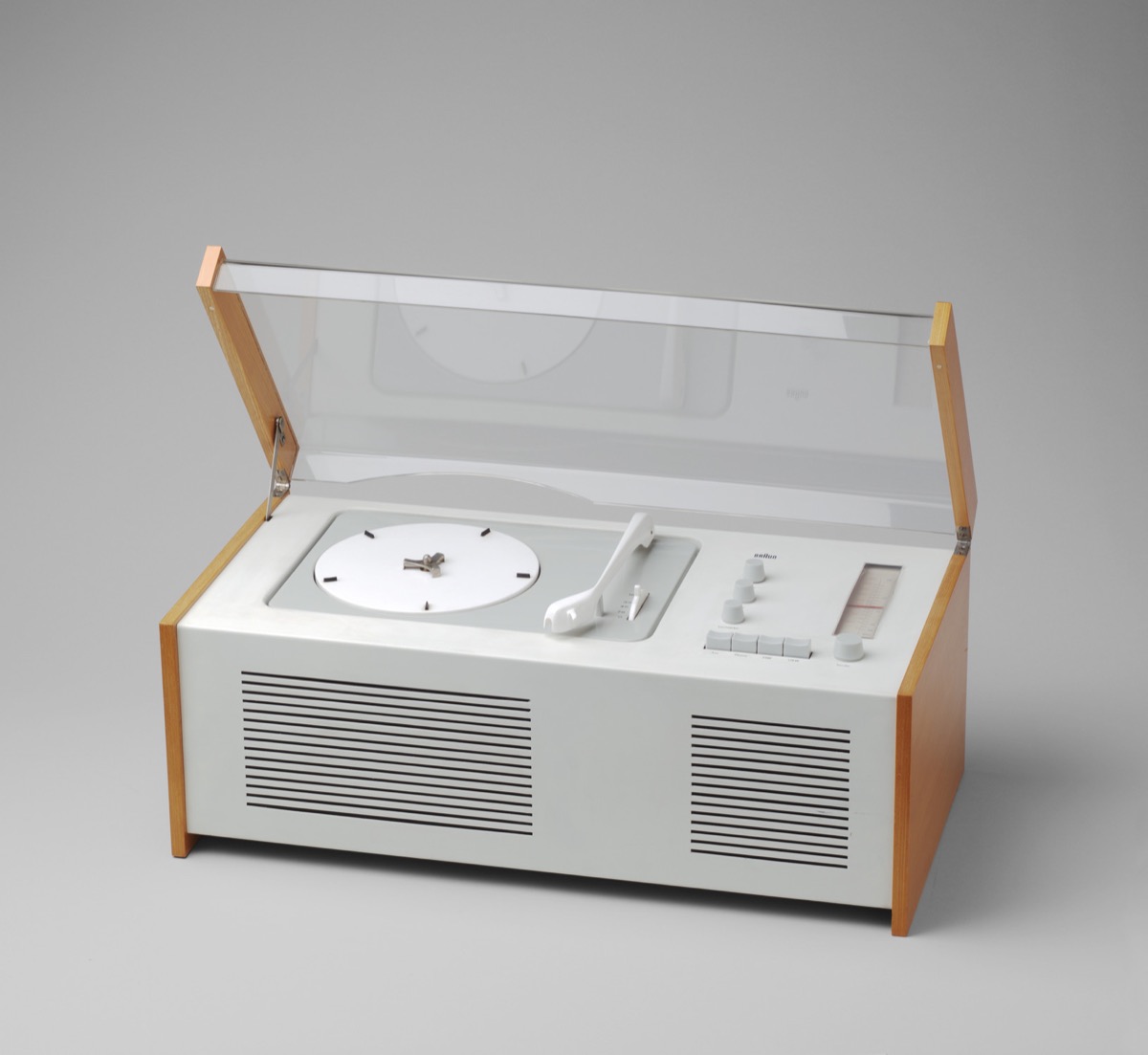
O SK 4, projetado com Hans Gugelot e Wilhelm Wagenfeld, era uma combinação de rádio e toca-discos. Todos os concorrentes em 1956 alojavam esses componentes dentro de um gabinete de madeira que parecia um aparador. O mecanismo ficava escondido. O objeto fingia ser um móvel.
Gugelot e Rams rejeitaram o disfarce. Colocaram o toca-discos e os controles na parte superior, alojaram os eletrônicos em uma caixa de metal e madeira pintada de branco, e cobriram com uma tampa. A tampa original de Gugelot era de metal, mas vibrava durante a reprodução e a gerência achou que parecia “uma caixa de pão”. Rams propôs substituí-la por Perspex transparente. A sugestão era específica: se o mecanismo não é vergonhoso, não o esconda. Deixe o usuário ver o toca-discos, o braço, os controles. Deixe o objeto ser honesto sobre o que ele é.5
A imprensa o chamou de “Schneewittchensarg” – o Caixão da Branca de Neve. O apelido veio do próprio Gugelot, que percebeu que a tampa transparente sobre o interior branco lembrava o caixão de vidro do conto de fadas. O nome pegou, e o princípio também: um rádio não precisa fingir ser um aparador. Um produto é mais digno quando é mais claro sobre sua função.
O SK 4 está na coleção permanente do MoMA. Ele fez uma indústria inteira abandonar a ideia de que eletrônicos de consumo deveriam parecer móveis tradicionais. Todos os produtos que a Braun fabricou nas quatro décadas seguintes seguiram o precedente que ele estabeleceu.6
T3 Pocket Radio (1958): Portabilidade como Categoria de Design
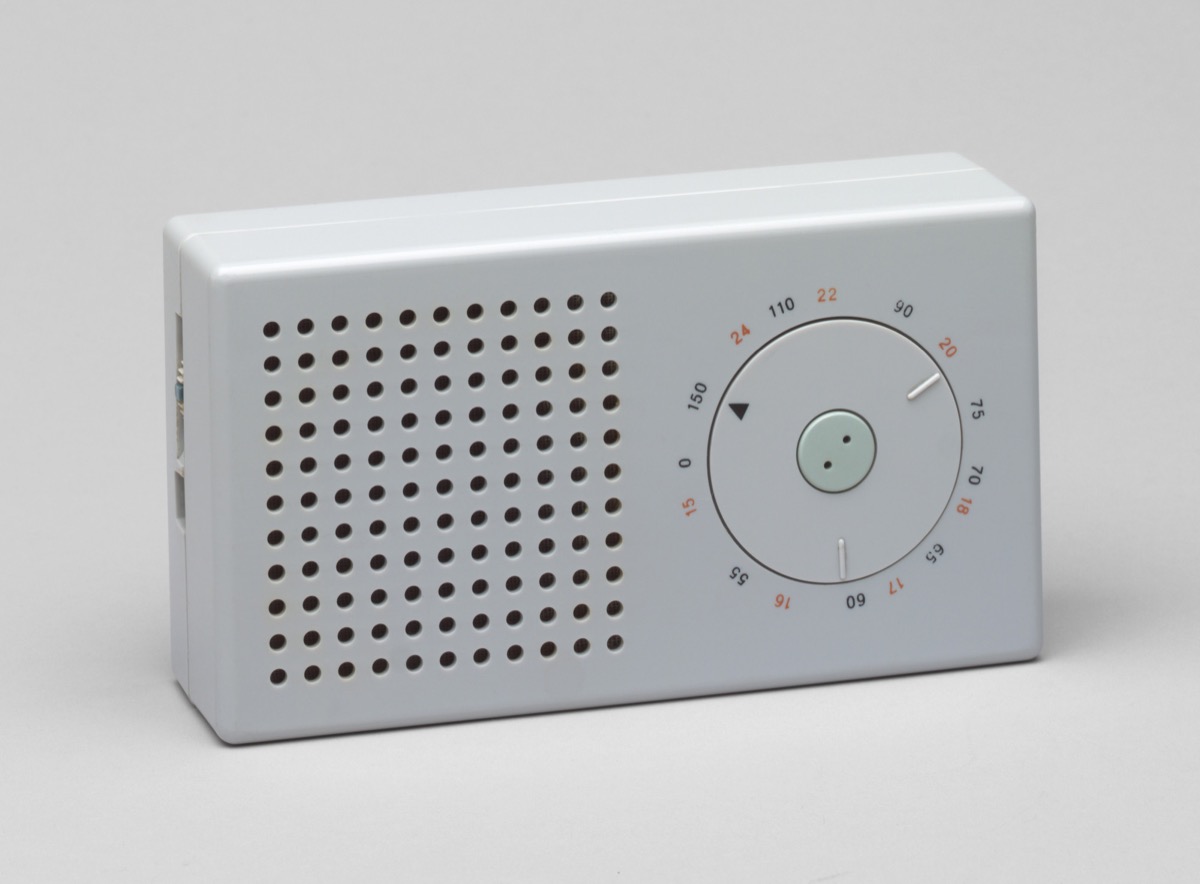
O Braun T3 era um rádio transistorizado projetado para caber no bolso de um paletó. Rams criou uma placa retangular branca com uma grade circular perfurada para o alto-falante e um dial de volume. O formato era determinado pelas dimensões da placa de circuito do transistor e pelo diâmetro do alto-falante. A carcaça não adicionava nada que os componentes não exigissem.
O T3 fez uma aposta que seus concorrentes não estavam dispostos a fazer: as pessoas trocariam qualidade acústica por liberdade de movimento. Cada elemento removido do design – o gabinete de madeira, os múltiplos botões, o tecido decorativo do alto-falante – era uma decisão de priorizar a portabilidade sobre a convenção. A grade metálica perfurada não era uma escolha estilística. Era a interface mais fina possível entre o cone do alto-falante e o ar.
Quarenta e três anos depois, Jonathan Ive levou uma placa retangular branca com cantos arredondados a Steve Jobs e a chamou de iPod. As proporções, o elemento de controle central, a face branca contra uma carcaça traseira lisa – a linhagem visual não é escondida e nunca foi negada. Ive escreveu o prefácio da biografia autorizada de Rams por Sophie Lovell e declarou publicamente que a capacidade de Rams de “dar forma a um produto que é tão convincente, tão certo, tão inevitável que parece não haver alternativa racional” moldou diretamente sua própria abordagem.7
O T3 está na coleção permanente do MoMA.8
606 Universal Shelving System (1960): Projetando para a Vida Toda
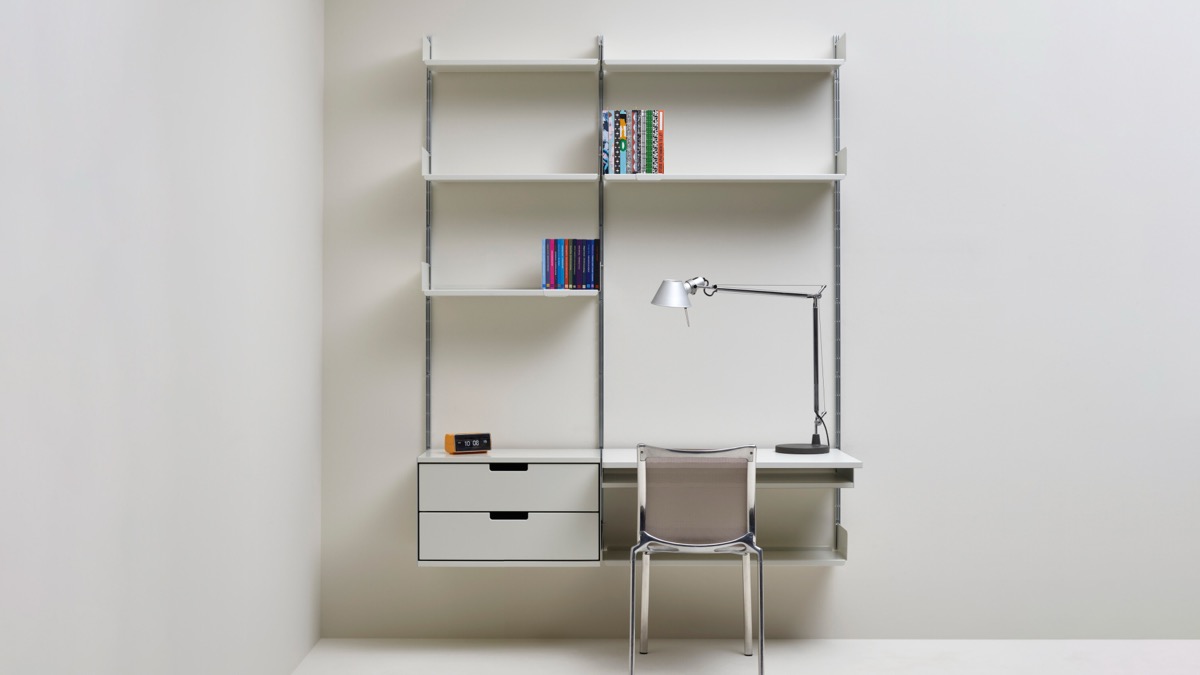
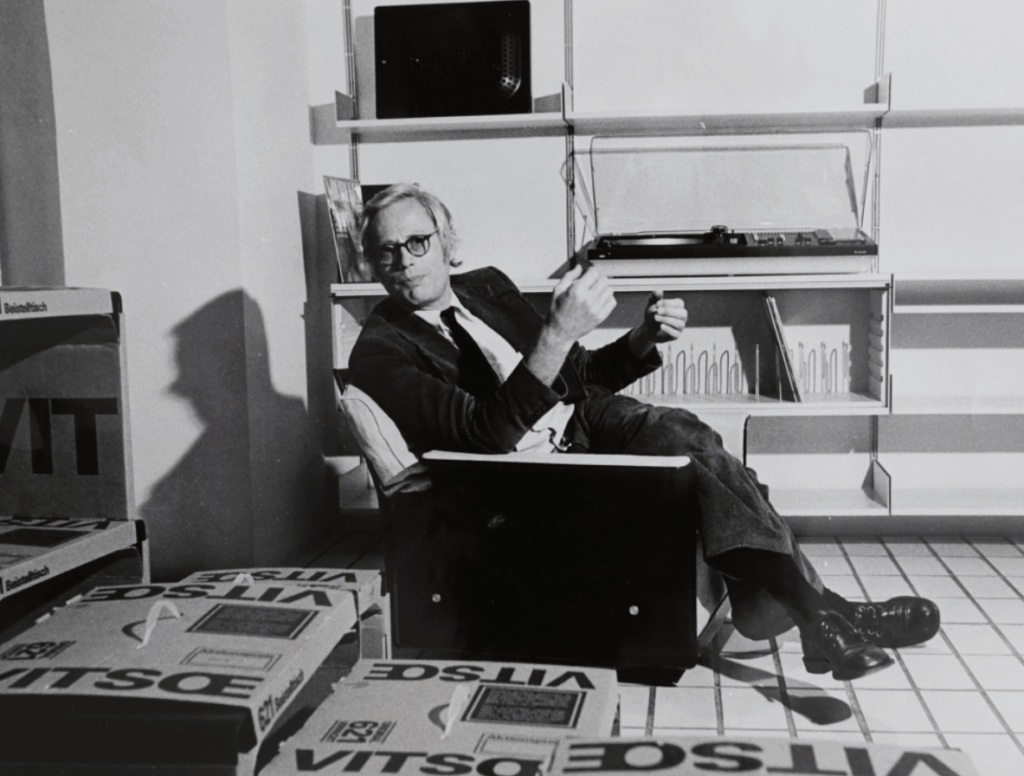
Em 1955, três anos antes do T3, Rams esboçou um sistema de prateleiras montado na parede baseado em trilhos de alumínio em formato E. Em 1957, pediu permissão a Erwin Braun para projetar móveis para outra empresa. Braun aprovou, supostamente dizendo que isso “ajudaria o mercado dos nossos rádios.” Otto Zapf apresentou Rams a Niels Vitsoe, um fabricante de móveis dinamarquês, e o 606 Universal Shelving System foi lançado em 1960.3
O 606 consiste em trilhos de alumínio montados na parede. Prateleiras, armários e mesas são pendurados nos trilhos com pinos – sem necessidade de ferramentas. O sistema tem duas larguras de vão (65cm e 90cm), criando 27 configurações possíveis para uma parede padrão. Está disponível em quatro cores. Não tem fixadores visíveis nem elementos decorativos.
A decisão de design não era sobre prateleiras. Era sobre o tempo. Rams projetou o 606 para durar mais que o cômodo onde fosse instalado, a casa que continha o cômodo e o proprietário que o comprou. O sistema pode ser reconfigurado conforme as necessidades mudam, expandido conforme as coleções crescem e transferido quando o proprietário se muda. A Vitsoe replaneja sistemas para novos espaços. Peças de 1960 são compatíveis com peças fabricadas em 2026.
O 606 ainda é fabricado hoje, inalterado há sessenta e seis anos. Em 2023, a Suprema Corte de Cassação da Itália o reconheceu como obra de arte, concedendo proteção de direitos autorais. O tribunal descreveu as prateleiras como “extremamente reduzidas, claras e calmas” com “nenhum elemento de design que cause inquietação.”9
Nenhum outro móvel em produção contínua a partir de um único design original alcançou essa longevidade. O 606 não é apenas um produto. É o argumento mais forte a favor do décimo princípio de Rams: bom design é o mínimo de design possível.
O Método
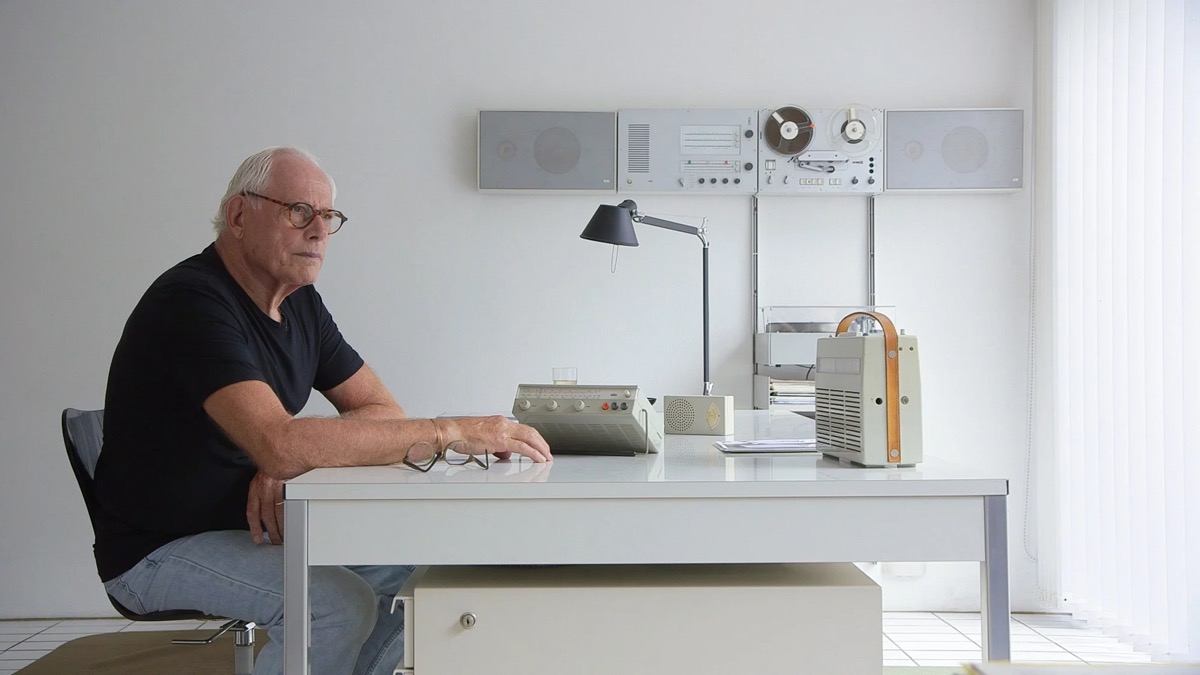
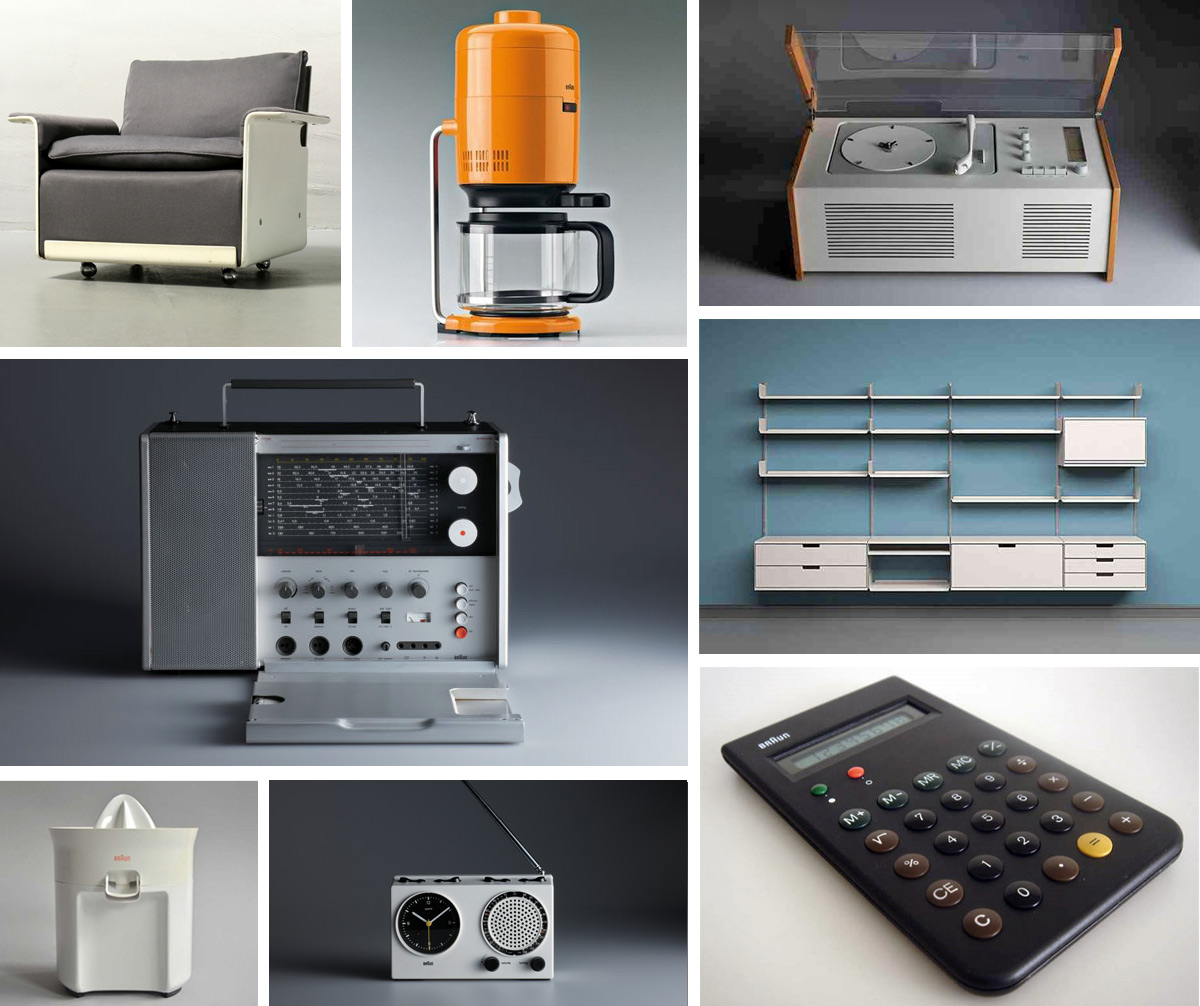

Rams trabalhava com restrições, não com inspiração. Cada projeto começava com os requisitos de engenharia: o que a placa de circuito precisa? Qual o tamanho do alto-falante? Quais são as tolerâncias de fabricação? A forma emergia dessas restrições filtradas por uma pergunta: qual é o mínimo que este objeto precisa ser?
“Meu coração pertence aos detalhes,” disse Rams em uma entrevista ao Designboom. “Na verdade, sempre os achei mais importantes que o quadro geral. Nada funciona sem detalhes. Eles são tudo, a base da qualidade.”10
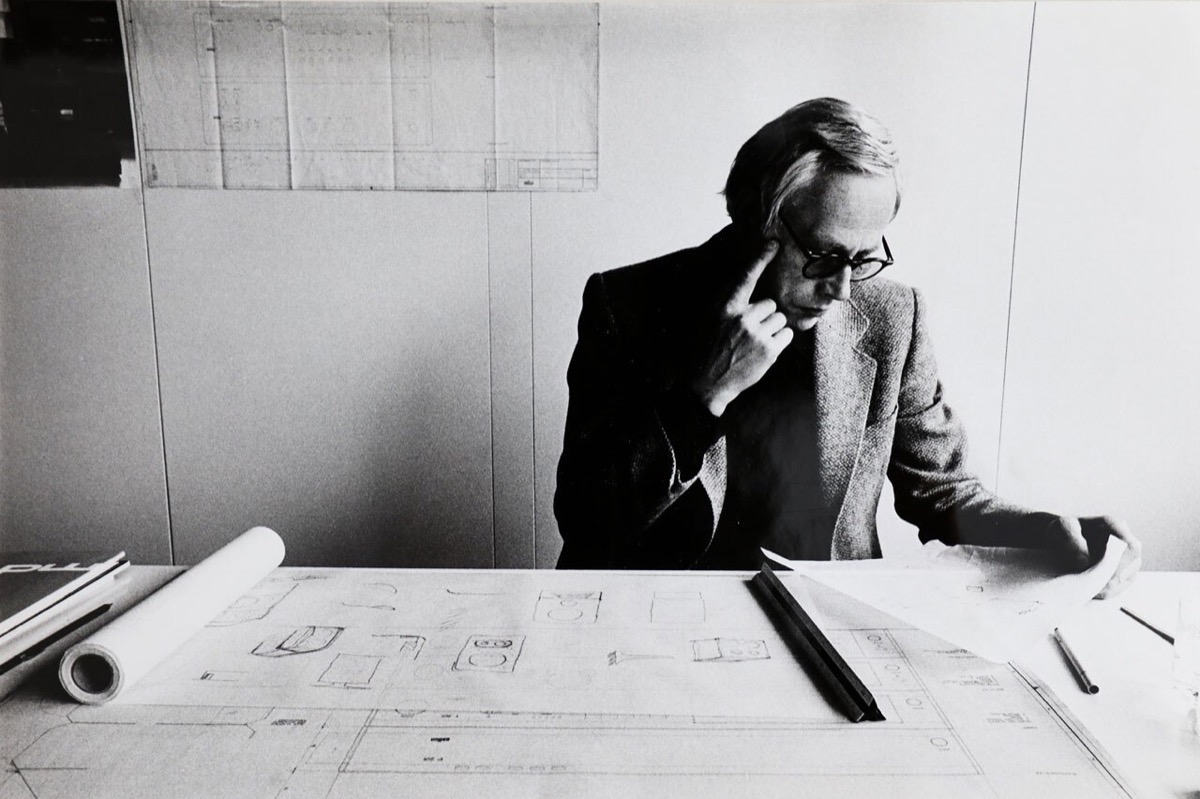
Ele desenhava à mão, a lápis, no papel. Construía modelos físicos. Passava mais tempo removendo elementos dos protótipos do que adicionando. Sua equipe de design na Braun era pequena – raramente mais de dez pessoas – e ele revisava cada produto pessoalmente. Seu colaborador de longa data, Dietrich Lubs, trabalhou com ele na calculadora ET 66 e em outros produtos posteriores. O processo era sempre o mesmo: entender o problema, propor uma solução e então desbastar a solução até que nada desnecessário permanecesse.
No final dos anos 1970, Rams ficou preocupado com “uma confusão impenetrável de formas, cores e ruídos” no mundo projetado ao seu redor. Ciente de que era um contribuidor significativo para esse mundo, perguntou-se: “Meu design é bom design?” A resposta se tornou seus Dez Princípios do Bom Design – não mandamentos ditados de cima, mas critérios desenvolvidos por autoexame. Ele os usou como ferramentas de ensino na Hochschule fur bildende Kunste Hamburg, onde foi professor de 1981 a 1997.1
Os princípios funcionam como um filtro, não como uma receita. Eles não dizem o que fazer. Dizem quando parar. “Bom design é o mínimo de design possível” é o décimo princípio e o mais difícil de seguir, porque exige a disciplina de remover o próprio trabalho.
Em seu discurso de 1976 “Design by Vitsoe,” proferido em Nova York, Rams alertou: “Imagino que nossa situação atual fará as gerações futuras estremecerem diante da falta de reflexão com que hoje preenchemos nossas casas, nossas cidades e nossa paisagem com um caos de tranqueiras variadas.” Ele pediu “o fim da era do desperdício.”11 Cinquenta anos depois, o estremecimento não parou. No documentário de 2018 “Rams” de Gary Hustwit, ele disse: “Se tivesse que fazer tudo de novo, não gostaria de ser designer. Existem produtos desnecessários demais neste mundo.”12
Cadeia de Influência
Quem o Moldou
A Escola de Design de Ulm – especificamente Hans Gugelot, Fritz Eichler e Otl Aicher – deu a Rams a estrutura intelectual: design como resolução sistemática de problemas, não autoexpressão. Seu avô, um marceneiro em Wiesbaden, deu-lhe a sensibilidade material: madeira, juntas, a honestidade da construção visível. “Fui fortemente influenciado pela presença do meu avô, que era marceneiro,” contou à Vitsoe.3
Jan Tschichold deu-lhe o precedente tipográfico para a redução. Die Neue Typographie (1928) de Tschichold argumentava que a tipografia deveria servir à comunicação, não à decoração – layouts assimétricos, fontes sem serifa, espaço em branco como elemento estrutural. Era o mesmo argumento que Rams faria sobre produtos: remova a decoração, deixe a função falar. A Escola de Ulm ensinava esse princípio através da linhagem de Tschichold, e Rams o absorveu em sua abordagem a cada superfície, etiqueta e painel de controle na Braun.4
Quem Ele Moldou

Jonathan Ive é o herdeiro mais documentado. A linguagem de design da Apple durante a era do iPhone – superfícies brancas, materiais visíveis, remoção de ornamento – remonta diretamente ao trabalho de Rams na Braun. Ive escreveu o prefácio da biografia autorizada de Rams e chamou “menos, porém melhor” de mantra que “encapsula perfeitamente a filosofia de design que guiou o desenvolvimento de muitos produtos icônicos da Apple.” Rams retribuiu: a Apple era “uma das poucas empresas” que implementava seus princípios. (Influência direta)7
Naoto Fukasawa aplicou a redução de Rams a produtos de consumo japoneses. Seu CD player de parede da MUJI – um disco branco com um cordão de puxar – é descendente direto da abordagem de Rams. Fukasawa e Jasper Morrison cocriaram o conceito “Super Normal”, que incluiu o 606 de Rams entre seus exemplos canônicos. (Influência direta)12
Kenya Hara, diretor criativo da MUJI, aplica os princípios redutivos de Rams através de raízes estéticas japonesas – wabi-sabi, o vazio como convite em vez de ausência. Hara reconheceu a conexão intelectual entre o funcionalismo de Rams e a filosofia de “vazio” da MUJI, embora chegue à redução por uma tradição cultural diferente. Seu livro White explora a ausência como uma qualidade de design que convida à participação do usuário. Onde Rams remove para esclarecer, Hara remove para abrir um espaço. (Princípio compartilhado, influência convergente)
O Fio Condutor
Rams provou que redução não é concessão. É o padrão mais exigente que um designer pode estabelecer. A pergunta “o que posso remover?” exige entender exatamente o que é essencial, e esse entendimento exige saber mais sobre o problema do que qualquer outra pessoa na sala. Seus objetos são silenciosos não porque lhe faltava ambição, mas porque ele entendia que ambição expressa por adição é mais fácil do que ambição expressa por remoção.
O Que Eu Tiro Disso
O décimo princípio de Rams – o mínimo de design possível – é o mesmo instinto por trás dos hooks de propósito único no meu sistema de agentes. Cada hook faz uma coisa. Se não consegue justificar sua existência, não existe.
FAQ
Qual é a filosofia de design de Dieter Rams?
A filosofia de Rams se centra em “weniger, aber besser” – menos, porém melhor. Ele acreditava que o bom design emerge da remoção de tudo que é desnecessário até que reste apenas o que serve ao usuário. Seus Dez Princípios do Bom Design, formulados no final dos anos 1970 como estrutura de autoavaliação, fornecem critérios sistemáticos para avaliar se cada elemento de um produto justifica sua existência por meio de função, honestidade e longevidade.1
O que Dieter Rams projetou?
Rams liderou o design na Braun de 1961 a 1995, produzindo o SK 4 Phonosuper (1956, com Hans Gugelot), o rádio transistorizado de bolso T3 (1958), a calculadora ET 66 (com Dietrich Lubs), e mais de 500 outros eletrônicos de consumo. Ele também projetou o 606 Universal Shelving System para a Vitsoe (1960), que permanece em produção inalterado.39
Como Dieter Rams influenciou a Apple?
Jonathan Ive, ex-Diretor de Design da Apple, citou Rams como sua principal influência em design e escreveu o prefácio de sua biografia autorizada. As conexões visuais e filosóficas são documentadas: o Braun T3 e o iPod original compartilham proporções e lógica de interface, e ambos os designers praticavam o design subtrativo – começando com restrições de engenharia e removendo tudo que não servisse à função.7
O que designers podem aprender com Dieter Rams?
Aplique os Dez Princípios como um filtro, não como uma receita. Para cada elemento em um produto, pergunte se ele serve à necessidade do usuário. Se não serve ao usuário, serve ao seu ego. Remova-o. O princípio “bom design é o mínimo de design possível” se aplica além de produtos físicos – a interfaces, sistemas e código.
Fontes
-
Dieter Rams, “Good Design,” Vitsoe. The Ten Principles of Good Design, formulated c. 1976-1978. Definitive text maintained by Rams’ professional partner since 1959. ↩↩↩
-
Ulm School of Design (Hochschule fur Gestaltung Ulm), founded 1953. See: Rene Spitz, HfG Ulm: The View Behind the Foreground (Axel Menges, 2002). Also: Artsy, “The Bauhaus’s Lesser-Known Successor”. ↩
-
Vitsoe, “Dieter Rams,” Vitsoe Biography. Primary biographical source maintained by the company Rams has worked with since 1959. Includes: carpenter grandfather, Braun recruitment, Vitsoe origin story. ↩↩↩↩
-
Sophie Lovell, Dieter Rams: As Little Design as Possible (Phaidon, 2011/2024). Authorized biography with foreword by Jonathan Ive. Covers Braun career, Vitsoe, lectures, and legacy. ↩↩
-
braunaudio.de, “Snow White’s Coffin SK4,” Braun Audio Heritage. Design history including Gugelot collaboration, Perspex lid decision, and “bread box” rejection. ↩
-
MoMA, “Radio-Phonograph (model SK 4/10), 1956,” Museum of Modern Art Collection. ↩
-
Jonathan Ive, foreword to Sophie Lovell, Dieter Rams: As Little Design as Possible (Phaidon, 2011). Also: CNN, “Dieter Rams: The legendary designer who influenced Apple,” CNN Style. ↩↩↩
-
MoMA, “Pocket Radio (model T3), 1958,” Museum of Modern Art Collection. ↩
-
Vitsoe, “606 Universal Shelving System,” and “History,” vitsoe.com. Includes 2023 Italian Supreme Court recognition as artwork. ↩↩
-
Designboom, “Dieter Rams video interview,” Treasures on Tape series, c. 2000/published 2020. ↩
-
Dieter Rams, “Design by Vitsoe,” speech delivered in New York, 1976. Full text available as PDF. ↩
-
Gary Hustwit, Rams (documentary, 2018). Features Rams at home in Kronberg with in-depth conversations about philosophy and process. Music by Brian Eno. hustwit.com/rams. ↩↩