Filosofia de Design: Virgil Abloh — Tudo entre Aspas

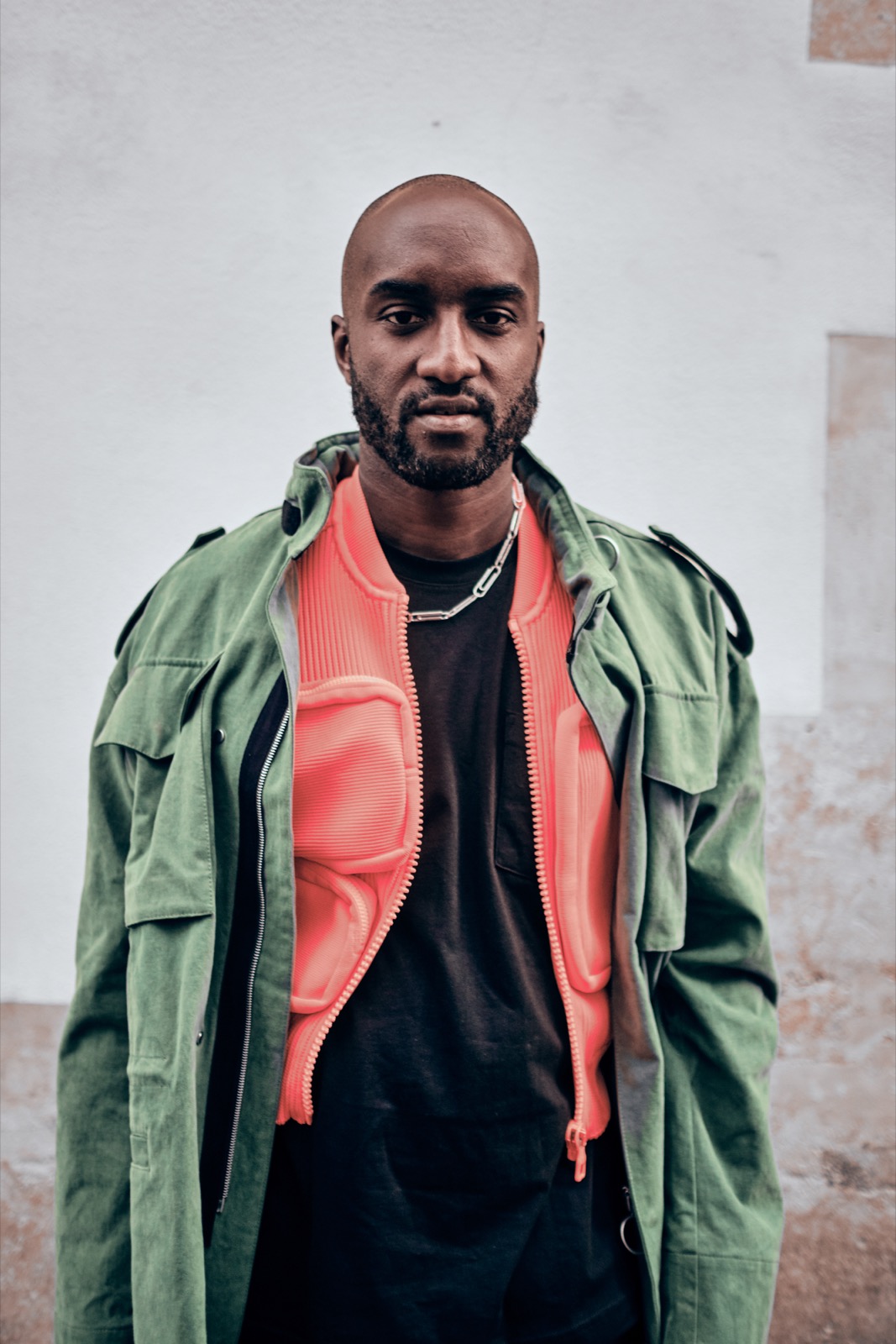
O Princípio
“Se você coloca dois por cento a mais, ou tira dois por cento, isso muda algo completamente… Meu código secreto tem sido três por cento.” – Virgil Abloh, palestra na Harvard GSD, 20171
Abloh chamava isso de “abordagem dos 3%” e a rastreava até Marcel Duchamp. Em 1917, Duchamp pegou um mictório produzido em massa, assinou “R. Mutt”, intitulou de Fountain e o submeteu a uma exposição de arte. O objeto não foi alterado. O contexto era tudo. Duchamp não fez um mictório. Ele tomou a decisão de que um mictório era arte. O ato de escolher era o ato criativo.
Abloh aplicou esse princípio a cada meio que tocou – moda, mobiliário, arquitetura, música, design gráfico. Ele não começava do nada. Começava de algo que já existia e editava até que a própria edição se tornasse a declaração. Seu recurso característico eram as aspas: palavras como “SHOELACES” impressas nos cadarços, “AIR” escrito à mão nas entressolas, “SCULPTURE” rotulado em uma sacola da IKEA. Tudo entre aspas. As aspas diziam: este objeto sabe o que é, e sabe que você sabe, e o saber é o design.
Um Nike Air Jordan 1 é um Nike Air Jordan 1. Um Nike Air Jordan 1 com “AIR” em Helvetica na entressola, costuras expostas, espuma visível através de painéis recortados, é um Virgil Abloh. O tênis não mudou muito. A moldura ao redor do tênis mudou inteiramente. E a moldura era tudo.
Contexto
Virgil Abloh nasceu em Rockford, Illinois, em 1980, filho de pais imigrantes ganeses. Sua mãe Eunice era costureira. Seu pai Nee gerenciava uma empresa de tintas. A casa era de classe trabalhadora, ganesa, e estruturada em torno da expectativa de que os filhos seguiriam carreiras práticas. Abloh estudou engenharia civil na Universidade de Wisconsin-Madison, onde também discotecava em festas do campus e serigrafiava camisetas com amigos.2
Após se formar, matriculou-se no programa de Mestrado em Arquitetura do Illinois Institute of Technology em Chicago. O IIT é onde Ludwig Mies van der Rohe serviu como diretor do departamento de arquitetura de 1938 a 1958 e projetou o Crown Hall, um dos edifícios canônicos do modernismo do Estilo Internacional. Abloh estudou no edifício que Mies projetou, absorveu a filosofia do “menos é mais” em nível institucional, e se formou com um diploma profissional e a convicção de que a arquitetura sozinha era lenta demais para o que ele queria construir.1
Em 2009, Abloh e Kanye West conseguiram estágios na Fendi em Roma. West já era uma estrela global. Abloh era um arquiteto formado de 28 anos que discotecava e fazia camisetas serigrafadas. O estágio apresentou ambos à mecânica da moda de luxo por dentro – os ateliês, as cadeias de suprimentos, os rituais do calendário de coleções. Abloh viu como a máquina funcionava e começou a planejar como reutilizá-la.3
Ele nunca foi uma coisa só. Era DJ, arquiteto, designer gráfico, criador de móveis, diretor criativo e estilista simultaneamente. Descrevia essa multiplicidade como deliberada. Em sua palestra na Harvard GSD, usou o conceito “turista vs. purista” – o purista tem profunda expertise no domínio e 10.000 horas de maestria; o turista traz uma perspectiva nova de fora. Abloh se posicionava como turista permanente em todos os campos, usando a arquitetura como seu sistema operacional e todo o resto como matéria-prima.1
“Tudo o que faço é para a versão de 17 anos de mim mesmo”, dizia repetidamente. “Acreditando que tudo é possível.”3
A Obra
Pyrex Vision (2012): O Readymade como Marca
Em 2012, Abloh comprou camisas de flanela encalhadas da Ralph Lauren Rugby de um outlet de fábrica por cerca de $40 cada. Ele serigrafiou “PYREX” e o número “23” nas costas. Vendia por $550. Também imprimiu em moletons Champion e shorts esportivos básicos. A marca se chamava Pyrex Vision. Durou aproximadamente um ano antes de ele encerrá-la para lançar algo mais ambicioso.8
O produto não era o ponto. O gesto era o ponto. Abloh estava demonstrando a abordagem dos 3% em escala comercial: pegar uma peça existente de um contexto (prateleira de outlet da Ralph Lauren), aplicar uma intervenção mínima (texto serigrafado e um número) e recontextualizá-la em outro mercado (streetwear). A margem de $510 tornava o readymade legível como economia. A imprensa de moda não sabia se chamava de genialidade ou golpe. Ambas as reações provavam que o conceito funcionava.
Pyrex Vision era o Fountain de Duchamp com nota fiscal.
Off-White (2013-2021): Tudo entre Aspas

Em 2013, Abloh fundou a Off-White em Milão. O recurso característico da marca eram as aspas. Etiquetas liam “SHOELACES” impresso nos cadarços, “FOAM” estampado no material exposto da entressola, “PLASTIC” gravado na embalagem plástica. Listras diagonais cortavam as peças. Cintos industriais amarelos – do tipo usado em segurança de armazéns – eram reaproveitados como acessórios de moda. Lacres plásticos pendiam dos tênis como etiquetas permanentemente anexadas. Cada elemento nomeava o que era, entre aspas, como se a peça fosse simultaneamente a coisa e um comentário sobre a coisa.3
As aspas eram o design. Transformavam cada produto em um texto sobre si mesmo. Um cinto rotulado “INDUSTRIAL BELT” é um cinto e uma declaração de que isso é um cinto e uma pergunta sobre por que um cinto custa o que custa, tudo ao mesmo tempo. A técnica descendia da arte conceitual – One and Three Chairs (1965) de Joseph Kosuth exibia uma cadeira física, uma fotografia da cadeira e uma definição de dicionário de “cadeira”. Abloh aplicou a triplicação de Kosuth a bens de consumo, colapsando o objeto e sua crítica em uma única compra.
A Off-White foi finalista do Prêmio LVMH em 2014, no primeiro ano em que Abloh participou. Em 2017, a marca gerava receita significativa e havia se tornado uma das marcas de moda mais buscadas globalmente. Tornou-se a plataforma de lançamento de onde cada movimento subsequente se originava.9
Nike “The Ten” (2017): Desconstrução como Linguagem de Design
Em 2017, a Nike deu a Abloh dez silhuetas icônicas – Air Jordan 1, Air Max 90, Air Force 1, Blazer Mid, Air Max 97, Air Presto, Zoom Vaporfly, React Hyperdunk, Air VaporMax e Chuck Taylor (via Converse) – e a liberdade de redesenhar todas elas. O resultado foi “The Ten”, a colaboração de tênis mais significativa comercial e culturalmente da história moderna.4
As intervenções de Abloh eram específicas e consistentes nas dez silhuetas. Ele expôs a espuma interna onde painéis acabados normalmente esconderiam a construção. Moveu o Swoosh, cortou janelas nos cabedais e escreveu rótulos à mão em Helvetica: “AIR” na entressola, “SHOELACES” nos cadarços, “OFF-WHITE for NIKE” no lado medial. Cada tênis mantinha sua silhueta original – a abordagem dos 3% ganhando forma física. Os tênis eram reconhecíveis como seus arquétipos, mas impossíveis de confundir com versões de varejo.
O que separava “The Ten” de toda colaboração anterior da Nike era escopo e método. A maioria das colaborações anteriores da Nike em silhuetas existentes modificava cores e materiais. Abloh modificou a construção em si: cortando painéis, expondo o processo de fabricação que a Nike passou décadas aperfeiçoando para ser invisível. O Presto teve seu cabedal fatiado. O Blazer teve seu calcanhar desconstruído para revelar o interior de espuma. As costuras do Air Jordan 1 foram deixadas deliberadamente cruas. Ele não estava redesenhando tênis. Estava anotando-os – tornando visível o trabalho e a estrutura que produtos de consumo acabados são projetados para esconder.
O próprio processo de design foi documentado publicamente. Abloh postava fotos de protótipos com anotações escritas à mão no Instagram, mostrando os designs evoluindo em tempo real. Essa transparência – tornar a iteração visível em vez de apresentar um mistério finalizado – fazia parte do método. “The Ten” não apresentava objetos de luxo polidos. Apresentava o ato de projetar como o produto em si.4
Louis Vuitton (2018-2021): A Porta que Dan Abriu
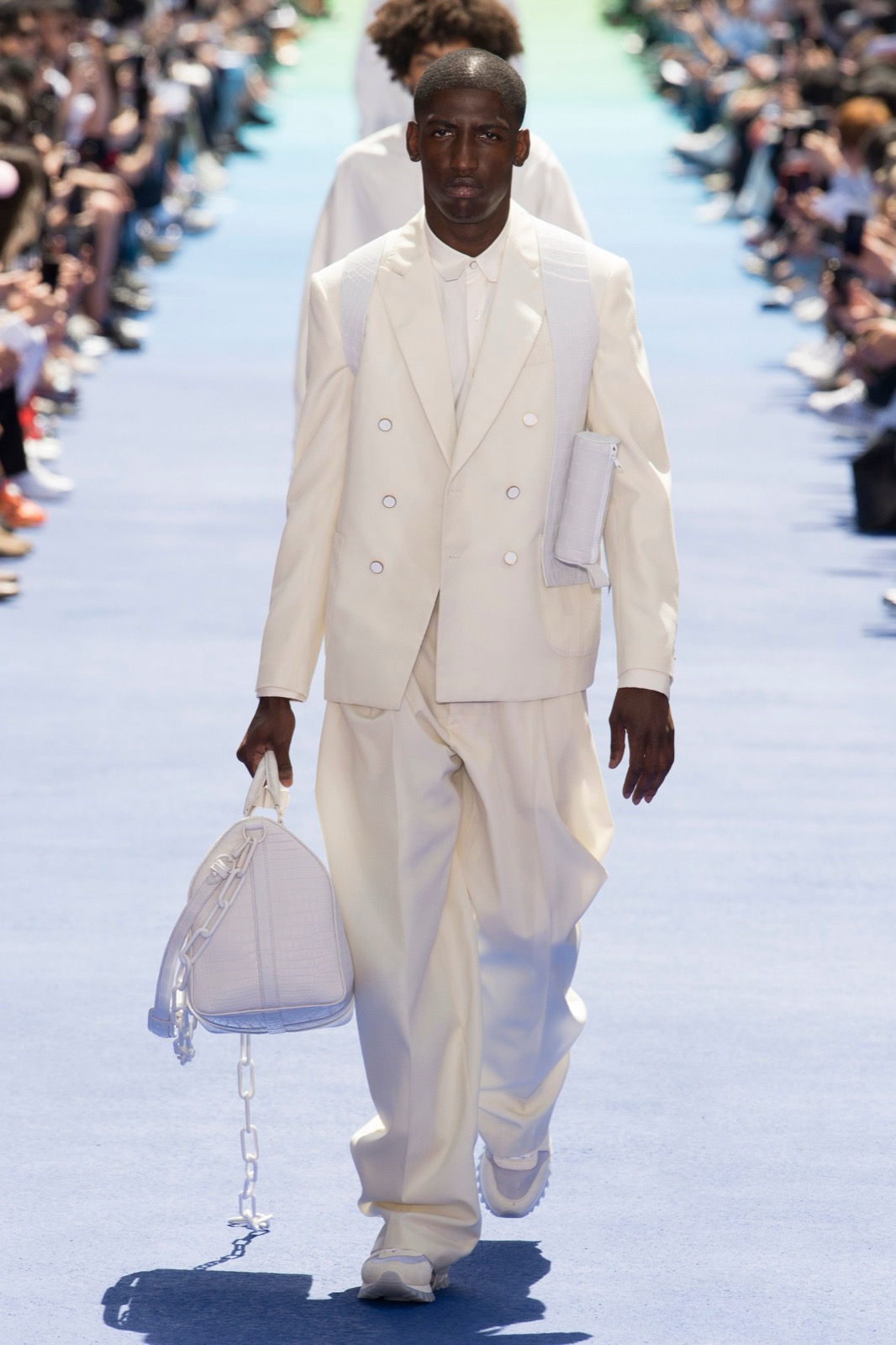
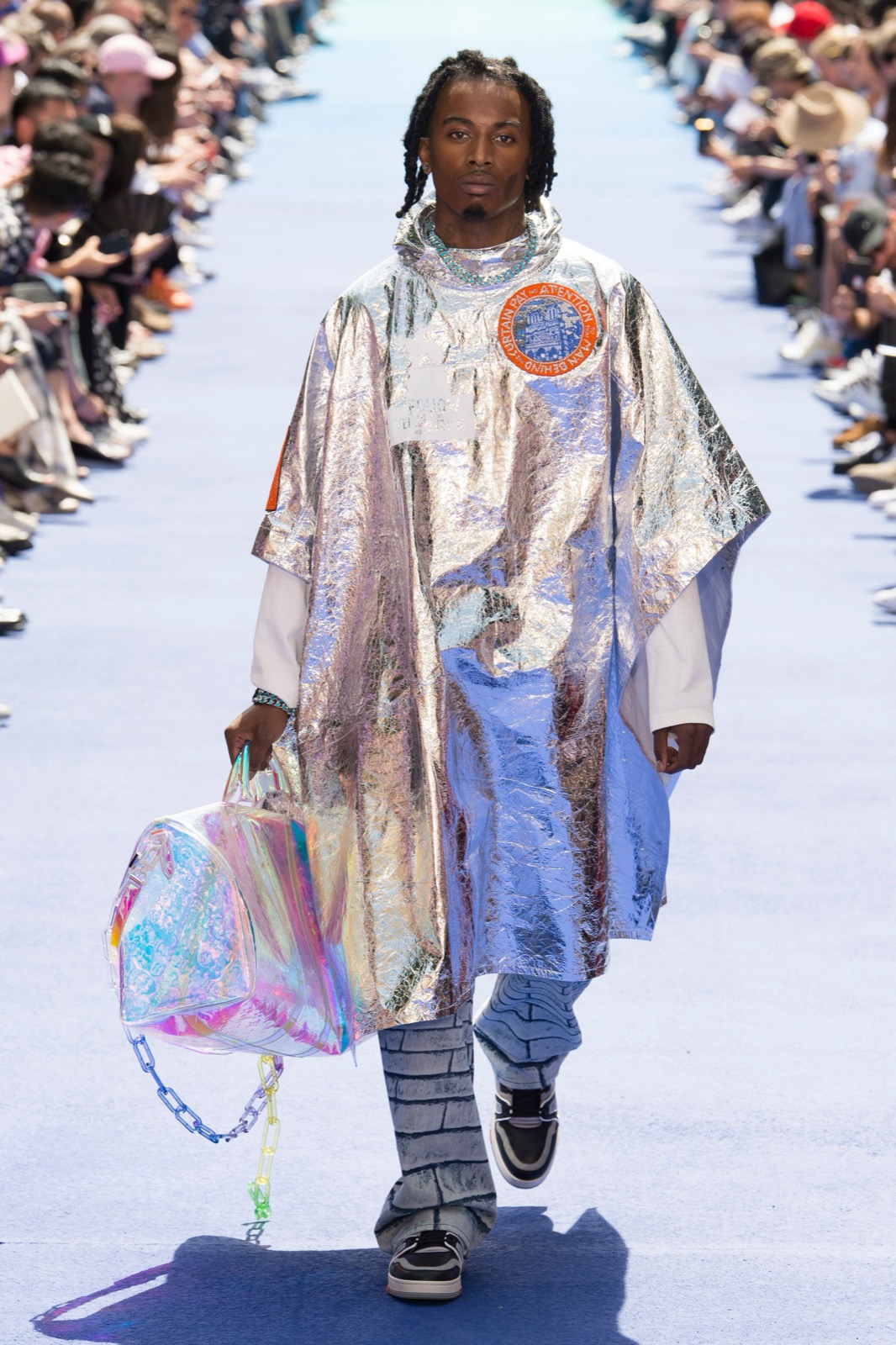
Em 25 de março de 2018, a LVMH anunciou Virgil Abloh como diretor artístico das coleções masculinas da Louis Vuitton – a primeira pessoa negra a ocupar o cargo em uma grande maison francesa.6
Sua coleção de estreia, Primavera-Verão 2019, foi apresentada em 21 de junho de 2018, nos jardins do Palais-Royal em Paris. A superfície da passarela era um gradiente prismático que percorria todas as cores do espectro. A lista de convidados se estendia a mais de mil pessoas, muitas vindas de fora do público tradicional de moda. Quando Abloh abraçou Kanye West no encerramento do desfile, ambos choraram. A imagem circulou globalmente.6
As coleções seguintes misturavam alfaiataria de luxo com referências de roupas de trabalho, incorporavam sistemas de arnês de outerwear técnico e apresentavam as intervenções gráficas – texto grande, aspas, superfícies pintadas – que haviam definido a Off-White. Ele não estava fazendo a Louis Vuitton parecer streetwear. Estava argumentando que a distinção entre os dois era uma ficção mantida por guardiões, e que os guardiões tinham acabado de lhe entregar as chaves. Seu primeiro desfile na LV apresentou um elenco diverso de modelos e uma lista de convidados que quebrou o protocolo – skatistas, DJs, artistas de hip-hop sentados ao lado de Anna Wintour. A mensagem era espacial: quem está na sala muda o significado de tudo na sala.
Abloh foi diagnosticado com angiossarcoma cardíaco, uma forma rara e agressiva de câncer, em 2019. Contou a quase ninguém. Continuou desenhando coleções, discotecando e dirigindo projetos criativos em múltiplas marcas enquanto fazia tratamento. Morreu em 28 de novembro de 2021, aos 41 anos. O comunicado da LVMH o descreveu como “um designer genial, um visionário, um arquiteto disruptivo e um líder impecável”.7
O Método
Na Harvard Graduate School of Design em outubro de 2017, Abloh deu uma palestra intitulada “Insert Complicated Title Here”. Foi estruturada em torno do que ele chamava de seus “códigos secretos” – princípios para o trabalho criativo destilados da faculdade de arquitetura, de Duchamp e de uma década fazendo coisas em todos os meios disponíveis.1
A abordagem dos 3%: Comece com algo que existe. Mude 3%. A mudança é o trabalho criativo. Isso não é licença para preguiça. É uma disciplina que exige conhecer o objeto original tão profundamente que você consiga identificar a intervenção precisa que o transforma. Os 97% que você deixa intactos não são inércia – são julgamento curatorial.
Turista vs. purista: O purista domina um único campo. O turista chega sem hábitos e, portanto, sem pontos cegos. A posição criativa mais produtiva é turista-no-campo-do-purista: conhecimento suficiente para entender as convenções, distância suficiente para ver o que as convenções obscurecem. Abloh passou sua carreira entrando em campos como turista e saindo antes de se tornar purista.
O readymade: Tudo é matéria-prima. Uma camisa de flanela é um readymade. Um tênis é um readymade. Uma maison francesa de 167 anos é um readymade. O ato criativo é a seleção e a edição, não a fabricação.
“Eu expresso o trabalho em arquitetura”, disse Abloh a Rem Koolhaas em sua conversa na System Magazine, “porque vejo tudo o que faço como construir algo para as pessoas experienciarem.”5
Seu volume de produção era extraordinário e intencional. Ele gerenciava Off-White, Louis Vuitton, colaborações com a Nike, a coleção de móveis IKEA MARKERAD, redesigns de garrafas da Evian, direção criativa da Mercedes-Benz e residências internacionais como DJ simultaneamente. Tratava essa amplitude não como distração, mas como uma prática arquitetônica unificada: o mesmo método dos 3% aplicado em todos os meios, as mesmas aspas ao redor de tudo, a mesma pergunta feita a cada objeto: o que acontece se eu reenquadrar isso?
Cadeia de Influência
Quem o Moldou
Marcel Duchamp deu a ele o arcabouço conceitual. O readymade – a ideia de que selecionar algo é um ato criativo equivalente a fabricar algo – é a base de todo projeto que Abloh executou. Ele citou Duchamp explicitamente na palestra da GSD e posicionou a abordagem dos 3% como uma extensão contemporânea do readymade para o design comercial. (Influência direta)1
Mies van der Rohe o moldou através do programa de arquitetura do IIT. Abloh estudou no Crown Hall, o edifício de vidro e aço que Mies projetou como a própria escola de arquitetura – uma estrutura inteiramente honesta sobre seus materiais e construção. A linhagem intelectual da honestidade material de Mies até o “menos, porém melhor” de Dieter Rams até as aspas de Abloh não é uma linha reta, mas uma ramificação: Mies removeu ornamento para revelar estrutura, Rams removeu ornamento para revelar função, e Abloh adicionou texto que nomeava a estrutura e a função explicitamente. Onde Mies e Rams confiavam que o usuário veria o essencial, Abloh o rotulava – um tipo diferente de honestidade, adaptado para uma era de ruído visual. (Influência institucional)
Dapper Dan construiu o pipeline da rua ao luxo que tornou a carreira de Abloh estruturalmente possível. Dan provou nos anos 1980 que existia demanda por moda de luxo recontextualizada pela cultura negra. Foi fechado por isso. Vinte e cinco anos depois, Abloh formalizou a mesma relação em um modelo que a indústria do luxo adotou em vez de processar. A observação de Dan se aplica: “Normalmente nós temos que ser eles para ter sucesso. Nós fizemos com que eles tivessem que ser nós para ter sucesso.” Abloh atravessou a porta que o trabalho de Dan forçou a abrir. (Influência direta)10
Kanye West foi o catalisador e colaborador. O estágio na Fendi, a órbita compartilhada, a disposição de operar simultaneamente na música, moda, arquitetura e vida pública – West forneceu o modelo operacional para a carreira criativa multifacetada que Abloh construiu. (Influência direta)
Quem Ele Moldou
O modelo criativo multifacetado. Antes de Abloh, a indústria da moda esperava que designers ficassem em suas áreas. Depois de Abloh, espera-se que diretores criativos discotequem, desenhem móveis, dirijam exposições de arte, consultem em diversas categorias e mantenham uma prática pública que é em si uma produção criativa. A descrição do cargo mudou.
Processo de design democratizado. A documentação no Instagram de protótipos, esboços e trabalhos em andamento de Abloh tornou o processo de design legível para milhões de pessoas que nunca haviam pensado sobre como os produtos são feitos. Ele tratou a transparência como material de design.
O Fio Condutor
Abloh sintetiza as tensões de toda esta série. Rams perguntou: o que posso remover? Abloh perguntou: o que posso reenquadrar? Ambos chegaram à clareza, mas por operações opostas – Rams pela subtração, Abloh pela anotação. Kare projetou ícones que as pessoas entendiam sem instrução. Abloh projetou aspas que as pessoas entendiam sem explicação. Ando construiu com concreto e luz porque não teve formação acadêmica e, portanto, não tinha hábitos herdados para desaprender. Abloh estudou formalmente no IIT mas operou como turista permanente, recusando-se deliberadamente a se fixar em qualquer disciplina. Dapper Dan construiu sua própria cadeia de suprimentos porque a indústria o excluiu. Abloh entrou pela porta da frente que décadas de trabalho de Dan haviam forçado a abrir.
A abordagem dos 3% é a declaração mais honesta sobre criatividade nesta série. Ninguém começa do zero. A questão é se você reconhece a matéria-prima ou finge que ela não existe. Abloh colocou aspas em tudo – inclusive em si mesmo.
O Que Eu Tiro Disso
Toda contribuição open-source é um readymade. Fork, mude 3%, publique. O diff é o ato criativo. O repositório upstream é o objeto encontrado. Abloh teria entendido pull requests.
FAQ
Qual é a filosofia de design de Virgil Abloh?
A filosofia de Abloh se centra na “abordagem dos 3%” – a ideia de que a criação significativa não exige começar do nada. Pegue algo que existe, identifique a intervenção precisa de 3% que o transforma, e a própria edição é o trabalho criativo. Ele rastreava esse método até o conceito de readymade de Marcel Duchamp e o aplicava em moda, arquitetura, mobiliário e design gráfico. Descrevia sua posição criativa como um “turista” permanente trazendo perspectivas externas para disciplinas estabelecidas.1
O que Virgil Abloh projetou?
Abloh fundou a Pyrex Vision (2012) e a Off-White (2013), projetou a colaboração “The Ten” da Nike (2017) e a coleção de móveis IKEA MARKERAD. Foi diretor artístico do menswear da Louis Vuitton de 2018 até sua morte em 2021 – a primeira pessoa negra a ocupar o cargo em uma grande maison francesa. Também colaborou com Mercedes-Benz, Evian e manteve uma carreira internacional como DJ durante todo esse período.36
Como Virgil Abloh influenciou a moda moderna?
Abloh formalizou o pipeline da rua ao luxo que Dapper Dan havia inaugurado nos anos 1980. Suas aspas na Off-White, desconstruções na Nike e coleções na Louis Vuitton demonstraram que streetwear e alta moda não eram categorias separadas, mas posições em um espectro. Ele estabeleceu o modelo do diretor criativo como uma figura interdisciplinar operando simultaneamente em moda, música, arte, design e cultura pública.910
O que designers podem aprender com Virgil Abloh?
Comece com o que existe. A abordagem dos 3% exige entender o original profundamente o suficiente para identificar a intervenção que o transforma. Torne o processo visível – Abloh documentava seus trabalhos em andamento publicamente, o que gerava tanto transparência quanto audiência. Reconheça suas fontes: as aspas são honestas sobre de onde o material veio.
Fontes
-
Virgil Abloh, “Insert Complicated Title Here,” lecture at Harvard Graduate School of Design, October 26, 2017. Harvard GSD YouTube. Primary source for “cheat codes,” 3% approach, tourist vs. purist framework, and Duchamp readymade connection. ↩↩↩↩↩↩
-
Museum of Contemporary Art Chicago, “Virgil Abloh: Figures of Speech.” Exhibition organized by MCA Chicago, curated by Michael Darling, opened June 2019. Biographical details: Rockford upbringing, Ghanaian immigrant family, civil engineering degree, IIT architecture. ↩
-
ICA Boston, “Virgil Abloh: Figures of Speech.” Retrospective exhibition. Primary source for creative philosophy, Off-White origin, cross-disciplinary method, and “everything I do is for the 17-year-old version of myself.” ↩↩↩↩
-
Nike, “The Ten.” 2017. 10 deconstructed Nike silhouettes with exposed construction, handwritten Helvetica labels, and Abloh’s design process documentation. ↩↩
-
Virgil Abloh and Rem Koolhaas, conversation, System Magazine, Issue 14, 2019. “I express the work in architecture” and “building something for people to experience.” ↩
-
LVMH, “Virgil Abloh appointed Louis Vuitton’s new Men’s Artistic Director,” March 25, 2018. First Black artistic director of a major French fashion house. SS19 debut in Palais-Royal gardens, June 21, 2018. ↩↩↩
-
LVMH, “LVMH, Louis Vuitton and Off-White are devastated to announce the passing of Virgil Abloh,” November 28, 2021. Cardiac angiosarcoma diagnosis in 2019, death at age 41. ↩
-
Complex, “The Oral History of Pyrex Vision.” Primary source for the Ralph Lauren flannel shirt origin, Champion hoodies, screen-printing process, and the deliberate one-year brand lifecycle. ↩
-
Time 100 Most Influential People, 2018. Profile by Takashi Murakami. “Virgil Abloh.” Recognition alongside world leaders and cultural figures. ↩↩
-
Dapper Dan, Dapper Dan: Made in Harlem (Random House, 2019). Also: Dance Policy, “How Dapper Dan Brought Luxury Streetwear to Hip-Hop.” “Blueprint/architect” framing and the street-to-luxury lineage connecting Dan’s 1980s innovation to Abloh’s institutional validation. ↩↩











