941 Apps · Case study · October 2026
Kiradex
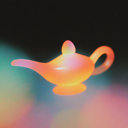
A collector's dex for Pokémon cards, built around the card as an object. Hold one up and the app names it; turn one over and the foil moves. This is the device the app opens from, drawn live by kiradex.app. Drag it to turn it; tap it to open it.
kiradex.app On 941apps.com Free · iPhone · in testing, coming to the App Store
No. 001
A dex, not a ticker
Collector apps had turned into price tickers. The thing a collector does with a card is hold it under a lamp, read the number off the corner, and put it in the binder page it belongs on. Kiradex starts there. Every set in English and Japanese, the cards you have and the cards you want, what they are worth over time, and each card as a thing you can turn over in your hands. キラ (kira) is what Japanese collectors call a holo card.
Free, with no account, no ads and no analytics. A collector's lists live in their own iCloud, where we cannot see them. The only other thing the app talks to is TCGdex, the public card catalog, for card data and pictures.
- 21,256English cards the scanner knows
- 12,781Japanese cards
- 332sets, card by card
- 13pins to earn
No. 002
The card as an object
Each card in the app is a 3D object you can spin and flip. The foil is a Metal surface shader on a RealityKit card: it reads the angle between the eye and the card and drives rainbow bands, a sweeping sheen and glitter from it, so a holo, a reverse holo, a full-art and an etched card each catch the light the way the real ones do. The catalog has no foil masks, so where the foil sits is inferred from a card's rarity and finishes.
The app opens from a device. A clamshell handheld built from RealityKit primitives, with a square viewfinder and the kira star behind its glass, boot lights, a green LCD, a cross pad and keys: the camera starts tight on the dark glass, pulls back as the lights come on, the lid swings open on its hinge, the LCD boots, and the camera goes in through the screen to the app. On iPhone Duo, unfolding the phone replays it.
No. 003
A scanner that stays on the phone
There is no server, so nothing is sent anywhere to be recognised. The camera's frames are read as text on the phone with Vision, and the collector number and the name are looked up in an index of every card that ships with the app. A match is certain only when the number with the set's size and the name agree; either alone is offered as a best guess with the other printings beside it. A grading label in the frame is read for grader, grade and certificate number.
For a raw card it measures the one part of a grade a camera can: the centering, given the way graders write it, 55/45, with the highest grade that centering alone allows. Corners, edges and surface are not judged, and the app says so. A guess at wear from the front was tried and taken out: on catalog scans of unworn cards it saw wear on 7 of 29, because borders are printed mottled, striped or silver depending on the era.
No. 004
Two displays, one source tree
iPhone Duo goes on sale on October 23 on iOS 27.1, and what an app gets on it is decided by the SDK stamped in its binary. Kiradex was walked through every pose in the simulator: a TabView, a NavigationStack in four of its five tabs and toolbar items with a title and a symbol put the app's bars on the side with no Duo code. One ArrangementView splits the open display, a wall of cards beside the inspector, and moves its divider onto the fold. The four 27.1-only call sites are fenced so the same tree builds with the App Store's Xcode 27 toolchain, which is how 1.0 went into App Store Connect while the 27.1 build waits.
- Prepare Your App for iPhone Duo: A Worked ExampleThe whole job done on Kiradex: what came free, what the walk caught, screenshots for both displays, and a brief for a coding agent.
- Xcode 27.1 Beta: Your App in the iPhone Duo SimulatorWhat the SDK adds, what the device profile says, and what a probe reports per pose.
No. 005
A town for collectors
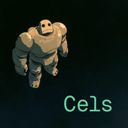
The collector has a profile: a handle the app makes up from short word lists, never typed; a pixel-art character with a wardrobe to change; three favourite cards picked from what is owned; and a level worked out from the collection alone, every time, so every device agrees with nothing stored. Thirteen pins mark feats in Kiradex's own language, First Card to Every Era, and they are Game Center achievements too. A plaza lets collectors walk around together and show off their cards; its one small server passes a handle, a look and a position along while you are there and keeps nothing.
The town is drawn by rule, measured from the 16-bit games that set the rules. Three posts go through it in detail:
- Pixel-Art Worlds on iPhone: What the 16-Bit Masters KnewThe constraints, the tile systems, and a tested recipe for crisp pixels on iPhone and iPhone Duo.
- Pixel-Art People: Characters and a Creator on iPhoneHow the best games build and dress their people, measured, and Kiradex's collector, wardrobe and creator screen.
- Pixel-Art Structures: Houses, Halls and Interiors on iPhoneHow Pokémon, the SNES RPGs and Stardew build houses and floors, and how Kiradex's town got real buildings.
No. 006
The site is the demo
kiradex.app puts a 3D model of the device on the page, closed and floating, and a tap opens it onto a small version of the app running in the browser against the same catalog: the device above is that page's device, in a frame. The model is ios27-duo-kit on three.js, with the shell made Kiradex's and the foil shader ported from Metal to GLSL. While it loads, a plasma globe charges up where it will stand.
The rest of the site is a reference built from the public catalog, each page a way into the device: a page for every set with its chase cards and every card by number as printed, a page for every species with every printing it is on in both languages, a page for every illustrator with every card they drew, and the numbers, counted from the catalog on the day the site was built. A link from the site opens the app on the same card for anyone who has it.
No. 007
The rules we set ourselves
Kiradex is an independent collector's tool, not affiliated with, sponsored or endorsed by Nintendo, Creatures Inc., GAME FREAK inc. or The Pokémon Company, and the app and site are built so that stays plainly true. The name is ours. Nothing of theirs is in the world: no creatures, no logos, no lettering, no character art; the pins and the town are drawn in Kiradex's own language. Card pictures are fetched from the public catalog at run time for identification, never bundled, never on a screenshot or a share image, and each is shown whole, credited to its illustrator and its set.
The game's name appears where it belongs: as the plain description of what the cards are.
No. 008
Where it stands
SwiftUI and SwiftData on iOS 27, the collection mirrored through the owner's private CloudKit database, RealityKit for the device and the card, Metal for the foil, Vision for the scanner. Kiradex is in TestFlight now, build by build, and is coming to the App Store, free. The day it is live, kiradex.app carries the link.
Card data and prices: TCGdex (TCGplayer, Cardmarket). Species names: PokéAPI. The device model on the site: ios27-duo-kit (Apache-2.0) and three.js (MIT). iPhone is a trademark of Apple Inc.