Engineering Philosophy: Barbara Liskov, The Contract Is the Type

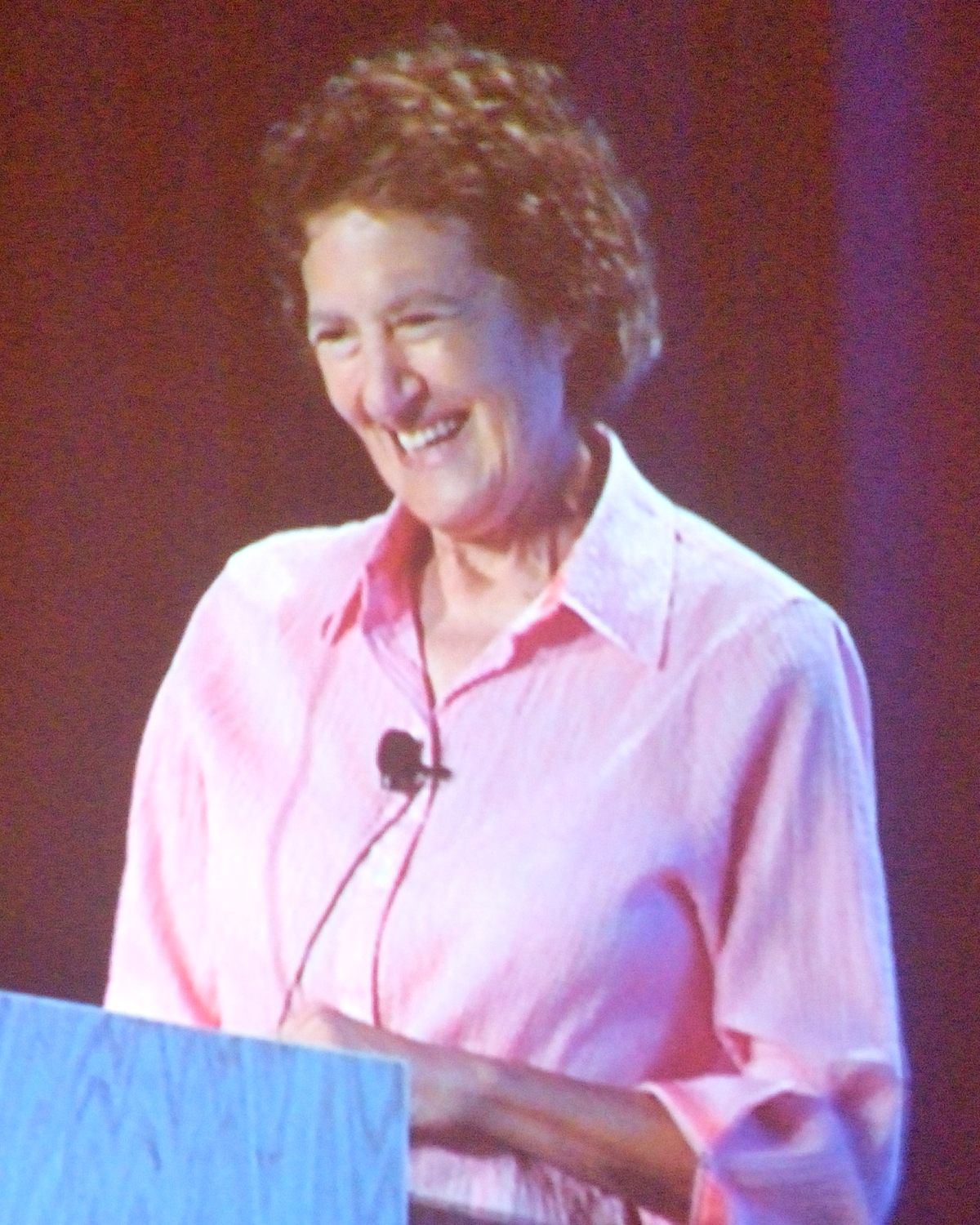
Barbara Liskov, MIT computer scientist and 2008 Turing Award laureate

Key Takeaways

  • Abstraction is about behavior, not structure. A type is the contract it keeps – the operations and their meaning – not the bits it stores. You use the thing by its promises, never by its representation.
  • A subtype must honor the supertype’s promises. The Liskov Substitution Principle: anywhere a supertype is expected, a subtype must work without breaking the caller’s assumptions – weaker preconditions, stronger postconditions, preserved invariants.
  • Modularity means reasoning about a part without the whole. Liskov’s precise definition: you can understand and verify a module in isolation, trusting its dependencies to keep their contracts. Abstraction is what makes that trust legitimate.
  • She made data abstraction a programming primitive. From CLU to Argus to the 2008 Turing Award, one idea scales from a data structure to a distributed database: define the contract, hide the mechanism.

The Principle

“Let φ(x) be a property provable about objects x of type T. Then φ(y) should be true for objects y of type S where S is a subtype of T.” – Barbara Liskov and Jeannette Wing1

Read slowly, that is the formal statement of what the field now calls the Liskov Substitution Principle, from her 1994 paper with Jeannette Wing.1 Strip away the notation and it says something almost stern: a subtype is not allowed to surprise you. Anything you could prove true about the supertype must stay true when you hand the program a subtype instead. The subtype inherits the parent’s promises, not just its shape – and if it cannot keep those promises, it is not a subtype, no matter what the type checker says.

Behind that sternness is the culmination of a single idea Liskov pursued for forty years: a type is defined by its behavior, not its representation. A module is a contract – a set of operations with a specified meaning – and the entire point of the contract is that you can use the thing without reading how it is built. Substitutability is just that conviction applied to inheritance: if S claims to be a kind of T, then everywhere a T was promised, an S has to honor the same promise. The structure can differ. The behavior cannot.

Why this matters is the thread running through her entire career: large programs are only tractable if you can reason about one piece without holding the whole in your head. Liskov’s word for that was modularity, and she meant something precise by it: the ability to understand and verify a module in isolation, trusting that everything it depends on will keep its stated contract. Data abstraction is what makes that trust legitimate, and behavioral subtyping is what keeps inheritance from quietly breaking it. It is the same conviction that runs underneath the argument that good systems are built so that taste is a technical system you can examine – a contract you can state and check – rather than a tradition you absorb by reading the whole codebase.

Context

Barbara Jane Huberman Liskov was born November 7, 1939, in Los Angeles, California.2 She took a bachelor’s degree in mathematics, with a minor in physics, from the University of California, Berkeley, in 1961.2 When she applied to graduate programs in math at Berkeley and Princeton, Princeton was not admitting women at all; she went to work instead, and found her way into early computing almost by accident, programming at the Mitre Corporation and at Harvard before deciding she wanted the doctorate after all.2

She earned her PhD from Stanford in 1968 – one of the first women in the United States to receive a doctorate from a computer science department.2 Her advisor was John McCarthy, the inventor of Lisp and one of the founders of the field of artificial intelligence; her dissertation built a program to play chess endgames, and along the way she devised the killer heuristic, a move-ordering trick still used in game-tree search.2 That detail is worth holding: she came up through AI, under the man who coined the term, and then turned away from it toward the problem that would define her – not how to make a machine think, but how to make a large program comprehensible.

Barbara Liskov at MIT

After Stanford she returned to Mitre, where she led the design of the Venus operating system – a small, low-cost interactive time-sharing system built to explore how careful machine and software architecture could simplify a system.23 In 1972 she joined the faculty at MIT, where she has remained ever since, now an Institute Professor, the highest rank the institution confers.2 Venus had taught her the question. The software-crisis anxiety of the early 1970s – the dawning recognition that programs had grown too large for anyone to reason about – sharpened it. The answer became CLU.

The Work

Data Abstraction and the CLU Language

Beginning in 1973, Liskov and her students at MIT designed and built CLU, and it is one of the most quietly influential languages ever made – a language almost nobody wrote production code in, whose ideas are now in nearly everything.4 Its organizing concept was the cluster, from which the language takes its name: a unit that bundles a data representation together with the operations allowed on it, and hides the representation entirely behind that set of operations.4 The cluster was the concrete realization of the abstract data type – the idea that a type should be known to its users only by what it does, never by how it stores its bits.45

CLU did not stop there. It pioneered or popularized a remarkable cluster of features that are now table stakes: iterators, implemented as coroutines with a yield statement, so you could walk a collection without exposing its internal structure; structured exception handling with signal and except, treated as part of normal control flow rather than bolted on; parametric polymorphism – type-safe parameterized types with constraints, the ancestor of generics; type-safe variant types; and multiple return values via parallel assignment.4 Iterators reappeared in Python, C#, and Ruby. Parameterized types became generics in Java and C#. Exception handling shaped Java and C++. Swift’s designers credited CLU by name.4 The language was a seedbank.

But the features were downstream of the principle. Liskov’s argument was that abstraction is the mechanism by which we manage complexity – you build a hard thing by defining a clean boundary, specifying what crosses it, and then never having to think about both sides at once. CLU was the proof that a programming language could enforce that boundary rather than merely permit it. The compiler became an ally of the contract.

The Liskov Substitution Principle

In 1987, Liskov gave a keynote at OOPSLA titled “Data Abstraction and Hierarchy,” published the following year in SIGPLAN Notices.6 Object-oriented programming was ascendant, and with it the idea of subtypes – types that inherit from and extend other types. Liskov’s question was the obvious one nobody had stated precisely: when is it actually safe to treat a subtype as its supertype? Her answer, in the keynote’s own words, was a substitution property: “What is wanted here is something like the following substitution property: If for each object o1 of type S there is an object o2 of type T such that for all programs P defined in terms of T, the behavior of P is unchanged when o1 is substituted for o2, then S is a subtype of T.”6

The popular paraphrase you will see everywhere – “if S is a subtype of T, then objects of type T may be replaced with objects of type S without altering any of the desirable properties of the program” – is a faithful compression of that.7 In 1994, Liskov and Jeannette Wing made it rigorous in the paper “A Behavioral Notion of Subtyping,” giving the conditions a true subtype must meet: its methods must demand no more (weaker or equal preconditions) and promise no less (stronger or equal postconditions) than the supertype’s, and it must preserve the supertype’s invariants and history properties.1 Those conditions, taken together, are what behavioral subtyping means – and they are why the colloquial “if it looks like a duck and quacks like a duck” formulations are not hers and miss the point: looking and quacking are shape; the principle is about kept promises.

The classic counterexample is the square that inherits from the rectangle. A Rectangle lets you set width and height independently; a client may set the height and trust the width is unchanged. A Square that inherits from it must force the two equal – so setting the height silently changes the width, and the client’s reasonable assumption is violated.7 The square is-a rectangle in the dictionary sense, and passes every type check, and is still not a behavioral subtype, because it cannot keep the rectangle’s promises. The whole lesson sits in that one shape: inheritance of structure is not inheritance of contract.

Distributed Systems: Argus and Thor

Liskov did not stay in language design. In the early 1980s she built Argus, described as the first high-level language to support the implementation of distributed programs – programs spread across machines that fail independently.23 Argus, an extension of CLU, introduced guardians (objects that encapsulate distributed state, accessed through handlers) and atomic actions (transactions that either complete fully or not at all, even across failures, coordinated by two-phase commit), and it demonstrated promise pipelining, where you can issue a call and continue working before its result returns.9 The hard problem of distribution is partial failure – one node dies while the others live – and Argus brought data abstraction to bear on it: a guardian is a contract that holds even when the network does not.

Thor, in the 1990s, was a distributed object-oriented database, providing reliable, highly available persistent storage of objects accessed by programs written in many languages.23 The throughline from CLU is exact. A cluster hides a representation behind operations; a guardian hides distributed state behind atomic operations; a Thor object hides persistence behind a typed interface. At every scale – a data structure, a network service, a database – Liskov’s move is the same: define the contract, hide the mechanism, and let the rest of the system reason about the contract alone.

Barbara Liskov speaking

The 2008 Turing Award and Legacy

In 2009, the ACM awarded Liskov the 2008 A.M. Turing Award – computing’s highest honor – with the citation: “For contributions to practical and theoretical foundations of programming language and system design, especially related to data abstraction, fault tolerance, and distributed computing.”8 The extended citation names the through-line precisely: she advanced “data abstraction, modularity, fault tolerance, persistence, and distributed computing systems.”8 She had already received the IEEE John von Neumann Medal in 2004 “for fundamental contributions to programming languages, programming methodology, and distributed systems,” and she was later inducted into the National Inventors Hall of Fame (2012) and awarded the Benjamin Franklin Medal (2023).2

The legacy is not a language or a system you can point to and run. It is that the way working programmers now think – “program to an interface,” “depend on contracts not implementations,” “this class violates LSP” – is Liskov’s vocabulary, absorbed so completely that most people who use it have never read the paper. This is the deepest kind of influence: when your idea stops being attributed because it has become the air.

The Method

The method is consistent across thirty years – operating systems, language design, and distributed databases.

Define the type by its behavior, not its representation. The recurring move is to draw a boundary, specify exactly what crosses it, and then refuse to let either side depend on the other’s internals. A cluster, a guardian, a Thor object are all the same act: a contract that hides a mechanism.45

Make modularity literal, then enforce it. Modularity, for Liskov, is not a code-organization preference – it is the ability to reason about a module in isolation, trusting that its dependencies keep their contracts. CLU’s compiler enforced the abstraction barrier rather than politely suggesting it. The discipline is only real if the tool checks it.4

A subtype must keep the supertype’s promises. Behavioral subtyping is the principle that inheritance is a contract, not a convenience. Weaker preconditions, stronger postconditions, preserved invariants – the subtype may do more, but it may never demand more or promise less than its supertype.1

Attack the hard problem at the boundary. Partial failure in distributed systems is brutal precisely because it breaks your ability to reason locally. Argus’s answer was to push abstraction into the failure model itself – atomic actions and guardians – so that a programmer could still reason about a piece without simulating every way the network could fall apart.23

Carry one idea all the way up. Data abstraction at the scale of a stack, a network service, and a database is recognizably the same idea. Liskov did not invent a new philosophy for each domain; she found the one that scaled and rode it from a 1970s type system to a 1990s distributed store.

Influence Chain

Who Shaped Her

John McCarthy. Her doctoral advisor at Stanford, the inventor of Lisp and a founder of AI, gave her both the rigor of mathematical computer science and – by way of her turn away from AI toward program structure – the problem that became her life’s work.2 (Direct influence)

The software crisis and the structured-programming era. Liskov came of age as a researcher exactly when the field admitted that programs had outgrown human comprehension. The structured-programming movement – Dijkstra, Hoare, Wirth – had argued that control flow must be disciplined to be reasoned about. Liskov extended the same conviction to data: it is not enough to discipline how a program moves; you must discipline what its data means and who is allowed to see how it is stored. (Formative influence)

C.A.R. Hoare and the discipline of specification. Hoare’s work on preconditions, postconditions, and invariants – reasoning about programs as logical assertions – is the direct intellectual ancestor of the behavioral-subtyping conditions she and Wing made precise. (Formative influence)

Who She Shaped

Every modern type system. Generics in Java and C#, iterators in Python and C#, exception handling across the C-family, Swift’s design – the features CLU pioneered are now the default furniture of nearly every language.4

Object-oriented practice. “Program to an interface, not an implementation,” dependency inversion, and the entire SOLID vocabulary’s “L” are Liskov’s principle, operationalized. A generation learned to spot a bad subclass without ever learning whose idea it was.7

Distributed systems engineering. Atomic actions, transactional guarantees across failing nodes, and the practice of treating a remote service as a contract that survives partial failure trace back through Argus and Thor.23

The Throughline

Edsger Dijkstra argued that a program must be structured so a human can reason about it – structured programming was the discipline of control flow in service of correctness. Liskov is the direct lineage: she did for data what Dijkstra did for control, insisting that modular reasoning requires disciplined abstraction barriers, not just disciplined loops. And where Thompson and Ritchie built Unix and C around small components that “do one thing well” and compose through clean interfaces, Liskov gave the theory of why that composition is trustworthy: a component you can rely on is one whose contract you can state and whose subtypes honor it. Even Grace Hopper’s compiler was an act of abstraction – moving translation into the machine so a human could reason in their own terms; Liskov made abstraction itself the unit of program design rather than a convenience the compiler provided. (Series bridge)

What I Take From This

The lesson I keep is that an interface is a promise, and the only interfaces worth anything are the ones you actually keep. It is easy to write a type signature; it is hard to honor everything that signature implies and never quietly violate it under a new subclass or a refactor. Liskov’s principle is the standard I hold a boundary to: not “does the type check pass?” but “can a caller trust this thing everywhere its parent was trusted, without reading how it is built?” It is the same bar as quality being the only variable – the question is never whether the code compiles, but whether the contract is real.

In the world I build in now – agents, tool loops, AI systems – Liskov’s conviction is more load-bearing than ever, because the components I compose are opaque by nature. A tool, a sub-agent, a model call is a module: you invoke it on a contract and you cannot read its internals. The whole game is whether that contract holds – whether a tool that claims to “search the codebase” actually returns what its specification promised, or whether swapping one model for another silently weakens a postcondition the rest of the system depended on. That is the Liskov Substitution Principle wearing 2026 clothes: a substituted component must keep the promises of the one it replaced. The discipline of stating contracts and checking that subtypes honor them is exactly the discipline that makes the evidence gate more than a slogan – a system you can reason about in pieces because each piece keeps its word.

FAQ

What is Barbara Liskov’s engineering philosophy?

Liskov’s core conviction is that a type is defined by its behavior, not its representation, and that this is what makes large programs tractable. A module is a contract – a set of operations with specified meanings – and the purpose of the contract is that you can use the module without understanding how it is built. This idea of data abstraction runs through everything she built, from the CLU language to the Argus distributed system, and it produced her most famous result: the principle that a subtype must honor every promise its supertype makes.451

What is the Liskov Substitution Principle?

It is the requirement that a subtype be usable anywhere its supertype is expected, without breaking the caller’s assumptions. Formally, in Liskov and Wing’s 1994 statement: “Let φ(x) be a property provable about objects x of type T. Then φ(y) should be true for objects y of type S where S is a subtype of T.”1 In her 1987 OOPSLA keynote she put it as a substitution property: if substituting an object of type S for one of type T leaves the behavior of every program unchanged, then S is a subtype of T.6 In practice, a true subtype must demand no more than its supertype (weaker or equal preconditions), promise no less (stronger or equal postconditions), and preserve its invariants. The popular “if it looks like a duck” phrasings are not Liskov’s and miss the point: the principle is about kept promises, not surface resemblance.7

What did Barbara Liskov invent?

She designed and led the implementation of the CLU programming language (begun 1973), which introduced or popularized abstract data types, iterators, structured exception handling, and parametric polymorphism – features now standard in Java, C#, Python, Swift, and others.4 Earlier she built the Venus time-sharing operating system; later she created Argus, the first high-level language for distributed programs, and Thor, a distributed object-oriented database.23 With Jeannette Wing she formalized behavioral subtyping, now called the Liskov Substitution Principle.1

Why did Barbara Liskov win the Turing Award?

The ACM awarded her the 2008 A.M. Turing Award “for contributions to practical and theoretical foundations of programming language and system design, especially related to data abstraction, fault tolerance, and distributed computing.”8 The recognition spans her whole career: making data abstraction a programming-language primitive through CLU, advancing modularity and the theory of subtyping, and bringing those ideas to bear on the hard problem of building reliable systems across machines that fail independently. She was one of the first women in the US to earn a computer science PhD (Stanford, 1968) and is an Institute Professor at MIT.2


Sources


  1. Barbara H. Liskov and Jeannette M. Wing, “A Behavioral Notion of Subtyping,” ACM Transactions on Programming Languages and Systems 16, no. 6 (November 1994): 1811–1841. The Subtype Requirement: “Let φ(x) be a property provable about objects x of type T. Then φ(y) should be true for objects y of type S where S is a subtype of T.” Conditions: methods with weaker-or-equal preconditions and stronger-or-equal postconditions, preserved invariants and history properties. Publisher of record (DOI): 10.1145/197320.197383. 

  2. “Barbara Liskov,” Wikipedia. Born November 7, 1939, Los Angeles; BA mathematics (physics minor), UC Berkeley, 1961; PhD, Stanford, 1968, advisor John McCarthy, on chess-endgame programs (killer heuristic); one of the first US women to earn a CS PhD. Venus OS at Mitre; CLU; Argus (“first high-level language to support the implementation of distributed programs,” with promise pipelining); Thor object-oriented database; MIT Institute Professor. IEEE John von Neumann Medal (2004); National Inventors Hall of Fame (2012); Benjamin Franklin Medal (2023). 

  3. “Barbara Liskov,” Encyclopaedia Britannica. Venus time-sharing system; CLU and data abstraction; Argus distributed programming; Thor distributed object-oriented database; 2008 Turing Award. 

  4. “CLU (programming language),” Wikipedia. Designed by Barbara Liskov and students at MIT, begun 1973, first appeared 1975. Clusters (the type-extension/abstract-data-type mechanism); iterators via yield coroutines; signal/except exception handling; type-safe parameterized types (parametric polymorphism) and variant types; multiple return values. Influenced generics and iterators in Java, C#, Python, Ruby, and was credited by Swift’s designers. 

  5. Barbara Liskov and Stephen Zilles, “Programming with Abstract Data Types,” Proceedings of the ACM SIGPLAN Symposium on Very High Level Languages, 1974. The foundational paper introducing the abstract-data-type approach that CLU implemented. See also Liskov’s retrospective talk “The Power of Abstraction” (OOPSLA, 2009). 

  6. Barbara Liskov, “Keynote address – data abstraction and hierarchy,” ACM SIGPLAN Notices 23, no. 5 (May 1988): 17–34, from the OOPSLA ‘87 Addendum to the Proceedings. The original substitution property: “What is wanted here is something like the following substitution property: If for each object o1 of type S there is an object o2 of type T such that for all programs P defined in terms of T, the behavior of P is unchanged when o1 is substituted for o2, then S is a subtype of T.” 

  7. “Liskov substitution principle,” Wikipedia. Origin in Liskov’s 1987 keynote and the 1994 Liskov–Wing formalization; the popular paraphrase “objects of a superclass may be replaced by objects of a subclass without breaking the program”; behavioral-subtyping conditions; the rectangle/square violation as the canonical counterexample. The “duck typing” phrasings are not Liskov’s. 

  8. “Barbara Liskov – A.M. Turing Award Laureate,” ACM. 2008 Turing Award citation: “For contributions to practical and theoretical foundations of programming language and system design, especially related to data abstraction, fault tolerance, and distributed computing.” Announcement and extended citation (“data abstraction, modularity, fault tolerance, persistence, and distributed computing systems”): CRA-WP. 

  9. Barbara Liskov, “Distributed Programming in Argus,” Communications of the ACM 31, no. 3 (March 1988): 300–312. Argus as an extension of CLU for distributed programs; guardians (objects encapsulating distributed state, accessed via handlers); atomic actions with strict consistency and atomicity guarantees coordinated by two-phase commit; nested distributed transactions. See also “Guardians and Actions: Linguistic Support for Robust, Distributed Programs” (Liskov and Scheifler, 1983). 

相关文章

Engineering Philosophy: Grace Hopper, Make the Computer Speak Human

Grace Hopper built the first compiler so programs could be written in human language, made latency physical with a nanos…

20 分钟阅读

Engineering Philosophy: Leslie Lamport, Think Before You Code

Leslie Lamport made distributed systems a science: time is not global, causality is what is real, and you specify the de…

19 分钟阅读