Philosophie de l'ingénierie : Raj Reddy, la technologie pour le milliard d'en bas

Points essentiels
- Concevoir l’interface qui n’exige aucune alphabétisation. Reddy a consacré sa carrière à apprendre aux machines à comprendre la parole humaine – les premiers systèmes de reconnaissance de la parole continue, puis Hearsay et Harpy – parce que la parole est la seule interface qui ne demande rien à l’utilisateur. Nul besoin de savoir lire, taper au clavier ou posséder un clavier pour parler. Pour les quelque 2,5 milliards d’êtres humains qui ne savent pas lire, la voix n’est pas un confort : c’est l’unique porte d’accès au savoir du monde.19
- Il a remporté le prix Turing pour avoir rendu l’IA réelle à grande échelle. En 1994, Reddy a partagé le prix Turing de l’ACM avec Edward Feigenbaum « pour avoir été des pionniers de la conception et de la construction de systèmes d’intelligence artificielle à grande échelle, démontrant l’importance pratique et l’impact commercial potentiel de la technologie de l’intelligence artificielle ». Il a été la première personne d’origine asiatique à recevoir cette distinction.12
- Le modèle du tableau noir est sa contribution discrète et universelle. Hearsay-II coordonnait des sources de connaissances indépendantes – acoustique, phonétique, lexicale, syntaxique – en les laissant coopérer sur un espace de travail partagé, le « tableau noir ». Cette architecture a débordé le cadre de la parole pour devenir un modèle général de combinaison de nombreuses sources de preuves en une seule réponse, ce que fait précisément, aujourd’hui encore, une pile d’IA moderne.34
- D’un village sans lumière électrique au premier doctorat en IA sous la direction de McCarthy. Né à Katoor, dans l’Andhra Pradesh, en 1937, premier de sa famille à terminer sa scolarité, Reddy est passé de Guindy à la Nouvelle-Galles du Sud, puis a obtenu un doctorat à Stanford en 1966 sous la direction de John McCarthy, avant de construire les systèmes les plus ambitieux de la discipline à Carnegie Mellon – et de les rediriger vers des gens comme ceux parmi lesquels il avait grandi.569
Le principe
« Tout ce que vous faites avec votre esprit, vous pouvez le faire plus vite, mieux et à moindre coût grâce aux ordinateurs… Nous pourrions orienter ce surcroît de productivité vers les domaines où le besoin sociétal est majeur. » – Raj Reddy9
La plupart des technologies de pointe se diffusent par ruissellement. Elles sont conçues pour ceux qui ont déjà les moyens de se les offrir – les lettrés, les connectés, ceux qui disposent d’un appareil et d’un forfait de données – et n’atteignent tous les autres que des années plus tard, édulcorées, quand elles les atteignent. Reddy a inversé la cible. Sa conviction était que l’IA la plus avancée devait viser les personnes que le reste de l’informatique laisse de côté : les non-alphabétisés, les ruraux pauvres, ce que les économistes du développement appellent le milliard d’en bas. Non pas comme une œuvre de charité greffée sur un produit fini, mais comme la contrainte de conception qui vient en premier.9
Le principe a une conséquence technique précise, et c’est le fil qui traverse tout ce qu’il a construit : l’interface ne doit rien exiger que l’utilisateur ne possède pas déjà. Un clavier exige l’alphabétisation et un alphabet latin. Un écran tactile exige un appareil et la familiarité avec les icônes pour s’y repérer. La parole n’exige rien. Tout être humain capable de parler dispose déjà de l’interface complète, installée à la naissance, dans sa propre langue. Alors, si vous voulez mettre le savoir du monde à la portée de quelqu’un qui n’a jamais appris à lire, vous ne lui apprenez pas à lire – vous apprenez à la machine à écouter. Voilà pourquoi un homme qui se souciait des personnes les plus pauvres de la planète a passé des décennies sur le problème profondément technique de la reconnaissance de la parole continue. Les deux ne font qu’un seul et même projet.19
C’est ce qui rend Reddy singulier parmi les géants de l’IA. Le prestige de la discipline va à la capacité – des modèles plus gros, des tests de performance plus difficiles, un jeu surhumain. Reddy a poursuivi la capacité avec autant d’acharnement que quiconque, bâtissant des systèmes assez ambitieux pour décrocher le prix Turing. Mais il n’a jamais dissocié la puissance de la destination. La voix comme grand égalisateur ; de vastes systèmes d’IA conçus pour servir les gens au bas de la pyramide. La technologie doit atteindre ceux qu’on laisse de côté – et la façon de le garantir, c’est de faire de ceux qu’on laisse de côté le cahier des charges.
Contexte
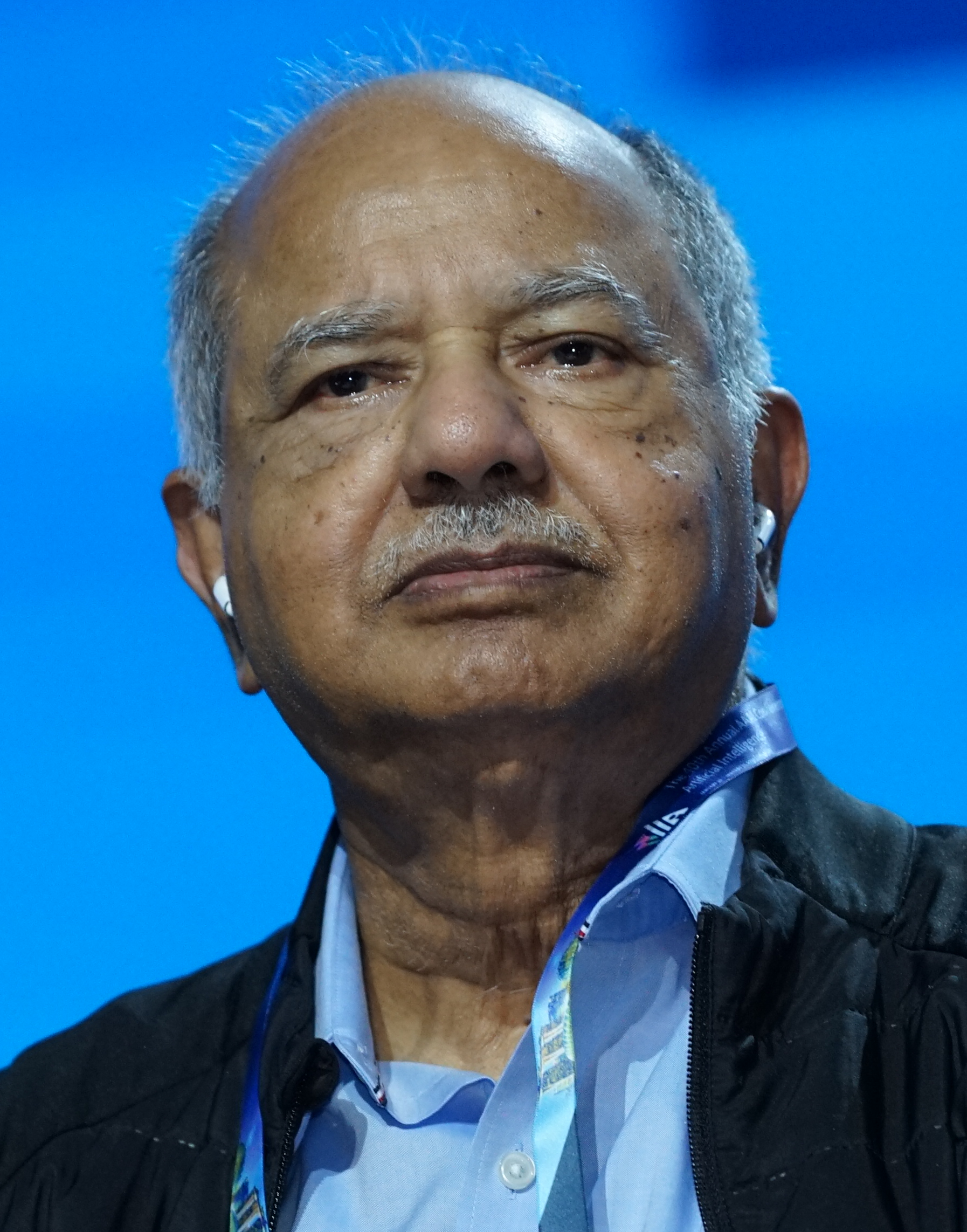
Dabbala Rajagopal Reddy est né le 13 juin 1937 à Katoor, un village situé dans l’actuel Andhra Pradesh, en Inde. Il a été le premier de sa famille à faire des études supérieures – le premier, en un sens véritable, à sortir de l’orbite du village. 56 Des décennies plus tard, interrogé sur cette enfance, il a refusé d’y voir une privation : « Le ciel était d’une clarté magnifique, et je pouvais voir toutes les étoiles. Des gens m’ont demandé : “Mon Dieu, étiez-vous donc si pauvre ?” Mais je ne me suis jamais senti privé de quoi que ce soit. »9 Cette phrase compte pour la suite technique, car l’homme qui a conçu pour le milliard d’en bas ne concevait pas pour une abstraction. Il concevait pour les gens dont il était issu, et il ne les considérait privés de rien d’autre que d’un accès.
La voie de sortie passait par l’ingénierie. Il a obtenu sa licence au College of Engineering de Guindy (université de Madras) en 1958, puis une maîtrise à l’université de Nouvelle-Galles du Sud à Sydney en 1960, travaillant pour IBM en Australie avant de traverser le Pacifique.56 À Stanford, il a décroché une maîtrise en 1964 puis, en 1966, un doctorat en informatique sous la direction de John McCarthy – l’homme qui avait forgé l’expression « intelligence artificielle » une décennie plus tôt. Reddy est largement décrit comme la première personne à obtenir un doctorat en IA sous la direction de McCarthy, ce qui le place à la source même de la discipline.56
Il est resté à Stanford comme enseignant (1966-69), puis a fait le pas qui a défini le reste de sa vie : en 1969, il a rejoint l’université Carnegie Mellon, où il est demeuré depuis.6 À CMU, il a bâti les systèmes de reconnaissance vocale qui ont fait sa renommée, fondé le Robotics Institute en 1979 (le premier département de robotique d’une université américaine), été doyen de la School of Computer Science (1991-99) et est devenu Moza Bint Nasser University Professor of Computer Science and Robotics.567 Stanford lui a offert la lignée la plus pure de la discipline. Carnegie Mellon lui a donné la liberté de construire de vastes systèmes réels et désordonnés – et de dépenser tout le crédit d’un lauréat du prix Turing au service d’une population pour laquelle personne d’autre en IA ne construisait.
Le travail
Reconnaissance vocale : Hearsay, le modèle du tableau noir et Harpy
Commençons par le plus ardu, car c’est là que le principe devient mathématique. La parole humaine est un flux sonore continu, sans véritables coupures nettes entre les mots – les silences que vous croyez entendre entre les mots ne sont, pour l’essentiel, qu’une illusion fournie par votre cerveau. Pire encore, un même signal acoustique peut se découper en mots différents. L’exemple classique est que « recognize speech » et « wreck a nice beach » sonnent de façon presque identique. Sur le seul signal audio brut, les deux lectures obtiennent un score à peu près équivalent ; la machine est réellement incapable de déterminer laquelle vous vouliez dire. Le module ci-dessous vous permet d’entendre cette ambiguïté se résoudre.
L’intuition de Reddy, développée avec ses étudiants à CMU tout au long des années 1970 dans le cadre du programme Speech Understanding Research de la DARPA, était qu’aucune source de connaissances isolée ne peut lever cette ambiguïté, mais que plusieurs sources coopérantes le peuvent. L’acoustique vous indique quels sons sont présents. Un modèle phonétique associe ces sons à des phonèmes candidats. Un lexique contraint les séquences de phonèmes qui constituent de vrais mots. Une grammaire contraint les séquences de mots qui constituent des phrases plausibles. Chacune est peu fiable isolément ; ensemble, elles cernent la réponse. La question était comment faire coopérer des sources indépendantes et peu fiables.
Sa réponse fut le modèle du tableau noir, concrétisé dans Hearsay-II. Imaginez un panel de spécialistes réunis autour d’un tableau noir commun. Chacun guette ce qu’il sait reconnaître – un phonème, un mot, une expression – et, lorsqu’il peut contribuer, il inscrit une hypothèse au tableau, assortie d’un indice de confiance. Les autres spécialistes lisent le tableau, s’appuient sur ce qu’ils y voient et inscrivent à leur tour leurs hypothèses. Aucun spécialiste n’est aux commandes ; aucun enchaînement figé ne les force à un ordre prédéfini. L’interprétation correcte émerge d’une multitude de contributions partielles et probabilistes coopérant sur un espace de travail commun. Le sous-titre de l’article publié le dit exactement : intégrer la connaissance pour lever l’incertitude.34 Hearsay-I, qui l’a précédé, fut le tout premier système capable de reconnaître la parole continue ; Hearsay-II a doté cette capacité de son architecture durable.13
Parallèlement à Hearsay, il y avait Harpy (Bruce Lowerre et Reddy, vers 1976), qui a fait le pari inverse et s’est révélé tout aussi influent. Au lieu de sources indépendantes inscrivant leurs hypothèses sur un tableau partagé, Harpy compilait toutes les connaissances – vocabulaire, grammaire, prononciation – en un unique et gigantesque réseau de tous les énoncés que le système pouvait éventuellement entendre, puis explorait ce réseau au moyen de la recherche en faisceau (beam search) : à chaque étape, ne conserver qu’une poignée des chemins les plus prometteurs et élaguer le reste, afin que la recherche reste praticable malgré l’immensité de l’espace.8 Harpy gérait un vocabulaire de 1 011 mots et fut le premier système à comprendre la parole continue avec un taux d’erreur inférieur à dix pour cent en quasi-temps réel.8 Le tableau noir de Hearsay a donné à l’IA un moyen de combiner des sources de connaissances ; la recherche en faisceau de Harpy lui a donné un moyen d’explorer efficacement l’espace combiné. Les deux idées sont encore porteuses – la coopération des preuves et l’élagage discipliné des possibilités se retrouvent sous la reconnaissance vocale présente dans chaque téléphone aujourd’hui.
Le Robotics Institute de CMU
En 1979, Reddy a fondé le Robotics Institute de Carnegie Mellon et en a été le premier directeur – le premier département de robotique d’une université américaine.567 Il est tentant d’y voir un chapitre distinct, un virage de la parole vers les machines. Il vaut mieux y lire le même instinct élargi. La reconnaissance vocale est le problème d’une machine qui perçoit et interprète un signal du monde réel, désordonné et continu, dans une profonde incertitude. La robotique, c’est ce même problème auquel s’ajoute le reste du monde physique : la vision, le mouvement, la manipulation, tout cela bruité, tout cela ambigu, tout cela exigeant que de nombreuses sources d’information imparfaites soient fusionnées en une seule décision.
L’instinct du tableau noir – de multiples sources de connaissances coopérantes levant ensemble l’incertitude – est exactement ce dont un robot autonome a besoin pour donner sens à son environnement. En bâtissant une institution plutôt qu’un simple laboratoire, Reddy a fait ce qu’un chercheur isolé ne peut pas faire : il a créé un lieu où l’intégration de la perception, de l’apprentissage et de l’action pouvait être poursuivie pendant des décennies par des centaines de personnes. Le Robotics Institute est devenu l’un des centres les plus importants de la discipline, et il est l’expression structurelle de la même conviction qui anime son travail sur la parole – à savoir que les problèmes intéressants sont ceux du système entier, où de nombreux éléments doivent coopérer pour appréhender un monde qui n’arrive pas pré-étiqueté.
Le prix Turing 1994 et les systèmes d’IA à grande échelle
En 1994, Reddy et Edward Feigenbaum ont partagé le prix Turing de l’ACM – la plus haute distinction de l’informatique – avec une citation qui mérite une lecture attentive : « pour avoir été des pionniers de la conception et de la construction de systèmes d’intelligence artificielle à grande échelle, démontrant l’importance pratique et l’impact commercial potentiel de la technologie de l’intelligence artificielle. »12 Reddy a été la première personne d’origine asiatique à recevoir le prix Turing.5
Arrêtons-nous sur ce que récompense cette citation. Pas un théorème. Pas un algorithme isolé. La conception et la construction de systèmes à grande échelle, et la démonstration de leur importance pratique. Feigenbaum avait montré que l’IA pouvait capter et appliquer le savoir d’experts dans des domaines réels ; Reddy avait montré que l’IA pouvait percevoir et comprendre le monde humain réel et désordonné de la parole continue. Ensemble, ils ont fait passer l’IA de la démonstration de laboratoire au système opérationnel – la preuve que ces idées pouvaient être construites à grande échelle et qu’elles compteraient au-delà du monde universitaire.12 Cette insistance sur le construit, à grande échelle, pour un usage réel est la tonalité même de toute la carrière de Reddy. Il ne s’est jamais contenté d’un résultat qui n’existait que dans un article. L’objectif a toujours été un système que quelqu’un puisse réellement utiliser – ce qui est, bien sûr, la même impulsion qui le pousse vers les gens qui ont le moins.
La technologie pour le milliard d’en bas : le Million Book Project, RGUKT et la fracture numérique
C’est ici que le principe se révèle pleinement. Après avoir reçu la plus haute distinction de la discipline pour avoir bâti de vastes systèmes d’IA, Reddy a consacré la seconde moitié de sa carrière à diriger cette capacité vers les gens que l’industrie technologique oublie régulièrement. Il a coprésidé le President’s Information Technology Advisory Committee (PITAC) des États-Unis de 1999 à 2001, façonnant les priorités nationales de recherche depuis l’intérieur du gouvernement.5 Mais ses projets les plus caractéristiques ont été conçus pour le monde en développement.
L’Universal Digital Library / Million Book Project, que Reddy a dirigé à Carnegie Mellon à partir de 2001, s’était donné pour mission de numériser un million de livres et de les rendre librement accessibles en ligne, avec une attention délibérée aux populations multilingues et mal desservies – le savoir du monde, numérisé, pour des gens qui n’avaient jamais eu de bibliothèque. En décembre 2007, le projet avait numérisé plus de 1,5 million de livres dans une vingtaine de langues, en collaboration avec des partenaires en Inde, en Chine et en Égypte.10 La Rajiv Gandhi University of Knowledge Technologies (RGUKT), que Reddy a contribué de façon déterminante à créer et dont il a été le chancelier fondateur, a été bâtie spécifiquement « pour répondre aux besoins éducatifs de la jeunesse rurale douée et à faibles revenus » de l’Inde – des étudiants comme le garçon de Katoor qui, par chance, s’en est sorti.56 Il a aussi été le président fondateur de l’International Institute of Information Technology (IIIT) de Hyderabad, et s’est vu décerner le Padma Bhushan, l’une des plus hautes distinctions civiles de l’Inde, en 2001.5
La logique qui relie tout cela est celle à laquelle il revient sans cesse : « Pour les 2,5 milliards de personnes illettrées dans le monde, [Reddy] cherche à appliquer sa technologie de reconnaissance vocale pour les aider à accéder au savoir du monde via internet. »1 Il a plaidé explicitement pour que l’IA soit dirigée vers les problèmes les plus difficiles du monde en développement – pauvreté, santé, éducation – plutôt que de les traiter comme un à-côté des produits commerciaux.11 Le travail sur la parole et le travail sur le développement ne sont pas deux carrières. Tout l’enjeu d’apprendre à une machine à comprendre le langage parlé a toujours été celui-ci – une personne qui ne sait pas lire, dans un village sans lumière électrique, posant une question à une machine dans sa propre langue et obtenant la réponse. La voix est le grand égalisateur, car c’est l’interface que tout être humain sait déjà utiliser dès sa naissance.
La méthode
La méthode de Reddy est moins un slogan qu’un ensemble d’engagements permanents. Parcourez le travail sur la parole, l’institut et les projets de développement, et l’on retrouve les mêmes gestes.
Faire de la contrainte de l’utilisateur le cahier des charges du système. La décision de conception la plus profonde de la carrière de Reddy – poursuivre la reconnaissance vocale pendant des décennies – découle directement d’un fait concernant l’utilisateur visé : il se peut qu’il ne sache pas lire. L’interface ne devait rien exiger ; la machine devait donc tout faire. La leçon générale est de repérer la contrainte la plus dure à laquelle se heurte votre utilisateur le moins bien servi et de la laisser piloter l’architecture, plutôt que de concevoir pour l’utilisateur facile et de rapiécer le reste. C’est le produit minimum digne d’exister lu du bas de la pyramide vers le haut.9
Quand aucune source isolée n’est fiable, faites-en coopérer plusieurs. Le modèle du tableau noir est une méthode, et pas seulement un artefact : cessez de chercher l’oracle unique qui lèverait l’incertitude, et laissez plutôt des sources de preuves indépendantes et faillibles inscrire leurs hypothèses sur un espace de travail partagé jusqu’à la convergence. C’est ainsi que Hearsay entendait la parole ; c’est ainsi qu’un système moderne fusionne des signaux ; c’est, franchement, ainsi que fonctionne aussi une bonne délibération entre des personnes.34
Construire des systèmes, pas des démonstrations. La citation du prix Turing récompense la construction à grande échelle. Le critère de Reddy n’a jamais été « est-ce que ça marche dans l’article » mais « est-ce un système que quelqu’un peut utiliser ». Un résultat qui ne peut être ni construit ni déployé est, à ses yeux, incomplet – la barrière de la preuve appliquée à des systèmes entiers plutôt qu’à des affirmations isolées.2
Diriger la capacité la plus avancée vers les gens les moins bien servis. C’est le geste qui élève le reste au-delà de la prouesse. La discipline consiste à refuser le gradient par défaut – où la technologie ruisselle vers ceux qui sont déjà servis – et à pointer délibérément la frontière vers le milliard d’en bas. La capacité sans destination digne d’elle n’est qu’un numéro d’esbroufe ; le test de Steve, celui qui demande si le travail mérite d’exister, trouve sa réponse dans la question de savoir pour qui il est fait.9
Refuser le cadre de la privation. « Je ne me suis jamais senti privé de quoi que ce soit. » Reddy conçoit pour les mal desservis sans condescendance – il les traite comme des gens qui manquent d’accès, et non de capacité. Ce respect est lui-même un principe de conception : construire l’outil qui les rencontre en égaux, dans leur propre langue, plutôt que la version simplifiée que vous supposez à leur portée.9
Chaîne d’influence
Qui l’a façonné
John McCarthy. Reddy a fait son doctorat sous la direction de l’homme qui a baptisé la discipline, à Stanford, dans ses années fondatrices – arrivant à l’IA avant que l’IA ait arrêté ce qu’elle était. Cela place toute sa vision du monde à la source : il a appris la discipline comme quelque chose que l’on construit, auprès de ceux qui l’inventaient. (Influence directe)
Le village dont il est issu. Katoor n’est pas un décor d’arrière-plan. La décision de consacrer une carrière de lauréat du prix Turing au milliard d’en bas est inintelligible sans lui. Le garçon qui fut le premier de sa famille à terminer sa scolarité n’a jamais cessé de concevoir pour les gens qu’il avait quittés, raison pour laquelle son travail le plus technique et son travail le plus humanitaire ne font qu’un. (Influence formatrice)
Le programme Speech Understanding de la DARPA. L’effort financé, compétitif et soumis à des échéances des années 1970 a donné à Reddy et à ses étudiants la pression et les ressources nécessaires pour construire Hearsay et Harpy en tant que vrais systèmes, et non en simples esquisses – le terrain d’épreuve où furent forgés le modèle du tableau noir et la reconnaissance vocale par recherche en faisceau. (Influence directe)
Qui il a façonné
La reconnaissance vocale moderne. Les systèmes de parole continue que Reddy et ses étudiants ont bâtis à CMU ont établi les idées – coopération des sources de connaissances, scoring probabiliste, recherche efficace dans d’immenses espaces d’hypothèses – qui, sous une forme évoluée, font tourner aujourd’hui chaque assistant vocal et chaque système de dictée. Ce travail alimente directement l’accessibilité comme fonctionnalité de plateforme.
L’architecture du tableau noir, partout. Le modèle de sources de connaissances indépendantes coopérant sur un espace de travail partagé pour lever l’incertitude a débordé le cadre de la parole pour devenir un modèle de conception général en IA, utilisé partout où de nombreux signaux partiels doivent être fusionnés en une seule réponse.
Une génération de chercheurs et d’institutions. À travers le Robotics Institute de CMU, la School of Computer Science, la RGUKT et l’IIIT de Hyderabad, Reddy a façonné non seulement des idées, mais aussi les lieux et les personnes qui les produisent – aux États-Unis et en Inde – ce qui est une forme d’influence à part entière, qui se compose au fil des décennies.
Le fil conducteur
Reddy est le point où le fil de cette série sur les destinataires de la technologie rencontre la machinerie profonde de l’IA. Grace Hopper a fait parler à l’ordinateur un langage que les humains pouvaient lire, en soutenant que la programmation devait se plier aux gens plutôt que les gens à la machine ; Reddy est son image en miroir – il a fait écouter l’ordinateur, afin que les gens incapables de lire ou de taper puissent tout de même être compris. Tim Berners-Lee a construit un web destiné à tout le monde, sur le principe que l’accès ne devait pas dépendre du privilège ; Reddy pousse cette universalité un cran plus bas, jusqu’aux gens que le web lui-même exclut encore – ceux qui ne savent pas lire. Et là où Fei-Fei Li insiste sur une IA centrée sur l’humain, Reddy en est la preuve précoce : une IA conçue, dès la première contrainte, autour de l’être humain qui a le moins. Hopper dit : faites parler la machine en langage humain ; Berners-Lee dit : faites qu’elle atteigne tout le monde ; Reddy dit : faites qu’elle écoute ceux qui n’ont jamais été atteints – et il pointe le système le plus avancé qu’il puisse construire vers le milliard d’en bas. (Passerelle de série)
Ce que j’en retiens
La leçon que je retiens de Reddy, c’est que les destinataires de ce que vous construisez constituent une décision d’ingénierie, et qu’elle doit venir en premier. Il est facile de traiter l’utilisateur comme un paramètre que l’on règle à la fin – livrer la chose puissante, puis penser à l’accessibilité, puis peut-être la localiser. Reddy a procédé dans l’autre sens. Il a pris la contrainte la plus dure à laquelle se heurtait son utilisateur visé – il ne sait pas lire – et a laissé ce seul fait dicter l’engagement technique le plus profond de sa carrière. L’interface ne devait rien exiger ; il a donc passé des décennies à apprendre aux machines à entendre. Cela réordonne ma façon de penser mon propre travail : non pas « que sait faire ce système, et qui peut l’utiliser », mais « pour qui est-ce, et qu’est-ce que cela impose au système ». Le cahier des charges commence au bas de la pyramide, et non au sommet.
La seconde leçon est plus discrète et porte sur l’ambition assortie d’une destination. Reddy a poursuivi la capacité avec autant d’acharnement que n’importe quel lauréat du prix Turing – systèmes à grande échelle, institutions fondées, des décennies de recherche de pointe. Mais il n’a jamais laissé la puissance flotter librement, détachée de qui elle sert. La chose la plus avancée qu’il pouvait construire, dirigée délibérément vers les gens que le reste de l’industrie oublie. C’est la discipline que je veux emprunter : refuser le gradient par défaut où la technologie remonte la pente vers ceux qui sont déjà à l’aise. Construire la chose de pointe, puis la pointer vers le bas. C’est la qualité est la seule variable avec une conscience en prime – la question n’est pas seulement « est-ce excellent ? » mais « est-ce excellent pour les gens qui en avaient le plus besoin ? » Reddy a passé toute une carrière à prouver que ces deux questions peuvent n’en faire qu’une.
FAQ
Quelle est la philosophie d’ingénierie de Raj Reddy ?
Que la technologie la plus avancée doit viser les gens que le reste de l’informatique laisse de côté, et que la façon de le garantir est de faire de l’utilisateur le moins bien servi le cahier des charges de conception. Pour Reddy, cela signifiait la parole : parce que les quelque 2,5 milliards de personnes non alphabétisées du monde ne savent ni lire ni taper, la seule interface qui ne leur demande rien est la voix humaine. Il a donc consacré sa carrière au problème profondément technique de la reconnaissance de la parole continue précisément *parce qu’*il se souciait des plus pauvres – l’ingénierie et la mission ne font qu’un seul et même projet.19
Pourquoi Raj Reddy a-t-il remporté le prix Turing ?
En 1994, Reddy a partagé le prix Turing de l’ACM avec Edward Feigenbaum « pour avoir été des pionniers de la conception et de la construction de systèmes d’intelligence artificielle à grande échelle, démontrant l’importance pratique et l’impact commercial potentiel de la technologie de l’intelligence artificielle ».12 Le prix récompense le fait de construire de vrais systèmes à grande échelle plutôt qu’un théorème isolé – Reddy pour la compréhension de la parole, Feigenbaum pour les systèmes experts. Reddy a été la première personne d’origine asiatique à recevoir le prix.5
Qu’est-ce que le modèle du tableau noir en IA ?
Le modèle du tableau noir, concrétisé dans le système de parole Hearsay-II de Reddy, est une architecture dans laquelle plusieurs « sources de connaissances » indépendantes – acoustique, phonétique, lexicale, syntaxique – coopèrent en inscrivant des hypothèses, chacune assortie d’un indice de confiance, sur un espace de travail partagé appelé le tableau noir.34 Aucune source isolée n’est assez fiable pour lever l’ambiguïté de la parole, mais ensemble elles convergent vers l’interprétation la plus plausible. Le modèle s’est révélé général : il est devenu, à travers toute l’IA, une manière standard de fusionner de nombreuses sources de preuves partielles et incertaines en une seule réponse.
Qu’étaient Hearsay et Harpy ?
C’étaient les systèmes pionniers de reconnaissance de la parole continue que Reddy et ses étudiants ont bâtis à Carnegie Mellon dans le cadre du programme Speech Understanding de la DARPA des années 1970. Hearsay-I fut le premier système capable de reconnaître la parole continue ; Hearsay-II a doté cette capacité de l’architecture durable du tableau noir, faite de sources de connaissances coopérantes.13 Harpy (Lowerre et Reddy, vers 1976) compilait toutes les connaissances linguistiques en un vaste réseau unique et l’explorait au moyen de la recherche en faisceau – ne conservant que les chemins les plus prometteurs à chaque étape – gérant un vocabulaire de 1 011 mots et devenant le premier système à comprendre la parole continue avec un taux d’erreur inférieur à dix pour cent en quasi-temps réel.8
Sources
-
« Raj Reddy », Computer History Museum. Décrit Reddy comme « un leader mondial de la reconnaissance vocale », lauréat du prix Turing 1994 de l’ACM, fondateur et dirigeant du « Robotics Institute en 1979, le premier département de robotique d’une université américaine ». Sur la mission : « Pour les 2,5 milliards de personnes illettrées dans le monde, Reddy cherche à appliquer sa technologie de reconnaissance vocale pour les aider à accéder au savoir du monde via internet », et il a joué « un rôle déterminant dans la création de la Rajiv Gandhi University of Knowledge Technologies en Inde, afin de répondre aux besoins éducatifs de la jeunesse rurale douée et à faibles revenus ». ↩↩↩↩↩↩↩↩↩↩
-
« A.M. Turing Award – Raj Reddy », ACM. La citation du prix Turing 1994, décerné conjointement à Raj Reddy et Edward Feigenbaum : « Pour avoir été des pionniers de la conception et de la construction de systèmes d’intelligence artificielle à grande échelle, démontrant l’importance pratique et l’impact commercial potentiel de la technologie de l’intelligence artificielle. » (La page de l’ACM bloque la récupération automatisée par une erreur HTTP 403 ; le libellé de la citation est corroboré mot pour mot par Wikipédia et Britannica, cités ci-dessous.) ↩↩↩↩↩
-
« Raj Reddy », Wikipédia. Reddy « a été un pionnier de la construction de systèmes de reconnaissance de la parole continue », développant Hearsay I, le premier système capable de reconnaître la parole continue, suivi de Hearsay II, Harpy et Dragon ; le « modèle du tableau noir » destiné à coordonner de multiples sources de connaissances a été adopté à travers toute l’IA appliquée. Documente également le prix Turing 1994 partagé avec Feigenbaum, le libellé de la citation, « la première personne d’origine asiatique à recevoir le prix Turing », la coprésidence du PITAC (1999-2001), l’Universal Digital Library / Million Book Project, la RGUKT, l’IIIT de Hyderabad et le Padma Bhushan (2001). ↩↩↩↩↩↩
-
Lee D. Erman, Frederick Hayes-Roth, Victor R. Lesser et D. Raj Reddy, « The Hearsay-II Speech-Understanding System: Integrating Knowledge to Resolve Uncertainty », ACM Computing Surveys 12(2), 1980. Le système repose sur le modèle du tableau noir, les sources de connaissances opérant comme des processus parallèles activés de façon asynchrone par des événements de données, coopérant sur une structure de données globale partagée afin d’intégrer des sources de connaissances indépendantes et de lever l’incertitude inhérente à la parole continue. ↩↩↩↩
-
« Raj Reddy », Wikipédia. Né le 13 juin 1937 dans le village de Katur (Katoor), aujourd’hui dans l’Andhra Pradesh, en Inde ; « le premier de sa famille à faire des études supérieures » ; licence au College of Engineering de Guindy (université de Madras), MTech à l’université de Nouvelle-Galles du Sud (1960) et, « diplômé en 1966, premier doctorat en IA sous la direction de John McCarthy » à Stanford ; entré à Carnegie Mellon comme professeur associé en 1969 ; directeur fondateur du Robotics Institute à partir de 1979 ; coprésident du PITAC (1999-2001) ; chancelier fondateur de la RGUKT ; président fondateur de l’IIIT de Hyderabad ; Padma Bhushan en 2001 ; « la première personne d’origine asiatique à recevoir le prix Turing ». ↩↩↩↩↩↩↩↩↩↩↩
-
« Raj Reddy », Encyclopaedia Britannica. « Né le 13 juin 1937 à Katur [ou Katoor], en Inde » ; licence (1958) du Guindy College of Engineering de Madras ; maîtrise (1960) de l’université de Nouvelle-Galles du Sud, à Sydney ; maîtrise (1964) et doctorat (1966) en informatique de Stanford ; enseignant en informatique à Stanford (1966-69) ; à Carnegie Mellon, directeur fondateur du Robotics Institute (1979-91), doyen de l’informatique (1991-99) et Mozah Bint Nasser University Professor of Computer Science and Robotics (1984- ) ; colauréat avec Edward Feigenbaum du prix Turing 1994 pour « la conception et la construction de systèmes d’intelligence artificielle à grande échelle, démontrant l’importance pratique et l’impact commercial potentiel de la technologie de l’intelligence artificielle ». ↩↩↩↩↩↩↩↩
-
« Raj Reddy », The Robotics Institute, Carnegie Mellon University. Reddy a fondé et dirigé le Robotics Institute en 1979 – le premier département de robotique d’une université américaine – et y poursuit son activité comme Moza Bint Nasser University Professor of Computer Science and Robotics. ↩↩
-
Bruce Lowerre et Raj Reddy, « The HARPY Speech Understanding System », Carnegie Mellon University (collection Newell). Harpy compilait le vocabulaire, la grammaire et la prononciation en un réseau unique représentant tous les énoncés possibles et l’explorait au moyen de la recherche en faisceau, ne conservant que les chemins les plus prometteurs à chaque étape ; le système utilisait un vocabulaire de 1 011 mots et fut le premier à comprendre la parole continue avec un taux d’erreur inférieur à dix pour cent en quasi-temps réel. Les chiffres de vocabulaire et de taux d’erreur sont corroborés par la présentation du système dans la fiche Wikipédia de Reddy et par « Raj Reddy and the Dawn of Machine Learning », This Could Be Important, qui note que « HARPY fut le premier système à comprendre, avec moins de dix pour cent d’erreur, la parole continue dans des conditions proches du temps réel. Son vocabulaire ne comptait qu’un millier de mots. » ↩↩↩
-
John Pavlus, « The AI Pioneer With Provocative Plans for Humanity », Quanta Magazine, 4 décembre 2024. Reddy sur son enfance au village : « Le ciel était d’une clarté magnifique, et je pouvais voir toutes les étoiles. Des gens m’ont demandé : “Mon Dieu, étiez-vous donc si pauvre ?” Mais je ne me suis jamais senti privé de quoi que ce soit. » Sur la finalité de l’IA : « L’informatique et l’IA sont des domaines qui décuplent nos capacités mentales. Tout ce que vous faites avec votre esprit, vous pouvez le faire plus vite, mieux et à moindre coût grâce aux ordinateurs » ; et « Nous pourrions orienter ce surcroît de productivité vers les domaines où le besoin sociétal est majeur… les villages ont besoin de nourriture, d’eau et d’électricité – aujourd’hui encore. » L’article documente son attention portée à l’élimination de la fracture de l’alphabétisation grâce à l’IA et à des interfaces « pour ceux qui se trouvent au bas de la pyramide économique ». ↩↩↩↩↩↩↩↩↩↩
-
« Million Book Project (Universal Digital Library) », Wikipédia, et « Online Library Gives Readers Access to 1.5 Million Books », Carnegie Mellon University News (2007). Un projet de numérisation de livres dirigé par Raj Reddy à Carnegie Mellon (2001-2008), visant une bibliothèque numérique universelle et librement consultable ; en décembre 2007, il avait numérisé plus de 1,5 million de livres dans une vingtaine de langues (dont le chinois, l’anglais, le télougou et l’arabe), en collaboration avec des partenaires comme l’Indian Institute of Science, l’université du Zhejiang en Chine et la Bibliothèque d’Alexandrie en Égypte, au moins la moitié des livres étant librement consultables. ↩
-
« Raj Reddy: AI Pioneer in Speech Recognition and Robotics », AI VIPs. Documente le plaidoyer de Reddy en faveur de l’application de l’IA aux défis du monde en développement – pauvreté, inégalités de santé et accès à l’éducation – ainsi que son argumentation soutenue pour combler la fracture numérique, avec un potentiel transformateur dans l’agriculture, la santé et l’éducation des régions mal desservies. ↩











