John Ternus: The Builder CEO

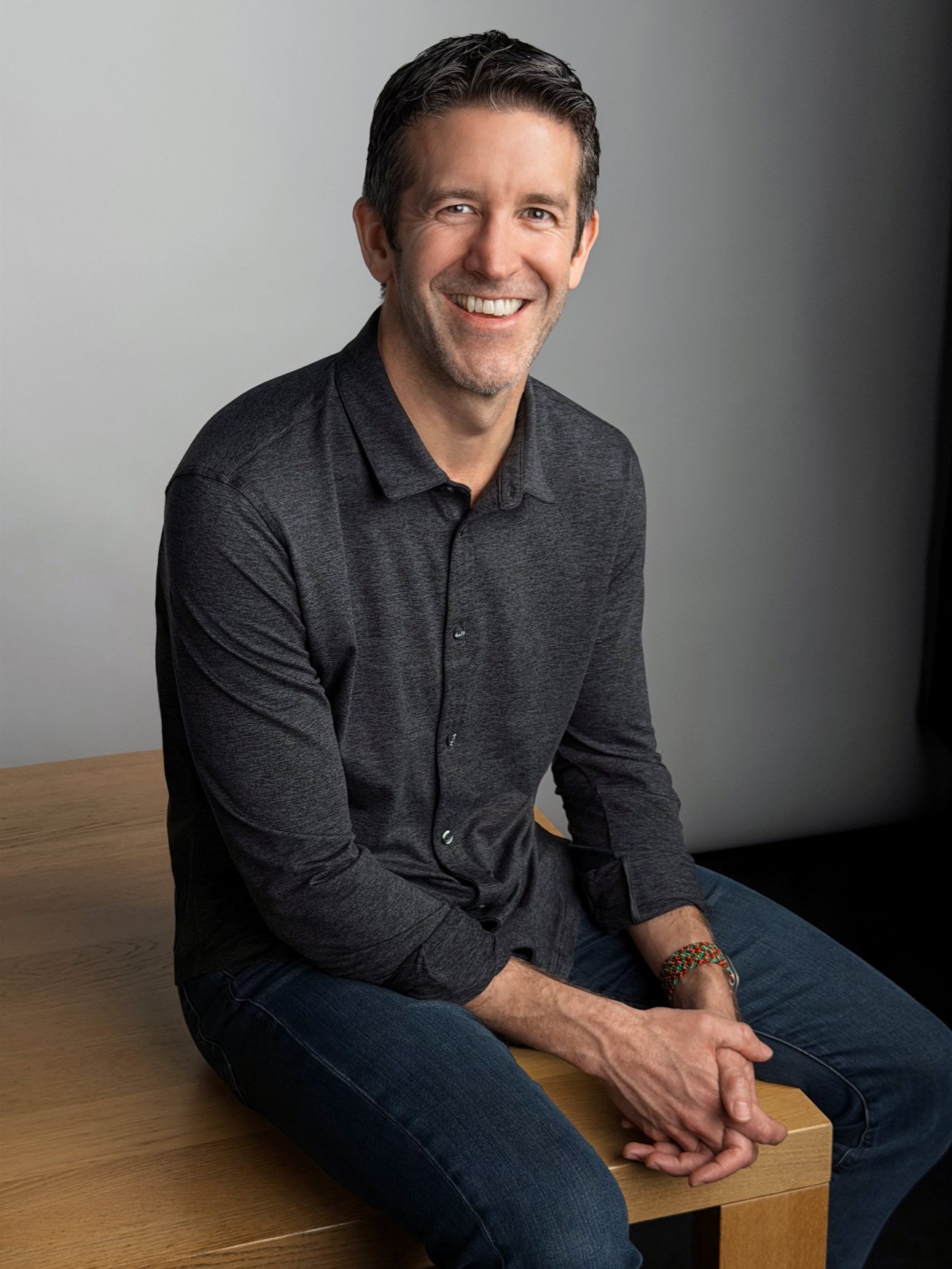
In his first year at Apple, in 2001, John Ternus spent a night at a supplier’s facility counting the grooves on the head of a screw through a magnifying glass. The part he was holding had 35 grooves. The specification called for 25. The engineer next to him asked whether this was normal. Ternus, a 26-year-old hardware engineer three months into his first job at the company, said the line he has repeated in public ever since: “It might not be normal, but it’s right.”1
Twenty-five years later, Apple’s board named him CEO.2
The announcement on April 20, 2026 is the biggest leadership transition in Apple’s history since Steve Jobs handed Cook the keys in August 2011. Tim Cook becomes Executive Chairman, effective September 1, 2026. Ternus, 51, becomes the eighth CEO in Apple’s fifty-year history, and the first since Jobs whose career has been spent almost entirely on the hardware side of the company. Johny Srouji, who led the Apple Silicon program, steps up to a new Chief Hardware Officer role reporting to Ternus.3 Arthur Levinson moves from non-executive chairman to lead independent director.
Apple is trading an operator for a builder at exactly the moment that matters. Cook ran the supply chain that made Apple a four-trillion-dollar logistics miracle. Ternus ran the product design team that made every piece of hardware Apple has shipped since he joined. The succession is not a drift, it is a deliberate shift in emphasis. Operator CEOs optimize; builder CEOs ship the category that didn’t exist yet. Apple picked the second one.
TL;DR
Apple announced on April 20, 2026 that Tim Cook will become Executive Chairman and John Ternus will become CEO effective September 1, 2026. Ternus is the hardware-engineering chief who led the Apple Silicon Mac transition, built the iPad business, and owned Vision Pro hardware. The succession inverts the last decade’s operator-CEO model in favor of a builder CEO at the moment Apple’s next decade depends on shipping genuinely new hardware categories (smart glasses, home devices) and category-extension form factors (foldable iPhone) rather than optimizing an existing one (iPhone). The structural tells: design now reports into engineering, robotics moved out from the AI org roughly a year before the announcement, and Cook kept the geopolitical portfolio through the chairmanship. Ternus inherits an AI runway that the sell-side calls a problem and the observable signals call a buildup, along with an iPhone Air product cycle the hot-take press calls a miss and the hardware lens reads as a deliberate miniaturization-capability bet. He also inherits a company that has spent five years quietly rehearsing this handoff.
For the standards frame behind this read, start with Minimum Worthy Product, The Steve Test, and the Apple platform matrix.
The 35-Groove Screw
The screw story is not a company legend. Ternus tells it himself.
He told it at the University of Pennsylvania’s 2024 engineering commencement.1 He has told versions of it in internal onboarding. Journalists who interview him inevitably get some variant. The frame is always the same: first months at Apple, dispatched to a supplier to inspect hardware before it ran at volume, pulling screws off the line and counting grooves under a magnifying glass past midnight. The spec called for 25. The supplier was shipping 35, over-spec, not under. The part did the job. Any reasonable project manager would move on.
Ternus moved on by flagging it. The line he draws is the one that matters: “it might not be normal, but it’s right.”1 What he was checking at that table was not whether the screw worked. It was whether the process worked. Over-spec today becomes under-spec tomorrow when the supplier finds the tolerance. The screw was right. The inspection was right. The escalation was right. Normal is the wrong axis.
The anecdote works as a myth because it is the correct myth for Apple. The 35-groove screw is the back of the cabinet that Jobs described in 1985, the part nobody would see, built to a standard the maker could sleep with. I wrote about the principle as the back of the fence in the Jobs essay. The lineage from Jobs to Ternus is literal. Ternus joined Apple in 2001, spent a decade working under Jobs, and inherited the craft discipline directly. Cook’s quote on the announcement confirms the lineage: “John Ternus has the mind of an engineer, the soul of an innovator, and the heart to lead with integrity and with honor.”2
Ternus’s own response language is quieter and closer to the doctrine I run: “I am humbled to step into this role, and I promise to lead with the values and vision that have come to define this special place.”2
Career, Compressed
Born in California in 1975. Mechanical Engineering and Applied Mechanics degree at the University of Pennsylvania, 1997, not Penn State, as multiple outlets keep getting wrong.4 Varsity swimmer through college. Senior project: a mechanical feeding arm operated by head movements, built for people with quadriplegia. Four years at Virtual Research Systems, a pre-internet VR headset startup, as a mechanical engineer. Joined Apple in 2001 on the product design team. First project: the Apple Cinema Display.5
The fact that Apple’s incoming CEO spent his first four post-college years designing VR headsets, then his first Apple year building a monitor, then two decades shipping every major hardware product the company released, and then personally ran the Vision Pro hardware program, is a tighter braid than the press has captured. The founder of Apple’s spatial computing era is also the first Apple CEO who personally designed head-mounted displays before Apple hired him.
Promotions:
- 2013: VP of Hardware Engineering, reporting to Dan Riccio. Portfolio included AirPods, Mac, iPad.5
- 2020: Adds iPhone hardware to his remit as Riccio rotates.
- January 2021: Promoted to SVP Hardware Engineering. Replaces Riccio. Joins the executive team.5
- Late 2022: Apple Watch hardware added to portfolio.
- Year-end 2025: Cook gives him oversight of Apple’s design teams.6
- April 20, 2026: Named CEO-designate; transition effective September 1.2
The year-end 2025 move is the decisive succession signal. After Jony Ive’s departure, Apple ran design as a peer organization to hardware engineering, reporting up to Jeff Williams and then shuffled through multiple arrangements. Handing design to Ternus ended that structure. Design now reports into engineering. Bloomberg’s Mark Gurman read the move as “Cook’s decisive signal”6, and three months later the official announcement landed.21
Why Now, Why Him
Three things make the timing specific.
Cook turned 65 in November 2025. Apple’s internal benchmark for senior executive transitions has historically clustered around that age.7 Cook is 65 at the announcement and will still be 65 on September 1. Jobs handed off at 56, forced by illness. Cook is handing off on his own schedule, in his own preferred product cycle.
The reported 2026 iPhone hardware cycle is the biggest since the iPhone X. Mark Gurman’s Bloomberg reporting points to a September 2026 launch that includes the first foldable iPhone, an expanded rollout of Apple’s second-generation in-house C2 modem across the iPhone 18 Pro line, and what his reporting calls “the biggest set of iPhone revamps in product history.”8 Cook is handing off into a cycle that requires a product person at the top. Handing off into the September 2027 cycle would have meant handing Ternus a quieter year. Handing off now gives him the iPhone launch that will define the next five years of Apple’s revenue, and a public proof point in his first 90 days.
Jeff Williams is already out. Williams, the long-presumptive heir, stepped down from COO operational duties in July 2025. Sabih Khan became COO.7 The board did not run a two-candidate horse race in April. Apple ran the horse race quietly across 2024-25, and Williams lost it before the announcement ever existed. The April news ratifies a decision the company already made.
Why Ternus over Federighi, the other internal candidate? Two reasons.
First, hardware. Apple’s last two CEOs have been a hardware-and-manufacturing person (Cook, who ran operations) and a product visionary (Jobs, who ran design and integration). The CEO has never been a software person. Federighi is beloved, a brilliant public speaker, and runs the platforms engineering that ship every year. But Federighi has not run a product P&L. Ternus oversees the hardware products that generate roughly 80% of Apple’s revenue.
Second, age. Cook was 50 when he became CEO. Ternus is 51. The symmetry is almost certainly deliberate. Apple has a 15-year CEO-tenure pattern, and the board picked a candidate old enough to have authority and young enough to run the company for another fifteen years.9
The Structural Move: Design Reports to Engineering
For most of the 2012-2022 decade, Apple’s design team was a peer org. Jony Ive ran it as an independent power center that reported directly to the CEO. After Ive’s 2019 departure and 2022 consulting wind-down, the team rattled through a series of reporting lines: to Jeff Williams, to the design leadership directly, back to Williams. None of those arrangements worked as well as the Ive era, and the product consequences were visible: less coherent design language, slower cycle times, a visible decline in what Gurman’s March 22, 2026 profile described as “a trend of declining product quality” that Ternus helped reverse.10
Handing design to an engineer, late 2025, is the structural move that defines the Ternus era before he even takes the job. Design now serves hardware engineering rather than running alongside it.
That is either a brilliant consolidation or a quiet repudiation of the Ive model, depending on who is telling the story. My read: it is both. The Ive era produced genuinely great work when Ive was the one who cared about the detail. When he left, the org structure he created carried on running without the person it was built around. Apple tried for five years to make the design-as-peer-org work without the peer. Ternus’s appointment is the acknowledgment that the experiment is over.
The replacement model is legible. An engineer who owns craft detail at the screw level, running a design team reporting into him, building a hardware product line with software reporting in parallel, with operations and services carrying the margin. It is a simpler org chart than Cook built. It is closer to the org chart Jobs ran.
| Dimension | Steve Jobs | Tim Cook | John Ternus |
|---|---|---|---|
| Background | Product visionary, no formal engineering training | Industrial engineer, MBA, supply chain | Mechanical engineer, BS Penn 1997 |
| Pre-CEO Apple role | Co-founder, iCEO, ran everything product-adjacent | COO, ran operations and global supply | SVP Hardware Engineering; ran iPad, Apple Silicon, Vision Pro |
| Signature discipline | Design critique, category reframing | Operations rigor, margin expansion, services growth | Hardware craft, supplier discipline, multi-program execution |
| CEO-era test | Ship the category nobody believed in (iPhone, iPad) | Scale the category to global size (iPhone) | Convert Apple’s miniaturization gains into the next daily-use product line (glasses, home) |
| What they were not | Operator; could not run a supply chain | Product visionary; relied on Ive and Federighi for taste | Not a software platform leader; AI/ML depends on delegates |
| Age at CEO | 30 (1985 handoff), 42 (1997 return) | 50 (2011 transition) | 51 (2026 transition) |
The point of the table is not hagiography. The point is that Apple has never repeated a CEO archetype. Each era’s CEO was specifically the opposite of the one before. Jobs’s absence left a company that needed an operator; Cook’s operator tenure built a company that needs a product-and-hardware person at the top for the next category. The pattern is the discipline, not the person.
What Ternus Inherits
The easiest way to read a new CEO is by the product portfolio they own first. Ternus owns four categories that sit on the critical path for Apple’s next decade. Every claim below is reported, not confirmed; Apple has announced none of it. The table shows the reporting source and what the draft is calling rumor versus announced.
| Category | Reported timing | Confidence | Source |
|---|---|---|---|
| Foldable iPhone, ~$1,999-$2,500, 7.76” inner display, Samsung panel | September 2026 launch window | Medium (two-source: Gurman and Kuo) | Gurman (Bloomberg), Kuo supply-chain notes8 |
| N50 smart glasses (no-display, audio + computer-vision, iPhone-tethered) | Late 2027 | Medium-low (single-source reporting) | Gurman Power On, AppleInsider12 |
| Home Hub, ~$350, 7” display, FaceTime camera | Spring 2026 (delayed from March) | Medium | Bloomberg reporting via TechBuzz14 |
| Tabletop robot, ~$1,000+, swiveling arm | 2027 or later | Low (Gurman pushed back on earlier Spring 2026 rumor) | Bloomberg via iClarified14 |
| C2 modem on iPhone 18 Pro (mmWave, satellite) | September 2026 | Medium (Pro-tier rollout, not full lineup) | MacRumors on Kuo reporting16 |
| M5 Apple Silicon (third-gen 3nm) | Shipped October 2025 | Confirmed (Apple) | Apple Newsroom24 |
| M6 Apple Silicon (TSMC 2nm node, analyst attribution) | 2026 in redesigned MacBook Pro | Medium (analyst) | Wccftech supply-chain reporting16 |
| Vision Pro 2 / Vision Air | 2026-2027 (context only; timing unsourced in open reporting) | Very low | Third-party analyst commentary, Vision Pro installed-base sub-1M context via TradingKey11 |
What the table makes visible is where the essay can and cannot lean. Foldable iPhone and the Home Hub are two-source reports with delivery windows in Ternus’s first twelve months as CEO. Smart glasses are single-source and later. The silicon roadmap is the only part of Ternus’s inheritance where Apple has actually announced near-term product. Everything else is journalism, not Apple.
The Vision Pro story sits at the edge of this table for the same reason. Apple has never published unit sales; third-party estimates put cumulative sales under one million since the February 2024 launch, and that reporting is what the Vision Pro 2 / Vision Air row is based on.11 The silicon program, by contrast, is the only part of this table Apple has actually confirmed at the product level: Ternus personally presented the Intel-to-Apple-Silicon Mac transition in November 2020, and M1 through M5 are Apple’s public record.1524
The Ternus-specific detail that matters most, across all of this, is the one that ties back to the 35-groove screw. He reportedly held the foldable program back for multiple years over the visible crease.8 The industry has shipped creased foldables for five years. Apple’s version waits until the crease goes away. The category-level version of “it might not be normal, but it’s right.” The question now is whether the product actually lands when it ships. A fold that creases after six months of use, or a home hub that depends on a still-delayed Siri, or glasses that fail to clear the fashion threshold, each hands the critics the same attack line: the engineer CEO is a craftsman, not a shipper.
Ternus has to prove he is both.
iPhone Air: Miniaturization Platform, Not Product Flop
The first-draft critique writes itself. The iPhone Air launched in September 2025. Launch-month sales came in at roughly 3% of the iPhone 17 lineup. Resale prices in China fell 40% in ten weeks. Foxconn dismantled most production lines, and reporting says Apple shelved the second-generation model.17 The hot-take critics will call the Air a product miss Ternus owns from hardware inception, the one they attack first.
The hot take misses the point of the Air.
Apple does not ship a thin iPhone because thin iPhones are what the phone buyer wanted in 2025. Apple ships a thin iPhone because the supply chain and manufacturing process required to build a production-scale thin iPhone are the same supply chain and manufacturing process Apple will need for smart glasses, the wearable pendant, the foldable, and every future device where volume packaging drives the form factor. The Air is not a product bet. It is a manufacturing-capability bet that Apple rendered as a product, and critics who think a quarter’s unit sales are the test read it on the wrong axis.
The test Ternus is running with the Air is different: can Apple actually produce, at the scale of the iPhone line, a device where the volume budget forces decisions about antenna placement, battery density, thermal dissipation, board layout, and supplier tolerance that the standard Pro form factor never forces? The answer from the 2025 launch cycle is yes. Foxconn dismantling the lines is the point. Apple built those specific lines to run a first-generation thin iPhone at volume. The lessons they generated feed forward into the glasses program, the pendant program, and whatever form factor comes next.
That is how hardware companies learn. The Mac mini G4 in 2005 was not a product bet on small-form-factor desktops as a category. It was Apple learning how to design a thermal envelope inside a physical volume smaller than anything the company had shipped before. Every MacBook Air since inherited those thermal constraints as a solved problem. The first iPod Mini was the same move at smaller scale. The first AirPods Pro, same move.
Ternus’s September 2025 stage line, “So thin and light, it seems to disappear in your hands,”18 is the line critics cite in the failure analysis. The second half of the sentence is the one that actually matters: a hardware company that can produce a device thin enough to seem to disappear has solved a manufacturing problem that translates directly into every volume-constrained product on its roadmap. The thin iPhone disappears from shelves because the phone buyer does not want to pay for less phone. The thinness translates to glasses because a glasses buyer absolutely does want to pay for less weight on their face.
Ternus’s read of the Air, per people who have worked on it, is that the product did its job. The unit-sales post-mortem is the wrong frame. The capability post-mortem is the right one, and the capability reads clean. The question for 2026-2028 is not whether Ternus learned from an Air “failure.” It is whether the manufacturing capabilities the Air program built come out the other side as glasses, pendants, and ultra-thin devices that do earn their place in the user’s life.
The AI Question: Late and Better, Same as Always
The AI runway is the single loudest question in the day-one coverage. Apple spent 2024 and most of 2025 trying to ship a rebuilt Siri and missed the original iOS 26.4 target by months. Gurman reported in early 2026 that the revamp slipped to iOS 27 in September. In early 2026 Apple reached a multi-year licensing arrangement to run a white-label Google Gemini model inside Private Cloud Compute as Siri’s reasoning engine, with Bloomberg reporting the cost at ~$1 billion per year.19 The sell-side framing since the April 20 announcement has been close to uniform: Apple is behind, and the CEO transition is partly in response.20
I am not worried about Apple on AI. The sell-side is reading the wrong pattern.
Apple has two modes. Invent the category (iPhone in 2007, AirPods in 2016, Apple Silicon in 2020) or show up late with the better version of someone else’s category (iPod in 2001, Apple Watch in 2015, Apple Maps from 2012 to the genuinely-good product it is now). AI is sitting at the center of the second pattern, and the second pattern is the one Apple has executed more times than any other company at its size.
The late-and-better pattern has a shape. The incumbents ship the first version; Apple watches, lets the category mature, and ships the second version that solves the problem the first versions failed to solve. The iPod landed when MP3 players were jukebox-ugly and the iTunes + click-wheel combo made the category usable. Apple Maps was a joke at launch in 2012, shipped inside iOS anyway because the strategic risk of depending on Google Maps outweighed the quality risk, and is now genuinely the best map in the US. Every product in that pattern shares a trajectory: rough launch, persistent investment, catch up in two to three years, surpass the incumbents in the third or fourth.
Watch the observable signals on AI. Applebot is crawling aggressively across sites, including mine, where Cloudflare logs show Apple’s crawler activity stepping up through Q1 2026. High-memory Mac mini and Mac Studio configurations, the SKUs with the strongest local-AI inference profile, are persistently backordered in the US retail channel. Reporting on Private Cloud Compute infrastructure scaling has been visible in the supply chain since late 2025.25 Those signals show up for anyone reading their own Cloudflare logs or watching Apple’s retail stock at the monthly cadence of a hardware company. A hardware company produces those signals when it is getting ready to ship, not when it is giving up.
Ternus’s own public posture on AI tracks the same pattern. In his April 2026 Tom’s Guide interview with Greg Joswiak, he framed Apple’s approach as starting from the user rather than the technology: Apple does not set out to ship AI; it asks how AI improves the product experience for real users.22 He drew the Apple Maps comparison explicitly in the same interview, a product that launched rough, kept improving, and is now genuinely good. That is the exact frame I expect him to use publicly through 2026.
The more interesting signal is the internal one. The robotics team move out of Giannandrea’s AI org in April 2025 was not a PR decision. It was Ternus, still SVP, making the call that the organizational parent was under-serving a product program. Bloomberg’s language is worth reading closely: Ternus “looks at mistakes as systematic problems that could be solved with better leadership instead of putting the onus on engineers.”13 That is an executive posture, not a technical one. The CEO posture landed a year later.
My read: WWDC 2026 in June is going to be bigger on AI than the sell-side currently expects. Not because Apple has been slack for eighteen months; because Apple has been quietly getting the pieces in position for the version of the product the company wants to ship rather than the demo the competitors showed twelve months ago. Gemini is the bridge while the real program matures. The $1 billion per year licensing cost is the tell: a company that expected to ship its own production-grade reasoning model in 2027 would not spend $3 billion over three years renting Google’s. A company that expected to ship it in 2029 would. Apple is in the 2027 timeline, not the 2029 one.
That is the late-and-better move. Apple runs it well.
Builder CEO vs. Operator CEO
The framing that matters for this post is the one I’ve been building toward all year.
Operator CEOs optimize. They make the thing cheaper, faster, and more profitable. They are often exactly who a company needs when the product is figured out and the job is scale. Cook took an Apple with a great iPhone and made it a four-trillion-dollar company by industrializing the supply chain, expanding services, and globalizing distribution. He did a genuinely superhuman job at the operator layer. The evidence is in the stock chart.3
Builder CEOs ship the category that didn’t exist yet. Jobs shipped the iPhone into a phone category dominated by BlackBerry. Nadella shipped Azure into a cloud category dominated by AWS. Pichai is trying to ship Gemini into an LLM category defined by OpenAI. Each of those is a category move that requires the CEO to make a product call the operators would not make.
Apple in 2026 is in the second situation. The iPhone is a figured-out product. Services is a figured-out business. The categories that are not figured out, glasses, foldable, home, AI agents, on-device intelligence, are the ones the next decade depends on. Picking an operator CEO at this moment would have been an active decision to keep optimizing the figured-out parts. Picking a builder CEO is an active decision to ship the categories that are not.
I sided with the builder CEO thesis in my Minimum Worthy Product essay and extended it in The Steve Test. What makes the Apple move interesting is that the company did the hard version of it: they picked the builder from inside, at the moment the operator’s runway was fully extended and the builder’s categories were ready to ship. Most companies pick a builder from outside after the operator has already stalled. Apple picked a builder from inside before the stall. That is a substantially harder move to execute politically, and a substantially better outcome when it works.
The counter-thesis is sharper than the day-one coverage makes it sound. Take the strong version of it seriously:
-
Ternus is an internal continuity candidate in an era that needs rupture. Analysts at TradingKey paraphrased one sell-side note arguing that “repeated Siri delays could expose Apple to structural risks of being marginalized during the migration to agent-based ecosystems.”20 A lifer CEO does not rebuild the institution. Every significant Apple platform rupture (the Mac, NeXT/OS X, iPhone, Apple Silicon) traces back to an external-ish push: Jobs’s return, an Intel-reset, an NVIDIA-free future. Picking from inside avoids the one ingredient rupture requires.
-
Cook is staying. The announcement is a half-transition. Cook remains Executive Chairman effective September 1, 2026, keeping the geopolitics portfolio, the board relationships, and the regulator dialogue.2 That is continuity sold as change. If Cook’s posture on China, India, and the EU DMA is structurally load-bearing, Apple has changed the product chair and kept the policy chair. A board that wanted real rupture would have handed all of it over.
-
Apple’s AI problem is a software and model-research problem, not a hardware problem. Private Cloud Compute, on-device model distillation, Siri rebuild, and the Gemini licensing bridge are all decisions made in the AI/ML org and the platform software org, not in hardware engineering. A CEO whose operating instincts are in hardware is ill-suited to reorganize the two orgs that actually matter here. Forrester’s Dipanjan Chatterjee framed this as the risk of “incrementalism when the moment calls for a rewrite.”23
-
Ternus owns real product disappointments on the user-facing side. The Touch Bar (2016-2023), the butterfly keyboard (2015-2019), and the Mac Pro trash can (2013-2019) all intersect his org over his hardware tenure. Not all of these are Ternus’s direct decisions, but enough of them are that the “reversed declining product quality” framing in Gurman’s profile is a direction, not a finished outcome. The iPhone Air is a separate debate; critics will treat it as a miss. The capability-bet reading (see next section) treats it as a deliberate platform play that will pay off in future products. Both readings are live; the CEO has to deliver the follow-through that decides the question.
The counter-thesis is the one I spent the longest sitting with before drafting. Here is the falsifiable standard I actually hold.
The builder-CEO thesis wins only if Apple ships one new category that earns daily use, not just admiration, inside five years. AirPods cleared the bar in 2019 and became one of the largest consumer electronics categories on earth. Apple Watch cleared it by 2017 and anchors the health strategy. Vision Pro and HomePod did not clear the bar. The iPhone Air is a different question than either of those; it was a capability play, not a category bet, which means the right test runs on whether the capabilities come out the other side as successful products in the next two to three years. Ternus has the foldable (a category extension, not a new category), the home hub (adjacent to HomePod’s failure mode), and the glasses (a reboot of the Vision Pro hypothesis), and the glasses are exactly where the Air’s miniaturization work lands. He needs one of those three to land the way AirPods did, not the way Vision Pro did.
The rupture thesis says the board should have picked someone who would burn the existing portfolio down and rebuild. The counter-counter is that Apple does not need rupture across the whole company. Apple needs a CEO who can ship one new daily-use category in five years while keeping the existing ones intact. A hardware builder fits that job description exactly.
What to Watch
The first year gives six reading points. Each has a legitimate way to read the signal; none is my prediction. Apple does what it does.
June 2026, WWDC. Software previews under Federighi. Ternus attends as the soon-to-be CEO. Watch whether Apple acknowledges the Gemini integration explicitly, or whether Siri updates ship under Apple-original branding only. The first choice signals a company willing to name its bridge strategy; the second signals a company pretending there is no bridge.
September 2026, iPhone launch. The first major product event with Ternus as CEO (Cook transitioned September 1). The reviewer response to the reported foldable (if it lands on schedule) either validates the “held for the crease” narrative or exposes it as marketing spin. Apple’s post-Jobs new-category track record is bimodal: land cleanly (AirPods, Watch) or land awkwardly (HomePod, Vision Pro). The fold has to land cleanly. Anything else takes eighteen months to recover from.
Late 2026. The reported M6 MacBook Pro (analyst reporting pegs the display to OLED; touch and 5G are single-source rumors), if it ships on time. The first substantial Mac redesign since the M1 MacBook Air. Ternus was the public face of the Apple Silicon transition, and an M6 MacBook Pro completes the first-decade arc of it.
Spring 2026 onward. The reported Home Hub launch window, with the real Siri overhaul integrated when iOS 27 lands in September 2026. The product depends on iOS 27 shipping a Siri that is genuinely better than the current one. If Siri slips again, the hub launch window slips with it, and the “AI liability” frame gets real in a way sell-side notes have been soft-pedaling.
Late 2027. First consumer smart glasses, per Gurman’s reporting. The Ray-Ban Meta comparison lands hard. Apple either ships the fashion-first, AI-tethered product that obviates the Vision Pro category fight, or ships another expensive niche device.
Through the cycle. Cook stays on as Executive Chairman, handling the policy and geopolitics side. The India manufacturing shift continues. The China relationship continues. The tariff negotiations continue. The fact that Cook is keeping that portfolio is the reason Ternus can run as an engineer CEO without spending his first year on state visits. It is also the reason the counter-thesis about “half-transition” has teeth: if the policy chair is load-bearing and stays, Apple has shifted less of its center of gravity than the title change suggests.
Key Takeaways
For product leaders and PMs:
- The structural move to watch is design reporting into engineering. Apple spent five years trying to run the Ive-era org without Ive. The new structure simplifies decision rights and pulls design back under the craft discipline.
- The 35-groove-screw standard is not a style preference; it is the test that distinguishes ship-grade detail from demo-grade detail. Use it.
- Category-defining products require a builder at the top. Delegate feature optimization; do not delegate category judgment.
For designers and engineers at Apple or adjacent companies:
- A builder CEO raises the bar on hardware craft and lowers the political weight of design-as-autonomous-org. Both changes are real.
- Ternus’s career is specifically the path from hardware engineer to CEO. That path has not existed at Apple before in the post-Jobs era. The precedent is set.
For investors and analysts:
- The AI concern is legitimate; the rupture thesis is not. Apple is running a portfolio of category bets, not a single-axis AI race. A builder CEO optimizes for category breadth; an AI-specialist CEO would have optimized for one axis and lost three.
- Cook keeping geopolitics through the chairman role is a structural de-risking move the sell-side has mostly missed.
For people in their own builder transitions:
- The succession that looks public at the announcement actually played out privately across the preceding five years. Williams out, design to Ternus, robotics to Ternus, Regent Street ribbon-cutting to Ternus, Gurman profile, announcement. The public event is the ratification of a private decision.
- “It might not be normal, but it’s right” is the version of the Steve Test that translates outside software. Keep the distinction between the ship standard and the reasonable standard. They are not the same.
Close: The Test
Apple spent the last fifteen years becoming an operational miracle. The next fifteen require a different kind of CEO. The company is making an explicit bet on the person who stayed late in 2001 counting screw grooves and has spent every year since owning the hardware that generates most of Apple’s revenue.
The bet has a falsifiable test, and it is not my confidence in Ternus. My confidence does not decide whether the thesis holds.
The test is this: Apple has to ship one new daily-use category inside five years of Ternus becoming CEO. One that clears the AirPods bar, not the Vision Pro bar. The foldable is an iPhone extension, not a new category. The home hub is a HomePod reboot. The glasses are the Vision Pro hypothesis retried without a display. At least one of those has to land the way AirPods did in 2016-2019: bought not because it is new, but because the user’s day is materially better with it than without it.
If no new category clears the bar by Q3 2031, the builder-CEO thesis loses. The rupture-thesis critics get to write the “should have picked outside” post, and they will be right. The iPhone Air reads as the first data point in a pattern rather than a capability-bet paying off in glasses.
If one category does clear the bar, the thesis holds, and the 35-groove screw becomes the right myth for the right moment. Not because the CEO is counting grooves, but because the standard at the top of the org determines what the person counting grooves is allowed to ship.
The standard sounds like this: “It might not be normal, but it’s right.”
Five years. One category. Daily use, not admiration.
FAQ
Who is John Ternus?
John Ternus is Apple’s eighth CEO, effective September 1, 2026. He is a mechanical engineer by training (Penn, 1997), joined Apple in 2001 on the product design team, and rose through hardware engineering to become SVP in January 2021. He led the iPad business, the Apple Silicon Mac transition, AirPods, Apple Watch hardware, and the Vision Pro hardware program before his appointment.5
Why did Apple pick an engineer CEO now?
Three reasons. Tim Cook turned 65 in November 2025 and is handing off on his own preferred schedule. The 2026 iPhone cycle is the largest hardware launch in recent history and requires a product person at the top. Apple’s next-decade category bets (glasses and home as new categories; foldable as a category extension; on-device AI across the lineup) need a builder CEO, not an operator CEO. Picking Ternus is an active decision to ship new categories rather than optimize existing ones.78
How does Ternus compare to Tim Cook and Steve Jobs?
Cook is an operations and supply-chain leader who scaled Apple into a four-trillion-dollar business by optimizing the existing product line. Jobs was a product visionary who shipped category-defining products. Ternus is closer to the Jobs lineage than the Cook lineage, but with an engineer’s toolkit rather than a designer’s: he is the craft-discipline CEO who builds the product from the silicon up rather than the marketing story down. His signature anecdote, counting screw grooves at a supplier past midnight, is the engineering-native version of Jobs’s carpenter-and-the-back-of-the-cabinet story.15
What products does Ternus ship first?
Reporting points to a foldable iPhone in September 2026 (at roughly $1,999-$2,500), an M6 MacBook Pro in late 2026 (analyst-reported OLED display; touch and 5G are single-source rumors), a Home Hub in Spring 2026 tied to the Siri overhaul, and a consumer smart-glasses preview in late 2027. Apple has announced none of these. Each is a category test if the roadmap holds. The foldable has to land the “held for the crease” narrative. The glasses have to prove the post-Vision-Pro consumer form factor. The home hub depends on the delayed Siri overhaul shipping with iOS 27.8121416
Is the AI concern real?
Yes. Apple is behind on AI against Google, OpenAI, and Anthropic. Siri slipped from iOS 26.4 to iOS 27. Apple reached a multi-year Gemini licensing arrangement in early 2026 to bridge the gap while rebuilding its own foundation model program (Bloomberg reports the cost at ~$1B/year). A builder CEO does not automatically solve the AI question. What Ternus brings is an organizational approach to it (he pulled robotics out from Giannandrea in April 2025 as an execution call). The test is whether that organizational approach extends to the core model program in the first 18 months.1913
What happens to Tim Cook?
Cook becomes Executive Chairman on September 1, 2026, explicitly keeping the policy and geopolitics portfolio (regulators, tariffs, India manufacturing, China relationship, EU Digital Markets Act). The division of labor is deliberate: Ternus runs the product company, Cook runs the institutional relationships. Apple gets an engineer CEO and keeps its best operator on the board. The move lowers the geopolitical risk of the transition materially.23
References
-
John Ternus, Penn Engineering 2024 Commencement Address, May 2024. Transcript excerpted at A Letter A Day. Contains the “35 grooves” screw anecdote and the “build it in a way that aligns with your values” close. ↩↩↩↩
-
Apple, “Tim Cook to become Apple’s Executive Chairman, John Ternus to become Apple’s CEO,” Apple Newsroom, April 20, 2026. Transition effective September 1, 2026. Contains Cook’s full quote on Ternus and Ternus’s response. ↩↩↩↩↩↩
-
Apple, “Johny Srouji Named Apple’s Chief Hardware Officer,” Apple Newsroom, April 20, 2026. Same-day announcement elevating Srouji to absorb Ternus’s hardware remit. Tim Cook and John Ternus memos to employees, Bloomberg, April 20, 2026. ↩↩↩
-
Correction: Ternus holds a BS in Mechanical Engineering and Applied Mechanics from the University of Pennsylvania (1997), not Penn State. Multiple outlets ran the error in early coverage. Primary source: Apple’s leadership page and the Daily Pennsylvanian’s coverage of Ternus as a notable Penn Engineering alumnus. ↩
-
Apple, John Ternus biographical page. Career history confirmed via Wikipedia citing Apple filings and Bloomberg reporting. Pre-Apple role at Virtual Research Systems (1997-2001) per same sources. First Apple project (Cinema Display) per 2024 Penn commencement address. ↩↩↩↩↩
-
Mark Gurman, “Apple Hardware Chief John Ternus Now Overseeing Design Ahead of Tim Cook CEO Succession,” Bloomberg, January 22, 2026. Reports that Ternus took over design leadership from Jeff Williams at end of 2025, the decisive succession signal. ↩↩
-
Fortune, “Apple’s Succession Plans: How Tim Cook Is Preparing Apple for the AI Era,” November 15, 2025. Context on Cook’s 65-year benchmark, Jeff Williams’s July 2025 step-down from COO operational duties, Sabih Khan’s elevation to COO, and Ternus as presumptive successor. ↩↩↩
-
Mark Gurman, “Apple’s Next CEO” (Bloomberg Businessweek feature, March 22, 2026) and subsequent coverage at MacRumors. The “biggest set of iPhone revamps in product history” characterization and the foldable iPhone pricing range are from Gurman’s reporting. Ming-Chi Kuo’s foldable iPhone roadmap corroborates the September 2026 target. ↩↩↩↩↩
-
John Gruber, “Cook to Chairman, Ternus to CEO,” Daring Fireball, April 20, 2026. Notes Ternus joins Sculley, Jobs, and Cook as Apple CEOs young enough for a decade-plus tenure, and frames the handoff as “all very Cook-ian” in its lack of drama. ↩
-
Mark Gurman, Businessweek profile via MacRumors summary. Specific phrasing: Ternus “helped reverse a trend of declining product quality” and has been criticized for “not doing as much as previous hardware chiefs to implement breakthrough technologies.” Both are Gurman’s characterizations. ↩
-
Vision Pro unit-sales estimates (“fewer than 1 million since Feb 2024 launch”) per aggregated analyst reporting cited in TradingKey, April 20, 2026. Apple has not published unit sales for Vision Pro; all figures are third-party estimates. ↩↩
-
Mark Gurman, “Apple’s AI Smart Glasses: Features, Styles, Colors, Cameras,” Bloomberg Power On newsletter, April 12, 2026. N50 program details, four frame designs, 2027 launch target. AppleInsider on the “built around context, not screens” posture. ↩↩
-
Mark Gurman, reported via 9to5Mac, April 2025, on the robotics team moving out from under John Giannandrea to Ternus. The “looks at mistakes as systematic problems” characterization comes from Gurman’s subsequent Bloomberg Businessweek profile. ↩↩
-
TechBuzz on Home Hub delay to Spring 2026; iClarified on the 2027 target for the swiveling tabletop robot. ↩↩↩
-
Apple’s November 2020 “One More Thing” event unveiled the M1 MacBook Air, MacBook Pro, and Mac mini. Ternus presented the Mac hardware segment. The two-year Apple Silicon transition was completed in 2022 with the Mac Pro launch. ↩
-
Wccftech on the TSMC N2 node decision; MacRumors on the C2 modem shipping in the September 2026 iPhones. ↩↩↩
-
IBTimes UK, “John Ternus and the iPhone Air Controversy,” April 2026. Launch-month sales at ~3% of iPhone 17 lineup, 40% resale-price decline in China in ten weeks, Foxconn line dismantling, second-gen shelved. The “artificially restricting features” critique traces back to a 2018 decision under Ternus on laser-sensor exclusivity for Pro models. ↩
-
John Ternus presenting the iPhone Air at Apple’s “Awe Dropping” event, September 9, 2025. Quote widely covered in the day-of reporting; see TechCrunch’s event recap. ↩
-
Mark Gurman, Daring Fireball summary of the Gemini-Siri reporting, November 2025, and TechCrunch on the February 2026 slip. The ~$1B/year licensing cost and the evaluation of Anthropic and OpenAI are per Gurman’s subsequent Power On reporting and Quartz coverage. ↩↩
-
TradingKey analysis of Apple’s CEO transition and AI strategy, April 20, 2026. Contains the “continuity candidate in a rupture moment” counter-thesis and the “marginalization during the migration to agent-based ecosystems” quote. ↩↩
-
Dan Ives of Wedbush, via CNBC, April 20, 2026. $350 price target maintained; “pressure on Ternus to produce success out of the gates” framing. ↩
-
Ternus, in the Joswiak and Ternus joint interview with Tom’s Guide, April 2026. Contains the “never think about shipping technology” posture, the Apple Maps “rocky start → great product” framing, and the “I could not be more excited” close on Apple’s next 50 years. ↩
-
Dipanjan Chatterjee (Forrester), Tim Cook to step down as Apple’s CEO: Builder succeeds the Operator, April 20, 2026. Canonical builder-vs-operator articulation: “Ternus is a hardware engineer, which signals that Apple will seek differentiation in its physical products even as it looks to reframe the device as a substrate for intelligent experiences.” The incrementalism warning on AI strategy also lives here. ↩
-
Apple, “Apple unleashes M5, the next big leap in AI performance for Apple silicon,” October 15, 2025. Ships in new 14-inch MacBook Pro, iPad Pro, and Vision Pro. Apple describes it as “third-generation 3-nanometer technology”; analysts (e.g. Wccftech) identify the node as TSMC N3P. ↩↩
-
Observable pre-launch signals for Apple’s AI buildup as of April 2026: Applebot crawler activity stepping up across the open web (visible in individual site operators’ Cloudflare logs, including the author’s); high-memory Mac mini and Mac Studio configurations backordered in the US retail channel per MacRumors and 9to5Mac reporting (the SKUs with the strongest local-AI inference profile); Private Cloud Compute supplier-reporting signals from late 2025 onward. These signals do not prove that Apple will ship an AI breakthrough at WWDC 2026; they reflect the kind of capacity-positioning a hardware company does when it is getting ready to ship rather than when it is retreating. ↩