Airbnb: Trust at Scale Through Design
How Airbnb uses photography-driven trust, flexible search, dual-persona design, and the Design Language System to connect strangers worldwide.
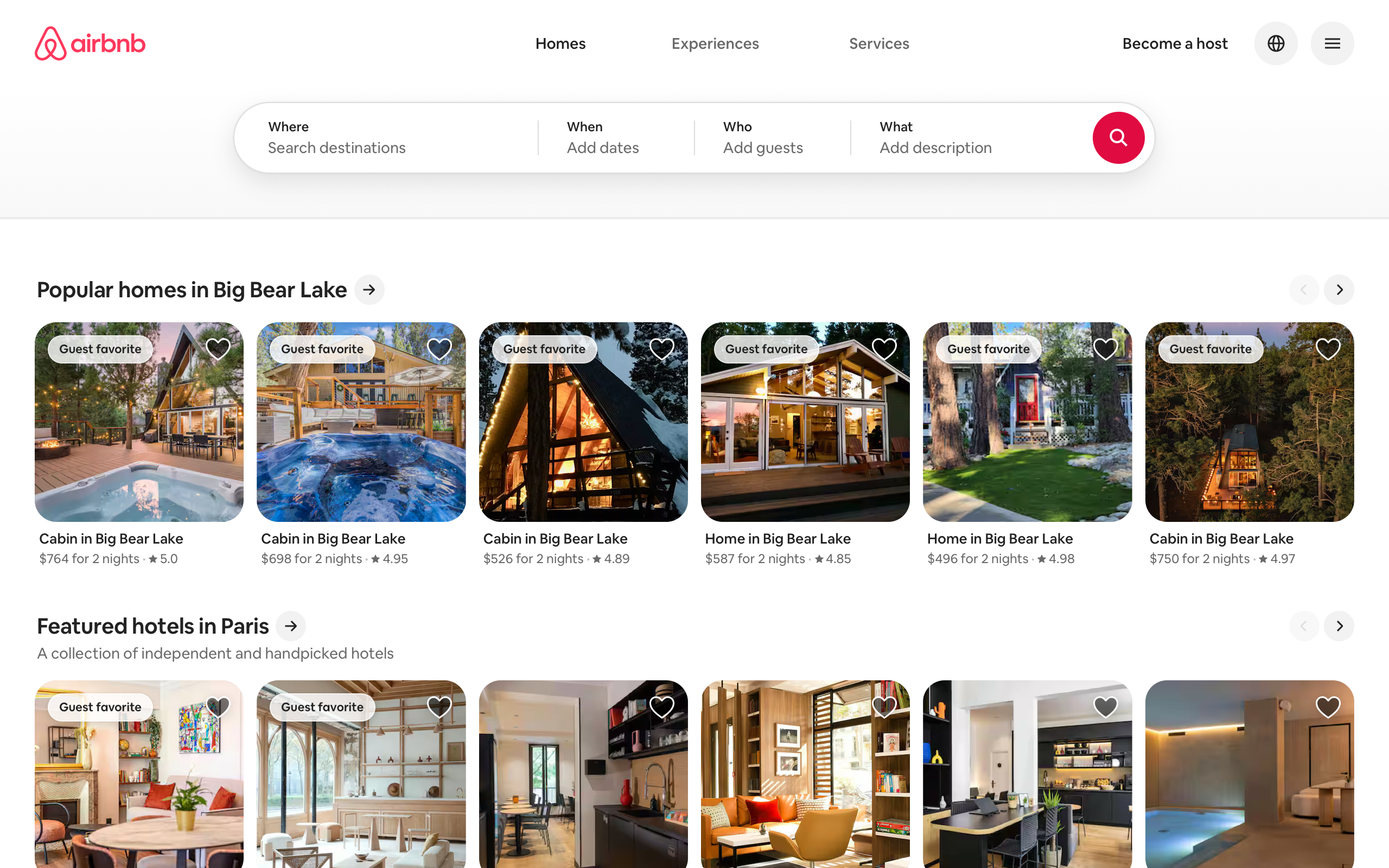
Airbnb: Trust at Scale Through Design
“Design is the body language of your product. It tells people how to feel before they know what to think.” — Brian Chesky, Airbnb CEO
Airbnb asks people to do something deeply unnatural: sleep in a stranger’s home. The entire business model depends on design’s ability to manufacture trust between people who have never met, in places they have never been, for transactions that cost hundreds or thousands of dollars. If the design fails to establish trust at any point in the flow — the listing, the photos, the reviews, the host profile, the checkout — the booking does not happen.
This trust problem is what makes Airbnb one of the most instructive design case studies in consumer software. Every design decision, from the photography standards to the review system to the pricing transparency, exists to bridge the gap between strangers. The Design Language System (DLS) that Airbnb built to solve this problem at global scale became one of the most influential design systems in the industry.
Why Airbnb Matters
Airbnb solved the hardest design problem in marketplace software: generating trust between strangers at global scale.
Key achievements:
- Built a design system (DLS) that unified web, iOS, and Android into a single visual language
- Proved that photography quality is the single highest-leverage design variable in a marketplace
- Created the category browsing paradigm that replaced traditional filter-first search
- Designed a dual-persona product (hosts and guests) that feels tailored to both without feeling like two separate apps
- Made pricing transparency a competitive advantage in a market that historically hid fees
Key Takeaways
- Photography is trust infrastructure - Airbnb’s investment in professional photography and image standards is not marketing spend; it is the primary mechanism through which strangers decide to trust each other with their homes and safety
- Flexible search respects uncertainty - Most travel searchers do not know exactly where they want to go or exactly when; Airbnb’s “I’m flexible” search paradigm acknowledges this uncertainty and turns it into a browsing experience
- Reviews must be designed, not just collected - The structure, display, and verification of reviews is as important as the reviews themselves; Airbnb’s multi-dimensional review system (cleanliness, accuracy, check-in, communication, location, value) provides actionable signal that a single star rating cannot
- Pricing transparency builds confidence - Showing the total price including all fees before checkout eliminates the booking anxiety that hidden costs create; Airbnb learned this lesson the hard way and redesigned their pricing display
- Dual personas require shared components - Hosts and guests have different goals but interact with the same system; the DLS ensures that both personas feel served without fragmenting the product into separate experiences
Core Design Principles
1. Photography as the Primary Trust Signal
Airbnb’s earliest growth insight was that professional photography dramatically increased bookings. The company literally sent photographers to hosts’ homes. This was not a marketing initiative. It was a design decision about what the product’s primary trust mechanism would be.
The image hierarchy on a listing:
LISTING PAGE — IMAGE LAYOUT:
┌────────────────────────────────┬────────────┬────────────┐
│                                │            │            │
│                                │  Image 2   │  Image 3   │
│       Hero Image               │            │            │
│       (largest, best shot)     ├────────────┼────────────┤
│                                │            │            │
│                                │  Image 4   │  Image 5   │
│                                │            │  [Show all │
│                                │            │   photos]  │
└────────────────────────────────┴────────────┴────────────┘

Grid ratio: 50% hero, 25% top-right pair, 25% bottom-right pair
All images: object-fit: cover (no letterboxing)
Aspect ratio: ~16:10 for hero, ~1:1 for grid items
/* Airbnb's listing image grid */
.listing-images {
  display: grid;
  grid-template-columns: 2fr 1fr 1fr;
  grid-template-rows: 1fr 1fr;
  gap: 8px;
  border-radius: 12px;
  overflow: hidden;
  cursor: pointer;
  max-height: 460px;
}

.listing-images__hero {
  grid-row: 1 / -1;  /* Spans both rows */
}

.listing-images img {
  width: 100%;
  height: 100%;
  object-fit: cover;
  transition: filter 200ms ease;
}

.listing-images:hover img {
  filter: brightness(0.92);
}

/* Show all photos overlay */
.listing-images__show-all {
  position: absolute;
  bottom: 16px;
  right: 16px;
  background: #ffffff;
  color: #222222;
  border: 1px solid #222222;
  border-radius: 8px;
  padding: 8px 16px;
  font-size: 14px;
  font-weight: 600;
  cursor: pointer;
}
Photography standards that function as design:
- Wide-angle shots establish space (reduces “smaller than expected” complaints)
- Natural lighting builds warmth and authenticity
- Beds are always made, surfaces are clear (cleanliness signal)
- At least one exterior/neighborhood shot (location context)
- Hero image must show the most distinctive feature of the space
2. Category Browsing: Replacing Search with Discovery
In 2022, Airbnb introduced Categories — a paradigm shift from filter-based search to visual browsing. Instead of asking users “where do you want to go?”, Airbnb started asking “what kind of experience are you looking for?”
CATEGORY BAR:
┌─────────────────────────────────────────────────────────┐
│  ◀ ┊ 🏠 Amazing  🏊 Amazing  🏕 Camping  🏰 Castles   │
│      views     pools                               ▶   │
│                                                         │
│    🌊 Beach-   🏡 Tiny     🌲 Tree-   🏗 Design    │
│      front      homes      houses               ▶   │
└─────────────────────────────────────────────────────────┘
  ↑ Horizontally scrollable
  ↑ Icon + label for each category
  ↑ Selected category is underlined + bold
/* Category pill navigation */
.categories-bar {
  display: flex;
  gap: 32px;
  overflow-x: auto;
  padding: 0 24px;
  scrollbar-width: none;  /* Hide scrollbar */
  -webkit-overflow-scrolling: touch;
  border-bottom: 1px solid #ebebeb;
}

.categories-bar::-webkit-scrollbar {
  display: none;
}

.category-item {
  display: flex;
  flex-direction: column;
  align-items: center;
  gap: 8px;
  padding: 12px 0;
  cursor: pointer;
  opacity: 0.65;
  transition: opacity 150ms ease;
  flex-shrink: 0;
  border-bottom: 2px solid transparent;
}

.category-item:hover {
  opacity: 1;
}

.category-item--active {
  opacity: 1;
  border-bottom-color: #222222;
}

.category-icon {
  width: 24px;
  height: 24px;
}

.category-label {
  font-size: 12px;
  font-weight: 600;
  color: #222222;
  white-space: nowrap;
}
Why categories changed search UX:
- Traditional filters assume users know what they want (dates, location, price range)
- Categories work for aspirational browsing (“I want something cool” becomes “show me treehouses”)
- The visual icons create scannable navigation that works across languages
- Categories unlock supply that traditional search would not surface (a castle in France you did not know existed)
3. The Airbnb Design Language System (DLS)
Airbnb’s DLS was one of the first design systems to enforce cross-platform consistency at scale. The system uses a shared vocabulary of components, tokens, and patterns that work across web, iOS, and Android.
Design tokens:
:root {
  /* Airbnb's color system */
  --color-primary: #ff385c;     /* Rausch — the signature pink-red */
  --color-primary-dark: #d70466;
  --color-text: #222222;
  --color-text-secondary: #717171;
  --color-border: #dddddd;
  --color-background: #ffffff;
  --color-surface: #f7f7f7;

  /* Spacing scale (8px base) */
  --space-1: 4px;
  --space-2: 8px;
  --space-3: 12px;
  --space-4: 16px;
  --space-5: 24px;
  --space-6: 32px;
  --space-7: 48px;
  --space-8: 64px;

  /* Border radius */
  --radius-small: 8px;
  --radius-medium: 12px;
  --radius-large: 16px;
  --radius-pill: 999px;

  /* Typography — Cereal is Airbnb's custom typeface */
  --font-family: "Cereal", -apple-system, BlinkMacSystemFont, sans-serif;
  --font-weight-book: 400;
  --font-weight-medium: 500;
  --font-weight-bold: 700;
  --font-weight-extra-bold: 800;

  /* Elevation */
  --shadow-card: 0 2px 16px rgba(0, 0, 0, 0.12);
  --shadow-dropdown: 0 4px 32px rgba(0, 0, 0, 0.16);
  --shadow-modal: 0 8px 28px rgba(0, 0, 0, 0.28);
}
The listing card — Airbnb’s most important component:
.listing-card {
  display: flex;
  flex-direction: column;
  gap: var(--space-3);
  cursor: pointer;
}

.listing-card__image-container {
  position: relative;
  aspect-ratio: 20 / 19;
  border-radius: var(--radius-medium);
  overflow: hidden;
}

.listing-card__image {
  width: 100%;
  height: 100%;
  object-fit: cover;
  transition: transform 300ms ease;
}

.listing-card:hover .listing-card__image {
  transform: scale(1.03);
}

/* Wishlist heart — always visible on hover */
.listing-card__wishlist {
  position: absolute;
  top: var(--space-3);
  right: var(--space-3);
  background: transparent;
  border: none;
  cursor: pointer;
}

.listing-card__wishlist svg {
  width: 24px;
  height: 24px;
  stroke: #ffffff;
  stroke-width: 2;
  fill: rgba(0, 0, 0, 0.5);
  filter: drop-shadow(0 2px 4px rgba(0, 0, 0, 0.2));
}

/* Rating and metadata */
.listing-card__details {
  display: flex;
  flex-direction: column;
  gap: 2px;
}

.listing-card__rating {
  display: flex;
  align-items: center;
  gap: 4px;
  font-size: 15px;
  font-weight: var(--font-weight-medium);
}

.listing-card__location {
  font-size: 15px;
  font-weight: var(--font-weight-medium);
  color: var(--color-text);
}

.listing-card__distance {
  font-size: 15px;
  color: var(--color-text-secondary);
}

.listing-card__price {
  font-size: 15px;
  margin-top: 4px;
}

.listing-card__price strong {
  font-weight: var(--font-weight-bold);
}
Design Patterns Worth Stealing
The Review Trust System
Airbnb’s review system is designed to provide actionable signal, not just sentiment. The multi-dimensional approach lets guests evaluate specific aspects of their stay.
REVIEW DISPLAY:
┌─────────────────────────────────────────────────────────┐
│  ★ 4.87 · 234 reviews                                  │
│                                                         │
│  Cleanliness      ████████████████████░  4.9            │
│  Accuracy         ████████████████████░  4.9            │
│  Check-in         █████████████████████  5.0            │
│  Communication    █████████████████████  5.0            │
│  Location         ████████████████████░  4.8            │
│  Value            ███████████████████░░  4.6            │
│                                                         │
│  ─────────────────────────────────────────────────────  │
│                                                         │
│  ○ Sarah · March 2026                                   │
│  "The apartment was exactly as pictured.                │
│   Great location, walking distance to..."               │
│   [Show more]                                           │
│                                                         │
│  ○ James · February 2026                                │
│  "Clean, well-organized, and the host                   │
│   responded within minutes to every..."                 │
│   [Show more]                                           │
│                                                         │
│  [Show all 234 reviews]                                 │
└─────────────────────────────────────────────────────────┘
Why multi-dimensional reviews work:
- A listing with 4.9 cleanliness but 4.2 value tells a different story than 4.6 overall
- Specific dimensions prompt more useful review content (guests think about each category)
- Hosts know exactly what to improve (communication, not “everything”)
- Bar-chart visualization is instantly scannable
Pricing Transparency
Airbnb learned a costly lesson about hidden fees. For years, cleaning fees and service fees were revealed only at checkout, causing massive drop-off. The redesigned pricing display shows total cost upfront.
BEFORE (hidden fees):
┌────────────────────────────┐
│  $89 / night               │  ← Listed price
│  ─────────────────────────  │
│  (Checkout reveals:)        │
│  $89 x 3 nights    $267    │
│  Cleaning fee        $75    │  ← Surprise
│  Service fee         $48    │  ← Surprise
│  Taxes               $39    │  ← Surprise
│  ─────────────────────────  │
│  Total              $429    │  ← 60% more than expected
└────────────────────────────┘

AFTER (total price toggle):
┌────────────────────────────┐
│  $143 / night total         │  ← All-in price
│  before taxes               │
│  ─────────────────────────  │
│  $429 total                 │  ← No surprises
│  ─────────────────────────  │
│  Price breakdown             │
│  $89 x 3 nights    $267    │
│  Cleaning fee        $75    │
│  Service fee         $48    │
│  ─────────────────────────  │
│  Total before taxes $390    │
│  Taxes               $39    │
│  ─────────────────────────  │
│  Total              $429    │
└────────────────────────────┘
The design principle: Showing the total price upfront reduces sticker shock at checkout. Users who see $143/night and proceed to booking are genuinely prepared to pay that amount. The conversion rate at checkout increases because the price has already been accepted. Hiding fees temporarily increases click-through but destroys trust and final conversion.
Host/Guest Dual-Persona Design
Airbnb serves two distinct user types — hosts and guests — within a single product. The DLS handles this through shared components with persona-specific content and flows.
GUEST VIEW:                         HOST VIEW:
┌──────────────────────┐            ┌──────────────────────┐
│  Explore              │            │  Today               │
│  ─────────────────── │            │  ─────────────────── │
│  Where to? [Search]  │            │  Arriving today: 2   │
│                       │            │  Checking out: 1     │
│  Categories:          │            │  Pending requests: 3 │
│  🏠 🏊 🏕 🏰          │            │                      │
│                       │            │  Your listings       │
│  [Listing cards...]  │            │  ┌────────────────┐  │
│                       │            │  │ ■ Beach House  │  │
│                       │            │  │ ★ 4.92 · $189 │  │
│  ────────────────── │            │  └────────────────┘  │
│  [Explore] [Wish]    │            │                      │
│  [Trips] [Inbox]     │            │  ────────────────── │
│  [Profile]           │            │  [Today] [Calendar]  │
│                       │            │  [Listings] [Inbox]  │
└──────────────────────┘            │  [Menu]              │
                                    └──────────────────────┘

Shared: Inbox, messaging components, review display, profile cards
Different: Navigation, home screen, primary actions, onboarding
The shared components that unify both personas:
- Message bubbles (same component, different context)
- Review cards (hosts review guests, guests review hosts)
- Profile display (photo, name, verification badges)
- Map integration (guests browse, hosts see their listing location)
- Calendar (guests pick dates, hosts manage availability)
The Verdict
Airbnb solved a trust problem that seemed impossible: convincing millions of strangers to open their homes to other strangers, sight unseen, for real money. The solution was not a single design feature but a comprehensive system — professional photography, structured reviews, verified profiles, transparent pricing, and a visual language that consistently communicates warmth, safety, and reliability.
The most transferable lesson is that trust in a marketplace is not a feature. It is the sum of every design decision across the entire product. The photography quality, the review structure, the pricing honesty, the host response rates, the verification badges — each is a thread in a fabric of trust. Pull one thread and the whole system weakens.
Best for learning: How to design for trust in two-sided marketplaces, how photography and visual standards drive conversion, and how to build a design system that serves multiple user personas without fragmenting the product.
Frequently Asked Questions
How does Airbnb use photography to build trust?
Airbnb invested in professional photography programs for hosts, establishing standards for wide-angle shots, natural lighting, and clear composition. The listing image grid uses a hero-image layout where the best photo dominates. Photography is the primary trust signal because it lets guests visually verify what they are booking. Listings with professional photos consistently outperform those without in booking conversion.
What is Airbnb’s Design Language System (DLS)?
The DLS is Airbnb’s design system that enforces visual consistency across web, iOS, and Android. It includes design tokens (colors, spacing, typography, elevation), reusable components (listing cards, review displays, search bars), and guidelines for interaction patterns. The system uses Airbnb’s custom typeface Cereal and the signature Rausch pink-red (#ff385c) as its primary accent color. The DLS enables hundreds of engineers to ship consistent experiences.
How did Airbnb’s category browsing change travel search?
Categories replaced the assumption that users know where and when they want to travel. Instead of starting with destination and dates, users can browse by experience type — treehouses, castles, beachfront, tiny homes. This paradigm surfaces supply that traditional search would never find (users cannot search for a castle if they do not know castles are available). The scrollable icon bar provides scannable, language-agnostic navigation.
Why did Airbnb switch to showing total prices?
Hidden fees (cleaning fees, service fees revealed only at checkout) caused massive booking abandonment. Users felt deceived when the final price was 40-60% higher than the displayed nightly rate. Airbnb introduced a “total price” toggle that shows the all-in nightly cost upfront. This reduced checkout abandonment because users who proceed have already accepted the real price. Transparency became a competitive advantage.
How does Airbnb’s review system build trust?
Airbnb uses multi-dimensional reviews (cleanliness, accuracy, check-in, communication, location, value) instead of a single star rating. This structure prompts guests to evaluate specific aspects, generates more actionable feedback for hosts, and gives future guests granular signal. A listing with 5.0 communication but 4.2 value tells a useful story. Reviews are tied to verified stays, preventing fake reviews.
Resources
- Website: airbnb.com
- Design Blog: airbnb.design — Case studies and design system documentation
- DLS: Airbnb’s Design Language System documentation and component library
- Engineering Blog: medium.com/airbnb-engineering — Technical deep dives
- Categories Launch: Study the 2022 Summer Release for the category browsing paradigm shift